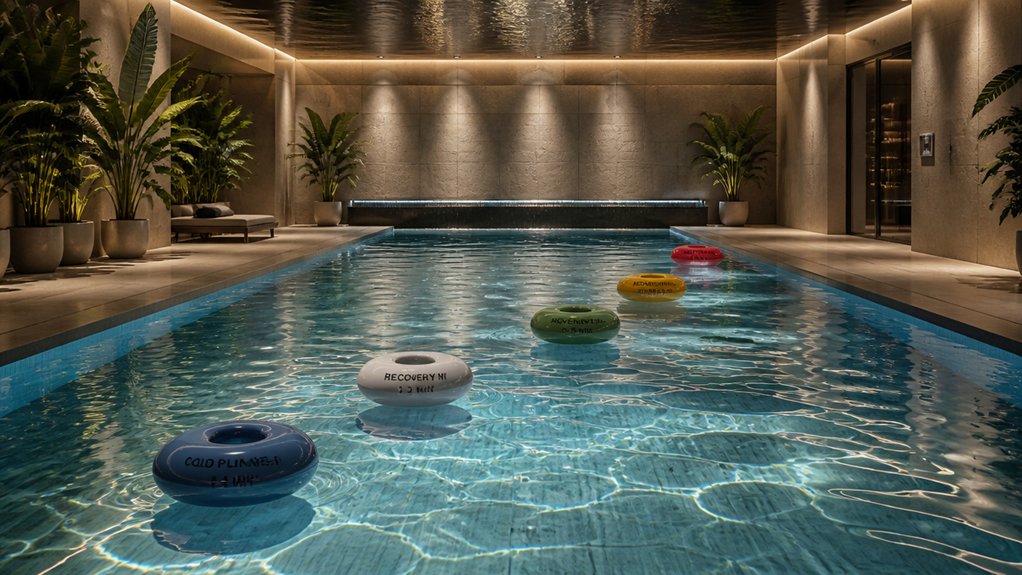

To boost sleep quality with therapeutic immersion, try cold baths at 8-10°C for about five minutes, ideally earlier in the day. This reduces inflammation, balances stress hormones, and lowers core temperature, signaling your body to produce more melatonin. Regular cold immersion can reset your circadian rhythms and promote deeper sleep. If you keep exploring, you’ll discover how to safely incorporate these techniques into your routine for better rest and mood.
How Cold Immersion Benefits Your Sleep and Mood
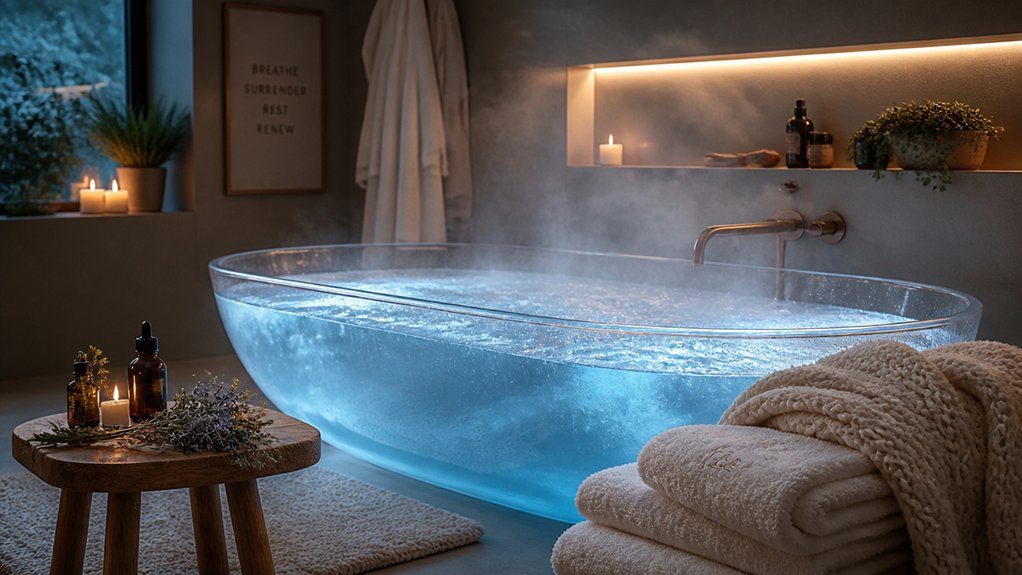
Cold immersion can greatly improve your sleep and mood by reducing inflammation and stress levels. When you practice cold water immersion, it lowers your stress responses and eases anxiety, helping stabilize your emotions.
This process supports better sleep quality by encouraging deeper, more restorative sleep phases. Cold exposure also influences your autonomic nervous system, aiding in resetting your internal clock and aligning your circadian rhythm. As a result, your body achieves a natural balance, making it easier to fall asleep and wake up refreshed.
Regular cold immersion sessions, especially in the morning, can boost your mental resilience and overall well-being. By decreasing inflammation and promoting stress reduction, cold water immersion helps create healthier sleep patterns and uplifts your mood.
How Cold Baths Boost Melatonin and Support Sleep Cycles
Taking cold baths can boost your melatonin production by helping your body recognize when it’s time to wind down. The temperature drop during immersion signals your internal clock, supporting healthier sleep rhythms. Additionally, incorporating adaptogens like ashwagandha and rhodiola into your routine can enhance stress resilience and promote a calmer state conducive to restful sleep adaptogen synergy. Regular cold exposure also reduces stress and anxiety, making it easier to fall asleep and stay asleep longer.
Cold Exposure and Melatonin
When you immerse yourself in cold water, your body responds by lowering core temperature, which signals the brain to produce more melatonin. This process ties closely to cold exposure’s ability to enhance sleep quality by supporting your circadian rhythm.
As your body’s temperature drops, melatonin secretion increases, helping you fall asleep faster and achieve deeper rest. Regular cold baths can also stabilize your melatonin rhythms, reducing nighttime awakenings and promoting restorative sleep.
Additionally, cold exposure decreases stress hormones, which can otherwise disrupt melatonin production. By balancing hormonal responses, cold immersion not only fosters better sleep but also aligns your sleep-wake cycle with natural daylight.
Incorporating the right chiller models and cooling capacity can optimize your cold bath experience for better sleep health. This physiological response makes cold baths a simple yet powerful tool for improving overall sleep health.
Enhancing Sleep Regulation
Immersing in cold water not only influences melatonin production but also plays a key role in regulating your sleep cycles. Cold baths, especially in the morning at 8-10°C, help reset your circadian rhythm by signaling your brain to increase melatonin release in the evening. This promotes better sleep regulation and a stable sleep-wake cycle. Using red light therapy devices after cold immersion can further enhance recovery and support your body’s natural sleep processes. Cold exposure also lowers core body temperature post-immersion, which is essential for initiating and deepening sleep stages. Additionally, regular cold baths help reduce stress and anxiety, easing intrusive pre-sleep thoughts and supporting melatonin synthesis. Over time, this can lead to more consistent sleep patterns and improved sleep quality. By modulating your biological processes, cold immersion effectively supports your body’s natural sleep regulation.
Best Cold Plunge Durations and Temperatures for Sleep
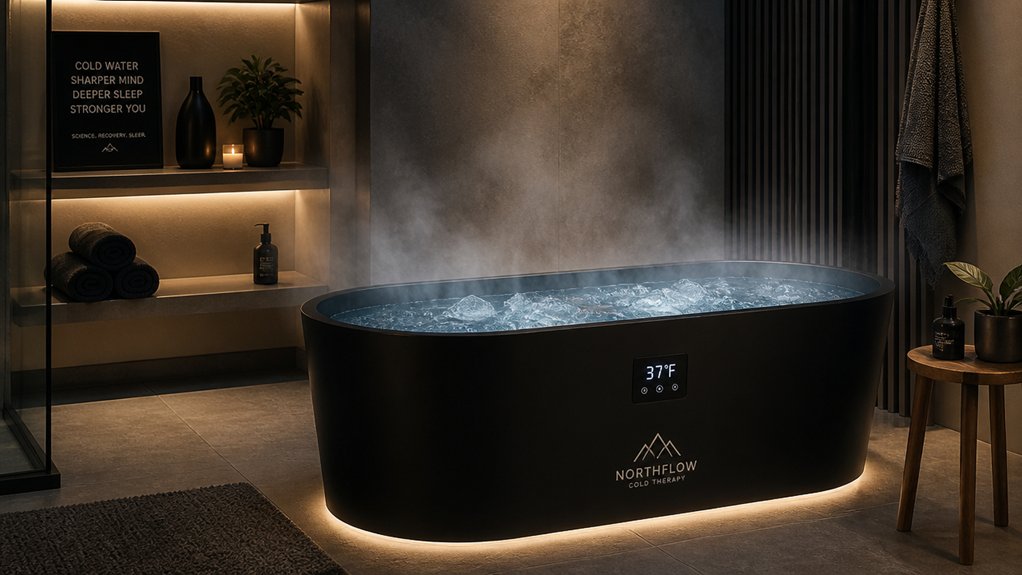
What’s the ideal cold plunge duration and temperature for enhancing sleep? About 5 minutes in water between 8-10°C (46.4-50°F) is ideal. This duration activates calming responses and resets sleep patterns without risking hypothermia. Cold water therapy at these temperatures can also support mental health and overall relaxation, improving sleep quality. Repeating this twice weekly reinforces benefits without overtaxing your body. To make it relatable, consider this overview:
| Duration | Temperature |
|---|---|
| 5 minutes | 8-10°C (46-50°F) |
| Up to twice weekly | Supports relaxation and sleep patterns |
| Longer or colder | Risks hypothermia and overstimulation |
| Shorter or warmer | Less effective for sleep quality |
Stick to these parameters for safe, effective sleep benefits. Additionally, incorporating proper precautions can help ensure a safe and comfortable experience.
Step-by-Step: Safely Incorporating Cold Baths Into Your Bedtime Routine
To safely add cold baths to your bedtime routine, start by preparing a comfortable, safe space with clean, accessible supplies. Focus on proper technique, ensuring you submerge gradually and avoid sudden movements, and listen to your body’s signals. Adjust the temperature and duration for your comfort, and use tools like apps or devices to monitor how your body responds. Incorporate insulation materials to maintain consistent water temperature and reduce heat loss during your immersion.
Preparing Your Space
Creating a safe and comfortable space for your cold bath is essential to enjoy its benefits without risk. Set up your area in a quiet, accessible location with non-slip mats and a cozy seating option to prevent injuries.
Prepare water at 8-10°C (46.4-50°F), ensuring the temperature promotes relaxation and reduces stress. Keep warm clothing and a drying towel nearby for safe, gradual warming afterward.
Limit immersion to about 5 minutes, ideally in the morning, to optimize sleep quality and avoid disrupting melatonin production. Use smartphone apps or wearables to monitor your body’s response, helping to personalize your routine.
Creating a soothing environment enhances the mind and body connection, fostering relaxation and improving overall quality of life. Incorporating the right cold plunge covers can also help maintain water cleanliness and temperature, further supporting your comfort and safety.
- Feel the calm wash over you as your space invites serenity
- Embrace a sanctuary designed for peace and safety
- Know you’re supporting your sleep and mental well-being
- Experience tranquility in a carefully curated environment
- Visualize the stress melting away in your perfect retreat
Correct Bath Technique
When incorporating cold baths into your routine, proper technique guarantees safety and maximizes benefits. Start with cold bath immersion at 8-10°C (46.4-50°F) for about five minutes, ideally in the morning. Ease into the water gradually, lowering yourself slowly to prevent shock, and reduce risks like hypothermia or cardiovascular stress. Focus on controlled, deep breathing during immersion; this stimulates your parasympathetic nervous system, promoting relaxation and helping reset your internal clock. Incorporating high-powered chillers can enhance rapid cooling efficiency, making your experience safer and more consistent. Afterward, warm up gently with a shower or sauna if included in your routine, supporting restorative sleep. Avoid cold baths immediately before bedtime. Instead, schedule them earlier to harness their full benefits—enhancing relaxation and improving sleep quality without disrupting melatonin production.
Adjusting For Comfort
Incorporating cold baths into your bedtime routine requires careful adjustments to guarantee comfort and safety. Start with water around 15-20°C (59-68°F), gradually lowering the temperature to 8-10°C (46.4-50°F) over time to prevent shock. Limit initial sessions to 2-3 minutes and increase gradually to allow your Nervous System to adapt without stress. Using advanced thermal insulation in chillers can help maintain desired temperatures while minimizing heat transfer from the environment, ensuring a more consistent and comfortable experience.
Schedule baths earlier in the day to support your circadian rhythm and avoid disrupting melatonin production. After each session, focus on calming routines like breathing exercises or progressive muscle relaxation to enhance sleep quality.
Use wearable sleep trackers to monitor how your cold immersion affects your rest, adjusting temperature and duration for maximum comfort and benefit.
- Feel confident as your body adapts safely
- Experience a deep sense of calm before sleep
- Feel your Nervous System gradually calming
- Watch your sleep quality steadily improve
- Embrace restful nights with comfort in mind
How Cold Exposure Reduces Anxiety and Eases Restless Nights
Cold exposure, particularly through brief cold water immersion, can greatly reduce anxiety and improve sleep quality by triggering physiological responses that calm the nervous system. When you dip into water at 8-10°C for just five minutes, your body reduces stress and inflammation, helping lower anxiety-related symptoms. Regular cold exposure also decreases intrusive thoughts at night by balancing anxiety hormones, easing restless nights. This process promotes nervous system calming, reducing physical tension before sleep. Using cold water immersion twice a week can lead to noticeable improvements in mental well-being and sleep patterns. To help you understand better, here’s a quick overview:
| Benefit | Effect |
|---|---|
| Reduce tension | Calms nervous system |
| Improve sleep quality | Supports restful nights |
| Ease restless nights | Lowers anxiety-related disturbances |
Combining Cold Water Therapy With Breathing and Mindfulness Practices
Combining cold water therapy with breathing and mindfulness exercises can greatly boost your relaxation response and help you fall asleep faster.
The cold immersion calms your nervous system, while mindful breathing reduces pre-sleep anxiety and physical tension. Together, these practices stabilize your circadian rhythm, making sleep more natural and restful.
Enhancing Relaxation Response
Enhancing your relaxation response before sleep can be especially effective when you pair cold water immersion with mindful breathing practices. This combination activates your parasympathetic nervous system, promoting deep relaxation and easing pre-sleep anxiety.
Cold exposure lowers your core body temperature, triggering melatonin release and supporting better sleep onset. Meanwhile, mindfulness helps you focus inward, diminishing intrusive thoughts that disrupt sleep quality. Together, these techniques reset your internal clock, reduce stress hormones, and foster emotional calmness essential for restful sleep.
Experience the shift with:
- A profound sense of calm washing over you
- Reduced nighttime anxiety and restlessness
- Improved mental clarity and focus
- Decreased stress hormone levels
- Enhanced emotional resilience for better sleep
Improving Sleep Onset
Integrating cold water therapy with mindful breathing and relaxation techniques can greatly improve your ability to fall asleep quickly. Morning cold water immersion at 8-10°C for five minutes reduces inflammation and stress hormones, promoting a refreshed nervous system that supports better sleep onset.
Combining this with deep breathing and progressive muscle relaxation enhances parasympathetic activation, calming your body for a faster shift to sleep. Cold exposure paired with cognitive mindfulness moves focus away from intrusive thoughts, reducing mental arousal and anxiety that hinder sleep.
Practicing this routine consistently helps regulate circadian rhythms and melatonin production, which lowers sleep latency. Layering cold water immersion with breath awareness effectively reduces pre-sleep physiological arousal, accelerating sleep initiation and supporting deeper, more restorative sleep cycles.
Common Mistakes When Using Cold Plunges for Sleep
One common mistake is using cold plunges too close to bedtime, which can overstimulate your nervous system and delay sleep. When you submerge yourself in cold-water immersion late at night, you risk sleep disturbances instead of relaxation.
If the water is below 8°C or you stay longer than five minutes, you increase health risks like hypothermia. Failing to gradually acclimate can cause excessive stress hormone release, worsening sleep and anxiety.
Additionally, neglecting calming routines, like sauna or relaxation techniques, reduces potential benefits. Always consider your individual health conditions, especially cardiovascular issues, as cold plunges can worsen these concerns and impair your sleep rather than improve it.
- Ignoring safe temperature limits risks hypothermia
- Overdoing cold-water immersion increases stress hormone levels
- Using plunges without calming routines diminishes relaxation
- Skipping gradual acclimation causes more anxiety
- Overlooking health conditions may lead to serious health risks
Who Should Try Cold Immersion Therapy for Better Sleep
| Who Should Try Cold Water Immersion | Important Considerations |
|---|---|
| Those in good health, comfortable with cold exposure | Avoid if you have cold intolerance or cardiovascular risks |
| People with stress-related sleep disruptions | CWI can help regulate stress hormones and calm the nervous system |
| Active adults and military cadets familiar with routine monitoring | CWI supports mental well-being and restorative sleep |
| Individuals seeking natural sleep enhancement | It may improve sleep quality by reducing inflammation and stress |
Cold immersion therapy can be a helpful tool for improving sleep quality if you’re in good health and comfortable with cold exposure. It’s especially beneficial for reducing stress-related sleep disruptions and calming your nervous system. However, if you have cardiovascular risks or cold intolerance, consult a healthcare professional first. CWI can support your natural sleep rhythms, promoting better sleep and overall well-being.
Tips for a Safe and Effective Cold Water Routine Before Bed
To guarantee cold water routines support your sleep goals safely, it’s important to follow specific guidelines. Limit cold water immersion to about 5 minutes at temperatures between 8-10°C (46.4-50°F), ensuring you stimulate the relaxation response without risking hypothermia.
Conduct your routine earlier in the day rather than before bed, so it doesn’t interfere with melatonin production. Use gradual exposure and stay consistent to build tolerance without causing stress or discomfort—abrupt immersion can hinder sleep quality.
Pair your cold water immersion with calming pre-sleep rituals, like deep breathing or muscle relaxation, to ease your shift into restful sleep. Always monitor your reactions carefully and avoid cold routines if you have health risks, consulting a healthcare provider if needed.
FAQs: Cold Baths and Sleep-What You Need to Know
Are cold baths effective for improving sleep, or are there specific factors to take into account?
Cold water immersion at 8-10°C for about five minutes can reduce inflammation and stress, which may improve sleep quality. Regular cold baths are linked with fewer upper respiratory infections and less sick leave, indicating broader health benefits. Exposure to cold water activates physiological responses that can help reset your biological rhythms and support deeper, more restorative sleep cycles.
However, safety precautions are essential, especially to avoid hypothermia from prolonged or excessively cold sessions. Combining cold immersion with therapies like sauna can amplify relaxation by balancing warm and cold stimuli, further enhancing sleep outcomes. Always consider your personal tolerance and consult a professional if needed.
Frequently Asked Questions
Can Cold Immersion Improve Sleep Quality Without Additional Therapy?
Cold immersion can improve your sleep quality even without extra therapy by helping regulate your body’s temperature, reduce stress, and promote relaxation. Incorporating regular cold baths or showers might make falling asleep easier and enhance overall rest.
What Are the Long-Term Effects of Cold Water Therapy on Sleep Health?
You may experience improved sleep health over the long term with cold water therapy, as it can enhance your circadian rhythm, reduce stress, and promote relaxation, leading to better sleep patterns and overall restorative rest.
How Does Cold Exposure Interact With Other Sleep-Enhancing Habits?
Cold exposure boosts sleep by lowering your core body temperature, which enhances relaxation. It works synergistically with habits like maintaining a consistent sleep schedule and reducing screen time, improving overall sleep quality and helping you fall asleep faster.
Are There Any Contraindications for Cold Immersion Therapy Before Sleep?
Yes, cold immersion before sleep isn’t suitable for everyone. If you have heart issues, circulation problems, or are pregnant, avoid it or consult a healthcare professional first. Listen to your body’s responses and adjust accordingly.
How Quickly Can One Expect to See Sleep Improvements With Cold Baths?
You might notice improved sleep quality within a few days to a week of regular cold baths, as they help reduce stress and inflammation. Consistency is key to seeing faster benefits, but everyone’s response varies.