
Cold water therapy boosts your mood and neuroplasticity by activating stress response pathways that promote nerve repair and brain rewiring. It releases feel-good neurotransmitters like endorphins and norepinephrine, improving your focus, energy, and emotional stability. Regular exposure reduces cortisol levels, making you more resilient to stress. It also engages neural mechanisms, enhancing brain plasticity and emotional flexibility over time. Keep exploring to learn how these powerful effects can transform your mental health even further.
How Cold Water Boosts Brain Plasticity and Mental Resilience

Cold water immersion stimulates the brain’s ability to adapt and recover by activating several biological pathways. When you immerse yourself, cold receptors send signals that trigger stress response pathways, promoting neuroplasticity—the brain’s capacity to rewire itself.
Cold shock proteins like RBM3 are upregulated, supporting nerve cell repair and preventing neuronal connections from breaking down. The immersion also causes the release of norepinephrine, increasing blood flow to the brain and sharpening alertness, which bolsters cognitive functions and emotional resilience.
Additionally, repeated exposure helps lower cortisol levels, reducing stress-related neurotoxicity and creating a brain environment more conducive to growth. The endorphin release triggered by cold exposure enhances mood and motivation, contributing to greater mental resilience and a stronger capacity to adapt. Furthermore, incorporating adaptogens into your routine may amplify these benefits by supporting the body’s stress response and promoting overall neuroprotection.
The Neurotransmitters Behind Cold Water’s Mood-Enhancing Effects
When you immerse in cold water, your body responds by releasing endorphins, which can produce feelings of euphoria and pain relief.
At the same time, a surge in norepinephrine helps sharpen your mood, increase focus, and improve overall mental clarity. These neurotransmitter responses work together to support better mood regulation and reduce stress during cold water therapy.
Additionally, proper temperature monitoring with cold plunge thermometers can optimize your experience, ensuring safe and effective exposure.
Endorphin Release Stimulus
Immersing yourself in cold water immediately triggers a stress response that stimulates the release of endorphins, the body’s natural painkillers and mood enhancers.
During cold water immersion, the cold shock activates cold receptors, sending electrical signals to your brain that promote endorphin release via stress adaptation pathways. This surge of endorphins produces feelings of pain relief, happiness, and alertness, boosting your overall sense of well-being.
Additionally, the use of dedicated shower timers can help steadily increase exposure time, supporting consistent timing accuracy in your cold water training. While individual responses may vary and the effect can diminish over time, endorphins remain a key neurotransmitter in cold water’s mood-enhancing benefits. These heightened endorphin levels work alongside increased norepinephrine, helping you build stress resilience and experience sustained improvements in mood and brain health through consistent cold water therapy.
Norepinephrine Surge Effects
Activating the sympathetic nervous system during cold water immersion causes a significant surge in plasma norepinephrine levels—often two to three times higher and lasting for hours afterward. This norepinephrine spike boosts blood flow to your brain, sharpening your alertness and focus, which lifts your mood and enhances cognitive function. Additionally, the increased release of norepinephrine during cold plunges can improve sensor accuracy under cold stress, ensuring more reliable physiological feedback. Elevated norepinephrine also stimulates neural pathways that support stress resilience and emotional regulation. As a result, you may experience reduced tension and fatigue, along with increased feelings of vigor and self-esteem. Regular Cold Water immersion keeps norepinephrine levels elevated, potentially facilitating neuroplasticity and strengthening neural connections.
- Improves emotional regulation and stress management
- Enhances blood flow for better brain function
- Elevates mood and self-esteem
- Promotes neuroplasticity and neural health
- Supports long-term stress resilience
Mood Regulation Mechanisms
Cold water immersion (CWI) triggers the release of key neurotransmitters like endorphins and norepinephrine, which play a central role in enhancing your mood. Endorphins provide mood boosts through natural pain relief and a “runner’s high,” while norepinephrine increases focus, alertness, and overall energy. During the cold shock response, activation of cold receptors sends signals that promote stress adaptation pathways, influencing neurotransmitter systems involved in mood regulation. Additionally, CWI lowers cortisol levels, reducing stress and negative emotions like tension and depression. These changes support neuroplasticity, helping your brain adapt and improve emotional resilience. Furthermore, pairing cold water therapy with percussion massagers can enhance recovery and promote sustained mental well-being. Together, these neurotransmitter shifts from cold water therapy contribute to better mood regulation, stress management, and long-term mental well-being.
How Cold Immersion Reduces Stress and Builds Emotional Flexibility
Because cold water immersion triggers a range of physiological responses, it can greatly reduce stress and build emotional flexibility.
When you immerse yourself, cold receptors activate your sympathetic nervous system, increasing norepinephrine, which sharpens focus and reduces nervousness. Cold water immersion also decreases cortisol levels for up to three hours, improving your stress resilience. The release of endorphins provides immediate feelings of well-being and pain relief, supporting emotional regulation.
With repeated cold exposure, your body’s cortisol response lessens, fostering adaptive neural pathways for better stress management. Additionally, facial cold water immersion activates the parasympathetic nervous system via the diving reflex, promoting calmness and shifting negative emotional states.
A comprehensive understanding of insulation in cold plunge setups can enhance thermal retention, making cold exposure more effective and comfortable.
Using Cold Water to Manage Mood Disorders and Improve Emotional Regulation
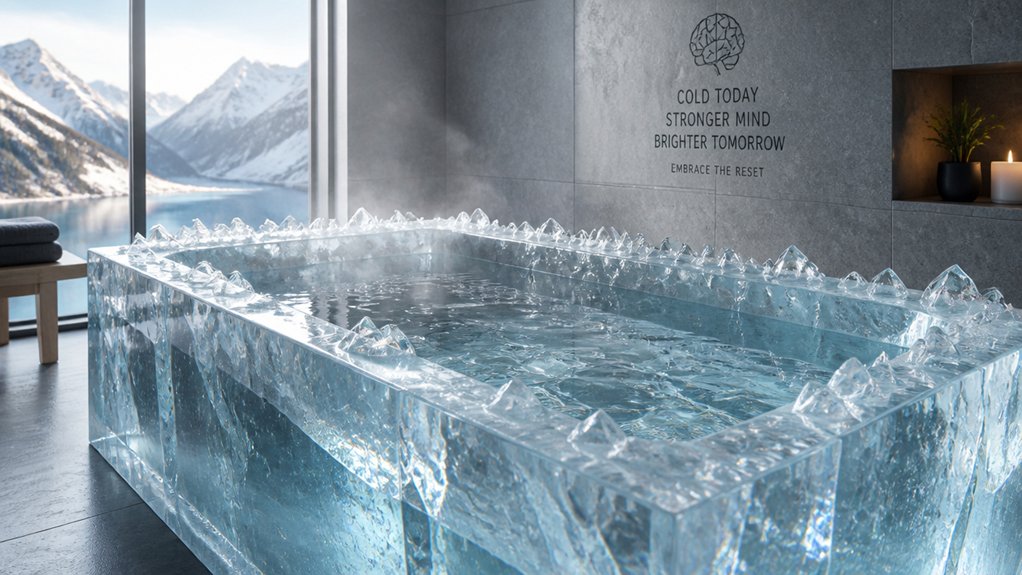
Building on how cold water immersion (CWI) fosters emotional flexibility, it can also be a powerful tool for managing mood disorders like depression and anxiety. CWI increases endorphin and norepinephrine levels, improving mood regulation and helping reduce symptoms of these conditions.
A 15-minute cold exposure routine can support neurotransmitter health, further enhancing mood stability.
Regular cold exposure lowers cortisol levels, enhancing your stress resilience and emotional regulation by dampening the physiological stress response. Brief facial immersions activate the parasympathetic nervous system through the diving reflex, promoting calmness and easing nervousness.
Studies show CWI decreases negative emotions such as tension, anger, and confusion while boosting positive feelings like vigor and self-esteem. Additionally, consistent cold water exposure may modulate neural pathways involving the prefrontal cortex and amygdala, supporting better coping and emotional control over mood disorders.
What Actually Happens in Your Brain During Cold Face and Body Shots
Ever wonder what actually happens in your brain during cold face and body shots? When you do cold face immersion, it activates your parasympathetic nervous system through the trigeminal and vagus nerves, triggering the diving reflex that slows your heart and promotes calm.
Cold receptor activation in your skin sends electrical signals to your brain, stimulating stress adaptation pathways that boost resilience and mental alertness.
Activating skin cold receptors sends signals that enhance resilience and sharpen mental focus through stress adaptation pathways.
During full-body cold water immersion, norepinephrine levels can increase up to 3 times, enhancing focus, energy, and blood flow to mood-related brain regions. The initial cold shock triggers endorphin release, producing feelings of well-being.
Additionally, cold exposure stimulates cold-shock proteins like RBM3, supporting neural repair and fostering neuroplasticity, leading to long-term brain health. Precise chillers designed for rapid cooling, energy efficiency, and easy installation depend on compressor power to optimize your cold therapy sessions.
How Regular Cold Exposure Strengthens Your Brain Over Time

Regular cold exposure trains your brain to respond more effectively to stress by strengthening the underlying neural pathways. Cold water immersion boosts neuroplasticity, enabling your brain to rewire and adapt more efficiently. It stimulates cold-shock proteins like RBM3, which support nerve cell repair and neural connectivity, potentially slowing neurodegenerative decline.
Increased norepinephrine levels from consistent cold exposure improve brain blood flow, enhancing focus and mood regulation over time. This process also activates adaptive neural pathways, strengthening stress resilience by optimizing connections between regions like the mPFC and insula. Additionally, regular exposure reduces cortisol levels and dampens stress reactivity, fostering emotional stability.
These neurophysiological adaptations promote sustained alertness, positive mood, and motivation, ultimately making your brain more resilient and functionally agile.
Simple Tips to Use Cold Water for Better Brain Health and Mood
To harness the mental health benefits of cold water, start by incorporating short immersion sessions into your routine and gradually increase their duration. This method activates your sympathetic nervous system, boosting norepinephrine, which enhances mood and focus.
Start with short cold water immersions to boost mood and focus gradually.
You can also try brief facial cold water immersions to trigger the parasympathetic diving reflex, reducing anxiety and calming your mind.
Consistent cold exposure releases endorphins and RBM3 proteins, promoting neuroplasticity and nerve repair.
To maximize results, pair cold water immersion with mindful breathing techniques like the Wim Hof Method, which amplifies mood boost and cognitive clarity.
- Begin with warm-up showers before cold dips
- Practice mindful breathing during immersions
- Keep sessions brief initially
- Gradually extend immersion time
- Focus on controlled, deep breaths for relaxation
Frequently Asked Questions
Why Does Cold Water Improve Mood?
Cold water improves your mood because it releases endorphins and norepinephrine, reduces stress hormones like cortisol, and stimulates brain pathways, helping you feel more alert, calm, and positive while increasing emotional resilience and fostering lasting neural changes.
What Is the 1 10 1 Rule in Cold Water?
The 1-10-1 rule guides you to gradually enter cold water for 1 minute, stay immersed for up to 10 minutes, then exit slowly for 1 minute. This approach helps you stay safe and benefits your mood and resilience.
Does Cold Water Boost Dopamine or Serotonin?
Cold water immersion boosts dopamine and norepinephrine levels, enhancing your mood and alertness, whereas its effects on serotonin are less clear. You’ll likely experience euphoria and motivation from catecholamine increases, supporting neuroplasticity and mental resilience.
Why Does Cold Water Make Me Happy?
Cold water makes you happy because it releases endorphins and norepinephrine, boosts blood flow to your brain, and activates your nervous system, creating feelings of euphoria, reducing stress, and improving your overall mood and emotional resilience.