To stay safe during an ice plunge, focus on controlled breathing techniques like slow, diaphragmatic breaths and longer exhales to calm your nervous system. Before entering, do deep belly breaths and practice box or triangle breathing to reduce panic and stabilize your heart rate. During immersion, maintain steady nasal inhalations and extended exhalations, resisting gasp reflexes. After exiting, use slow, calming breaths to recover. If you want to learn more about ensuring safe, effective cold water breathing, keep exploring these techniques.
Our Recommended Products on Amazon


As an Amazon Associate we earn from qualifying purchases.
Understanding the Water Shock Response and Its Effect on Your Breathing
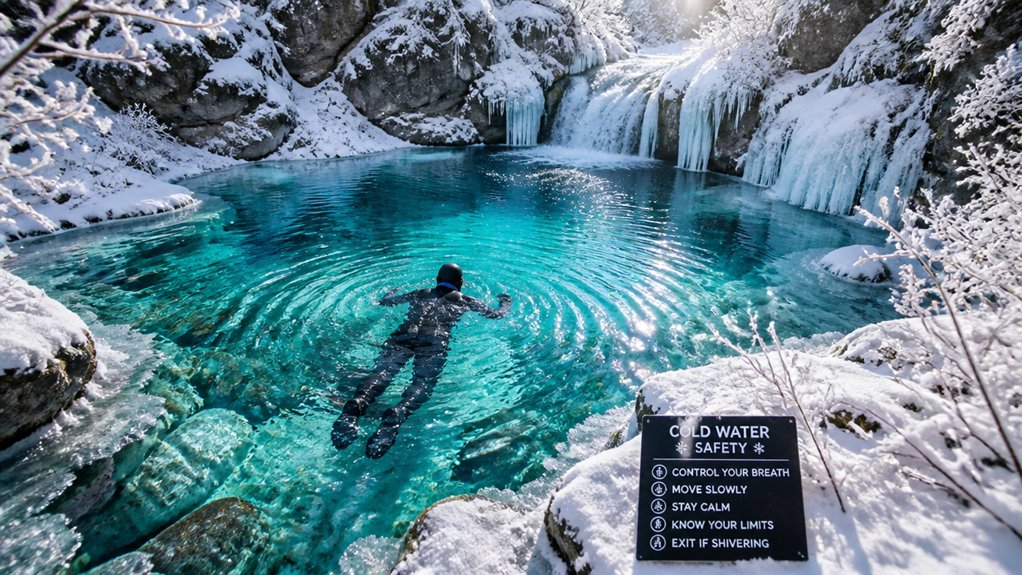
When you suddenly enter cold water, your body reacts instinctively through the cold water shock response, which can markedly affect your breathing.
During cold water immersion, this response triggers an involuntary gasp and rapid, irregular breathing, raising the risk of drowning if not managed. The shock involves activation of your sympathetic nervous system, which spikes your heart rate and constricts blood vessels.
This often leads to shallow breaths or breath-holding, disrupting normal oxygen intake and increasing carbon dioxide levels. To counteract this, practicing breath control—especially slow, deep nasal breathing—can help override the reflex.
Using techniques like diaphragmatic or box breathing signals safety to your nervous system, calming the response and maintaining stable breathing during your cold plunge. Incorporating accurate pulse oximetry can also provide real-time feedback on your oxygen levels, enhancing safety during cold exposure.
Why Controlled Breathing Matters Before Your Cold Plunge
Beginning your cold plunge with controlled breathing can greatly influence how your body responds. It helps slow your heart rate and stabilize your breathing patterns, which is essential during the initial cold shock response.
By taking 3-4 deep, slow breaths—inhale through your nose for about 3 seconds and exhale for 6—you send a safety signal to your brain. This reduces panic and prevents gasping or irregular breathing during immersion.
Techniques like box breathing, with equal inhale, hold, exhale, and hold intervals, help downshift your nervous system and keep you calm. Practicing controlled breathing routines beforehand trains your body to manage sympathetic activation, supporting steady oxygen intake and lowering the risk of dizziness or fainting. Incorporating breathing resistance training can further enhance your lung capacity and resilience before cold exposure.
It’s a simple yet critical step for safe cold plunge sessions.
How to Prepare Your Body With Deep Belly Breathing Exercises
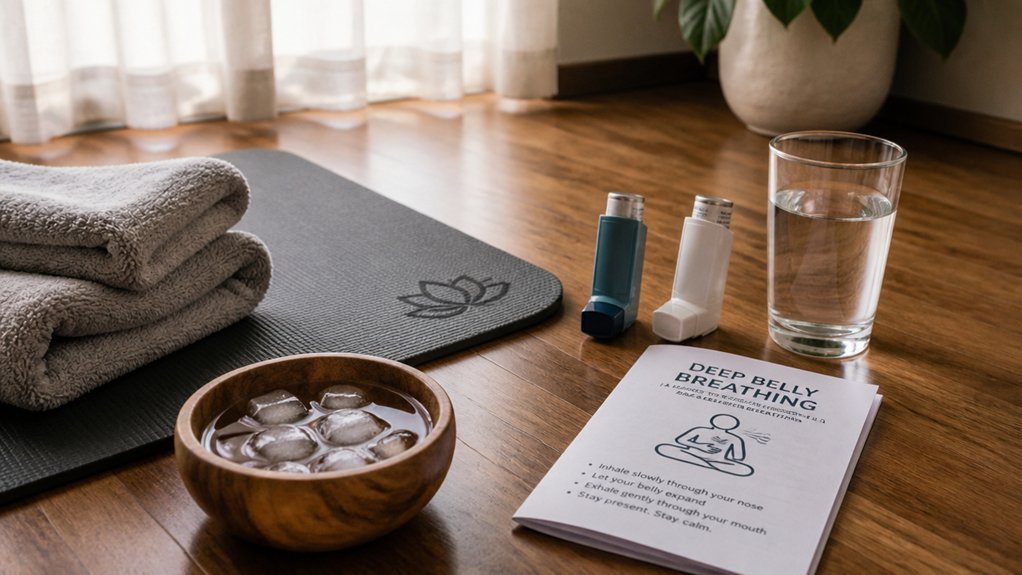
To prepare your body, start with deep belly breaths that engage your diaphragm fully. Focus on slow exhalations through your mouth to promote relaxation and signal safety. A steady breathing pattern supported by guided devices can enhance your rhythmic breathing and help you stay calm and breathe steadily during cold exposure. Consistent practice helps you stay calm and breathe steadily during cold exposure.
Engage Diaphragm Effectively
Engaging your diaphragm effectively is essential for preparing your body for an ice plunge. Focus on diaphragmatic breathing by taking a deep breath through your nose for about 4 seconds, allowing your belly to fully expand. This belly breathing activates your diaphragm, rather than relying on shallow chest movements.
Place your hands on your stomach to feel the rise and fall, ensuring your breath remains concentrated in your belly. After inhaling, hold the breath for 2 seconds, then exhale slowly through your mouth for longer than the inhale. Incorporating breath control techniques can further enhance your ability to stay calm and composed during cold exposure.
This controlled breathing calms your nervous system, lowers blood pressure, and boosts oxygen exchange. Practicing these deep belly breaths regularly will help you maintain calmness and resilience when facing cold water stress.
Focus on Slow Exhales
Focusing on slow, deliberate exhales is a powerful way to prepare your body for an ice plunge. During breathing exercises, extend your exhalation to 6-8 seconds while inhaling through the nose for 3-4 seconds, engaging the diaphragm. This signals safety to your nervous system, reducing cold shock panic and stabilizing your heart rate. Slow exhales activate the parasympathetic nervous system, lowering blood pressure and promoting calmness. Repeating deep belly breathing helps train your body to sustain oxygen and stay relaxed under cold stress, preventing hyperventilation. Additionally, using accurate heart rate sensors can provide real-time feedback to optimize your breathing practice in cold environments. Consistent practice allows your nervous system to downshift sympathetic activity, enhance breath awareness, and improve cold tolerance.
Build Consistent Practice
Establishing a consistent deep belly breathing routine is essential for preparing your body for ice plunge sessions. Focus on diaphragmatic (deep belly) breathing, inhaling through your nose for about 4 seconds to expand your belly, then slowly exhaling through your mouth for 6 seconds to activate relaxation. Practice this daily to increase oxygen saturation and train your body to stay calm under cold stress. Place one hand on your belly and another on your chest to confirm the breath expansion is focused on the diaphragm, not the chest. Incorporate slow, steady exhalations longer than inhalations, such as a 2:1 ratio, to signal safety to your nervous system. Building this routine with 3-4 mindful breaths before immersion helps minimize hyperventilation and better prepares you for the cold shock. Ensuring your breathing equipment is reliable during your sessions enhances safety and consistency, as per timer accuracy considerations in extreme conditions.
Step-by-Step: Practicing Box (Square) Breathing for Cold Water
To practice box breathing effectively for cold water immersion, start by finding a quiet space where you can sit comfortably. Focus on your breath, inhaling through your nose for 4 seconds, then hold your breath for 4 seconds.
Exhale slowly for 4 seconds, making sure your belly or ribs expand fully. Finally, hold your breath again for 4 seconds before repeating the cycle. This box breathing pattern helps downshift your nervous system, calm your heart rate, and promote a focused mental state before and during ice plunges. Incorporating timer alerts can enhance your awareness of your breathing intervals and improve timing consistency.
Practice smoothly and deliberately, maintaining control throughout each phase. Consistent use of this technique prepares you to manage the initial cold shock, supporting relaxation and reducing panic during cold water immersion.
Using Triangle Breathing to Manage Anxiety During Your Cold Dive
When you feel anxiety building during a cold plunge, using triangle breathing can help you regain control and stay calm. This technique involves three equal stages—inhale, hold, and exhale—for about four seconds each.
By focusing on this rhythmic pattern, you regulate your respiratory rate and reduce panic during cold water immersion. Triangle breathing calms the sympathetic nervous system, promoting steady oxygen flow and decreasing the gasping reflex often triggered by cold shock.
Practicing this before and during your ice plunge sharpens your mental focus, diminishes anxiety, and fosters a relaxed, controlled state in the face of cold stress. Water resistance ratings and material durability play a crucial role in ensuring your smartwatch maintains its functionality and integrity during prolonged cold water immersion. Over time, regular use strengthens breath awareness and resilience, making cold water immersion safer and more comfortable.
How 4-7-8 Breathing Helps Calm Your Nervous System
Building on the calming effects of triangle breathing, the 4-7-8 technique offers a focused way to soothe your nervous system during cold water immersion. By inhaling for 4 seconds, holding for 7, and exhaling slowly for 8, you activate breath control to influence your parasympathetic nervous system.
This prolonged exhale helps lower your heart rate and eases breathlessness caused by cold shock. The 4-7-8 breathing technique signals your nervous system to shift from fight-or-flight to rest-and-digest mode, promoting relaxation.
Regular practice:
- Enhances breath control
- Downregulates stress responses
- Fosters mental calmness
- Builds resilience against cold-induced anxiety
Using this technique during ice plunges helps you maintain composure, improve tolerance, and stay focused in stressful moments.
How to Use Sighing to Relax and Increase Oxygen Flow
In cold plunge sessions, sighing serves as a powerful tool to relax your nervous system and boost oxygen intake. Using physiological sighs—two consecutive inhales (one long, one short) followed by a slow exhale—helps activate your parasympathetic nervous system, promoting calm and reducing tension.
Incorporate these breathing techniques during cold therapy to counteract the initial gasping reflex, which can lead to hyperventilation. Sighing increases lung capacity and enhances carbon dioxide elimination, ensuring better oxygen flow.
As you employ this technique, you’ll notice reduced panic and increased mental focus, making the shift into cold exposure smoother. Regularly practicing sighing builds resilience, helping you stay composed and in control during your ice plunge sessions.
Superman Breathing: Improving Rib Expansion and Breath Control
Have you ever noticed how shallow or uneven your breathing can become during cold exposure? Superman breathing helps address this by emphasizing rib expansion through a deep, nose inhale.
Instead of lifting your chest, you place your hands on the outside of your lower ribs to focus on horizontal expansion. This technique enhances diaphragmatic breathing and increases lung capacity.
With a slow, full exhale, your ribs contract inward, fostering better breath control. Practicing Superman breathing sharpens your breath awareness and reduces distracting thoughts, promoting relaxation during cold water immersion.
To maximize its benefits, focus on:
- Deep, nose inhalations
- Horizontal rib expansion
- Controlled, full exhalations
- Mindful rib mechanics
Refining these elements supports steadier, more controlled breathing during ice plunges.
How to Recognize and Prevent Hyperventilation or Dizziness
You need to stay alert for signs like lightheadedness, tingling, or shortness of breath, which indicate hyperventilation.
To prevent this, practice slow, controlled breathing techniques such as deep diaphragmatic breaths and box breathing before and during your immersion.
If dizziness hits, exit safely, sit or lie down, and focus on steady breathing until you feel stable again.
Recognize Signs Early
Recognizing the early signs of hyperventilation or dizziness can make the difference between a safe ice plunge and a hazardous situation. During the shock of cold, your breathing may become rapid and shallow, risking hyperventilation. Pay attention to symptoms like light-headedness, tingling in your lips or fingers, chest tightness, or feeling breathless despite breathing quickly. These signals indicate the need to slow down.
Watch for physical cues such as:
- Dizziness or disorientation
- Irregular heartbeat
- Excessive shivering
- Strong urge to hold your breath
Respond immediately by exiting the cold water or pausing to focus on deep, diaphragmatic breathing with slow exhalations. Recognizing these early signs helps prevent dangerous fainting, panic, or hyperventilation episodes.
Maintain Steady Breathing
Maintaining steady, controlled breathing during an ice plunge is essential to avoiding hyperventilation and dizziness. Cold plunges often trigger a gasping reflex and irregular breaths, which can escalate into panic and lightheadedness.
To prevent this, practice slow, deep diaphragmatic breathwork, focusing on longer exhalations (6–8 seconds). Recognize hyperventilation signs like rapid, shallow breaths, dizziness, or tingling in your hands. If they occur, immediately slow your breath and concentrate on expanding your belly.
Using box breathing—inhale for 4 seconds, hold for 4 seconds, exhale for 4 seconds, hold for 4 seconds—can help keep your heart rate steady. Consistently maintaining a controlled breath pattern signals safety to your nervous system, reducing the risk of panic or breath-holding.
Breathing Tips: Timing and Rhythm for Safe Cold Water Breathing
How can you optimize your breathing to stay safe and calm during an ice plunge? Focusing on timing and rhythm using effective cold breathing techniques is essential.
Start with 3-4 slow, deep breaths, inhaling through your nose for about 3 seconds and exhaling slowly for 6 seconds, to prepare your body and lessen shock.
Begin with 3-4 deep, slow breaths—inhale through your nose for 3 seconds, exhale for 6—to prepare and reduce shock.
During the plunge, maintain diaphragmatic breathing, emphasizing slow nasal inhales that expand your belly and long mouth exhales to promote calm and oxygenation. Use a 2:1 exhale-to-inhale ratio, such as inhaling for 3-4 seconds and exhaling for 6-8 seconds, to stimulate relaxation.
Incorporate rhythmic techniques like box breathing (4-4-4-4) to steady your heart rate and sustain focus, reducing hyperventilation and panic.
Why Longer Exhales Help Keep You Calm During the Cold Plunge
Have you ever wondered why taking longer exhalations during a cold plunge helps you stay calm? When you exhale deeply and slowly, around twice as long as your inhale, you cue your brain that you’re safe. This activates your parasympathetic nervous system, which promotes relaxation and counters stress responses.
In a cold plunge, an extended exhale helps reduce the panic reflex and prevents hyperventilation caused by cold water shock. It also lowers your heart rate and stabilizes your breathing, making it easier to stay centered.
Using the 2:1 exhale ratio improves breath control and mental clarity during immersion. Sustaining longer exhales helps you maintain calmness, enhances your endurance, and supports both mental focus and physical relaxation in icy conditions.
Post-Immersion Breathing for Relaxation and Recovery
After stepping out of the ice plunge, focusing on slow, deep diaphragmatic breathing helps you activate your parasympathetic nervous system, which promotes relaxation and speeds up recovery. This breathing pattern reduces your heart rate and blood pressure, counteracting the initial cold-induced sympathetic nervous system spike.
Incorporate techniques like extending exhalations (e.g., exhaling for 6–8 seconds after inhaling for 3–4 seconds) to signal safety to your brain and decrease residual panic reflex. Using box breathing—inhale, hold, exhale, hold each for 4 seconds—further downshifts nervous system activity.
Combining these strategies with a gradual heat recovery, such as a sauna, stabilizes your respiratory rhythm and supports vascular recovery, amplifying the calming effects on both your breathing and heart rate.
Common Mistakes to Avoid When Breathing During Cold Water
What common breathing mistakes can undermine your safety during cold water immersion?
Many make the mistake of rapid, shallow breathing, which can trigger dizziness, panic, or loss of control. Do not hold your breath for too long immediately upon immersion—as it raises stress response and risks hypoxia. Irregular or erratic breathing caused by gasping reflex can also be dangerous; focus instead on slow, controlled inhales and long exhales. Additionally, breathing only through your mouth diminishes the calming effect of nasal inhalation, which activates diaphragmatic breathing. Pre-immersion breath preparation, like deep belly breaths, is critical to avoid panic. Here’s a quick comparison:
| Mistake | Correct Practice |
|---|---|
| Shallow, rapid breathing | Inhale deeply and control each breath |
| Holding breath prematurely | Exhale slowly and maintain steady breathing |
| Mouth-only breathing | Breathe through nose to calm the stress response |
| Ignoring breath prep | Use diaphragmatic breathing beforehand |
How to Incorporate Breathing Into Your Safe Cold Water Routine
Incorporating proper breathing techniques into your cold water routine is essential for safety and effectiveness. Start with slow, deep breaths—inhale through your nose for about 3 seconds with belly expansion, then exhale slowly over 6 seconds—to prepare your body and calm your nervous system.
Use box breathing (inhale-hold-exhale-hold each for 4 seconds) right before entering the water to steady your heart rate and foster mental clarity.
During immersion, maintain controlled diaphragmatic breathing, focusing on slow, full belly breaths to counteract the cold shock reflex and prevent panic. Adopt a 2:1 exhale-to-inhale ratio—like inhaling 4 seconds and exhaling 8—to signal relaxation and reduce stress.
Practice these techniques outside cold exposure sessions to enhance your ability to stay calm during plunges.
Frequently Asked Questions
What Is the 4 7 8 Rule for Breathing?
The 4-7-8 rule guides you to breathe in through your nose for 4 seconds, hold your breath for 7 seconds, then exhale audibly through your mouth for 8 seconds, promoting calmness and controlled breathing during cold exposure.
Is 2 Minutes in an Ice Bath Safe?
Yes, two minutes in an ice bath can be safe if you’re healthy, gradually acclimate, and practice controlled breathing techniques. Start with shorter sessions, and consult a healthcare provider if you have any medical conditions before attempting.
Is Cold Plunging Good for Your Lungs?
Cold plunging can benefit your lungs by improving oxygenation and promoting relaxation through vagus nerve activation. However, you need controlled breathing to manage hyperventilation and avoid stress, especially if you have underlying respiratory conditions.
What Is the 4 4 4 4 Breathing Technique?
You breathe in for 4 seconds, hold your breath for 4 seconds, breathe out for 4 seconds, then hold again for 4 seconds, creating a steady rhythm that calms your nervous system and enhances focus during cold water immersion.