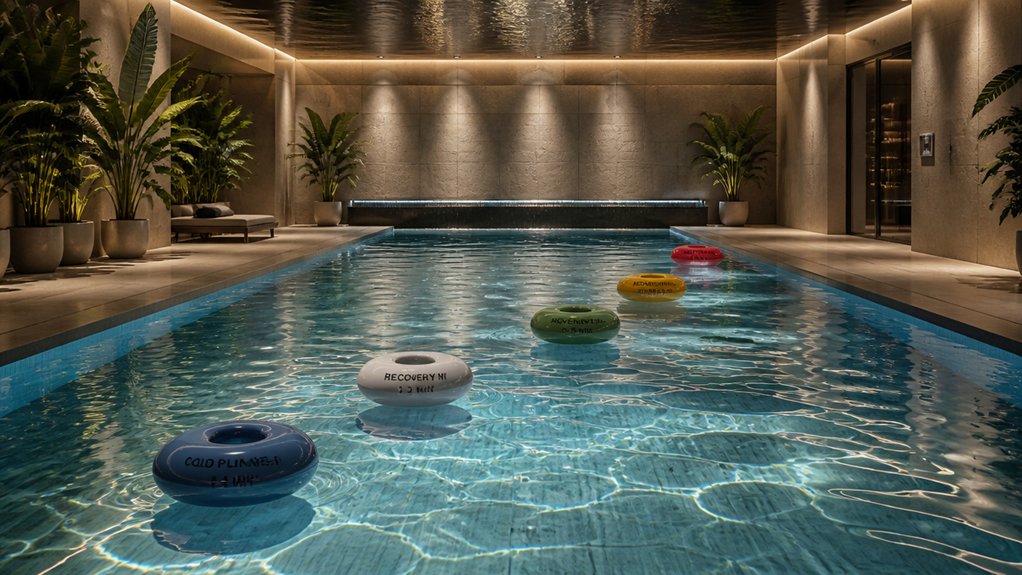

To help manage your shock response during cold immersion, focus on slow, diaphragmatic nasal breathing. Techniques like the 4-7-8 or cyclic sighing can calm your nervous system, lower heart rate, and prevent hyperventilation. Breathe deeply through your nose with controlled inhales and extended exhales, and consider holding your breath post-exhale. If you keep exploring, you’ll find more ways to stay calm and safe during cold water exposure.
What Is Cold Shock, and Why Does It Matter?

Have you ever wondered what happens to your body when suddenly immersed in cold water? Cold shock is your body’s immediate response, triggering uncontrolled gasping and rapid breathing.
Cold water immersion prompts sudden gasping and rapid breathing, risking hyperventilation, dizziness, and panic.
This intense stress response causes your breathing to become hyperventilation, reducing carbon dioxide levels, which can make you dizzy and panic. As your heart rate increases, blood pressure rises, raising the risk of drowning or cardiac problems.
The quick, shallow breaths can overwhelm your nervous system, impairing your motor skills and heightening panic. Understanding this reaction is vital because uncontrolled breathing during cold shock can be dangerous.
Controlling your response, especially your breathing, can help you stay calmer and improve your chances of survival by preventing the cycle of hyperventilation and its associated risks. Developing a controlled breathing pattern before cold immersion can significantly mitigate the shock response.
How Does Controlled Nasal Breathing Influence the Cold Shock Response?
Controlled nasal breathing slows your breaths and activates your diaphragm, helping you resist the rapid, shallow breathing typical in cold shock. It also warms and filters the air you take in, reducing stress on your lungs and nervous system. Additionally, it can facilitate rhythmic pacing, which supports autonomic balance during cold exposure.
Nasal Breathing Enhances Calmness
When you breathe through your nose, it activates your body’s calming mechanisms, helping to counteract the intense fight-or-flight response triggered by cold shock. Nasal breathing stimulates the parasympathetic nervous system, promoting relaxation and reducing panic. Engaging in slow, diaphragmatic nasal breaths helps regulate carbon dioxide levels, preventing hyperventilation and dizziness. It also stimulates the vagus nerve, lowering heart rate and blood pressure, enhancing the relaxation response. To visualize these benefits, see the table below:
| Effect | Mechanism | Outcome |
|---|---|---|
| Promotes Calmness | Activates parasympathetic nervous system | Reduces panic and anxiety |
| Stabilizes Heart Rate | Stimulates vagus nerve | Fosters emotional and physical stability |
| Improves Breath Quality | Filters, warms, humidifies air | Supports steady, gentle breaths |
This approach helps shift your physiology into a calmer state during cold shock. Additionally, accuracy and response time are critical in ensuring reliable measurements during ice bath sessions.
Modulates Stress Response
Nasal breathing actively influences your stress response by engaging the parasympathetic nervous system, which promotes calmness and reduces the intensity of the fight-or-flight reaction during cold shock.
By practicing controlled breathing, especially slow diaphragmatic breaths, you can stabilize your heart rate and lower blood pressure. Techniques like nasal breathing help increase CO2 tolerance, preventing hyperventilation and anxiety.
Here are three ways nasal breathing modulates your stress response:
- Stimulates the vagus nerve, promoting relaxation.
- Activates the parasympathetic nervous system for calmness.
- Blunts rapid breath and muscle tension during shock.
Consistent diaphragmatic breathing trains your body to better handle acute stress, improving resilience to cold shock by calming physiological reactions through controlled nasal breathing. Incorporating adaptogen blends can further support stress regulation and enhance overall recovery during cold plunge routines.
Why Slow, Diaphragmatic Breathing Helps Manage Cold Water Immersion Symptoms

When you breathe slowly with your diaphragm, your heart rate stabilizes and your relaxation response activates. This style of breathing helps reduce shock symptoms by calming your body and lowering adrenaline. Practicing it can make cold water immersion more manageable and less overwhelming. Additionally, focusing on your respiration can help mitigate the effects of peripheral vasoconstriction on heart-rate accuracy sensor performance.
Stabilizes Heart Rate
Slow diaphragmatic breathing activates your parasympathetic nervous system, which helps calm your heart rate during cold water immersion. By engaging in deep, belly breaths, you promote a stable heart rhythm and prevent the rapid pounding caused by shock.
This controlled breathing counters the sympathetic fight-or-flight response that spikes stress hormone levels and accelerates your heartbeat. To deepen this effect:
- Maintain slow, deliberate breaths using your diaphragm.
- Focus on gentle, equal inhalations and exhalations to reduce hyperventilation.
- Regularly practice this breathing pattern to improve heart rate variability and lower cardiovascular strain.
Activates Relaxation Response
Engaging in slow, diaphragmatic breathing directly stimulates your vagus nerve, which activates the parasympathetic nervous system and triggers your body’s relaxation response. By focusing on controlled breath, you signal your body to shift from stress to calm.
Diaphragmatic breathing helps to lower blood pressure and reduce muscle tension, easing agitation during cold water immersion. Deep belly breaths engage your vagus nerve, promoting heart rate reduction and muscle relaxation.
Controlled slow exhalations regulate oxygen and carbon dioxide levels, preventing dizziness and hyperventilation. Practicing gentle nasal breath with an upright posture supports diaphragmatic function, encouraging your body to activate its natural relaxation mechanisms. Incorporating water treatment rituals can also help reinforce a calming routine that supports these physiological responses.
This breath pattern enhances your ability to calm down quickly during shock response, helping you recover more efficiently.
Reduces Shock Symptoms
Practicing slow, diaphragmatic breathing during cold water immersion can greatly reduce shock symptoms by directly calming your nervous system. This technique activates your parasympathetic nervous system, counteracting the stress response caused by cold shock.
By using diaphragmatic breathing, you improve oxygenation and prevent shallow chest breaths that worsen hyperventilation. Incorporating slow exhales helps lower your heart rate and blood pressure spikes, reducing dizziness and agitation.
Maintaining nasal breathing and gentle, slow breaths increases CO2 tolerance, helping stabilize blood flow. Using recovery tracking apps can also provide real-time feedback on your breathing patterns and physiological responses during immersion sessions.
Here are key benefits:
- Activates parasympathetic nervous system for relaxation
- Enhances oxygenation and prevents hyperventilation
- Reduces heart rate and blood pressure spikes
Simple Breathing Methods to Reduce Cold Shock Intensity

When faced with cold shock, using simple breathing techniques can greatly reduce its intensity. Diaphragmatic breathing, which involves slow, gentle breaths using your abdomen, helps counteract the rapid, shallow chest breathing triggered by shock, calming your nervous system.
Maintaining nasal breathing during cold exposure reduces airway irritation and supports oxygen flow, easing symptoms. Breath holds after exhaling, like in Buteyko technique, increase CO2 tolerance and decrease hyperventilation. Box breathing—inhale, hold, exhale, and hold each for four seconds—regulates your heart rate and encourages relaxation.
Additionally, cyclic sighing with slow, complete exhalations stimulates the parasympathetic system, reduces physiological arousal, and lowers your breathing rate. These simple methods are effective tools for managing the initial cold shock response. Incorporating timer accuracy in extreme cold temperatures ensures your breathing exercises remain effective even in frigid conditions.
How to Practice Diaphragmatic Breathing Before Your Cold Plunge
Before you take the cold plunge, spend 5 to 10 minutes practicing diaphragmatic breathing to strengthen your body’s relaxation response.
To do this effectively:
- Sit comfortably with your shoulders relaxed, placing one hand on your chest and the other on your abdomen. Focus on making your belly rise more than your chest with each breath.
- Inhale gently through your nose for 3 to 4 seconds, emphasizing diaphragmatic movement, then exhale slowly through pursed lips for 4 to 6 seconds to promote relaxation.
- Keep your breath soft, quiet, and steady, avoiding shallow chest breathing that can increase anxiety.
This practice activates your parasympathetic nervous system, improving oxygenation and calming your nervous system for better cold stress tolerance.
Using Cyclic Sighing to Stay Calm During Cold Water Immersion
During cold water immersion, employing cyclic sighing can be a powerful way to stay calm and control your body’s shock response. This breathing pattern involves a double inhale through the nose, followed by a slow, complete exhale through the mouth.
By doing so, you activate your parasympathetic nervous system, which promotes relaxation and counters the fight-or-flight response triggered by cold exposure. Cyclic sighing reduces rapid, shallow breathing, preventing hyperventilation and dizziness.
Practicing this technique for about five minutes can lower your resting breathing rate, helping you feel more composed and in control. The slow exhalations directly influence heart rate and anxiety levels, making cyclic sighing an accessible, effective method to maintain calm during and after cold water immersion.
Step-by-Step Guide to Box Breathing for Cold Shock Management
Box breathing offers a straightforward way to manage cold shock responses by giving your breathing a steady, controlled rhythm.
To start, follow these steps:
- Inhale slowly through your nose for 4 seconds, focusing on diaphragmatic breathing to engage your belly.
- Hold your breath for 4 seconds, visualizing a square to enhance focus.
- Exhale gently for 4 seconds, releasing tension and encouraging relaxation.
- Hold your breath again for 4 seconds before repeating.
This cycle activates your parasympathetic nervous system, helping to lower your heart rate and counter the fight-or-flight response triggered by cold shock.
Practicing for 1–2 minutes during cold water exposure can promote calmness, reduce anxiety, and improve oxygenation.
Applying the 4-7-8 Breathing Technique During Cold Water Exposure
When you face cold water immersion, applying the 4-7-8 breathing technique can help you remain calm and maintain control.
As you start, inhale slowly for 4 seconds, then hold your breath for 7 seconds, which helps regulate your stress response. Exhaling steadily for 8 seconds with a soft “whoosh” sound counters the rapid, shallow breathing triggered by cold water exposure.
This controlled exhalation relaxes your nervous system, activating the parasympathetic response and reducing panic. Holding your breath during the 7-second pause stabilizes your heart rate and blood pressure, preventing shock symptoms.
With practice, this technique improves oxygenation and breathing stability during cold immersion, empowering you to stay composed and resist the instinct to panic.
Can Alternate Nostril Breathing Boost Resilience Against Cold Shock?
Could practicing alternate nostril breathing actually enhance your resilience against cold shock? This technique stimulates the parasympathetic nervous system, helping you relax and better manage stress responses during cold exposure. By balancing autonomic activity, it reduces the fight-or-flight response, making cold shock less overwhelming.
Practicing alternate nostril breathing calms the nervous system, enhancing resilience to cold shock and reducing stress during cold exposure.
To understand its benefits better, consider:
- calming your nervous system, leading to steadier heart rate and breathing
- increasing CO2 tolerance, which enhances oxygen delivery and offsets rapid, shallow breaths
- building resilience through consistent practice, improving your capacity to handle surprise cold shocks
When you incorporate alternate nostril breathing into your routine, you activate calming mechanisms that can help you stay composed during sudden cold exposure, ultimately boosting your stress response and resilience against cold shock.
Safety Tips: Precautions for Breathing Exercises in Cold Water
Practicing breathing exercises in cold water requires careful precautions to avoid dangerous reactions. Keep your breathing rate slow and gentle, focusing on diaphragmatic breathing to stay calm and control the shock response caused by cold exposure.
Always prioritize controlled nasal breathing, as mouth breathing can increase water inhalation risks and decrease oxygen efficiency in cold conditions. Avoid rapid or forceful breathing, which can lead to hyperventilation and loss of breath control.
If you experience dizziness, pain, or breathlessness, stop immediately and seek medical advice to prevent complications like hypoxia or cardiac stress. Practice in a safe environment with supervision so you can respond promptly to adverse reactions, especially those triggered by cold shock or sudden stress responses.
Integrating Breathing Techniques Into Your Cold Plunge Routine Safely
To incorporate breathing techniques into your cold plunge safely, start by practicing slow diaphragmatic breaths beforehand to calm your nervous system.
During immersion, use cyclic sighing and nasal breathing to manage shock and reduce anxiety.
Always watch for signs of dizziness, and stop immediately if you feel uncomfortable.
Controlled Breathing During Cold Exposure
When you immerse yourself in cold exposure, intentionally controlling your breathing can greatly reduce the shock response. Techniques like diaphragmatic breathing and nasal breathing activate your parasympathetic nervous system, promoting calmness.
To deepen your practice, consider these strategies:
- Use slow, deep nasal inhales and prolonged exhales to help manage shock and regulate heart rate.
- Incorporate slow breath holds after exhalation, practicing methods like cyclic sighing or Buteyko to improve CO2 tolerance.
- Maintain steady, controlled breathing to avoid hyperventilation and dizziness, supporting safety and effectiveness during cold plunges.
Techniques To Reduce Shock
Integrating specific breathing techniques into your cold plunge routine can greatly mitigate the shock response and promote safety.
Focus on slow, diaphragmatic breathing through your nose to activate the parasympathetic nervous system, helping your body relax during immersion. Using box breathing—inhale for four seconds, hold, exhale for four seconds, then hold—can stabilize your breathing and reduce the stress of cold shock.
Emphasize extended exhales to stimulate the vagus nerve, which promotes calming effects. Cyclic sighing, with deep inhalation and slow, complete exhalation, helps regulate your heart rate and diminish physiological arousal.
Practicing these controlled, mindful breathing exercises before and after your cold plunge guarantees a safer experience while supporting quicker recovery.
Safety Precautions For Cold Plunges
Incorporating breathing techniques into your cold plunge routine requires careful attention to safety. To do this effectively:
- Always practice controlled diaphragmatic breathing before and during the plunge to stay calm and prevent hyperventilation triggered by the shock response.
- Focus on slow, extended exhales to stimulate your parasympathetic nervous system, promoting relaxation amidst the cold.
- If you feel dizzy or breathless, stop immediately and breathe gently through your nose to restore oxygen balance and avoid panic.
Prior to plunging, use deep breathing methods like box breathing or the 4-7-8 technique to prepare your body and reduce stress-induced heart rate spikes.
Always perform cold plunges in a safe environment with supervision.
Frequently Asked Questions
What Is the 4 4 4 4 4 Breathing Pattern?
The 4-4-4-4-4 breathing pattern, or box breathing, involves inhaling for 4 counts, holding for 4, exhaling for 4, and holding again for 4, promoting relaxation and helping you manage stress and shock effectively.
What Is the Breathing Trick for Anxiety?
You can try cyclic sighing, which involves taking a full breath, then a deeper “sip” breath, followed by a slow exhale. This technique helps lower your breathing rate and quickly calms anxiety symptoms effectively.
What Is the Most Effective Breathing Pattern?
The most effective pattern is slow, diaphragmatic nasal breathing combined with cyclic sighs or box breathing. You should focus on controlled, relaxed inhales and exhales to activate your parasympathetic nervous system, calming your body during shock.
What Is the 4-7-8 Breathing Technique For?
The 4-7-8 breathing technique helps you relax, reduce anxiety, and calm your nervous system, especially during stress or shock. It slows your heart rate, lowers blood pressure, and promotes restful sleep, easing your physiological response effectively.