
Lower-temperature plunges promote safer circulation by gradually constricting your blood vessels, reducing cardiovascular stress. Your skin’s thermoreceptors detect the cold, triggering controlled vasoconstriction that conserves heat and supports healthy blood flow. Mild temps, like 50-59°F, make this process gentle, minimizing heart strain and dizziness. This cycle of constriction and dilation enhances long-term vessel flexibility. If you want to understand how to optimize your cold exposure, keep exploring these key principles.
How Cooler Temperatures Promote Safer, Gradual Blood Vessel Constriction

Cooler water temperatures, typically between 50-59°F (10-15°C), encourage blood vessels to constrict gradually rather than suddenly. During cold plunges or cold water immersion, this steady vasoconstriction helps control blood flow, reducing cardiovascular stress. Instead of abrupt narrowing, the temperature prompts a slow, controlled vessel narrowing that supports safe redistribution of blood from the skin surface to core organs. This process maintains stable blood pressure and avoids sudden spikes that could overwhelm your heart. The use of high-quality chillers with advanced thermal insulation, for example, ensures consistent and precise temperatures, further aiding this gradual constriction. The moderate cold exposure allows your autonomic nervous system to adapt steadily, minimizing shock responses like dizziness or hyperventilation. By promoting gradual vasoconstriction, lower temperatures optimize circulation and guarantee a safer, more controlled cold-water immersion experience.
How Your Body’s Thermoreceptors Help Regulate Circulation During Cold Plunges
Your body’s thermoreceptors in the skin play an essential role in managing circulation during cold plunges by sensing the drop in water temperature and triggering immediate vasoconstriction—narrowing the blood vessels to conserve core heat.
When you undergo cold-water immersion, these thermoreceptors respond strongly to lower temperatures, causing a more pronounced narrowing of blood vessels and controlling blood flow. As you exit, the thermoreceptors signal vasodilation, increasing blood flow and supporting circulation recovery.
This cycle of vasoconstriction and vasodilation enhances nutrient delivery and waste removal in tissues, promoting vascular health. The heightened activity of thermoreceptors at colder temperatures makes cold plunges especially effective for improving circulation, as they stimulate a vascular workout that benefits overall cardiovascular function.
Why Mild Cold Water Temperatures Reduce Heart Strain Better Than Freezing Cold
While cold plunges stimulate vasoconstriction and improve circulation, the temperature of the water determines how your heart responds. Mild cold water temperatures (50-59°F) promote moderate vasoconstriction and dilation, enhancing circulation without notably raising heart rate or blood pressure.
In contrast, freezing cold plunges trigger intense vasoconstriction and activate the sympathetic nervous system more strongly, increasing cardiovascular strain and heart workload. Gradual cold exposure with mild temperatures allows your body to adapt smoothly, reducing hyperventilation and dizziness, especially if you have heart conditions. This safer approach minimizes risks while still benefiting circulation.
- *Enjoy safer vascular responses with mild cold temperatures.*
- *Lower cardiovascular strain than freezing immersions.*
- *Facilitates gradual adaptation for better heart health.*
How Gentle Cold Plunges Support Long-Term Vascular Flexibility
Gentle cold plunges at temperatures between 50–59°F (10–15°C) support long-term vascular flexibility by promoting moderate vasoconstriction that primes blood vessels for better dilation during rewarming. This cold exposure encourages your blood vessels to adapt gradually, improving circulation and endothelial function over time. Using chillers with energy-efficient compressors can help sustain these mild-temperature immersions comfortably and effectively. Regularly practicing gentle cold plunges helps maintain resilient blood vessels and enhances vascular flexibility without excessive stress. Cold-water immersion at these milder temperatures avoids the risks associated with extreme vasoconstriction, ensuring safer, more sustainable benefits for long-term vascular health.
Through controlled cold exposure, your blood vessels become more responsive and elastic, supporting peak nutrient delivery and overall circulation. These benefits highlight how gentle cold plunges foster vascular resilience without jeopardizing safety or overstressing your cardiovascular system.
Tips for Choosing the Right Cold Water Temperature for Safe Circulation Boosts
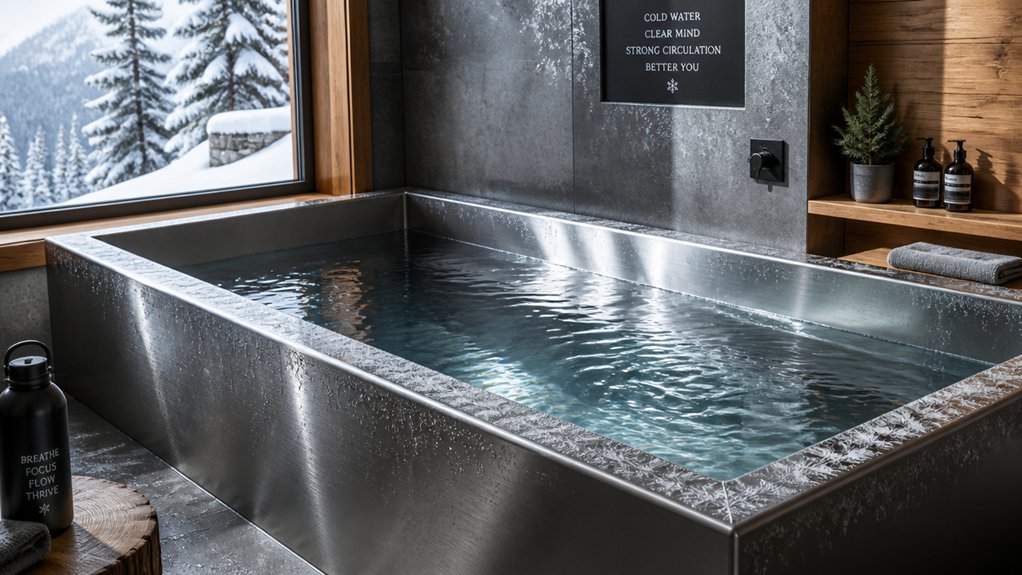
Choosing the right cold water temperature is key to safely reaping circulation benefits without risking adverse effects. For effective cold plunges, aim for water between 50°F and 59°F (10-15°C). This range provides blood vessel constriction without excessive risk.
Beginners should start with slightly warmer water around 55°F to 65°F to gradually adapt their blood flow response. Cold exposure can improve circulation and enhance muscle recovery, reduce inflammation, and support overall vascular health.
Water colder than 50°F increases the risk of hypothermia, frostbite, and impaired circulation, so avoid plunges at these temperatures. Always measure water temperature and limit immersion to 1-5 minutes for safe circulation boosts.
- Use a thermometer to guarantee proper water temperature
- Start gradually and listen to your body’s response
- Limit immersion time to prevent adverse effects
- Selecting the right temperature control options in your cold plunge tub can help maintain safe and consistent water temperatures.
Frequently Asked Questions
Does Cold Plunging Improve Circulation?
Cold plunging improves your circulation by causing your blood vessels to constrict and then dilate after you get out. This cycle boosts cardiovascular efficiency, reduces inflammation, and helps flush out waste, making your blood flow more effectively.
Do Cold Plunges Help Neuropathy?
Cold plunges may help neuropathy by improving blood flow and reducing inflammation, but they can also worsen symptoms if your circulation is poor. Always check with your doctor before trying cold water therapy for nerve issues.
Is There a Downside to Cold Plunge?
Yes, there are downsides. You might risk hypothermia, frostbite, or nerve damage with overly cold plunges. They can cause dizziness, elevate blood pressure, and impair muscle function, which could lead to injuries or health complications if you’re not careful.
What Are the Benefits of a 2-Minute Cold Plunge?
A 2-minute cold plunge boosts your circulation by constricting and then dilating blood vessels, reduces inflammation, enhances recovery, increases alertness, and strengthens cardiovascular health—all while minimizing hypothermia risks with brief exposure.