
During pregnancy, it’s safest to swim in water above 59°F (15°C), as colder temperatures can cause vasoconstriction, reducing uterine blood flow and raising cardiovascular stress. Avoid water below this temperature to prevent cold stress and hypothermia. Temperatures above 92°F (33.4°C) should also be avoided to prevent heat stress. To stay safe, limit immersion time and monitor your body temperature carefully. If you continue, you’ll discover essential tips for safely managing cold water exposure during pregnancy.
What Are the Benefits and Risks of Cold Water Swimming During Pregnancy?

Have you wondered whether cold water swimming during pregnancy is safe or beneficial? It can offer several benefits, like reducing inflammation, boosting mental health with dopamine and beta-endorphins, and improving metabolism and insulin sensitivity, which may help with gestational diabetes.
However, there are risks too. Cold water swimming can increase cardiovascular stress as vasoconstriction raises your heart rate and blood pressure. It might also affect uterine blood flow and fetal oxygen supply, and there’s an elevated hypothermia risk because pregnancy alters thermoregulation.
Early pregnancy cold exposure has been linked to a 20% increase in preterm birth risk before 34 weeks. To stay safe, guarantee proper acclimation, avoid swimming alone, and skip cold water baths if blood pressure is too high or low. Additionally, understanding how commercial cold plunge tubs maintain specific temperatures can help you manage cold exposure safely during pregnancy.
How Does Cold Water Affect Your Heart and Circulation When You’re Pregnant?
When you’re exposed to cold water, your blood vessels constrict, redirecting blood flow to crucial organs, which can raise your heart rate and blood pressure. Because pregnancy already increases blood volume and stress on your cardiovascular system, this reaction could add extra strain. The effects on uterine blood flow and fetal oxygen delivery aren’t fully known, so it’s important to approach cold water exposure carefully. Monitoring your blood oxygen levels with reliable devices can help ensure your safety during such sessions.
Cold Water’s Cardiovascular Impact
Cold water exposure prompts your blood vessels to narrow, a response known as vasoconstriction, which redirects blood to essential organs.
During cold water immersion, your heart works harder to maintain circulation, raising blood pressure — especially for pregnant women, whose blood volume increases by 30-50%. This heightened activity can place extra stress on your cardiovascular system.
- Vasoconstriction boosts blood flow to your core but may reduce uterine blood flow.
- Elevated heart rate might increase risk for those with pre-existing heart conditions.
- Blood pressure can spike during cold water activities, requiring caution.
- Pregnant women are more susceptible due to hormonal changes affecting vasoconstriction.
- The body eventually dilates vessels after immersion, but effects on fetal circulation remain uncertain.
- Incorporating material durability in safety equipment can help prevent additional risks during exposure.
Pregnancy Circulatory Changes
Pregnancy naturally causes significant changes in your cardiovascular system, with blood volume increasing by 30%-50% to support the developing fetus. This surge raises your blood pressure and heart rate, placing additional stress on your blood vessels and overall circulation.
When you enter cold water, vasoconstriction occurs, narrowing your blood vessels to redirect blood toward essential organs. This response further elevates your heart rate and blood pressure during cold immersion, adding to the cardiovascular workload. After exiting, vasodilation happens, restoring circulation toward normal, but how this impacts pregnant women’s cardiovascular system remains understudied.
The combined effects of pregnancy and cold water exposure may influence uterine blood flow and oxygen delivery, increasing the risks of cardiovascular strain and hypothermia, especially given your altered thermoregulation during pregnancy. Cold-weather-optimized device technology and careful monitoring can help mitigate some of these risks.
Can Cold Water Swim Impact Uterine Blood Flow and Baby’s Wellbeing?

When you swim in cold water during pregnancy, your body constricts blood vessels, which could affect uterine blood flow. While research doesn’t show direct harm to the baby, changes in fetal heart rate suggest possible impacts on oxygen or nutrients. It’s important to take into account your individual health and consult your doctor before taking part in cold water activities. Additionally, understanding the temperature control features of chillers can help ensure a safer and more comfortable experience during cold water immersion.
Cold Water Induces Vasoconstriction
Exposure to cold water during swimming triggers vasoconstriction, causing blood vessels to narrow and redirect blood flow toward essential organs.
In pregnancy, this response can increase your maternal heart rate and blood pressure. Although the effects of vasoconstriction on uterine blood flow, oxygen delivery, and fetal wellbeing aren’t well understood, concerns exist that cold water swimming and pregnancy might challenge your cardiovascular system.
It’s important to take these effects into account, especially since your blood volume increases by 30%-50% during pregnancy.
- Vasoconstriction reduces blood flow to extremities
- Possible impact on oxygen and nutrient delivery to fetus
- Higher maternal heart rate may strain cardiovascular system
- Unclear effects on uterine blood flow
- Further research is needed to clarify risks
- Water treatment solutions can help maintain water quality and safety during cold water exposure.
Uterine Blood Flow Risks
Cold water immersion causes vasoconstriction that redirects blood flow toward essential organs, but its effects on uterine blood flow and fetal wellbeing aren’t well understood. During cold water swimming, vasoconstriction may reduce uterine blood flow, raising concerns about fetal oxygen and nutrient delivery for pregnant women. Although no conclusive evidence links cold water exposure to fetal harm, the potential for decreased uterine perfusion warrants caution. Using a reliable digital thermometer can help monitor water temperature to ensure safety during cold water activities.
Pregnancy-induced cardiovascular changes, like increased blood volume and faster heart rate, could interact with cold-induced vasoconstriction, affecting uterine circulation. Due to limited research, expert guidelines advise pregnant women to avoid cold water swimming unless they’re regularly acclimated. More studies are needed to understand how cold water impacts uterine blood flow and overall fetal wellbeing during pregnancy.
Fetal Oxygen Supply Changes
Vasoconstriction from cold water immersion redirects blood flow to essential organs and raises your heart rate and blood pressure, but how this affects blood flow to the uterus and the fetus remains unclear.
During cold water swimming and pregnancy, maternal temperature changes can influence fetal oxygen supply, but the exact impact isn’t well understood. Cold-induced vasoconstriction may reduce uterine blood flow, potentially limiting oxygen and nutrients to the fetus. However, current evidence shows no direct fetal harm from cold exposure, though fetal heart rate variations have been observed.
- Cold water swimming might temporarily influence fetal oxygen levels.
- Vasoconstriction could reduce uterine blood flow, affecting oxygen delivery.
- Maternal temperature changes may impact fetal wellbeing.
- Pregnancy adaptions make predicting effects challenging.
- Limited research calls for caution with cold water activities.
Signs and Symptoms of Cold Stress and Hypothermia in Pregnant Swimmers?
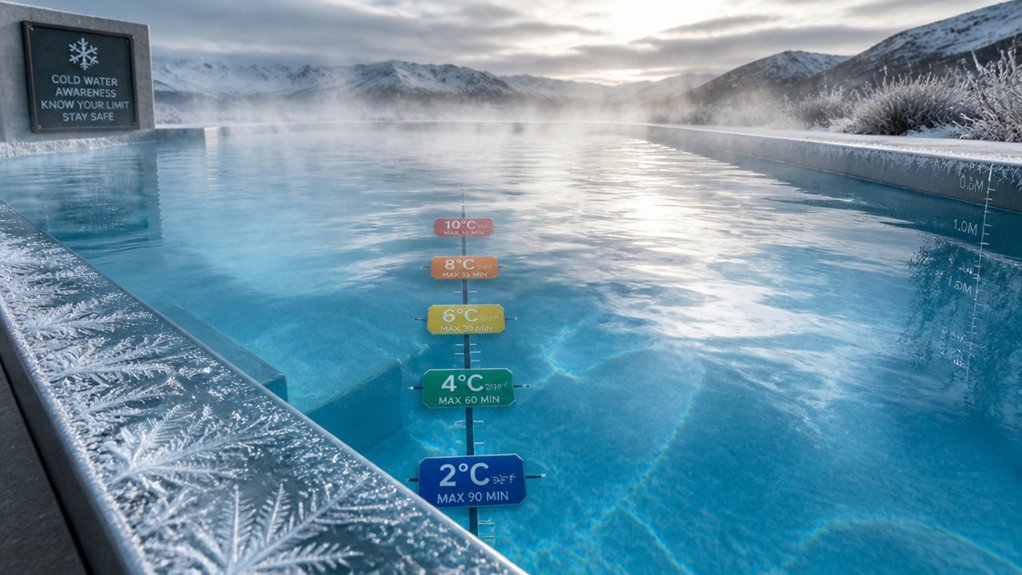
How can pregnant swimmers recognize the warning signs of cold stress and hypothermia? Cold stress symptoms include intense shivering, numbness, pale or bluish skin, dizziness, and fatigue, all signs of impaired thermoregulation.
Pregnant swimmers should watch for shivering, numbness, pale skin, dizziness, and fatigue as signs of cold stress and hypothermia.
Hypothermia’s symptoms are more severe and may include confusion, slowed speech, poor coordination, and decreased consciousness. Because pregnancy alters your body’s response, you mightn’t notice these signs immediately.
Your body’s cardiovascular response, like increased heart rate and vasoconstriction, can also cause dizziness or lightheadedness, risking your safety. If you experience uncontrollable shivering, confusion, or unsteady movements, it’s essential to exit the cold water immediately.
Recognizing these symptoms early can prevent serious complications for you and your baby, especially considering that cold retention duration affects thermal stability during cold exposure.
What Is a Safe Temperature Range for Cold Water Swimming During Pregnancy?
To stay safe while swimming in cold water during pregnancy, aim for temperatures around 59°F (15°C) or higher.
Water colder than that increases the risk of vasoconstriction and cardiovascular stress, especially with prolonged exposure. Monitoring water temperature and limiting immersion time are key to minimizing risks and ensuring safety.
Optimal Cold Water Range
Maintaining a safe cold water temperature during pregnancy requires careful attention to both comfort and health risks. The ideal cold water range for cold water swimming and pregnancy is generally around 59°F (15°C) or higher, helping prevent cold stress.
Moderate water temperatures, between 82°F and 84°F (28–29°C), have shown benefits like reducing pedal edema, making them safe for pregnant women. Exercise physiologists recommend avoiding water below 92°F (33.4°C) to prevent heat stress.
You should only swim in cold water if you’re regularly acclimated prior to pregnancy. Always consult with health professionals to guarantee safety, especially when outdoor conditions vary. Proper temperature choices help optimize benefits while minimizing risks during cold water swimming and pregnancy.
- Keep water above 59°F (15°C) for comfort and safety
- Moderate ranges (82–84°F) support health benefits
- Avoid water below 92°F (33.4°C) to prevent heat stress
- Acclimate gradually if you’re an experienced swimmer
- Seek professional guidance before attempting cold water swimming
Risks of Excess Cold
Exposing yourself to water that’s too cold can pose serious health risks during pregnancy, with temperatures below 59°F (15°C) markedly increasing the chance of cold stress and hypothermia.
Cold temperatures can cause vasoconstriction and cardiovascular strain in pregnant women, reducing uterine blood flow and oxygen delivery to the fetus. The risks associated with excessive cold exposure include a higher likelihood of preterm birth, especially if exposure occurs during the first seven weeks of pregnancy.
Staying in cold water too long or swimming in temperatures well below recommended ranges can impair your body temperature regulation, putting both you and your developing baby at risk. To protect your health and your baby’s development, it’s essential to understand and adhere to safe temperature limits during cold-water activities.
Temperature Monitoring Tips
What’s the ideal temperature range to keep your cold-water swimming safe during pregnancy? Staying within 59°F to 92.1°F (15°C to 33.4°C) helps prevent cold stress and overheating.
Monitor signs of cold stress like shivering, dizziness, or discomfort during immersion; these indicate you should cut back or exit the water. Avoid cold water swimming if temperatures drop below 59°F, as hypothermia risk increases, especially if you’re not acclimated.
Regularly check the water temperature with a reliable thermometer before entering. Pay attention to how your body responds and limit immersion to avoid cold stress. Practicing good temperature monitoring keeps your swim safe, allowing you to enjoy cold water swimming and pregnancy without unnecessary risks.
How to Monitor Your Body Temperature When Swimming in Cold Water?
Ever wonder how to guarantee your body stays safe while swimming in cold water during pregnancy? Monitoring your body temperature is essential. Use a waterproof digital thermometer or wearable body temperature monitor to track your core temperature during and after cold water swimming. Watch for signs of hypothermia, such as uncontrollable shivering, dizziness, or numbness, which signal dangerous temperature drops. Aim to keep your body temperature below 102.2°F (39°C) to prevent overheating, and avoid hypothermia risks. Regularly assess skin temperature and rely on feelings of warmth and comfort as additional cues. Having a companion monitor you for visible cold stress symptoms helps you exit water promptly if discomfort or abnormal temperature drops occur.
| Monitoring Method | Key Signs and Actions |
|---|---|
| Waterproof thermometer | Stop swimming if temperature drops dangerously low |
| Wearable body monitors | Exit water immediately at signs of cold stress |
| Subjective warmth assessment | Adjust activity or exit if feeling cold |
| Skin temperature check | Recognize surface cooling |
| Companion observation | Help respond to signs of hypothermia |
How Long Can You Stay in Cold Water While Pregnant?
How long you can safely stay in cold water while pregnant depends on several factors, including your body’s acclimation, overall health, and the water temperature.
Pregnant women should limit their time in cold water to prevent excessive cold stress, which can impact your physiological response. For cold water swimming, a few minutes is generally safest, especially at around 59°F (15°C).
Consider these points:
- Acclimate gradually to cold water to improve tolerance
- Avoid prolonged cold exposure to reduce hypothermia risk
- Watch for symptoms like dizziness, shivering, or discomfort
- Hydrate well before and after cold water swimming
- Consult your healthcare provider before swimming outdoors during pregnancy, as individual limits vary and safety is the priority.
Precautions to Take Before and During Cold Water Swimming When Pregnant?
Are you considering cold water swimming during pregnancy? To stay safe, make sure you’re regularly acclimated to cold water beforehand, which helps reduce physiological stress. Never swim alone—having someone nearby can prevent accidents from dizziness or hypothermia. Avoid cold water swimming if you have raised or very low blood pressure, as pregnancy already stresses your cardiovascular system, and cold immersion causes vasoconstriction. Keep your time in water brief—just a few minutes at around 59°F (15°C) or higher—and watch for symptoms like shivering or dizziness. Use safety measures such as non-slip mats, sturdy footwear, and stay hydrated. Choose swimming sites with tested water quality to prevent infection. Prioritize your safety and listen to your body at all times.
| Precaution | Reason | Key Tip |
|---|---|---|
| Acclimate first | Reduces physiological stress | Start practice pre-pregnancy |
| Never swim alone | Immediate help needed in emergencies | Always have a buddy |
| Monitor symptoms | Signs of overexposure (dizziness, shivering) | Exit water immediately |
| Use safety gear | Prevent injury and infections | Wear non-slip footwear |
Why Does Acclimatization Matter Before Cold Water Swimming in Pregnancy?
Acclimatizing to cold water before pregnancy helps your body handle the shock better and reduces cardiovascular stress. This preparation lowers the risk of hypothermia and improves blood flow, supporting your baby’s health.
Being accustomed to cold water makes swimming safer and more manageable during pregnancy.
Building Cold Tolerance Safely
Building cold tolerance gradually before pregnancy is essential because your body needs time to adapt to the physiological stresses of cold water immersion. This process—acclimatization—enhances your thermoregulatory function, allowing better maternal temperature regulation during cold water swimming and pregnancy.
Without proper adaptation, sudden cold exposure can trigger excessive vasoconstriction, risking uterine blood flow and fetal oxygen supply. Developing tolerance beforehand helps reduce hormonal and autonomic nervous system shocks, which supports safer immersion and minimizes fetal risks.
Remember, expert guidelines emphasize that only experienced, acclimated swimmers should attempt cold water swimming during pregnancy.
To build cold tolerance safely:
- Gradually increase exposure duration
- Maintain consistent cold water swims
- Monitor your body’s responses
- Focus on controlled breathing
- Consult a healthcare provider regularly
Reducing Hypothermia Risks
Since pregnancy alters the body’s response to cold exposure, proper acclimatization becomes critical in reducing hypothermia risks during cold water swimming. For pregnant women, acclimatization helps the body better regulate temperature, lessening the likelihood of hypothermia.
Regular exposure to cold water swimming and pregnancy guarantees you experience less vasoconstriction and cardiovascular stress, protecting uterine blood flow. The changes in the hypothalamic-pituitary-adrenal (HPA) axis during pregnancy can decrease cold sensitivity, making acclimatization essential to prevent unintentional hypothermia.
Without proper preparation, cold water immersion poses a greater risk of hypothermia, which has been linked—albeit rarely—to preterm birth. So, expert guidelines recommend cold water swimming in pregnancy only after establishing adequate acclimatization to minimize temperature-related stress.
What Should Pregnant Women With Heart or Blood Pressure Conditions Know?
If you have heart or blood pressure conditions during pregnancy, it’s essential to be cautious about cold water swimming. Cold immersion causes vasoconstriction, raising heart rate and blood pressure, which can worsen pre-existing heart disease or blood pressure issues.
Pregnancy already increases blood volume by 30%-50%, putting additional stress on your cardiovascular system. Engaging in cold water activities without proper guidance can be risky. Always consult healthcare professionals before swimming in cold water if you have these conditions. They can help assess your individual risk and provide personalized advice.
Keep these points in mind:
- Avoid cold water swimming if blood pressure is unstable
- Never swim alone with cardiovascular concerns
- Only engage if you’re regularly acclimated to cold water
- Monitor your symptoms closely during and after exposure
- Follow professional medical guidance at all times
When Should You Stop Cold Water Swimming in Pregnancy?
Knowing when to stop cold water swimming during pregnancy is essential for your safety. Pregnant women should stop cold water swimming if they aren’t regularly acclimated swimmers before pregnancy, as their bodies are more vulnerable to risks.
Stop cold water swimming immediately if you experience dizziness, shivering, discomfort, or signs of hypothermia during immersion. Swimming alone in cold water is strongly discouraged to prevent accidents or exhaustion.
If you have raised blood pressure or very low blood pressure, avoid cold water swimming altogether, since cold exposure can worsen cardiovascular stress. Also, discontinue swimming if the water temperature drops below 59°F (15°C) or if you’re immersed for more than a few minutes, to prevent cold stress and protect your health.
Does Pregnancy Stage Change the Safe Cold Water Temperature?
Research currently offers limited insight into whether and how pregnancy stages influence safe cold water temperatures. While experts recommend staying in water around 59°F (15°C) or higher, there’s no conclusive evidence that different pregnancy stages require changes in these temperatures.
Limited evidence suggests pregnancy stages don’t require changes in safe cold water temperatures. Stay informed and prioritize comfort.
Your body’s response to cold water swimming doesn’t markedly differ between early, mid, or late pregnancy, but individual comfort and health remain key.
- Early pregnancy may not necessitate colder water avoidance.
- Late pregnancy doesn’t automatically mean stricter cold water limits.
- Consistent acclimation benefits safety across all stages.
- Risk factors could vary based on individual health, not trimester.
- More research is needed to determine stage-specific safe cold water levels.
Ultimately, the emphasis stays on maintaining safe cold water conditions regardless of your pregnancy stage.
Tips for Preparing and Exiting Cold Water Safely During Pregnancy?
When preparing to enter or exit cold water during pregnancy, taking careful precautions can make the process safer and more comfortable. Pregnant women practicing cold water swimming should enter and exit slowly, using non-slip mats, sturdy footwear, and handrails if available, to prevent slips.
To stay safe, avoid swimming alone—having a companion guarantees help if you experience dizziness or sudden reactions. Limit cold water immersion to a few minutes to reduce cold stress and watch for symptoms like shivering or dizziness.
Hydrate well before and after cold water exposure to counteract increased urination and sweating. Choose well-lit, obstacle-free entry and exit points to minimize trip hazards.
These steps help guarantee safe cold water swimming during pregnancy.
Are There Alternatives to Cold Water Swimming for Similar Benefits During Pregnancy?
Are there safer alternatives to cold water swimming that still offer similar benefits during pregnancy? Yes. Cold showers provide cooling benefits with less whole-body exposure, making them a safer choice.
Cold showers are a safer way to enjoy cooling benefits without full-body exposure during pregnancy.
Swimming in moderately cold water can also boost circulation and mood without the risks of icy conditions. Cold compresses target specific areas like muscles or swelling, reducing discomfort safely.
Additionally, relaxation techniques such as meditation, mindfulness, and controlled breathing support stress relief and overall wellbeing. These alternatives help you enjoy some cold exposure benefits—improved circulation, mood lift, and reduced muscle pain—while minimizing cardiovascular risks.
Consider incorporating these options into your routine for safer, effective ways to experience the advantages of cold exposure during pregnancy.
Consult Your Healthcare Provider Before Cold Water Activities in Pregnancy?
Considering the potential risks involved, it’s vital for pregnant women to consult their healthcare providers before engaging in cold water activities.
Cold water swimming can cause cardiovascular stress, especially in those with elevated or very low blood pressure, making medical advice essential. Healthcare providers can evaluate your individual health, assess your blood pressure levels, and determine if cold exposure could impact uterine blood flow or fetal oxygen supply.
Consultation helps you understand risks related to cold-induced vasoconstriction and guarantees you’re sufficiently acclimated to cold water, reducing sudden cold stress risks.
Given the threat of hypothermia and other cold-related complications, professional guidance enables you to make informed decisions and adopt tailored safety measures during pregnancy, safeguarding both you and your baby.
Frequently Asked Questions
Is 72 Water Temperature Too Cold to Swim?
No, 72°F isn’t too cold to swim, especially if you’re pregnant and accustomed to cold water. It’s generally safe, helps reduce swelling, and improves circulation, but avoid swimming alone and speak to your healthcare provider if you have concerns.
Is 40 Degrees Too Hot for a Bath When Pregnant?
Yes, 40°C (104°F) is too hot for a bath when you’re pregnant because it can cause overheating and thermal stress, risking fetal development. Keep your bath water below 39°C (102.2°F) for safety during pregnancy.
Is a 90 Degree Pool Safe for Pregnancy?
Yes, a 90°F pool is safe for pregnancy since it falls within the recommended temperature range, helping you avoid overheating. Just keep monitoring how you feel and consult your healthcare provider if anything concerns you during your swim.
Is 98 Degree Water Too Hot for Pregnancy?
Yes, 98-degree water is too hot for pregnancy because it approaches normal body temperature, increasing risks of overheating and fetal harm, especially during prolonged immersion. Stick to cooler water below 92.1°F for safer exercise.