

To maximize benefits and stay safe, use your pre-workout once daily, ideally 20-30 minutes before intense sessions over 90 minutes. Cycling non-consecutive days or 3-4 times weekly helps prevent tolerance, jitters, and overstimulation. Incorporate rest days to support recovery and reduce side effects. Adjust frequency based on how your body responds, and watch for signs of overuse. Keep exploring to discover smarter strategies for optimizing your pre-workout schedule.
Why Your Pre-Workout Frequency Affects Your Results
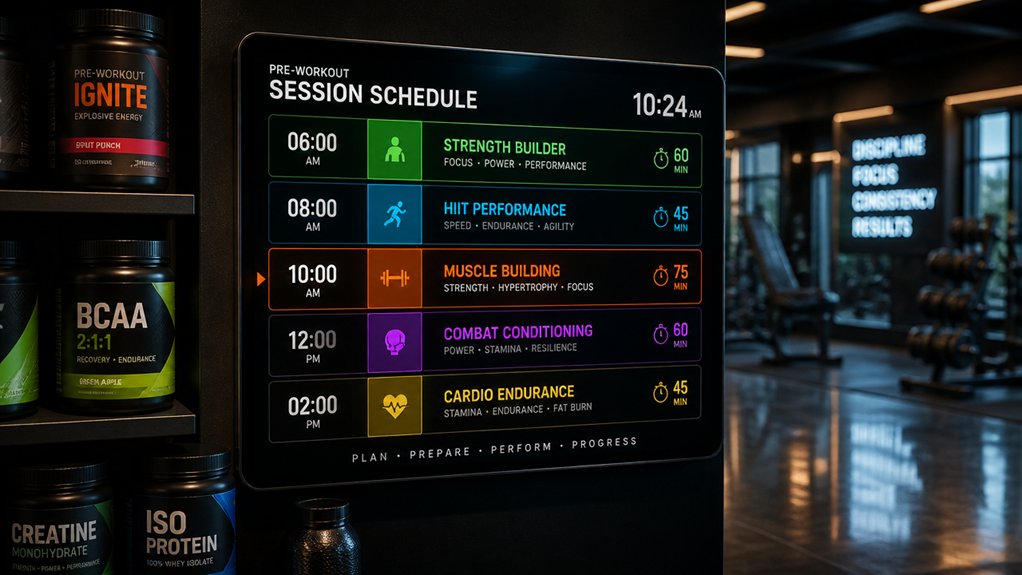
Your pre-workout frequency directly impacts your results because overusing supplements can lead to tolerance, diminishing caffeine’s stimulant effects over time. If you take pre-workout too often, your body adjusts, reducing its response and hindering performance gains. To prevent this, incorporating adaptogens or natural nootropics into your routine can help support mental and physical resilience, ensuring sustained benefits. Typically, taking pre-workout once per day about 20-30 minutes before exercise is ideal, maximizing benefits while minimizing side effects like jitteriness or insomnia. Consistent use around 3-4 times weekly aligns with high-intensity training, helping to boost endurance and peak power.
However, daily use or excessive intake increases risks such as heart palpitations. To sustain improvements and avoid habituation, cycling or rotating your pre-workout intake is recommended. This approach helps maintain stimulant effectiveness and supports consistent performance without adverse side effects.
How Your Body Reacts to Pre-Workout and Training Cycles
When you incorporate pre-workout supplements into your training, your body responds with immediate boosts in alertness and focus, typically peaking around 20-30 minutes after you take it. This surge enhances workout performance by increasing energy levels and mental clarity.
Pre-workout supplements boost alertness and focus, peaking 20-30 minutes after dosing to enhance workout energy and clarity.
Over time, your body adapts to ingredients like caffeine, which can lead to tolerance if you don’t cycle pre-workout. Additionally:
- Regular use improves short bursts of intense activity and power output.
- Beta-alanine’s benefits in delaying muscle fatigue build gradually with consistent dosing.
- Cycling pre-workout helps prevent tolerance, maintaining ingredient effectiveness.
- Training cycles combined with pre-workout enable you to optimize recovery and performance while avoiding overstimulation.
- Tracking your sessions with recovery tools can help you monitor how your body responds over time and adjust accordingly.
Understanding your body’s reactions guarantees you use pre-workout effectively without diminishing its benefits.
How Often Should You Use Pre-Workout for Safety and Effectiveness?
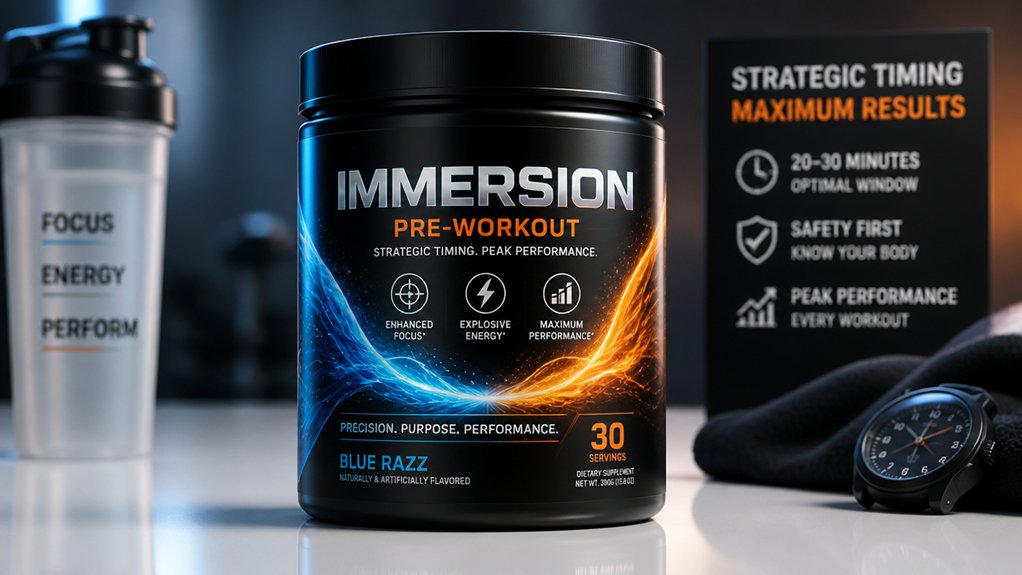
You should generally use pre-workout supplements only once a day, preferably before intense workouts, to maximize benefits and minimize side effects. Using them more often can lead to tolerance, making ingredients less effective and increasing the risk of jitters or sleep issues. Incorporating magnesium absorption into your routine can support muscle relaxation and recovery, especially when timed around the workout schedule. Consulting a healthcare professional can help you establish a safe and effective schedule based on your tolerance and goals.
Optimal Usage Frequency
To maximize safety and effectiveness, it’s best to limit pre-workout to no more than once daily, especially before intense workouts lasting over 90 minutes. This helps prevent jitteriness, insomnia, and cardiovascular stress caused by excessive caffeine intake. A well-timed dose also considers the importance of maintaining balanced electrolytes, such as sodium, potassium, and magnesium, to support muscle function and energy levels. Understanding the electrolyte balance means recognizing when to pause to avoid tolerance buildup and diminishing effects. Consider these tips:
- Use pre-workout primarily for high-intensity or endurance sessions.
- Cycle off pre-workout periodically to restore natural energy levels.
- Avoid multiple daily doses to reduce stimulant overload.
- Consult a healthcare professional if you have heart conditions or sensitivity to stimulants.
Following these guidelines guarantees you enjoy the benefits while minimizing side effects, keeping your fitness routine safe and effective.
Consider Tolerance Levels
Since overusing pre-workout supplements can lead to tolerance, it’s important to monitor how often you use them to maintain their effectiveness and guarantee safety. Tolerance develops when you use stimulants like caffeine frequently, reducing their impact over time. Incorporating pH-balanced formulas, which are gentler on the skin, can also help support overall skin health amid frequent use of supplements or exposure to various environmental factors. If you’re sensitive to caffeine or have pre-existing heart or anxiety conditions, you may experience more side effects, such as jitteriness or increased heart rate, with excessive use. Limiting your frequency—typically no more than 2-4 times a week—and cycling pre-workout intake by taking breaks of several days or weeks help prevent tolerance and reliance. This approach also preserves stimulant sensitivity, ensuring that each dose remains effective without requiring higher doses. Always listen to your body’s signals to avoid adverse effects and optimize safety.
Preventing Overuse Risks
Using pre-workout supplements more than once daily can greatly increase the risk of tolerance, side effects, and overstimulation. To avoid tolerance and adverse effects like jitters, insomnia, and elevated heart rate, it’s best to stick to once daily use. Additionally, being mindful of water treatment and maintenance practices can help optimize your recovery and overall performance.
For safety and maximum benefit:
- Limit intake to high-intensity or long-duration workouts (>90 minutes).
- Avoid using pre-workout supplements late in the day to prevent sleep issues.
- Guarantee at least 24 hours between doses to give your body a break.
- Consult a physician before regular use, especially if you have heart conditions, anxiety, or take medications.
Following these guidelines helps protect your health while maintaining the effectiveness of pre-workout supplements.
The Benefits of Using Pre-Workout on Non-Consecutive Days

Using pre-workout on non-consecutive days helps keep your tolerance in check, so the energy boosts stay effective over time. It also lowers your risk of side effects like jitters or trouble sleeping by not overdoing stimulants. Plus, scheduling your intake around intense workout days can support better recovery and safer use. Incorporating devices with adjustable speed settings can further optimize your pre-workout routines and ensure personalized intensity levels.
Reduced Tolerance Build-Up
Opting to skip pre-workout on some days is an effective way to prevent your tolerance from building up quickly. Regular use of pre-workout supplements can lead to tolerance buildup, diminishing caffeine’s energy and focus benefits.
By alternating days, you maintain the effectiveness of ingredients like beta-alanine and citrulline, which support endurance and delay fatigue. This approach also helps avoid escalating doses, reducing side effects such as jitters, nervousness, or insomnia. Additionally, it minimizes risks linked to continuous stimulant exposure, like increased heart rate or restlessness. Incorporating sustained-release formulations can further help manage tolerance levels and prolong effectiveness.
To maximize benefits:
- Preserve stimulant effectiveness
- Minimize side effects
- Maintain ingredient sensitivity
- Support long-term performance gains
Lower Side Effect Risks
When you choose to take pre-workout supplements on non-consecutive days, you considerably lower the risk of experiencing common side effects like jitters, insomnia, and increased heart rate. This approach helps prevent the buildup of stimulus tolerance, keeping caffeine’s energizing effects effective without needing higher doses.
By spacing out your intake, you reduce the likelihood of feeling jittery or experiencing insomnia caused by overstimulation and late-day caffeine consumption. Additionally, taking pre-workout intermittently limits beta-alanine–induced tingling, as your body isn’t constantly adapting to its effects.
Cycling your use allows your nervous system to recover, minimizing nervousness and urination issues that can arise from daily stimulant use. Overall, this strategy enhances safety while maintaining the benefits of your pre-workout routine.
Enhanced Recovery Potential
By spacing out your pre-workout sessions on non-consecutive days, you give your body a chance to recover fully from stimulant exposure, boosting overall training benefits. Cycling pre-workout intake prevents tolerance buildup to caffeine and other active ingredients, keeping their effects potent. This approach also minimizes side effects like jitteriness, insomnia, and increased heart rate.
Additionally, using pre-workout supplements intermittently supports enhanced recovery by allowing your muscles to optimize the benefits of ingredients like beta-alanine and creatine. Non-daily use aligns with research showing peak benefits during short bursts of intense activity, without the constant overstimulation that hampers sleep and natural energy regulation.
- Reduces tolerance buildup
- Maintains stimulant effectiveness
- Prevents side effects
- Optimizes recovery and muscle benefits
Designing a Weekly Pre-Workout and Recovery Routine
Creating an effective weekly pre-workout and recovery routine requires balancing high-intensity training days with sufficient rest to prevent overstimulation and support recovery. Use pre-workout supplements primarily on days with high-intensity or endurance workouts, taking them 20-30 minutes before exercise for best results.
Limit intake to once daily and avoid consecutive days to reduce the risk of overstimulation and help your muscles recover. Incorporate one to two full rest or low-intensity days each week without pre-workout to promote muscle recovery and prevent tolerance buildup.
Pay attention to your individual tolerance, adjusting the frequency based on workout demands and how your body responds. Pair your routine with good nutrition, hydration, and sleep to maintain peak performance and recovery throughout the week.
Signs You’re Overdoing It With Pre-Workout : What to Watch For
Exceeding the recommended amount of pre-workout supplements can lead to noticeable side effects and health risks. Overuse often manifests as persistent tingling sensations, beyond typical beta-alanine effects, or digestive issues like nausea and cramping.
Watch for signs of overstimulation, such as:
- Increased heart rate and jitters
- Restlessness and difficulty sleeping
- Heightened anxiety or tremors
- Fatigue that persists despite regular use
Excessive caffeine intake, especially beyond 400 mg daily or 6 mg/kg body weight, amplifies these effects. If you notice these symptoms, it’s a clear sign you’re overdoing it.
Pausing or reducing intake helps prevent more serious health issues and guarantees your pre-workout routine remains effective and safe.
Tips to Adjust Your Pre-Workout Frequency for Better Performance
To optimize your performance and reduce the risk of side effects, it’s important to fine-tune how often you use pre-workout supplements. Stick to taking pre-workout once daily, ideally 20-30 minutes before your most demanding workout to boost energy and focus without overstimulation.
Adjust your pre-workout frequency based on workout intensity and duration; use it mainly for sessions over 90 minutes or intense training days. To prevent tolerance buildup and side effects like feeling jittery, avoid daily use on lighter days and cycle your pre-workout every few weeks.
Pay attention to your personal tolerance, especially to caffeine above 3-6 mg/kg body weight, and reduce intake if you experience nervousness or heart palpitations. Always consult a healthcare professional if you have health conditions.
Frequently Asked Questions
What Is the 3-3-3 Rule for Gym?
The 3-3-3 rule involves doing three workout sessions per week, with three exercises targeting three muscle groups each session. You should schedule pre-workout supplements 20-30 minutes before each workout to optimize energy and focus.
How Often Should You Cycle Preworkout?
You should cycle your preworkout every 4 to 8 weeks, taking a 1 to 2-week break, to prevent tolerance, reduce side effects, and maintain effectiveness. Always consult a healthcare professional for personalized guidance.
What Is the 2 2 2 Rule in the Gym?
The 2-2-2 rule in the gym means doing 2 exercises, 2 sets each, over 2 days per week. It helps you balance training and recovery, boosting strength and endurance without overtraining or causing injury.
Can You Take Pre-Workout on GLP-1?
You can take pre-workout on GLP-1 medications, but proceed with caution. Start with lower doses, monitor your body’s response, and consult your doctor to guarantee safety, especially considering increased cardiovascular and gastrointestinal risks.