To optimize alternating hot–cold therapy, start with 1-2 sessions daily, each lasting about 20 minutes, and alternate 1 minute cold with 3 minutes heat, repeating three times. As you heal, gradually increase duration, cycles, and frequency, mindful of your skin’s response. Use cold after heat to reduce inflammation and finish with cold to boost recovery. If you keep adjusting your routine smartly, you’ll discover more ways to enhance your healing process.
What Are the Benefits of Hot and Cold Therapy for Recovery?
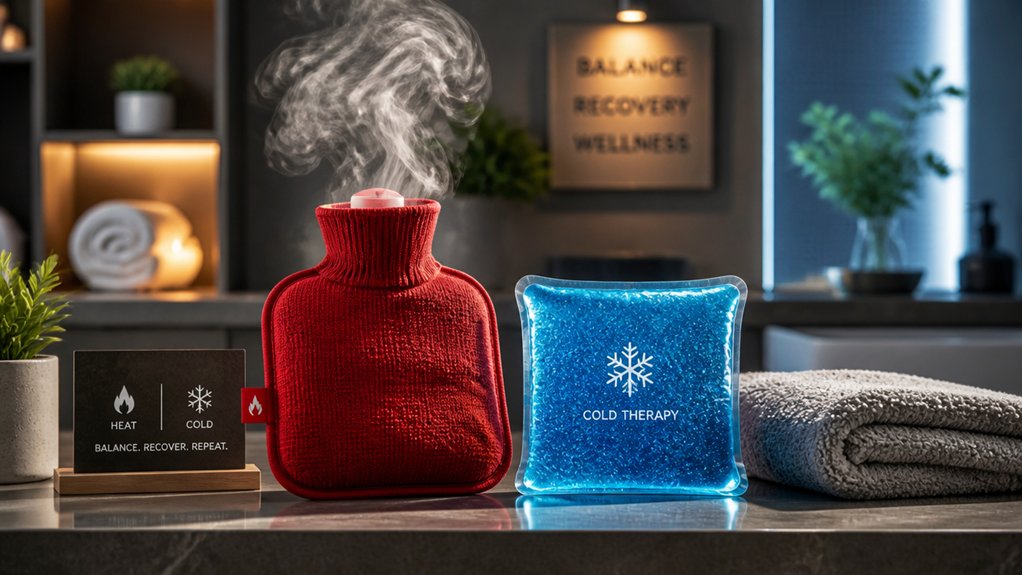
Have you ever wondered why alternating hot and cold therapy is so effective for recovery? The key lies in how it stimulates blood flow and reduces inflammation. Alternating between heat and cold causes vasodilation and vasoconstriction, which accelerates healing. Using the appropriate heat lamp setup ensures safe and effective temperature control during therapy. Cold therapy numbs pain and reduces swelling by constricting blood vessels, while heat relaxes muscles, alleviating tension and spasms that can hinder recovery. This contrast therapy prevents muscle tension buildup and promotes overall relaxation.
What Factors Affect How Often You Should Use Hot and Cold Therapy?
The frequency at which you should use hot and cold therapy varies depending on several key factors, including the stage of your injury and your individual sensitivity.
Therapy frequency depends on injury stage and personal sensitivity for safe, effective pain relief.
For acute inflammation, limiting cold therapy to about 20-minute sessions every few hours during the first 24–48 hours is important, while contrast therapy is typically done 1–2 times daily after swelling decreases.
Your pain tolerance and skin sensitivity also influence how often you can safely switch between hot and cold. Those with underlying conditions like circulatory issues need to be cautious with heat application.
Chronic conditions or muscle soreness may tolerate more frequent or longer heat sessions. Monitoring reactions such as skin redness or increased swelling helps you adjust frequency to avoid irritation or complication.
Additionally, choosing the appropriate recovery cream—such as magnesium-based, arnica-containing, or menthol cooling formulations—can enhance the benefits of your therapy improved recovery.
How Often Should Beginners Use Hot and Cold Therapy?
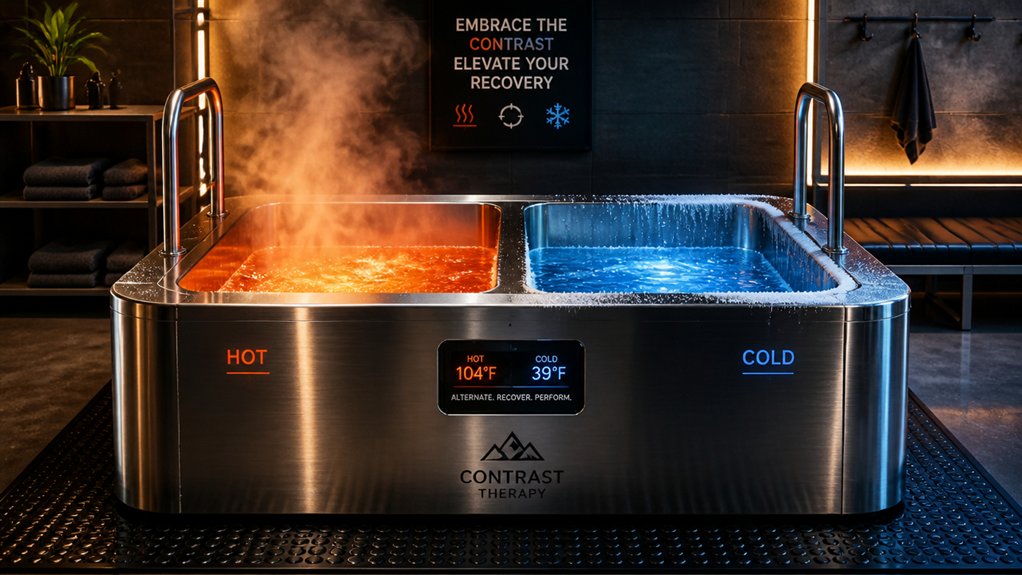
As a beginner, you should start with 1 to 2 sessions daily, keeping each one around 20 minutes. Focus on gradually increasing your exposure while monitoring your skin and comfort levels closely. Always pay attention to your body’s signals to prevent skin damage or overstimulation. Incorporating a variety of heating technology can help you find the most comfortable and effective contrast therapy routine.
Start Slowly and Gradually
Starting with hot and cold therapy gradually is essential to avoid overwhelming your body. You should start slowly and build up as your body becomes accustomed to the temperature changes.
Begin with 1 to 2 times daily, focusing on short application times—such as 1 minute cold followed by 3 minutes heat, repeated for around three cycles. Use cool rather than ice-cold cold, and warm rather than very hot heat, to prevent discomfort or skin injury.
As you gain confidence, gradually increase the duration and intensity only if you feel comfortable, avoiding pain or adverse skin reactions. Make sure to monitor your body’s response over several days before considering more frequent sessions.
This cautious approach helps guarantee safety and maximizes the benefits of hot–cold therapy. Incorporating quiet, energy-efficient chillers can also help create a relaxing environment, encouraging longer and more comfortable sessions.
Limit Sessions to 20 Minutes
To get the most benefit from hot–cold therapy without risking skin irritation or other issues, it’s important to set clear time limits for each session. Generally, limit alternating hot and cold to about 20 minutes total. This helps prevent skin irritation and prevents symptoms from worsening.
For beginners, aim for contrast therapy once or twice daily, with each session lasting no more than 20–30 minutes, including both heat and cold phases. Start with brief intervals, like 1 minute cold, then 3 minutes heat, repeating two to three times. Always finish with a cold application to reduce inflammation.
- Use cold, heat, and contrast therapy in moderation
- Stick to 20-minute sessions to avoid overuse
- Gradually increase time as tolerated
- Maintain consistent scheduling for best results
Additionally, choosing the right foam roller with firm density and support can optimize your preparation and recovery routine.
Monitor Skin and Comfort
Monitoring your skin and comfort during hot and cold therapy is essential, especially for beginners. You should regularly check the skin’s response to prevent injuries like burns or frostbite.
For cold application, limit sessions to about 1 minute, then switch to heat for 3-4 minutes, repeating up to three times. Always place a thin cloth barrier between therapy packs and your skin to reduce risk and check the skin every few minutes.
If you notice abnormal redness, discomfort, or dark red areas, stop or adjust the therapy immediately. Keep in mind, avoid exceeding 20 minutes on one area, and increase duration gradually if the skin tolerates it well.
Monitoring guarantees you stay safe while gaining the benefits of hot–cold therapy.
How Can You Adjust Therapy Frequency as You Heal?
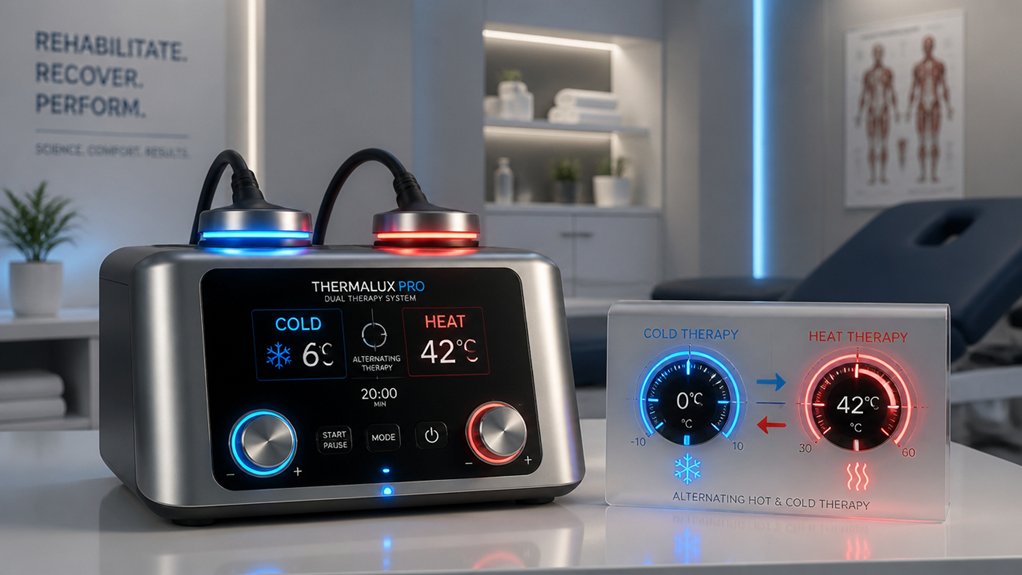
As you heal, pay close attention to how your body responds to contrast therapy and adjust the frequency accordingly. A water temperature control can significantly influence how your body reacts and recovers, so ensure your setup allows for precise adjustments. If you notice increased pain or irritation, cut back on sessions to prevent setbacks, but if your symptoms improve, consider gradually increasing them. Remember to listen to your body and consult your healthcare provider if symptoms persist or worsen.
Monitor Symptom Changes
Keeping an eye on how your symptoms change is key to adjusting your hot–cold therapy effectively. As you progress, monitor your symptom improvement and watch for signs of increasing inflammation or pain.
If inflammation decreases and symptoms improve, you can reduce the frequency from twice daily to once daily. Be attentive to the skin coloration; persistent dark red or burning sensations mean you should stop or slow down therapy.
Watch for diminishing returns or worsening symptoms like increased swelling, redness, or prolonged pain, which indicate that therapy needs to be decreased or paused.
Track changes carefully so you can:
- Adjust duration of heat phases gradually
- Increase sessions if symptoms are stable
- Maintain the proper cold-to-heat ratio
- Cease therapy if adverse skin reactions occur
- Consider temperature regulation features to optimize recovery.
Adjust Based on Comfort
Adjusting the frequency of hot–cold therapy based on your comfort guarantees you avoid overstressing your healing tissues.
If you’re using contrast therapy, start with 1-2 sessions per day, gradually increasing as your body adapts. Alternating hot and cold helps reduce inflammation, but therapy requires monitoring your skin closely—look for redness, discomfort, or signs of burns. If you notice irritation, reduce the frequency or duration.
As your healing progresses, consider increasing the duration of heat phases or adding more cycles before upping session frequency. To avoid setbacks, decrease sessions during periods of fatigue or pain.
Applying heat with massage stones or other methods can be beneficial, but always listen to your body and adjust based on how you feel.
Additionally, incorporating appropriate water treatment solutions can help maintain water quality and extend the longevity of your cold plunge sessions, supporting your overall recovery process.
Increase Gradually Over Time
Gradually increasing the frequency of your contrast hot-cold therapy allows your body to adapt safely as you heal. Start with once daily sessions of 20-30 minutes and gradually increase to twice daily as your inflammation and pain decrease.
To optimize treatment, consider these tips:
- Extend heat application during hot phases by 1-2 minutes without exceeding safe temperature limits.
- Increase the number of contrast cycles from two to three per session cautiously.
- Adjust the frequency based on symptom improvement, monitoring skin response closely.
- Maintain a consistent treatment schedule for 2–3 weeks, reassessing progress regularly to align with healing stages.
How Often Do Athletes Use Hot and Cold Therapy for Best Results?
How often should athletes use hot and cold therapy to optimize recovery? Typically, using hot and cold in 1 to 2 contrast therapy sessions per day yields the best results. Each session usually lasts 20-30 minutes, with alternating hot and cold water, often switching every 1 minute of cold with 3 to 4 minutes of heat, repeated about three times.
Starting contrast therapy during the subacute phase, 48-72 hours after injury, helps reduce inflammation, boost circulation, and ease pain. Athletes often include these sessions post-exercise to diminish lactic acid buildup and accelerate muscle recovery.
To avoid adverse effects like swelling or spasms, finish each session with a cold phase and limit total applications over several days or weeks.
Does Seasonal Change Influence Your Therapy Routine?
Have you noticed that your therapy routine might need tweaks as the seasons change? Cold and hot therapy routines are affected because temperature influences recovery and circulation.
Seasonal changes require adjusting your hot and cold therapy for optimal recovery and comfort.
In summer, you can often increase cold plunge frequency to 4-7 times weekly, as ambient heat speeds recovery. During winter, the cooler air and slower rewarming mean reducing sessions to 2-4 times weekly.
Indoor temperature shifts also impact therapy comfort, requiring adjustments in heat therapy duration or intensity. Seasonal changes affect how your body regulates temperature, so balancing hot and cold sessions guarantees peak results.
- Increase cold therapy in summer for quicker recovery
- Limit cold sessions in winter to avoid chill
- Adjust heat therapy based on indoor temperature
- Maintain routine consistency for sustained benefits
When Should You Stop or Change Your Hot and Cold Therapy Routine?
Knowing when to stop or adjust your hot and cold therapy is essential to avoid risking further injury or adverse effects. Stop using therapy immediately if you experience pain beyond slight discomfort or notice skin turning dark red, which may indicate burns or tissue damage.
Discontinue if inflammation worsens, swelling increases, or symptoms like redness, warmth, or fever suggest infection or heat intolerance. During the first 48–72 hours after an acute injury, avoid contrast therapy; stick to ice to reduce swelling effectively.
If you have circulatory issues, heart conditions, cold urticaria, Raynaud’s syndrome, or impaired sensation, modify or stop therapy to prevent adverse reactions. Always consult a healthcare provider if symptoms persist after 2–3 days or if you experience severe pain, stiffness, or movement difficulties.
Frequently Asked Questions
How to Alternate Between Hot and Cold Therapy?
You should start with cold therapy for 10-20 minutes, then switch to heat for 10-15 minutes, repeating 3 cycles. End with cold, and make certain you’re comfortable, stopping if you feel excessive pain or skin issues.
Why Do I Alternate Between Hot and Cold?
You switch between hot and cold because your body tries to regulate inflammation or hormonal fluctuations, causing blood vessels to expand and contract. Stress, diet, or health issues may also trigger this oscillation to balance internal temperatures.
In What Order Should You Do Hot and Cold Therapy?
You should start with cold therapy to reduce inflammation, then follow with heat to promote circulation and relax muscles. Repeat this cycle two to three times, always ending with cold to prevent swelling.
Does the Hot Cold Method Work?
Yes, the hot-cold method works by improving circulation, reducing inflammation, and providing pain relief. You cycle between heat and cold, typically 1 minute cold with 3-4 minutes heat, to enhance recovery and soothe muscles effectively.