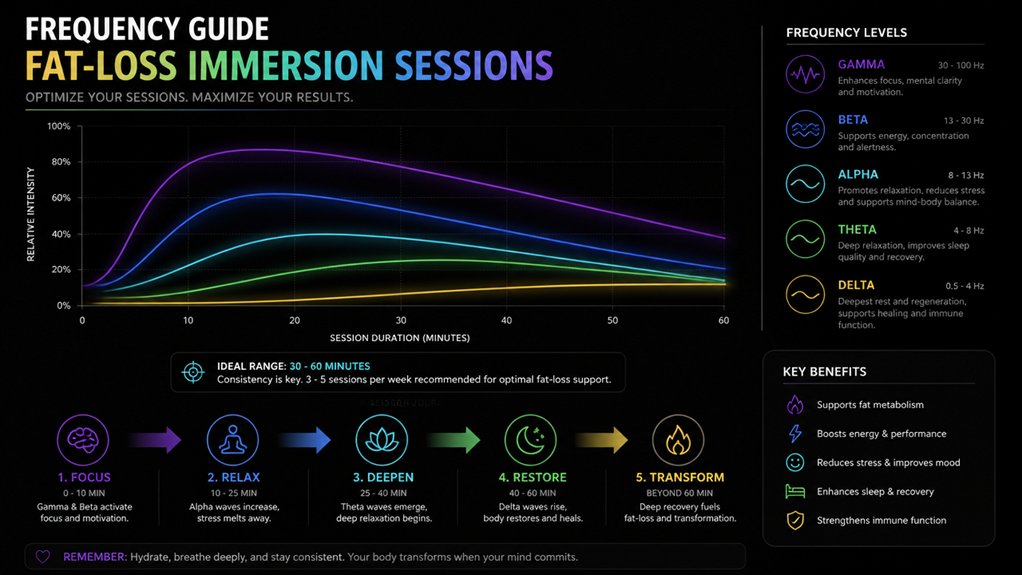
For fat-loss immersion sessions, aim for 2 to 4 sessions weekly, each lasting 3 to 10 minutes in water between 50-59°F. Consistency boosts metabolic effects like increased norepinephrine and brown fat activity, enhancing fat burning. Avoid overdoing it to prevent hormonal stress and reduce recovery. Adjust frequency based on how your body responds, and always monitor signs of fatigue or discomfort. Keep exploring to discover how to optimize your cold plunge routine further.
How to Cold Plunge Safely as a Beginner
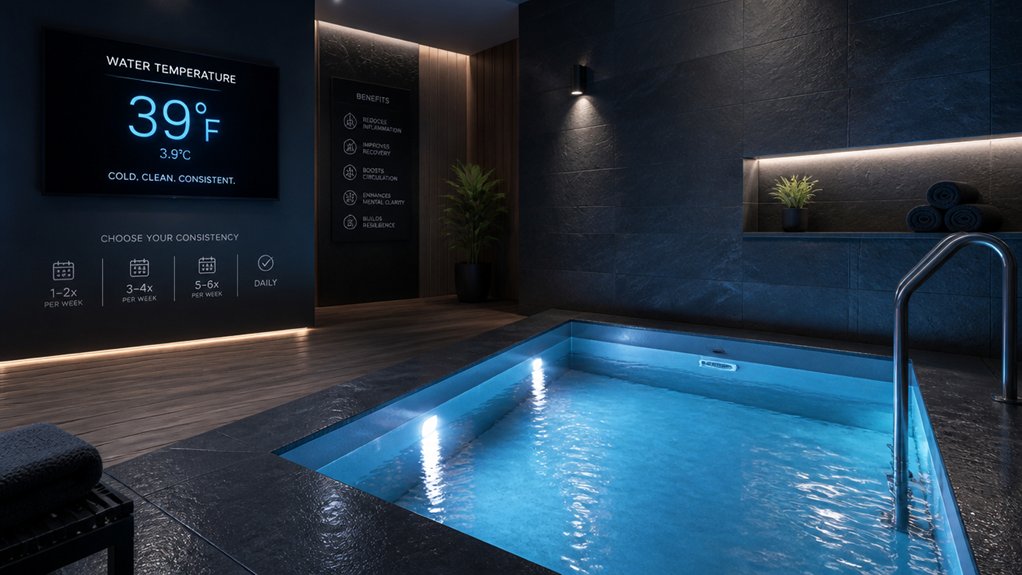
If you’re new to cold plunging, it’s important to start slowly to guarantee safety and maximize benefits. Begin with sessions at 60-65°F (15-18°C) for 1-2 minutes, two to three times weekly. Focus on gradual increasing duration and lowering temperature over 4-8 weeks, allowing your body to adapt safely. Stay attentive to how you feel during and after each plunge—if you experience excessive fatigue, poor sleep, or mood changes, adjust your frequency or duration. Cold plunging can support fat loss by boosting your energy balance, but avoid it immediately after resistance training; wait at least four hours for adequate recovery. Incorporate rest days to maintain overall balance, ensuring consistent weekly sessions without overtaxing your body. Additionally, consider the importance of proper water treatment and insulation to keep your cold plunge safe, effective, and comfortably maintained.
How Often Can Beginners Cold Plunge to Maximize Benefits and Minimize Risks
How often you should cold plunge as a beginner balancing safety and benefits involves strategic frequency choices. Starting with 2-3 sessions per week at 60-65°F (15-18°C), lasting 1-2 minutes, helps you adapt safely and minimizes adverse effects.
As your tolerance improves, you can gradually increase the frequency to 3-4 times weekly and extend durations to 3-5 minutes over 4-8 weeks. Keep total weekly exposure around 11 minutes for ideal physiological benefits.
Remember to avoid cold plunging immediately after strength training—wait at least four hours—to protect muscle recovery. During periods of fatigue or poor sleep, reduce your frequency to prevent risks.
Properly balancing your cold plunge frequency enhances adaptation, maximizes benefits, and supports your overall health journey effectively. Understanding the importance of water treatment and filtration ensures your water quality remains safe and hygienic during regular use.
What Is the Recommended Cold Plunge Frequency for Intermediate and Advanced Users
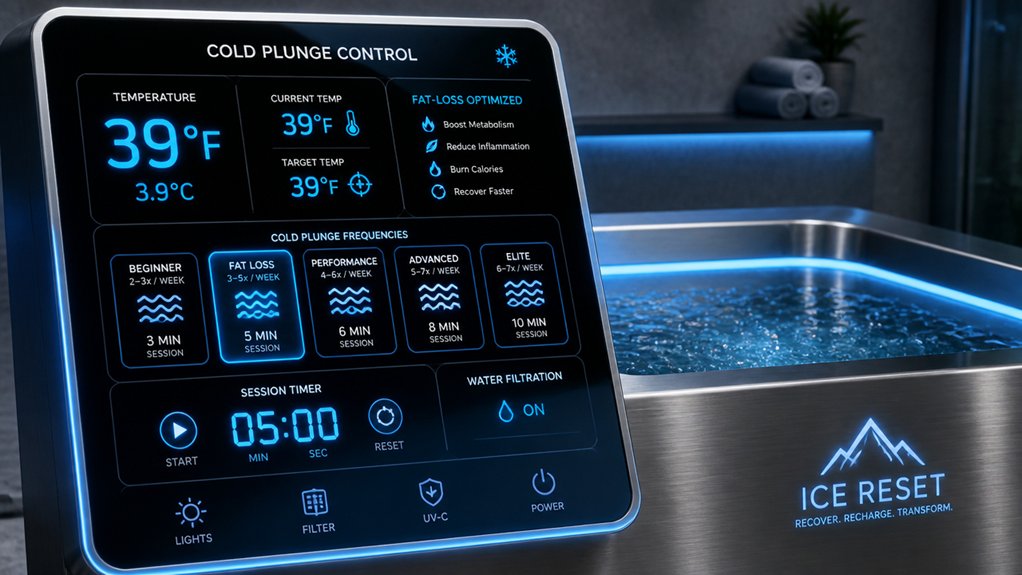
For intermediate and advanced users, a typical cold plunge routine involves 4–6 sessions per week, totaling around 11–40 minutes. Adjust your frequency based on your recovery, fatigue, and specific goals to avoid overexposure. Monitoring how your body responds helps you optimize benefits while minimizing risks. Incorporating insulation efficiency considerations can help maintain consistent water temperatures during prolonged sessions.
Optimal Weekly Frequency
Once you’ve established a consistent cold plunge routine for 3 or more months, you can typically handle daily sessions safely, usually lasting 2-5 minutes at temperatures between 55-60°F (13-15°C).
For peak fat-burning and increased caloric deficit, aim for a weekly frequency of 4 to 7 sessions, based on your recovery and fatigue levels. Here’s a guide:
- 4-5 sessions: Ideal for balancing recovery with fat loss, especially when combining with endurance training.
- 3-4 sessions: Recommended for strength athletes to avoid blunting muscle gains while still enhancing recovery.
- 6-7 sessions: Suitable for endurance athletes seeking to boost performance and decrease fat percentage.
- Adjust as needed: Reduce sessions during fatigue, poor sleep, or mood disturbances to optimize fat loss and muscle preservation.
Adjusting Based on Goals
When determining the ideal cold plunge frequency for intermediate and advanced users, it’s essential to prioritize your recovery and overall health while aligning with your specific goals.
If your focus is fat loss, a frequency of 4 to 6 sessions per week can maximize metabolic benefits and calories burned, especially when sessions last 3 to 10 minutes at 55-60°F.
For muscle preservation, spacing out sessions to avoid impairing recovery from exercise is vital, so limiting cold plunges to 3-4 times weekly post-strength training is recommended.
During periods of fatigue, poor sleep, or mood changes, reducing frequency by 1-2 sessions supports better adaptation. Adjusting your cold plunge routine based on these cues helps optimize fat loss, recovery, and overall progress while safeguarding your health.
Monitoring Recovery and Fatigue
Monitoring your recovery and fatigue levels is essential in determining the ideal cold plunge frequency for intermediate and advanced users. If recovery indicators like fatigue, mood disturbances, or elevated resting heart rate surface, reduce session frequency by 1-2 times weekly.
To effectively track this:
- Watch for shifts in energy levels and mood.
- Measure resting heart rate, especially if it’s elevated.
- Observe signs of accumulated fatigue and poor sleep.
- Adjust frequency based on training goals and adaptation, typically 4–6 times weekly.
- Incorporate thermal insulation quality considerations, as better insulation can influence cooling efficiency and impact recovery perceptions.
Strength athletes usually limit to 3–4 sessions per week and avoid post-strength workouts to prevent muscle gains impairment.
Balancing subjective mood and objective markers helps prevent overuse and supports consistent progress.
How to Adjust Your Cold Water Therapy Routine Based on Goals and Lifestyle
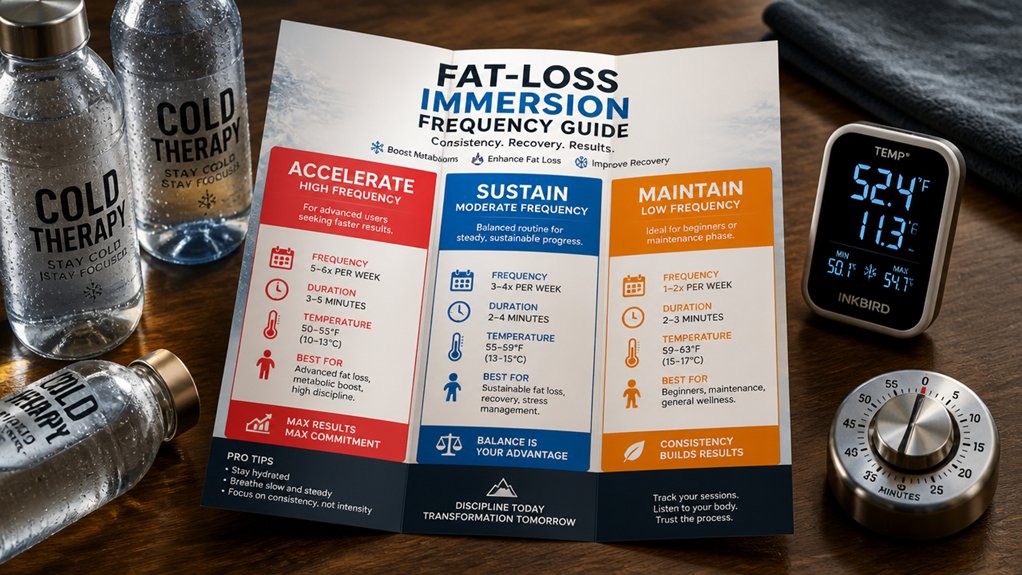
Wondering how to tailor your cold water therapy routine to fit your goals and lifestyle? Start with 2-3 sessions per week, lasting 1-2 minutes at 60-65°F, gradually increasing duration and lowering temperatures over 4-8 weeks to build tolerance safely.
Begin with 2-3 weekly sessions of 1-2 minutes at 60-65°F, gradually increasing duration and intensity over 4-8 weeks.
For fat-loss and metabolic benefits, aim for a total weekly exposure of at least 11 minutes, spread across multiple sessions of 3-5 minutes at 50-59°F.
If you’re experienced, you can perform 4-7 cold plunges weekly, each lasting 3-10 minutes, to optimize fat-burning while monitoring recovery.
Schedule your cold sessions away from intense strength training by at least four hours to avoid hindering muscle gains.
During fatigue or poor sleep, reduce frequency to support overall recovery and prevent overtraining.
Additionally, selecting a high-quality plunge tub with proper insulation and filtration, as described in the material quality section, can enhance your comfort and safety during these routines.
How to Recognize Signs You Should Reduce or Pause Your Cold Plunge Sessions
Noticing how your body responds during or after cold plunge sessions is key to ensuring safe and effective practice. If you experience persistent fatigue, it signals you may need to reduce frequency to support recovery. Elevated resting heart rate and poor sleep quality also indicate your body isn’t recovering well, which can hinder fat oxidation goals related to fat loss.
Increased mood disturbances or irritability might be signs of overstimulation, suggesting you should pause sessions. Prolonged muscle soreness or delayed recovery after physical activity could mean cutting back so your muscles adapt properly.
Finally, excessive shivering, inability to warm up, dizziness, numbness, or chest discomfort are serious signs to immediately reduce intensity or pause cold plunges to protect your health. Listening to these signs helps optimize your fat-loss immersion routine safely. Choosing the right blood oxygen monitor can also help you track how your body is responding to cold stress measurement accuracy and ensure your readings are reliable during these sessions.
What Scientific Evidence Tells Us About Cold Plunge Frequency and Fat Loss
Scientific studies demonstrate that cold plunge sessions conducted 2 to 4 times weekly, lasting 3 to 10 minutes at temperatures between 50-59°F (10-15°C), effectively stimulate fat loss mechanisms. This frequency encourages metabolic adaptations, boosting fat oxidation and activating brown fat thermogenesis. Short, consistent cold immersion sessions raise norepinephrine levels, enhancing your body’s ability to burn fat. Higher frequencies up to daily can be safe for experienced individuals, but overdoing it may cause hormonal stress and diminish fat loss benefits. Timing sessions away from strength training guarantees peak results. Additionally, incorporating adaptogen blends can support stress resilience and recovery during cold plunge routines.
Frequently Asked Questions
How Long Should Each Cold Plunge Session Last for Optimal Fat Loss?
You should aim for cold plunge sessions lasting about 3 to 5 minutes, as this duration helps optimize fat loss without risking hypothermia. Start slowly, listen to your body, and gradually increase your time as tolerated.
Can Cold Plunging Replace Traditional Exercise for Fat Reduction?
Cold plunging can’t replace traditional exercise for fat reduction. It may boost metabolism temporarily, but sustainable fat loss requires consistent physical activity and a balanced diet. Use cold plunges alongside exercise rather than as a substitute.
What Are the Best Times of Day to Cold Plunge for Weight Loss?
You should cold plunge in the morning to boost metabolism and energy, or after workouts to aid recovery and amplify fat burning. Avoid late-night dips, as they might disrupt sleep and hinder your weight loss efforts.
How Do Cold Plunge Frequencies Differ for Various Body Types?
Your cold plunge frequency should vary based on your body type; leaner individuals may tolerate more frequent sessions, while those with higher body fat seek less intense routines. Listen to your body’s responses to tailor your immersion schedule effectively.
Are There Specific Signs I Should Stop Cold Plunging Altogether?
Yes, you should stop cold plunging if you experience chest pain, dizziness, numbness, severe shivering, or any unusual symptoms. Always listen to your body, consult a healthcare professional, and avoid plunging if you’re pregnant or have health issues.