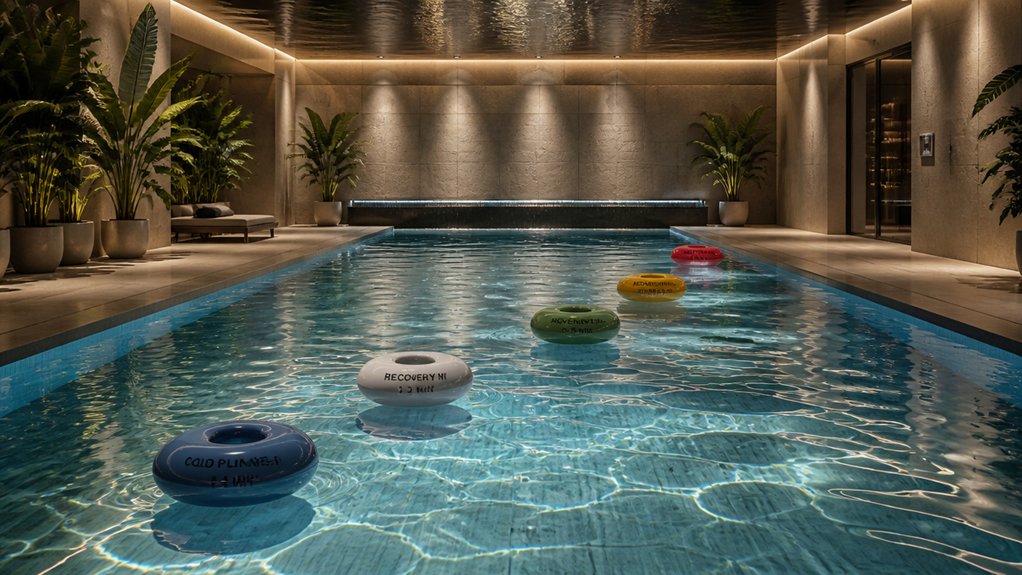

Morning immersion frequency matters because it trains your nervous system, balancing hormones and boosting resilience over time. Regular cold dips heighten norepinephrine and beta-endorphin levels, which improve focus, mood, and recovery. Consistency helps reduce your perception of cold stress and strengthens your body’s ability to adapt, making recovery more efficient. By sticking to a routine, you support long-term hormonal and nervous system health. Keep going, and you’ll uncover even more ways to optimize your recovery journey.
Why Morning Cold Plunges Boost Your Recovery

Starting your day with a cold plunge can greatly enhance your recovery by activating your body’s stress response systems early on. Morning cold plunges trigger a 200-300% increase in norepinephrine, which improves your focus, mood, and reduces mental stress, all helping your recovery process.
Immersing in cold water at 38-50°F for 1-3 minutes stimulates your sympathetic nervous system, regulating stress responses crucial for efficient physiological recovery. Regular cold exposure builds stress resilience and supports hormonal balance throughout the day.
These morning cold plunges also boost alertness and energy by releasing beta-endorphins, preparing you for workouts and recovery routines. Additionally, choosing a well-insulated cold plunge tub ensures temperature retention and more consistent immersion, maximizing these benefits. Consistent cold immersion establishes a recovery stimulus that enhances adaptation, reduces fatigue, and keeps overtraining at bay, making your recovery more effective and sustainable.
How Regular Morning Cold Dips Accelerate Muscle Recovery
Regular morning cold dips help accelerate muscle recovery by stimulating the release of norepinephrine, which reduces inflammation and promotes faster repair. Engaging in cold plunge sessions per week at 38-45°F for 2-4 minutes shortly after waking can lower muscle soreness and boost recovery. These frequent dips enhance circulation and decrease muscle damage biomarkers, improving nutrient delivery essential for muscle protein synthesis. By promoting better blood flow, cold plunges facilitate the repair and rebuilding process, enabling your muscles to recover more quickly from training stress. Incorporating regular morning dips harnesses these benefits, making your recovery more efficient and your progress more sustainable. Additionally, utilizing multi-chamber compression boots can complement cold immersion by providing targeted compression to further enhance circulation and reduce recovery time.
Best Time in the Morning to Cold Plunge for Optimal Results
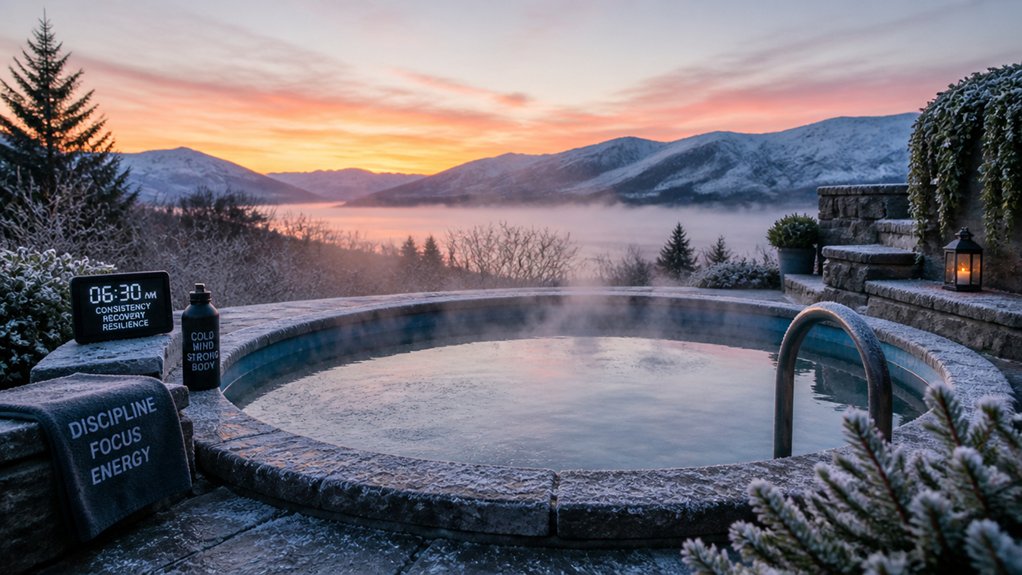
To maximize the benefits of your cold plunge, aim to take it within the first 30 minutes after waking. This timing leverages natural cortisol peaks and guarantees your body reacts ideally. Using the right type of cold plunge tub can also enhance the experience and results. Morning immersion at 38-50°F for 1-3 minutes activates your sympathetic nervous system, boosting focus and energy. Consistently scheduling your cold plunge sessions per week during this window amplifies norepinephrine release—by 200-300%—enhancing mood and cognitive clarity. Starting your cold immersion between 5 a.m. and 8 a.m. coincides with body rhythms that support stress resilience and mental sharpness. Even a minimum of 30 seconds can be beneficial, but extending to 2-3 minutes yields more profound physiological and psychological recovery effects. Timing your cold plunge correctly makes all the difference for ideal results.
How Often Should You Cold Plunge in the Morning?
How often should you cold plunge in the morning to reap maximum benefits? Ideally, aim for 5-7 morning cold plunges per week. This frequency promotes consistent hormonal changes, boosts alertness, and enhances stress resilience.
A reliable thermometer with accurate temperature readings can help you maintain optimal water temperatures and ensure safety during each session.
Imagine this:
- Starting your week with an invigorating plunge, setting a productive tone.
- Maintaining momentum by daily sessions, lasting 1-3 minutes at 38-50°F.
- Gaining mental clarity by sticking to this routine, even with brief 30-second dips.
Regular morning cold plunges activate your sympathetic nervous system, increasing norepinephrine by 200-300%, sharpening focus and mood. Coastal communities like Newport Beach swear by this routine, prioritizing mental health and productivity.
Consistent plunge sessions per week foster better energy levels and recovery, making daily immersion a powerful habit for overall well-being.
Adjust Your Morning Cold Plunge Routine for Your Goals
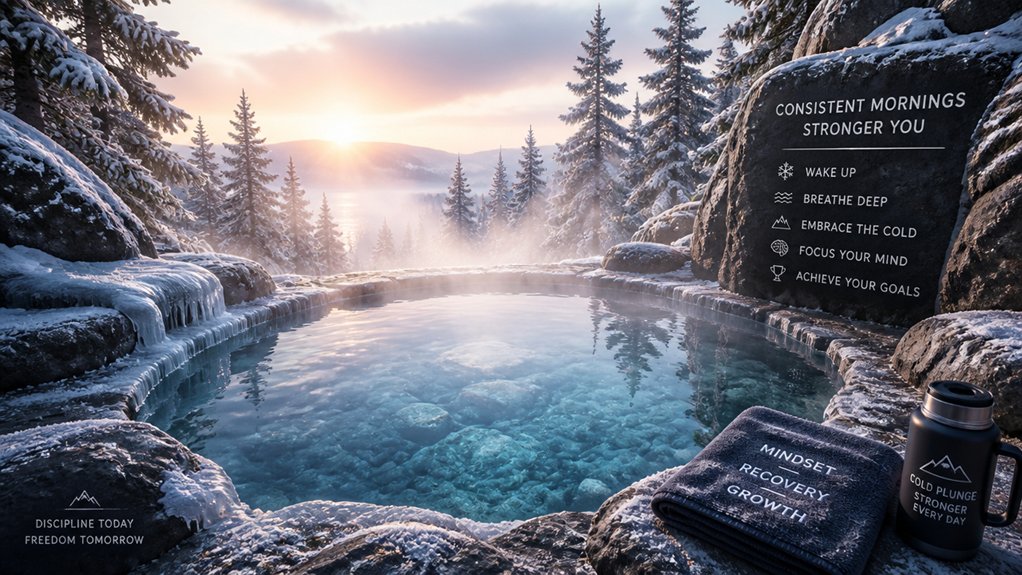
To get the most out of your cold plunge, adjust the frequency and timing based on your goals.
If you want sharper focus and mood boost, daily 1-3 minute immersions work best, while less frequent sessions may support immune health. Tailoring your routine guarantees you maximize recovery and performance effectively.
Tailoring Frequency for Goals
Adjusting your morning cold plunge routine to fit your goals guarantees you get the most benefits without overdoing it. To optimize outcomes, tailor your cold exposure and sessions per week to your priorities. Incorporating proper cold retention duration ensures the cold therapy remains effective longer, maximizing recovery without overexposure.
For mental clarity and mood boost, aim for brief immersions of 30 seconds to 3 minutes at 38-50°F daily or nearly daily.
For muscle recovery, stick to 3-4 sessions per week, avoiding immediately after intense strengthening to prevent hindering hypertrophy.
To support your immune system, maintain consistency with cold exposure 2-3 times weekly, balancing stimulation without overstressing your system.
Adjusting Cold Exposure Timing
Thinking about the best time to take your morning cold plunge can maximize its benefits for your specific goals. Properly timing your morning cold plunge sessions influences how effectively you activate your body’s stress response, alertness, and recovery pathways. Adjusting your cold exposure frequency helps tailor results—daily for mental clarity or 2-3 times weekly for immune support. Use this guide to customize your routine:
| Goal | Suggested Timing | Frequency |
|---|---|---|
| Mental focus & alertness | Morning, immediately upon waking | Daily or near-daily |
| Stress resilience | Morning, before or after breakfast | 2-3 times weekly |
| Immune support | Mid-morning, with consistent spacing | 2-3 times weekly |
| General recovery | When feeling fatigued, flexible | Depends on personal needs |
Adjust your morning cold plunge sessions based on your goals to optimize recovery and performance. Recognizing the importance of proper cold plunge timing can enhance your body’s natural recovery processes and overall wellness.
Seasonal Tips: Cold Plunging in Summer vs. Winter
As the seasons change, adjusting your cold plunge temperature and frequency is key to maintaining safety and effectiveness. Hot summer days allow for more frequent sessions with slightly warmer water, while winter’s cold stress requires careful timing and longer recovery. Using appropriate water treatment solutions can help keep your water clean and safe across varying temperatures and usage levels.
Temperature Adjustments Seasonally
Seasonal temperature changes influence how often you should cold plunge, with summer and winter requiring different approaches to maximize benefits and safety.
In summer, cooling water at 50-55°F allows you to increase your cold water immersion to 4-7 times per week, combating heat and supporting recovery. Picture:
- A brisk dip on a hot day.
- Your muscles cooling rapidly.
- Enhanced metabolic boost.
A suitable chest freezer model, such as the EUHOMY 3.5 Cu.Ft. Portable Chest Freezer, can help maintain consistent water temperatures for frequent immersions.
In winter, lower temperatures (around 60-65°F) reduce cold shock risk, so you might stick to 2-4 times per week. The water is warmer and easier to tolerate initially, allowing you to build resilience gradually.
Consistency in your routine, regardless of season, remains key for continuous benefits and adaptation.
Impact of Ambient Heat
Ambient heat considerably influences how you should approach cold plunging throughout the year.
During summer, increased ambient heat requires you to plunge more frequently—about 4 to 7 times weekly—with cooler water to improve thermal regulation and combat heat stress. This helps lower your core temperature quickly and supports faster recovery.
In winter, ambient heat drops and rewarming rates slow, so cold plunging typically occurs 2 to 4 times per week. Despite the reduced frequency, many users report heightened mental resilience.
Seasonal temperature fluctuations also demand adjustments in duration and water temperature to guarantee safety and effectiveness. By tailoring your cold plunge routine to ambient heat, you optimize recovery while minimizing thermal stress and avoiding hypothermia risks across the seasons.
Safety and Adaptation
Adjusting your cold plunge routine for safety involves understanding how seasonal changes impact recovery and health risks.
In summer, higher temperatures typically allow you to increase cold plunging frequency to 4-7 times weekly, aiding faster recovery markers.
In winter, lower temperatures mean longer rewarming times, so reduce sessions to 2-4 times weekly to prevent hypothermia.
Imagine:
- A summer morning where rapid recovery lets you plunge daily at 55-60°F for 2-5 minutes without strain.
- A winter day where careful monitoring means limiting sessions and focusing on safe rewarming before the next plunge.
- Starting as a beginner at 60-65°F, gradually lowering temperatures over several weeks, listening to your body’s signals.
Always avoid plunging while still cold; follow the Søberg Principle to maximize benefits and limit risks.
Practical Tips for Building a Sustainable Morning Cold Plunge Habit
Building a sustainable morning cold plunge routine hinges on starting slow and staying consistent. Begin with short durations, around 30 seconds to 1 minute, at 38-50°F. This helps your body gradually build tolerance without overwhelming it.
Remember, consistency matters more than the length—aim to cold plunge daily or nearly daily to harness norepinephrine’s benefits for mental clarity and stress resilience. Ideally, schedule your plunge within 30 minutes of waking to take advantage of the natural cortisol peak for enhanced alertness and recovery.
Pair your cold immersion with light movement or breathing exercises to improve circulation and ease the shock response. Keep track of your mood, focus, and energy levels daily so you can personalize your frequency and duration as you adapt and recover over time.
Common Mistakes to Avoid When Cold Plunging in the Mornings
While establishing a consistent morning cold plunge routine is beneficial, many overlook common pitfalls that can undermine their efforts.
First, plunging into water below 38°F without proper acclimation can trigger excessive sympathetic activation, stressing your body.
Second, limiting your plunge to no more than three minutes prevents prolonged cortisol spikes that can disrupt your natural hormonal rhythms.
Third, skipping gradual exposure progression raises the risk of cold shock response and makes adherence tougher.
Additionally, avoid doing intense training immediately after your plunge, as it can inhibit muscle protein synthesis.
Finally, don’t forget to hydrate and warm up afterward—failing to do so could lower your core body temperature, risking hypothermia and cardiovascular stress.
Pay attention to these mistakes to optimize recovery and safety.
Tracking Your Morning Cold Plunges to Maximize Benefits
Have you ever wondered how tracking your morning cold plunges can help you get the most out of your routine? Monitoring the times, water immersion sessions, and temperatures you use reveals patterns that optimize benefits.
By recording each session’s duration, temperature, and timing, you can identify when your progress plateaus or declines. Consistency is key, as regular water immersion sessions boost norepinephrine levels by 200-300%, improving stress resilience and mood.
Using logs or apps helps guarantee you maintain your ideal frequency and find your personal thresholds. Tracking also allows you to see how your subjective feelings of focus, energy, and recovery align with your cold plunge routine, making it easier to fine-tune your approach for maximum benefits.
Estimating the Right Duration for Your Morning Cold Plunge Routine
Finding the right duration for your cold plunge depends on balancing effective stimulation with your personal tolerance.
Shorter sessions of 1 to 2 minutes can boost alertness without overtaxing you, while longer durations may offer stronger benefits—if you can handle them. Building up gradually over time helps you discover what works best, ensuring consistency and long-term gains.
Optimal Cold Exposure Duration
Determining the ideal duration for your morning cold plunge involves balancing safety, comfort, and benefits. Typically, 1 to 3 minutes at 38-50°F (3-10°C) are ideal for activating your sympathetic nervous system without undue stress.
During your sessions, imagine:
- Holding steady for perhaps 2 minutes, feeling the shock and then the calm;
- Sustaining that for a few minutes, allowing physiological improvements like circulation and mood to take hold;
- Avoiding extended immersions over 5 minutes, which risk hypothermia or discomfort.
Starting with brief sessions of around 30 seconds can boost norepinephrine, but sticking to 1-3 minutes per session best balances recovery benefits and comfort. This duration helps reinforce consistency while maintaining safety and efficacy.
Personal Tolerance Thresholds
To tailor your morning cold plunge effectively, it’s important to understand your personal tolerance thresholds. Your personal tolerance thresholds determine how long you can comfortably stay submerged without overstressing your body.
Starting with a duration of 30 seconds to 1 minute at 38-50°F (3-10°C) helps prevent excessive stress while activating your sympathetic nervous system. Tracking how you feel afterward—both physically and mentally—can guide you in adjusting your personal tolerance thresholds over time.
As you adapt, gradually increase your immersion by 15-30 seconds weekly, aligning exposure with improved cold tolerance and norepinephrine response.
Consistency for Long-Term Benefits
Consistently engaging in morning cold plunges for 1 to 3 minutes at 38-50°F leads to sustained elevations in norepinephrine, which can boost your long-term stress resilience and mental clarity.
To maximize benefits, consider:
- Visualizing a routine where daily dips gradually build your tolerance, like stacking small stones into a sturdy tower.
- Recognizing that often should you cold, per session, is typically 2-3 minutes—long enough to produce physiological changes without overwhelming your system.
- Imagining your body’s adaptation over weeks as repeated sessions strengthen your nervous system, making cold exposure feel easier and more beneficial over time.
Consistency keeps your hormones balanced, reduces cold stress perception, and supports recovery, making daily immersion a powerful tool for sustained improvement.
Frequently Asked Questions
What Are the 4 R’s of Recovery?
The 4 R’s of recovery are Repair, Rest, Refuel, and Rehydrate. They involve rebuilding muscles, relaxing your body, consuming proper nutrients, and replenishing fluids, helping you recover physically and mentally for peak performance and well-being.
Do Rest Days Lower Cortisol?
Yes, rest days lower cortisol by giving your stress response system time to recover, reducing chronic activation. This helps prevent muscle breakdown, supports repair, and promotes hormonal balance essential for effective recovery and overall health.
How to Improve Daytime Recovery?
To improve daytime recovery, you should schedule regular active breaks, incorporate stretching or mindful pauses, and choose light exercises like walking. Avoid prolonged sedentary periods, and prioritize relaxation techniques to reduce stress and enhance overall energy levels.
Why Is It Important to Have Faster Recovery?
Faster recovery is essential because it lets you train more often and intensely, reduces injury risk, keeps your neuromuscular and hormonal systems in check, and guarantees you’re always ready to perform at your best.