To naturally boost melatonin, try scheduling short cold exposures 1–2 hours before bed, like cool baths or splashes, to stimulate your pineal gland. Focus on cooling your extremities, such as hands and feet, and keep sessions brief—about 3–10 minutes in water between 50°F–68°F. Gradually adapt to the cold, avoid doing it immediately before sleep, and don’t pair it with bright lights. Keep exploring other tips to optimize your sleep and circadian rhythm.
How Cold Exposure Can Help Improve Your Sleep

Cold exposure can be an effective way to boost your sleep quality because it helps lower your core body temperature, which naturally drops at night and triggers melatonin production.
When you expose yourself to cold environments or cold showers in the evening, you promote relaxation by reducing cortisol levels and signaling your body that it’s time to wind down. This process supports your circadian rhythm and stimulates the pineal gland to produce more melatonin, the hormone key to sleep regulation.
Lowering skin and core body temperature before bedtime encourages your body to prepare for sleep, aligning with your natural rhythm. Regular cold exposure, combined with good sleep hygiene, can enhance overall sleep quality by optimizing melatonin synthesis and reinforcing your body’s internal clock. Incorporating breathing exercises during cold practice can further improve relaxation and help regulate your nervous system for better sleep.
The Science: How Ice Baths Boost Melatonin and Sleep Quality
Ice baths stimulate the body’s parasympathetic nervous system, which promotes relaxation and stress reduction. This activation helps lower cortisol levels, creating a calmer state that supports the body’s natural melatonin production.
Cold exposure from ice baths also mimics the body’s typical drop in temperature during nighttime, signaling the pineal gland to boost melatonin levels essential for good sleep. As your body’s temperature drops, this enhances sleep quality by aligning with the sleep-wake cycle.
Although direct evidence of increased melatonin after an ice bath is limited, physiological cooling and relaxation promote the natural rhythm of melatonin, helping you fall asleep faster and enjoy more restorative sleep. This process ultimately supports better sleep efficiency and overall health. Cold Plunge Thermometers with accurate temperature readings can help optimize your immersion time for maximum benefit.
Safe and Effective Cold Plunge Tips for Better Rest
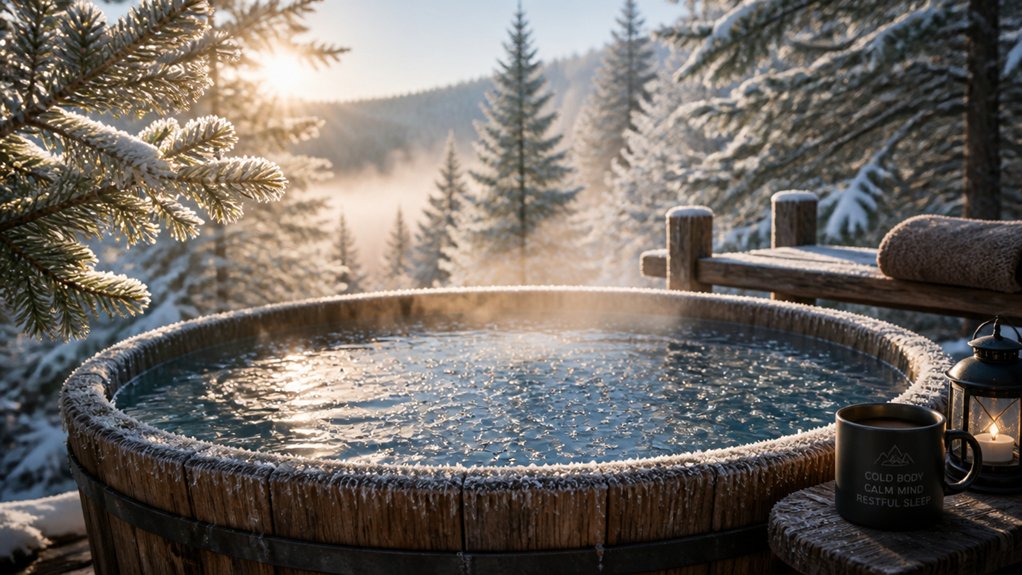
Timing your cold plunge at least an hour before bed helps prevent alertness that could delay sleep. Keep your session brief—around 5 to 10 minutes—in water between 60-68°F to promote relaxation without stressing your body. Incorporating a water treatment routine can further ensure the water remains clean and skin-friendly during your relaxation session. Following safe practices guarantees you enjoy the sleep-boosting benefits without discomfort or risk.
Cold Exposure Timing Tips
Have you ever wondered when the best time is to take a cold plunge for sleep benefits? Cold exposure in the late afternoon or early evening helps lower your core body temperature, aligning with the natural rise of melatonin.
This timing supports melatonin production and improves sleep quality by activating your parasympathetic nervous system. Avoid plunging immediately before bed, as it can increase alertness and delay sleep onset.
Pairing cold exposure with daytime natural light boosts serotonin levels, which serve as a precursor to melatonin. Keep in mind, consistent timing is key to regulating your circadian rhythms.
Additionally, incorporating guided meditation devices designed for relaxation can enhance your mental readiness and relaxation response afterward. Also, steer clear of bright and blue light 90 minutes before bed, allowing melatonin levels to rise naturally and ensuring a more restful night.
Safe Cold Plunge Practices
To safely enjoy the sleep-enhancing benefits of cold plunges, it’s important to follow proper protocols. Limit your cold plunge to 3–5 minutes at 50°F–60°F (10°C–15.5°C), helping lower core body temperature and support melatonin production. Avoid plunges immediately before bedtime; finish at least 60–90 minutes prior to sleep to prevent overstimulating your nervous system. This timing allows melatonin benefits to kick in, promoting sleep onset and stress reduction. Hydrate well and warm up gradually afterward to prevent disrupting melatonin’s role in sleep. Consistent daytime exposure can regulate cortisol levels, indirectly improving sleep quality. Incorporating insulation systems in your cold plunge setup can help maintain optimal temperatures and enhance your experience.
When and How to Use Cold Therapy for Maximum Sleep Benefits
Applying cold therapy at the right time can greatly enhance your sleep quality, but it’s essential to do it correctly. Aim for cold exposure about 60 to 90 minutes before bedtime to support melatonin production and aid you to fall asleep faster.
A cool shower, ice pack, or cold extremity exposure helps lower your body temperature, signaling your brain to increase melatonin levels naturally. Focus on cooling your extremities, like hands and feet, to promote heat loss and trigger melatonin release.
Avoid cold exposure within 30 minutes of bedtime, as it may activate your sympathetic nervous system and delay sleep onset. Incorporating waterproof timers to precisely monitor cold plunge durations can ensure safe and effective sessions. Combining cold therapy with dim lighting and reduced blue light exposure can further optimize your sleep cycle and improve overall sleep quality.
Avoid These Common Cold Exposure Mistakes
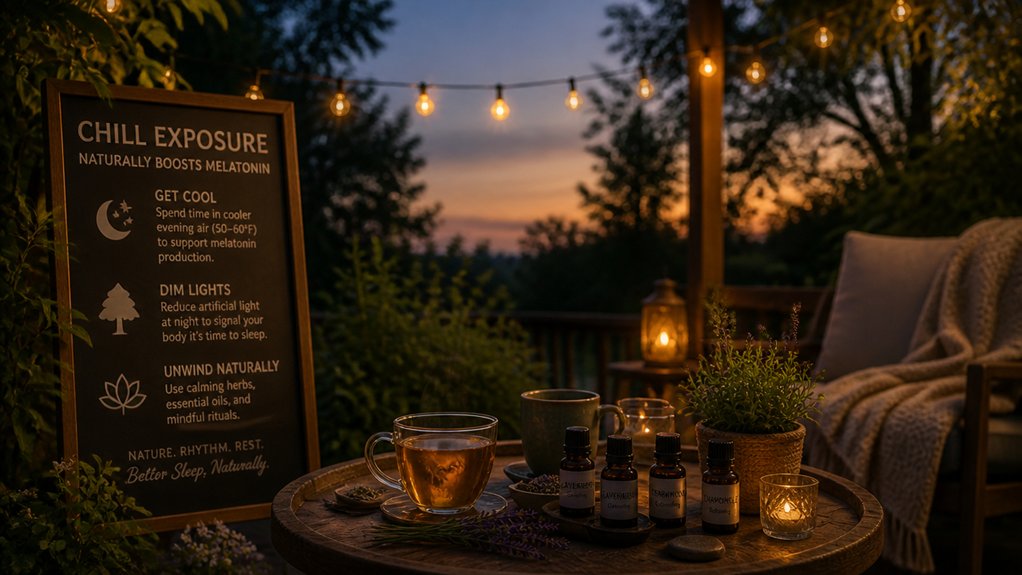
Avoid overexposing yourself to cold, especially right before bed, as it can raise cortisol levels and hinder melatonin production.
Don’t use extreme cold immersion or ice baths late at night, since they activate your nervous system and disrupt your sleep rhythms. Also, steer clear of cold exposure paired with bright artificial light, as both can suppress melatonin when you’re trying to wind down. Additionally, using bromine tablets in ice bath water can help maintain safe sanitation without affecting your sleep, as they are low-odor and designed for stable disinfection at low temperatures.
Overexposure to Cold
Overexposing yourself to cold, especially in the evening, can interfere with your sleep by activating your body’s alert systems and elevating stress hormones like cortisol. This increase can disrupt melatonin production, delaying melatonin onset and impairing sleep quality.
To prevent this, avoid extended chilling before bed, as prolonged cold exposure raises stress hormones and hampers your circadian rhythm. Instead, practice controlled cold exposure earlier in the day to support healthy melatonin levels.
Consider these points:
- Limit cold exposure to brief periods in the evening.
- Guarantee proper warming afterward to stabilize body temperature.
- Avoid extreme or prolonged chilling that activates alertness.
- Focus on timing cold exposure to align with your circadian rhythm.
- Using temperature therapy features, like rapid cold adjustment, can help regulate exposure duration and intensity.
Improper Cold Protection
Have you ever experienced restless nights after cold water immersion without proper protective gear? Cold exposure without gradual acclimation can cause excessive stress, disrupting your melatonin production.
Sudden cold stress suppresses melatonin levels, making it harder for you to fall asleep. Avoid exposing yourself to cold temperatures right before bed, as acute cold stress can interfere with sleep onset.
Skipping protective clothing or wetsuits increases the risk of hypothermia, which negatively impacts thermoregulation and overall sleep quality. Prolonged cold exposure that lowers your core body temperature beyond a healthy range can impair melatonin secretion, delaying sleep and reducing its restorative benefits.
Never combine alcohol with cold exposure, as it worsens thermoregulation and further decreases melatonin levels, heightening sleep disturbances.
Track Your Sleep and Melatonin Response to Cold Exposure
Tracking your sleep and melatonin response to cold exposure can reveal how this stressor affects your sleep quality and circadian rhythms.
Monitoring sleep and melatonin responses to cold exposure reveals its effects on sleep quality and circadian rhythms.
By monitoring how cold exposure influences melatonin production, you gain insights into its impact on sleep onset and duration.
To deepen your understanding:
- Use wearable devices or sleep trackers to track your sleep, sleep latency, and duration during cold exposure sessions.
- Record the timing and duration of cold exposure, especially relative to bedtime, to understand effects on melatonin release.
- Observe changes in thermoregulation and how they correlate with sleep quality.
- If accessible, analyze melatonin biomarkers for a precise view of melatonin rhythm shifts.
Combining subjective sleep logs with objective data helps identify if cold exposure supports or disrupts your circadian rhythm and melatonin production.
Can Cold Exposure Improve Your Sleep? Key Takeaways
Can cold exposure truly enhance your sleep quality? Yes. Cold exposure promotes relaxation by lowering your core body temperature, which aids the natural melatonin regulation process. Taking a cool shower or bath 1-2 hours before your bedtime can trigger melatonin secretion, helping you fall asleep faster and improving sleep quality. Additionally, cooling your sleeping environment to a comfortable, lower temperature supports sustained melatonin production overnight. Reduced cortisol levels from regular cold exposure further boost melatonin synthesis while decreasing stress. Combining cold exposure with good light hygiene maximizes sleep benefits.
| Cold Exposure Benefits | Effects on Sleep |
|---|---|
| Lowers core temperature | Encourages melatonin secretion |
| Reduces cortisol levels | Supports relaxation and reduces stress |
| Enhances natural melatonin regulation | Improves overall sleep quality |
Frequently Asked Questions
How Do I Naturally Increase My Melatonin?
You can naturally increase your melatonin by getting morning sunlight, avoiding bright and blue lights before bed, spending time outdoors during the day, limiting alcohol at night, and eating melatonin-rich foods like cherries and eggs for better sleep.
What Fruits Have the Highest Melatonin?
You should eat tart cherries, goji berries, strawberries, and tomatoes, as they’re among the fruits highest in natural melatonin. Including a mix of these in your diet can help boost your melatonin levels naturally and improve sleep quality.
Can Taking Melatonin Lower Cortisol?
Yes, taking melatonin can lower cortisol because it promotes relaxation and helps regulate your circadian rhythm, which reduces stress hormone levels in the evening. This can make you feel calmer and support easier shift into sleep.
What Drink Is High in Melatonin?
You should try tart cherry juice, as it’s high in melatonin and naturally supports sleep. Milk, goji berry tea, and nut milks like pistachio or walnut are also good options to boost your melatonin levels naturally.