Timing your water immersion sessions is key to improving sleep because doing it 1 to 2 hours before bedtime allows your body to cool down and relax naturally. Immersing too close to sleep can stimulate your nervous system, making it harder to wind down. By scheduling it at the right time, you help your circadian rhythm align with your body’s cooling process, promoting better sleep. Continue exploring how to make this routine work best for you.
How Does Cold Water Immersion Affect Sleep Physiology?
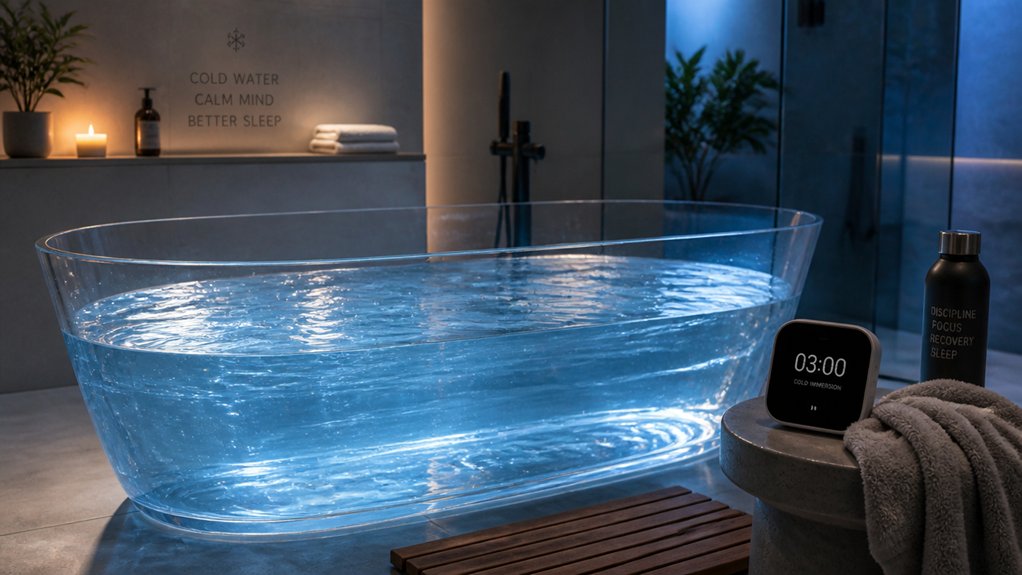
How does cold water immersion influence sleep physiology? When you immerse in cold water, it lowers your core body temperature by 2-3°F within a few minutes, triggering a natural cooling process that encourages sleep onset and boosts slow-wave sleep. Additionally, the cooling system in cold plunge tubs ensures precise temperature control, supporting this process effectively. Initially, it activates your sympathetic nervous system, increasing alertness, but shortly shifts to parasympathetic dominance, slowing your heart rate and promoting relaxation. During immersion, norepinephrine is released, which helps reduce stress and anxiety. The cooling effect suppresses your core temperature for up to 80 minutes, aligning with your circadian rhythm and improving sleep architecture by reducing awakenings and limb movements. This physiological response aids in stress reduction and helps your body progress from alertness to restful sleep, ultimately enhancing sleep quality.
Why Preparing Your Body Before Cold Water for Sleep Matters
Preparing your body before cold water immersion is essential for maximizing relaxation and safety, as abrupt exposure can trigger stress responses that interfere with sleep onset. A gradual physiological adjustment prevents excessive adrenaline surges, helping your body shift smoothly to parasympathetic dominance. Start with water at 10-15°C and keep initial sessions around 90 seconds to aid safe adaptation. Proper hydration and avoiding excessive fluid intake before immersion support stable cardiovascular responses crucial for sleep quality. Additionally, allowing time after immersion for natural warming and calming activities enhances the relaxation benefits. Employing appropriate insulation and water temperature control methods can further optimize your response.
When’s the Best Time to Do Cold Water Immersion for Better Sleep?
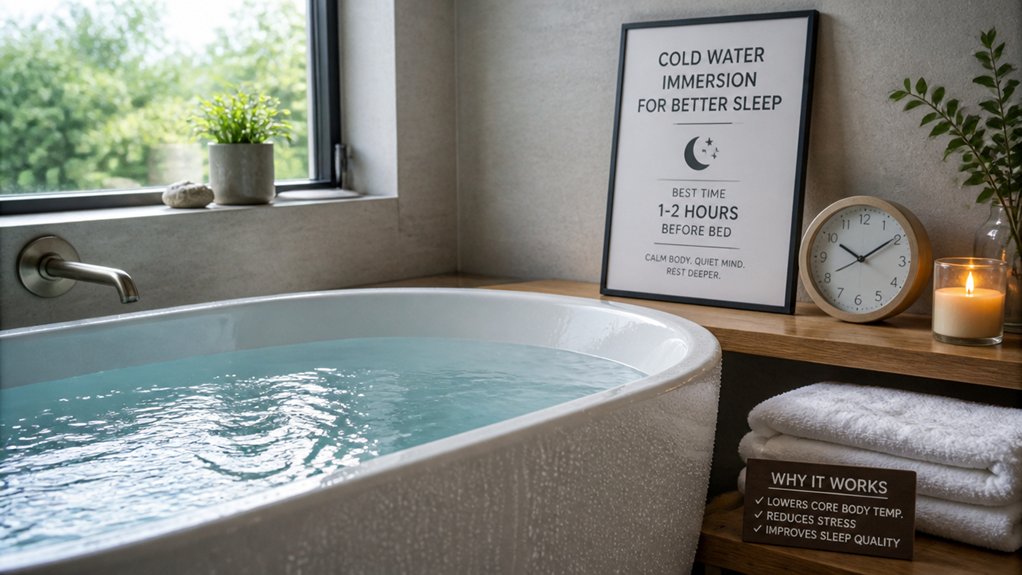
Timing your cold water immersions appropriately can make a significant difference in how well they support your sleep. The best time for cold immersion is 1 to 2 hours before bed, allowing initial alertness from cold plunging to subside and encouraging relaxation. A proper cooling period helps the body transition into a state conducive to sleep by supporting core body temperature regulation. Cold immersions within an hour of sleep can stimulate the sympathetic nervous system, delaying sleep onset due to adrenaline release. Alternatively, afternoon immersions, between 2 to 6 pm, provide alertness during energy dips and foster parasympathetic activation, which supports sleep later on. To optimize sleep quality, stick to consistent timing of cold immersion sessions in the late afternoon or early evening. This practice helps regulate core body temperature and balances the nervous system, making your immersion on sleep more effective.
How Long Should You Stay in a Cold Plunge to Improve Sleep?
To effectively improve your sleep through cold water immersion, aim to stay in the cold plunge for about 1 to 3 minutes. This duration optimizes cold exposure, triggering beneficial physiological responses without overloading your body. Using temperature control options such as built-in chillers or external devices ensures consistent and safe immersion times. Starting with 90 seconds is advisable if you’re new to immersion, gradually increasing as your body adapts. Staying longer than 5 minutes is generally not recommended, as extended immersion may induce stress rather than relaxation. A minimum of 30 seconds can activate the physiological effects, but for sleep benefits, 1-3 minutes is ideal. Regular sessions within this timeframe over weeks can gradually enhance sleep quality by promoting relaxation and reducing stress responses. Keep the immersion within this duration to maximize sleep-related benefits without adverse effects.
Post-Immersion Habits to Maximize Your Sleep Benefits
After finishing your cold water immersion, adopting the right post-immersion habits can greatly enhance your sleep benefits. To maximize the calming effect and promote falling asleep, consider these steps:
- Engage in relaxing activities like light stretching, meditation, or reading to enhance mental calmness.
- Gently dry off instead of vigorous rubbing to maintain the skin’s cooling effect and support parasympathetic activation.
- Avoid hot showers or saunas that can disrupt the body’s natural rewarming process, essential for sleep improvement.
- Hydrate earlier in the day and limit fluids before immersion to prevent nighttime awakenings.
- Using durable waterproof timers to monitor water temperature and duration can ensure consistency in your routine and enhance your results.
These habits help sustain the calming effects of cold immersion, optimize sleep benefits, and foster deeper, more restorative rest.
Frequently Asked Questions
What Is the 3 3 3 Rule for Sleep?
The 3 3 3 rule for sleep means immersing in cold water for about 3 minutes at 10-15°C, three hours before bed, to enhance deep sleep, reduce awakenings, and wake up feeling more alert.
Does Cold Water Immersion Help Sleep?
Yes, cold water immersion helps your sleep by lowering your core temperature, promoting relaxation, reducing sleep onset time, and enhancing deep sleep. Doing it 1-2 hours before bed maximizes these benefits for better restorative sleep.
What to Drink to Fall Asleep Quickly?
You should drink warm, non-caffeinated beverages like herbal teas or a small glass of tart cherry juice to fall asleep quickly. Avoid sugary or caffeinated drinks, and hydrate earlier in the evening to prevent nighttime awakenings.
Why Does Swimming Make Me Sleep Better?
Swimming makes you sleep better because it tires your body, activates relaxation responses, and lowers your core temperature. Post-swim cold immersion enhances this effect, promoting deeper sleep, reducing anxiety, and helping you fall asleep faster.