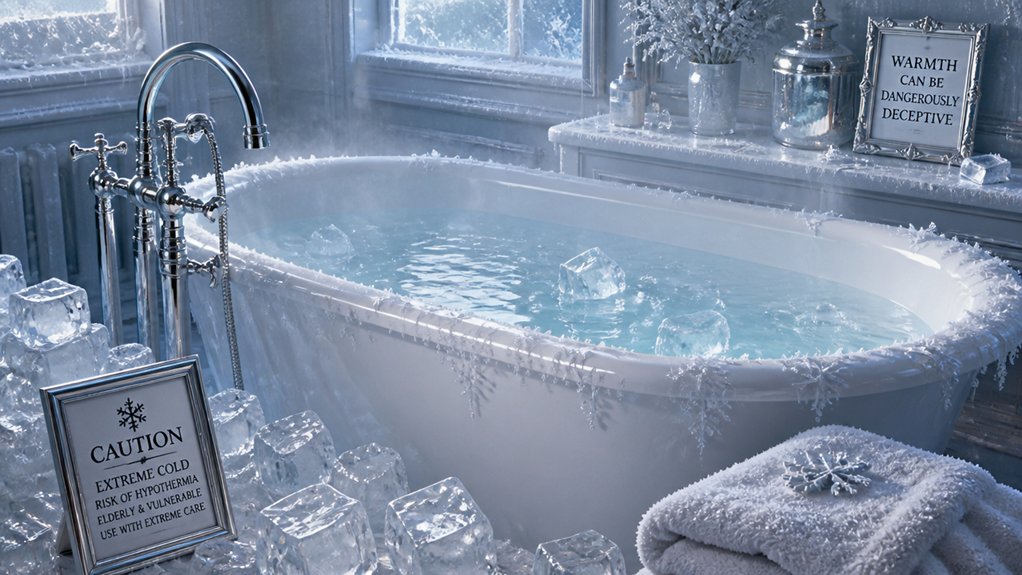
Baths with ice are risky for seniors because cold water causes blood vessels to constrict, putting extra strain on the heart and increasing the risk of heart attacks or arrhythmias. Older adults have reduced sensation, thinner skin, and less insulation, which makes them more vulnerable to hypothermia, frostbite, and nerve damage. Cold shock responses can also raise blood pressure suddenly. Understanding these dangers can help you decide how to stay safe—more details follow.
Why Is Cold Therapy Riskier for Seniors?
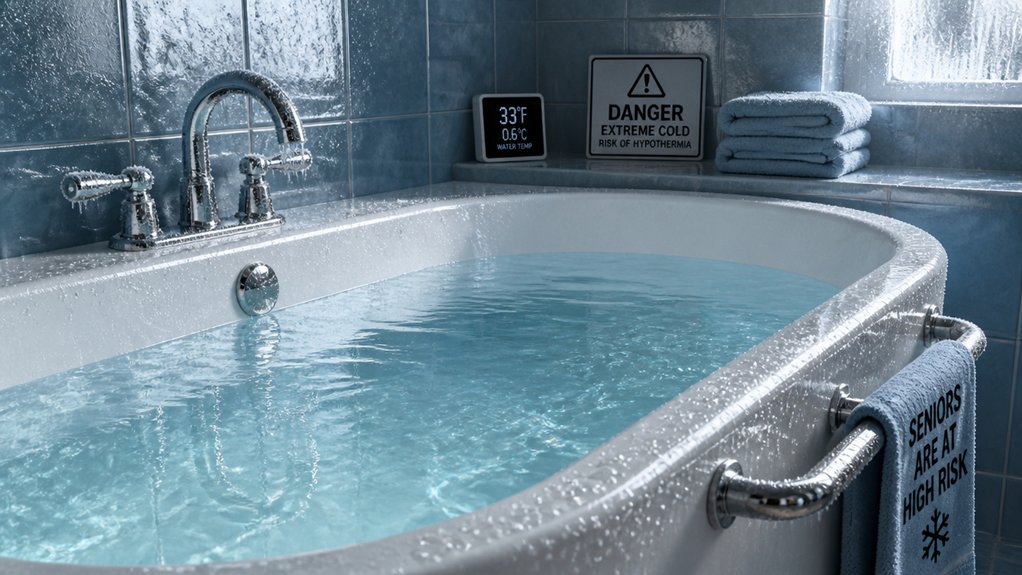
Why is cold therapy riskier for seniors? Cold exposure can be dangerous because aging reduces your cold sensation and response. This means you mightn’t realize how cold you’re getting, risking excessive exposure.
Thinner skin and less subcutaneous fat lower your insulation, making it easier for your body heat to escape quickly, possibly leading to hypothermia. Additionally, cold exposure causes vasoconstriction, which increases cardiovascular stress—raising your heart workload—especially below about 59°F.
As you age, your ability to acclimate to cold diminishes, and cold sensitivity lessens. This makes you more vulnerable to dangerous conditions like frostbite or after-drop. Many cold therapy protocols intended for younger adults aren’t suitable for seniors and should be adjusted to safer, warmer temperatures and shorter durations. Incorporating appropriate insulation and safety measures is essential to reduce these risks and ensure a safer experience.
How Cold Water Immersion Affects Senior Heart Health
Cold water immersion significantly affects senior heart health because it causes blood vessels to constrict below approximately 59°F, forcing the heart to work harder to circulate blood and maintain core temperature. This increased workload can strain the heart, especially for those with existing heart disease. As you age, reduced cold sensation and slower acclimation heighten the risk of excessive cardiovascular stress and arrhythmias during ice baths. Here’s a quick overview:
| Effect of Cold Water Immersion | Risks for Seniors | Heart Response |
|---|---|---|
| Vasoconstriction | Increased strain | Heart pumps harder |
| Shock response | Elevated blood pressure | Risk of heart attack |
| Heat loss due to thin skin | Hypothermia risk | Cardiovascular strain |
| After-drop phenomenon | Heart rhythm disturbances | Dangerous arrhythmias |
Considering these effects, cold-water immersion can dangerously impact seniors with heart conditions.
A thorough understanding of thermoregulation is essential to recognize how aging affects the body’s ability to adapt safely to cold exposure.
Hypothermia Risks for Older Adults in Ice Baths
Older adults face a heightened risk of hypothermia during ice baths because their thinner skin and reduced subcutaneous fat provide less insulation, causing their bodies to lose heat more rapidly.
Older adults are more vulnerable to hypothermia during cold exposure due to thinner skin and less fat insulation.
Prolonged exposure to cold water below 59°F causes vasoconstriction and cardiovascular stress, which can lead to dangerous drops in body temperature. The cold also impairs blood pressure regulation, making it harder for seniors to maintain stability.
Symptoms of hypothermia—confusion, slowed heartbeat, or unconsciousness—may appear suddenly or worsen after exiting the bath, especially due to after-drop. Since aging diminishes cold sensation and shivering responses, seniors mightn’t realize they’re at risk.
Therefore, understanding the importance of material durability in cold plunge tubs is essential for ensuring they remain safe and effective, especially for vulnerable populations.
Medical guidelines recommend starting with warmer water around 68°F and limiting exposure to reduce these serious risks.
Nerve Damage From Repeated Cold Exposure in Seniors
Repeated exposure to cold through ice baths can harm your nerves, especially if you’re elderly, because age-related thinning of the skin and loss of subcutaneous fat reduce natural insulation and make nerves more vulnerable.
Repeated cold exposure can cause nerve damage, leading to symptoms like tingling, numbness, weakness, or increased cold sensitivity. As you age, your cold sensation and nerve response decline, making it harder to notice early signs of nerve injury during cold therapy. Conditions common in seniors, such as diabetes and peripheral neuropathy, further impair nerve health and circulation, increasing the risk of unnoticed nerve damage. Additionally, magnesium in muscle recovery creams supports nerve function and muscle relaxation, highlighting the importance of careful cold therapy practices in older adults.
Whole-body ice baths pose higher risks compared to localized cold therapy, which is generally safer. If you’re elderly, caution is essential to prevent nerve harm from repeated cold exposure.
Why Seniors Are More Susceptible to Cold Shock Responses
As your body ages, its ability to respond quickly and effectively to sudden temperature changes diminishes. This makes seniors more susceptible to cold shock during cold plunges or icy baths. Reduced cold sensation and slower acclimation delay your body’s reaction, increasing the risk of dizziness, impaired motor control, and cardiovascular stress. Thinner skin and less subcutaneous fat mean less insulation, so heat escapes faster, intensifying cold shock effects. Additionally, age-related shifts in nervous and cardiovascular systems mean your heart may react unpredictably, raising the risk of arrhythmias and respiratory difficulty. The perfusion index can help monitor blood flow and assess readiness or risk during these sessions.
Medical Conditions That Make Cold Baths Risky for Seniors
If you have heart disease, cold baths can increase your risk of triggering arrhythmias or overloading your heart.
Circulatory or nerve issues, like peripheral neuropathy, may prevent you from feeling cold damage or slow down rewarming, raising hypothermia chances.
Respiratory conditions such as COPD or asthma can worsen with cold water, making breathing more difficult and dangerous.
Exposure to prolonged cold can also impair temperature control, especially if you use a freezer or liner not suited for continuous temperature regulation.
Heart Disease Risks
Cold baths pose significant risks for seniors with heart disease because exposure to cold water causes blood vessels to constrict, which increases the workload on the heart. This vasoconstriction can lead to rapid rises in heart rate and blood pressure, putting extra stress on already compromised cardiovascular systems.
Seniors with conditions like hypertension, arrhythmias, or a history of heart attack are especially vulnerable to adverse events such as arrhythmias or heart attacks during or after ice baths. The cold shock response can further overwhelm your heart, increasing the risk of serious complications.
As you age, slower cold acclimation and reduced thermoregulation heighten this risk, making temperature measurement essential before attempting cold water therapy.
Circulatory and Nerve Issues
Seniors with circulatory problems and nerve conditions face heightened dangers from cold baths due to impaired blood flow and nerve sensitivity. Circulatory issues like poor circulation and peripheral neuropathy reduce the body’s ability to rewarm tissues and repair damage caused by cold exposure.
Conditions such as Raynaud’s disease cause extreme vasoconstriction, leading to painful episodes and tissue damage during cold water immersion. Additionally, cold exposure raises cardiac workload, which can worsen hypertension and heart disease.
Peripheral nerve damage increases the risk of numbness or long-term irritation because age-related nerve sensitivity decline makes injuries less noticeable. Diminished sensation from these issues masks injuries and delays response, increasing the chance of tissue harm.
For seniors with circulatory or nerve problems, cold baths pose serious health risks that shouldn’t be underestimated.
Respiratory Condition Concerns
Exposure to cold air during ice baths can greatly impact individuals with respiratory conditions, as it may trigger bronchospasms that lead to coughing, wheezing, and shortness of breath. Cold air constricts blood vessels in the respiratory system, making breathing more difficult for seniors with asthma or COPD. Additionally, the pH-balanced cleansing agents found in gentle body washes can help support skin barrier health and reduce irritation from cold exposure. Cold water immersion increases respiratory workload, potentially worsening symptoms and risking respiratory distress. When exposed to cold air, sensitive airways can tighten, increasing the risk of hypoxia. To reduce dangers, seniors with respiratory issues should use nasal breathing and face coverings during cold therapy. Medical clearance is essential before attempting ice baths, as cold air and water can provoke airway constriction, elevating the risk of breathing difficulties and emergencies.
How Aging Skin Influences Cold Therapy Safety
As skin ages, it becomes thinner and loses subcutaneous fat, reducing its natural insulation against chilly temperatures. This change makes older adults more vulnerable to cold injury during cold therapy, such as ice baths. The impaired insulation means your skin can’t shield you from cold as effectively, increasing frostbite risk and nerve damage if exposure is prolonged or intense.
Additionally, aging skin has diminished resilience, making tissues more fragile. Seniors also experience decreased cold sensation and a weaker response to cold, making it harder to detect danger. Their reduced thermoregulation and slower acclimation to cold environments further elevate risks like after-drop, where core body temperature keeps dropping after leaving the cold water.
Recognizing Signs of Cold-Related Injuries in Older Adults
Because aging skin doesn’t insulate as effectively and nerve response times slow, older adults often don’t recognize cold injuries in time. Watch for warning signs like pale or bluish skin, which feels cold to the touch, along with numbness, tingling, or sharp pain in fingers, toes, or extremities.
Confusion, slurred speech, slow breathing, and decreased coordination can signal hypothermia. After exposure to cold water, beware of after-drop—a dangerous continued drop in core temperature—which can cause dizziness, weakness, or loss of consciousness.
If you experience dizziness, an intense cold sensation, panicked breathing, or confusion during or after an ice bath, it’s crucial to exit immediately and seek medical help. Recognizing these warning signs can prevent serious cold-related injuries.
Precautions Seniors Should Take Before Cold Water Immersion
Before attempting cold water immersion, seniors should seek medical clearance, especially if they’ve cardiovascular, pulmonary, diabetes, or thermoregulation issues, or take medications affecting cold response.
Cold water immersion protocols designed for younger adults are unsafe for seniors due to decreased cold sensation, thinner skin, reduced subcutaneous fat, and slower acclimation.
Beginners over 65 should start with water around 68°F for 30 seconds to 2 minutes, gradually reducing temperature toward 55–59°F, while keeping total exposure under 5 minutes.
A trusted person should be present during initial sessions to monitor for dizziness, confusion, or cardiac symptoms, and to assist if needed.
After cold exposure, rewarm gradually in dry, warm clothes indoors and avoid exertion to prevent hypothermia and after-drop.
When Should Seniors Avoid Ice Baths?
When should seniors avoid ice baths? If you have cardiovascular conditions like heart disease, hypertension, or arrhythmias, avoid cold baths. The cold causes vasoconstriction, increasing your heart’s workload and risking serious complications.
Seniors with peripheral neuropathy, diabetes with circulatory issues, or Raynaud’s disease should also stay away, as impaired sensation and blood vessel constriction heighten the risk of tissue damage.
If you suffer from chronic lung diseases or asthma, cold immersion can trigger bronchospasm and worsen breathing problems.
Pay attention to symptoms like dizziness, confusion, or loss of motor control during cold exposure; these signals mean you should exit immediately to prevent hypothermia.
Always seek medical clearance before attempting ice baths, especially if your medications influence circulation or thermoregulation.
Tips for Safely Introducing Cold Therapy to Seniors
Introducing cold therapy to seniors requires caution and gradual adjustment to minimize shock and cardiovascular stress. Start with warm water around 68°F for 30 seconds to 2 minutes, then slowly lower the temperature toward 55–59°F over multiple sessions.
Begin cold therapy with warm water, gradually lowering temperature to ensure safety for seniors.
Keep total exposure under 5 minutes, prioritizing shorter, warmer sessions to prevent hypothermia and vasoconstriction risks. Always have a trusted person present during initial cold plunging to monitor reactions like dizziness, confusion, or shivering.
Guarantee the environment is safe, with non-slip surfaces and easy access to warm clothing. After cold therapy, gradually rewarm the body in a warm room (≥68°F) to stabilize core temperature and avoid after-drop.
Consult a healthcare professional before starting, especially if your senior has heart or respiratory issues.
Safer Cold Treatment Alternatives for Seniors
Instead of full-body ice baths, consider localized cold applications or devices that let you control temperature and pressure for 15–30 minutes.
Light cold exposure, like cold showers or partial immersion at around 68°F, helps reduce risks and builds tolerance gradually.
Always focus on gentle rewarming and consult your healthcare provider to guarantee these methods are safe for your specific health conditions.
Localized Cold, Controlled Application
Localized cold therapy, such as ice packs or cold-compression devices, offers a safer alternative to full-body ice baths for seniors by providing controlled, targeted cooling. These controlled devices regulate temperature and pressure precisely, allowing sessions lasting 15–30 minutes under supervision.
This method minimizes cardiovascular stress and the risk of hypothermia, especially for seniors with circulation or heart concerns. Unlike immersion in ice baths, localized cold treatments reduce systemic cold shock and after-drop phenomena.
They also target inflammation and soreness without affecting the entire body, making them more suitable for vulnerable seniors.
- Minimize safety risks with precisely regulated temperature
- Focus on specific areas needing relief
- Reduce chances of uncontrolled cold shock
- Suitable for seniors with circulation issues
- Offer safer, manageable cold therapy options
Warmth and Gentle Rewarming
When managing cold therapy for seniors, gradual and gentle rewarming is essential to guarantee safety and comfort. You should prioritize warmth by using dry clothes and maintaining indoor temperatures at or above 68°F, which helps prevent after-drop and hypothermia.
Short, controlled cold exposures combined with gentle rewarming methods, like warm environments or approved saunas, reduce cardiovascular and respiratory risks. Avoid sudden shifts from cold to hot, such as hot showers after ice baths, as they can cause thermal shock. Instead, focus on slow, controlled warming to stabilize core temperature safely.
Localized cold therapy with cold-compression devices or ice packs allows you to control temperature and pressure, facilitating safer, gradual warming. A warm, accessible space with non-slip mats and handholds offers additional safety during recovery.
Medical Experts’ Advice on Cold Water Safety for Older Adults
Medical experts emphasize that older adults should approach cold water activities with extreme caution, given their heightened vulnerability to risks like hypothermia and cardiovascular strain.
Cold water below approximately 59°F causes vasoconstriction, which increases the workload on your heart—especially risky if you have circulation or heart issues. Medical experts advise seniors with conditions like heart disease, hypertension, or diabetes to avoid ice baths or only try them under strict medical supervision.
Cold water below about 59°F increases heart strain, so seniors with circulation or heart issues should avoid icy baths or consult a doctor.
Gradual, shorter exposures to water around 68°F, with careful monitoring, can help reduce risks. Always avoid prolonged immersion and practice careful rewarming afterward to prevent dangerous drops in core temperature.
- Know your body’s limits before exposure
- Seek medical advice if unsure
- Use gradual, controlled cold water exposure
- Monitor for signs of distress
- Prioritize safety over quick results
Frequently Asked Questions
Should Old People Do Ice Baths?
You shouldn’t do ice baths without consulting a healthcare professional, especially if you have health conditions. Even then, if approved, keep temperatures warm, limit exposure, and watch for adverse symptoms to stay safe during cold therapy.
Who Should Not Take an Ice Bath?
You should not take an ice bath if you have heart disease, hypertension, diabetes with circulation issues, peripheral neuropathy, Raynaud’s disease, cold agglutinin disease, chronic lung conditions, or are on specific medications. Always consult your doctor first.
Is 20 Minutes in an Ice Bath Too Long?
Yes, 20 minutes in an ice bath is too long, especially for seniors. It increases risks like hypothermia and cardiovascular stress. Stick to shorter durations, around 5-10 minutes, and warmer temperatures to stay safe.
What Does a 3 Minute Ice Bath Do?
A 3-minute ice bath reduces muscle soreness and inflammation temporarily by constricting blood vessels, calming nerve activity, and promoting quick recovery, but if you’re vulnerable, it’s essential to keep it brief and at safe temperatures to avoid risks.