To stay safe during beginner submersion therapy, start slowly with shorter sessions, gradually increasing time as your tolerance builds. Always check water temperatures with reliable tools and keep your water clean to prevent infections. Never immerse alone—have a buddy and emergency contacts nearby. Monitor how you feel and exit immediately if you experience dizziness, numbness, or confusion. Following these safety tips can protect you, and more helpful advice lies ahead for your safe cold water journey.
Why Is Cold Water Therapy Safe and Beneficial for Beginners?
Why is cold water therapy considered safe and beneficial for beginners? Cold Water Immersion, when done properly, offers many advantages without risking your safety.
Starting with water temperatures between 39-59°F (4-15°C), you can safely immerse yourself for 1-2 minutes as a beginner. Gradually, you’ll get used to the sensation by practicing short, controlled immersions and breathing techniques, helping you avoid cold shock or respiratory distress.
Cold Water Immersion reduces muscle soreness and inflammation, promoting recovery even with light effort. It also pushes mental resilience and boosts mood by increasing endorphin release.
Ensuring safety measures like supervision, having a buddy nearby, and leaving the water if you feel dizzy or numb makes cold water therapy accessible and safe for newcomers. Using appropriate water treatment solutions can also maintain water quality and skin safety during use.
Should You Consult a Healthcare Provider Before Starting?
Before starting cold water therapy, it’s important to talk to your healthcare provider, especially if you have heart issues, high blood pressure, or other health concerns. They can evaluate your medical history and help identify any risks related to cold exposure. Consulting a professional guarantees you create a safe, personalized plan that fits your health needs. Be sure to discuss your thermal safety precautions to ensure your wellness journey is both effective and secure.
Medical History Considerations
Consulting a healthcare provider is a critical step before starting submersion therapy, especially if you have underlying health conditions. A thorough medical history evaluation helps identify issues like cardiovascular problems, respiratory disorders, or circulatory concerns that could increase risks during cold water immersion.
If you’re on medications affecting blood flow or the nervous system, your healthcare professional can advise about potential interactions. Pregnant individuals and those with compromised immune systems should also seek medical clearance beforehand.
Additionally, understanding the water temperature control features of your cold plunge setup ensures safer immersion practices tailored to your health status. This consultation guarantees your safety, helping to determine appropriate temperature ranges and immersion durations tailored to your health. Remember, understanding your medical history is essential, and consulting a professional provides guidance on safe practices, including essential first aid knowledge, in case of emergency.
Personal Risk Factors
Evaluating your personal risk factors is an essential step before beginning cold water immersion therapy, especially if you have any underlying health issues.
If you have heart conditions, high blood pressure, or circulatory disorders like Raynaud’s disease, you should consult a healthcare provider to assess safety.
Those with respiratory issues or a history of fainting and seizures need medical advice to understand potential risks associated with sudden cold exposure.
Pregnant women should seek clearance from their doctor due to possible effects on blood flow and fetal health.
If you’re taking medications affecting your cardiovascular or nervous system, a provider can advise whether immersion is safe.
Anyone with chronic health conditions should undergo a thorough medical evaluation before starting cold therapy, ensuring your safety throughout the process.
Additionally, understanding how measurement accuracy can impact your monitoring during ice bath sessions is crucial for maintaining safe levels and avoiding unexpected health issues.
What Are the Proper Techniques for Cold Water Immersion?
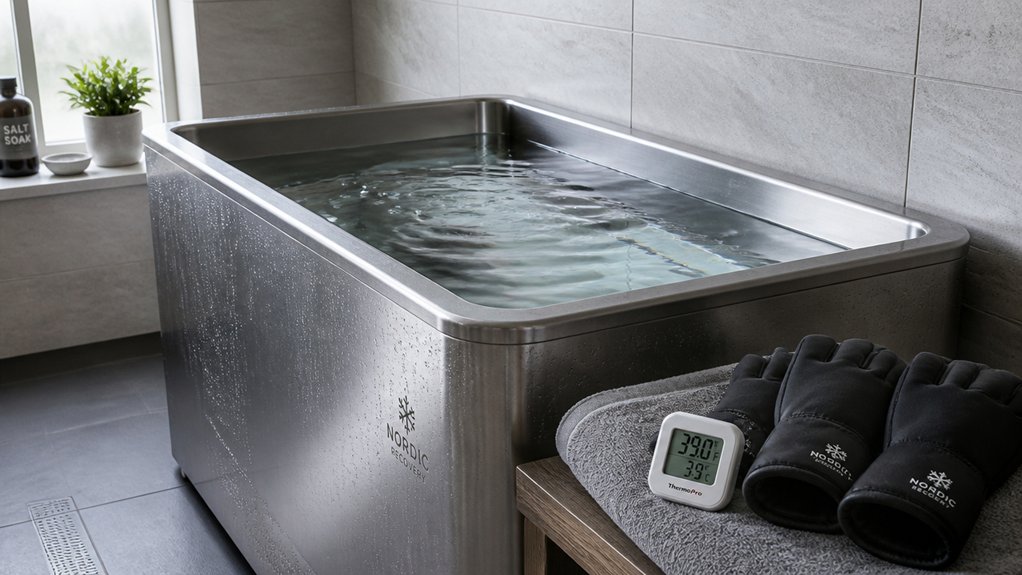
To stay safe during cold water immersion, you should focus on controlled breathing techniques, such as slow, deep inhales through your nose and evenly timed exhales. Start with water temperatures between 50-59°F and limit your time to 1-2 minutes to gradually build tolerance. Consistently practice gradual temperature adaptation, including cold showers, to improve comfort and endurance over time. Using a temperature control device or thermometer can help maintain safe and consistent water temperatures during your sessions.
Controlled Breathing Strategies
When performing cold water immersion, mastering controlled breathing techniques is essential for safety and comfort. Proper controlled breathing helps manage the body’s stress response and prevents panic.
Begin by taking a deep inhalation through your nose lasting 3-5 seconds to counteract cold shock. Hold your breath for a few seconds, then slowly exhale over the same duration to promote relaxation. Repeat these controlled breathing cycles to calm your nervous system and extend your immersion safely.
Remember to avoid rapid or shallow breathing, as it can worsen discomfort and cause irregular breathing. To build tolerance, practice breath control techniques outside of immersion, like cold showers. Consistent practice strengthens your ability to stay calm and in control during your submersion sessions. Incorporating tools such as breathing exercise devices can enhance your respiratory control and endurance effectively.
1. Deep inhalations over 3-5 seconds
2. Hold breath momentarily before exhaling
3. Slow, controlled exhalations
4. Repeat cycles to maintain calmness
Gradual Temperature Adaptation
Starting cold water immersion gradually allows your body to adapt safely and comfortably. Begin by choosing water at the warmer end of the recommended range, around 50-59°F (10-15°C). This helps your body acclimate without shock.
Start with short sessions of 1-2 minutes, then slowly increase duration to 3-5 minutes over multiple sessions. Incorporate controlled breathing techniques, such as deep nasal inhalations for 3-5 seconds and slow exhalations, to manage the cold shock response.
Using cold showers beforehand can help your nervous system progressively accept colder water. Always monitor how you feel—dizziness, shivering, or numbness signal it’s time to exit—to prevent hypothermia.
Considering insulation efficiency in your cold plunge tub can also enhance your comfort and safety during cold therapy sessions.
Patience and careful progression are key for safe, effective temperature adaptation.
How Can Cold Showers Help You Prepare for Full Immersion?
Have you considered how cold showers can prime your body for full immersion? They help you gradually acclimate to cold temperatures, reducing cold shock risk during an ice bath or full submersion.
Here’s how they prepare you:
- Builds mental toughness – regular exposure helps you tolerate cold stress incrementally.
- Improves breathing control – brief cold showers train controlled breathing, essential for managing shock.
- Enhances vascular response – cold exposure promotes blood vessel constriction and dilation, aiding recovery.
- Supports temperature adaptation – starting near 15°C and lowering gradually guarantees a safe, comfortable shift.
- Prepares your water treatment routine – acclimating to cold through showers can improve your understanding of water clarity and maintenance needs, especially with products like clarifiers and treatments designed for cold plunge water water clarity.
Incorporating cold showers sets the foundation for safer, more effective full immersion, helping you handle colder water with confidence.
How Do You Set and Maintain a Safe Water Temperature?
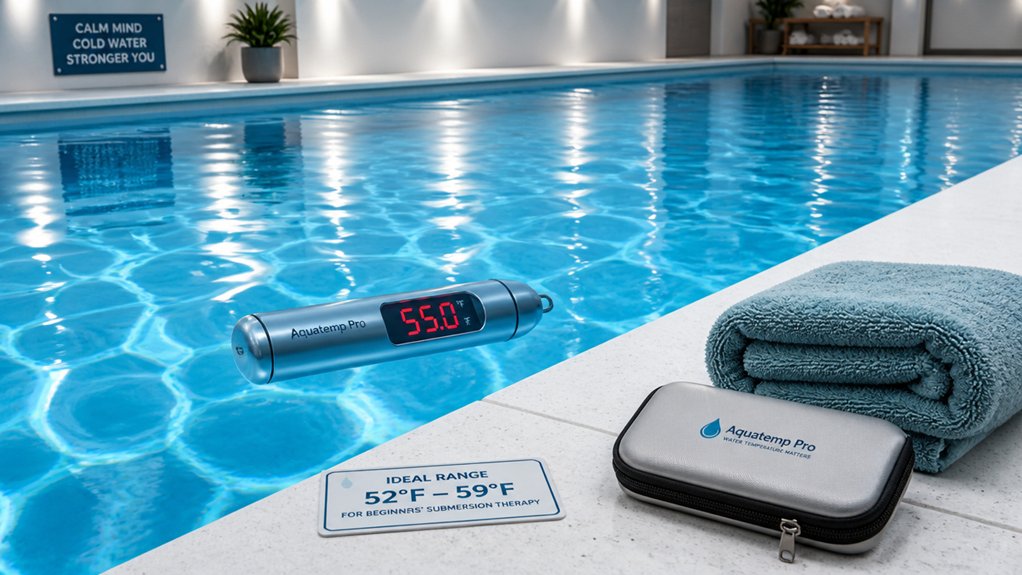
To keep your immersion safe, you need to set and maintain a consistent water temperature within the recommended range. Use a reliable thermometer to regularly check the water and make small adjustments as needed.
Taking these steps helps prevent sudden temperature changes that could pose risks during your session.
Maintaining Consistent Temperature
Maintaining a consistent water temperature is essential for safe and effective cold water immersion therapy. To achieve this, you need to regularly monitor the water with a reliable thermometer, ensuring it stays between 39-59°F (4-15°C).
Here are key steps:
- Use a thermometer to check the water temperature frequently.
- If using an ice bath or cold plunge tub, add small ice amounts gradually, stirring the water to distribute cold evenly.
- Prepare the water just before your session and keep it in a shaded, insulated area to prevent temperature fluctuations.
- Change the water often if you lack filtration or chilling systems, maintaining hygiene and consistent temperature.
These practices help you sustain a safe and controlled water environment throughout your therapy session.
Monitoring Water Coolness
Monitoring water coolness is essential to guarantee a safe and effective submersion therapy session. You should always use reliable thermometers to constantly track the water temperature before and during immersion, preventing dangerous fluctuations.
To prioritize safety, set the water temperature within the recommended range of 39-59°F (4-15°C), and avoid going outside this range. For beginners, gradually lower the temperature, starting closer to 59°F (15°C), to help with acclimatization and minimize cold shock risk.
Maintain water temperature by limiting replenishment or ice addition to controlled amounts, ensuring it doesn’t fall below safe levels. Regularly checking and adjusting the water temperature, especially when using natural sources or non-chilled tubs, helps prevent hypothermia and maintains a safe environment throughout the session.
Adjusting for Safety
Setting and maintaining a safe water temperature during immersion therapy requires careful attention and proactive adjustments. You should start at the warmer end of the range, around 15°C (59°F), and gradually lower it as your tolerance improves.
Using a precise thermometer helps you monitor and keep the water temperature consistent throughout your session, reducing the risk of hypothermia.
To adjust for safety:
- Begin with a temperature near 15°C and avoid sudden drops.
- Regularly check the water temperature during each session.
- Shorten immersion times initially to help your body acclimate.
- Adjust the temperature incrementally if you notice discomfort or changes in body response.
Following these steps guarantees you set and maintain a safe water temperature, making your immersion therapy both effective and safe.
How Long Should Beginners Stay in Cold Water?
How long should beginners stay in cold water? Starting with shorter durations helps you build confidence and improve your swimming skills safely.
It’s best to begin with 1 to 2 minutes in water closer to the warmer end of the 39-59°F (4-15°C) range to reduce shock and discomfort. As you become more comfortable and your body adapts, you can gradually increase your immersion time up to 3 to 5 minutes. However, avoid exceeding 10 to 15 minutes to prevent over-cooling and adverse effects.
Always monitor your physical responses, like dizziness or irregular breathing, and end the session immediately if you experience discomfort. Prioritizing safety guarantees you safely develop your tolerance and swimming skills during submersion therapy.
How Do You Recognize and Respond to Hypothermia Signs?
You need to recognize early signs of hypothermia like uncontrollable shivering or numbness, which indicate your body is getting dangerously cold.
Keep a close eye on any dizziness, fatigue, or clumsiness, and be ready to respond quickly.
If symptoms worsen, remove the person from the cold, dry them off, and rewarm gradually to prevent further health risks.
Recognize Physical Symptoms Early
Recognizing the early signs of hypothermia can be life-saving during submersion therapy. If you notice the following, it’s time to act immediately:
- Uncontrollable shivering, and muscle soreness or stiffness in extremities.
- Numbness or tingling sensations in your fingers, toes, or lips.
- Pale, blue, or mottled skin indicating poor blood circulation.
- Confusion, dizziness, fatigue, or slurred speech signaling mental decline.
If you observe any of these symptoms, exit the water promptly. Dry off, dress in dry clothes, and warm up gradually with warm drinks and blankets. Avoid sudden heat or hot showers, which can be dangerous.
Early recognition helps prevent escalation to dangerous hypothermia stages.
Monitor Body Temperature Changes
Monitoring body temperature during submersion therapy is essential to guarantee safety. You need to recognize early signs of hypothermia, such as intense shivering, numbness, pale skin, or loss of coordination. If you notice dizziness, confusion, or slurred speech, these are severe indicators requiring immediate action. Always prevent unsupervised immersion, especially for beginners, and limit water exposure to 1-2 minutes initially. Stay attentive to your body’s signals and stop therapy if symptoms appear.
| Symptom | Action | Emotional Impact |
|---|---|---|
| Intense shivering | Exit water, dry off, begin rewarming | Anxiety over worsening |
| Numbness, pale skin | Seek warmth, monitor closely | Fear of losing control |
| Dizziness, confusion | Stop therapy, seek medical advice | Relief and safety reassurance |
Respond Quickly to Signs
When signs of hypothermia appear during submersion therapy, quick action can prevent serious health risks. Recognizing early symptoms is vital for water safety. If you notice uncontrollable shivering, numbness, pale or blue skin, dizziness, or confusion, respond immediately.
To guarantee safety:
- Exit the cold water immersion promptly if symptoms like nausea or disorientation occur.
- Gently warm the person with dry clothes, towels, and warm beverages—avoid hot showers.
- Monitor their condition closely after exiting.
- Seek medical attention if symptoms worsen or persist, preventing serious health complications.
Quick response minimizes risks, emphasizes water safety, and helps secure a safe experience during submersion therapy. Always remember, never dive solo—having a buddy or professional helps you react fast.
Why Is It Important to Never Submerge Alone?
Why is it essential to never submerge alone? Safety tips emphasize having a buddy or supervision during cold water immersion because immediate assistance can be lifesaving if you experience dizziness, irregular breathing, or loss of consciousness.
A companion reduces the risk of drowning or hypothermia-related emergencies, especially in open water or ice baths. Monitoring by another person helps identify early warning signs like shivering, numbness, or blue skin, so you can exit promptly.
Inexperienced users might encounter a cold shock response causing irregular breathing, which a buddy can help manage or summon help for. Emergency intervention requires quick action, making it vital to avoid isolating yourself during submersion. Following this safety tip can prevent serious outcomes and guarantee a safer experience.
How Should You Adjust Cold Exposure Based on Your Body’s Response?
How do you properly adjust cold exposure based on your body’s response?
If it’s your first time, start with warmer water in the 39-59°F (4-15°C) range and keep sessions brief—just 1-2 minutes.
Begin with 39-59°F water for 1-2 minutes during your first cold exposure session.
Pay close attention to symptoms like dizziness, nausea, or irregular breathing; if any appear, exit immediately to prevent shock or hypothermia.
Use controlled, deep breathing techniques to stay calm and manage cold shock.
Once you’re comfortable and symptoms diminish, gradually extend your time and lower the water temperature over multiple successful sessions.
Remember, always rewarm gradually with dry clothes and warm beverages.
Listen to your body, and don’t push beyond its current tolerance, especially during your initial experiences.
When Is Cold Water Therapy Not Recommended Due to Health Conditions?
Have you considered how certain health conditions can make cold water therapy risky? If you’re a parent thinking about children, keep in mind that young kids with heart conditions or high blood pressure shouldn’t undergo cold water immersion, as it could strain their cardiovascular system.
Children with Raynaud’s disease should avoid it because extreme cold can trigger blood vessel constriction and circulation issues.
Those with asthma, COPD, or other respiratory problems might experience breathing difficulties during cold water exposure.
Also, if a child has open wounds, skin conditions, or infections, immersing them could worsen symptoms or spread infections.
Additionally, cold water therapy isn’t suitable for children under the influence of medications or substances that impair temperature regulation or sensory responses.
Always consult a healthcare professional before proceeding.
How to Keep Your Equipment and Water Clean to Stay Safe?
Maintaining clean equipment and water is essential for a safe and effective cold water therapy session. Follow these safety protocols to keep everything hygienic:
Keeping equipment and water clean ensures a safe, hygienic cold water therapy experience.
- Regularly empty and refill tubs or ice baths to prevent bacterial buildup and guarantee water hygiene.
- Use natural, non-toxic sanitizers like hydrogen peroxide or activated oxygen systems, avoiding harsh chemicals.
- Never share towels or equipment; always rinse off before immersion to limit contaminants.
- Clean and disinfect surfaces, rims, and handles with antimicrobial solutions after each use to reduce infection risks.
Additionally, keep your setup covered or enclosed to prevent debris, insects, and airborne contaminants from entering the water. Properly maintaining your equipment and water aligns with safety protocols, securing a safer experience each time.
What Are Best Practices for Safe Entry and Exit?
What’re the key safety practices you should follow when entering and exiting a submersion therapy tub?
For children and adults, entering the water gradually helps prevent cold shock and allows your body to adjust. Use deep, controlled breathing to stay calm during immersion. Avoid sudden movements to prevent dizziness or imbalance, and make sure the surface is slip-resistant.
Limit initial immersion to 1-2 minutes, especially for beginners, and exit promptly if you feel dizzy, nauseous, or overly uncomfortable. When leaving the water, do so carefully, supporting yourself if needed.
Rewarm gradually with dry clothes and warm beverages, avoiding hot showers immediately afterward. Following these practices guarantees safety and maximizes the benefits of your submersion therapy experience.
What Emergency Tools and Contacts Should You Have Ready?
Are you prepared for emergencies during submersion therapy? If you’re working with young children, it’s essential to have the right tools and contacts ready.
Ensure safety with proper tools and contacts before starting submersion therapy with children.
First, keep a fully charged phone nearby, so you can quickly call emergency services like 9-1-1 if needed. Second, have reach or throw rescue devices accessible to assist someone in trouble without risking your safety.
Third, maintain a stocked first aid kit close to the therapy area for minor injuries or until help arrives. Finally, display emergency contact numbers prominently, including local medical services and a trusted nearby person.
Using life jackets or flotation aids for young children or inexperienced swimmers adds an extra layer of safety, preventing unexpected incidents.
How Can You Track Your Progress and Stay Attuned to Your Body?
How can you stay alert to your body’s signals while practicing submersion therapy near water? Pay close attention to physical cues like dizziness, shivering, numbness, or irregular breathing during and after immersion.
Use standardized feedback forms or journals to record details such as immersion duration, water temperature, and how comfortable you felt. Tracking these factors helps you monitor your adaptation and tolerance over time.
Notice recovery indicators like reduced muscle soreness or improved mood after each session, and adjust accordingly.
Keep open communication with a trained supervisor or buddy, reporting any discomfort or adverse symptoms immediately.
Frequently Asked Questions
What Precautions Should Be Taken During Aquatic Therapy?
During aquatic therapy, you should guarantee trained supervision, conduct thorough assessments, maintain clean, safe environments, monitor clients closely for discomfort or symptoms, and use clear communication to adjust therapy, preventing accidents and guaranteeing overall safety.
What Are 5 Basic Rules of Water Safety?
You should always supervise closely, make certain everyone can swim or has proper gear, secure pools with barriers, keep emergency devices nearby, and designate a water watcher to prevent accidents and keep everyone safe while in or around water.
Do You Need to Know How to Swim for Float Therapy?
No, you don’t need to be a swimmer for float therapy, but knowing basic water skills helps you stay calm and confident. If you can’t swim, inform staff and consider supervision to guarantee your safety throughout the session.
What Are the Potential Risks or Side Effects of Aqua Therapy?
You might experience cold shock, dizziness, or nausea if water is too cold or you stay submerged too long. Risks include hypothermia, especially with prolonged exposure, and health issues for certain medical conditions, so always follow safety guidelines.