To boost mental wellbeing with cold plunges, start with mindfulness and controlled breathing before and after immersion to activate your parasympathetic nervous system. Visualize positive outcomes and use affirmations to enhance mood and resilience. Pair your plunges with physical activity or TIPP skills like muscle relaxation for better stress regulation. Incorporate temperature cycling of heat and cold to deepen relaxation, and establish a regular routine tailored to how you feel. Keep going; you’ll discover even more ways to elevate your mental health.
How Cold Plunging Connects to Your Mind and Body
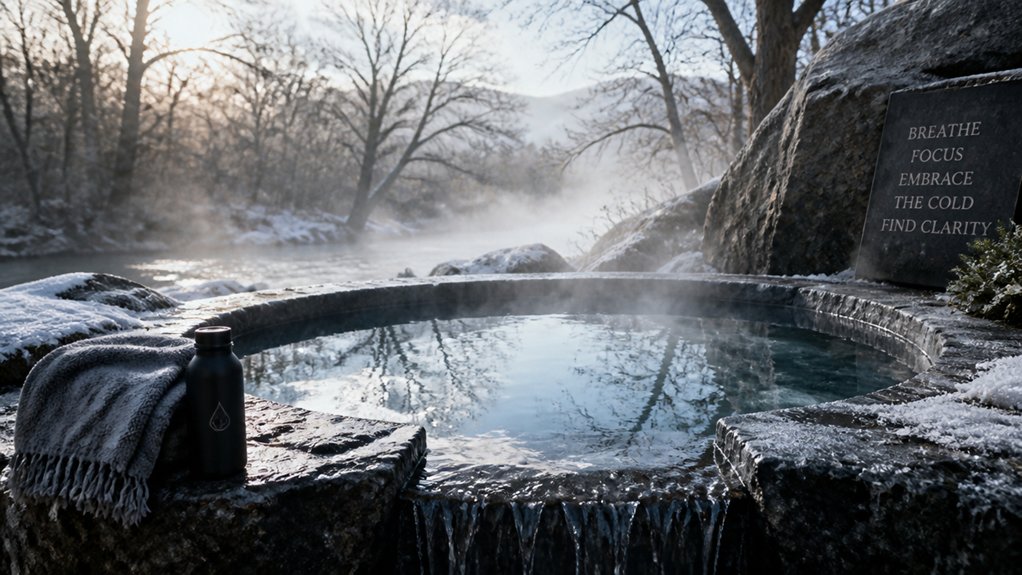
Cold plunging directly stimulates your nervous system, creating powerful links between your mind and body.
When you engage in cold water immersion, your sympathetic nervous system activates quickly, boosting norepinephrine levels that sharpen focus, increase alertness, and lift your mood. This response also lowers cortisol, helping you handle stress better.
Cold water immersion boosts norepinephrine, sharpening focus, lifting mood, and reducing stress for better resilience.
The cold shock response triggers the release of cold-shock proteins like RBM3, which support neural repair and protect mental well-being over time.
Facial immersion stimulates the parasympathetic nervous system through the vagus and trigeminal nerves, calming you via the diving reflex and helping regulate emotional states. Incorporating adaptogen blends can further enhance your stress resilience and recovery during cold plunge routines.
How to Use Meditation and Mindfulness Before and After Cold Plunging
You can enhance your cold plunge experience by practicing mindful breathing techniques beforehand to help manage your body’s initial cold shock response. Incorporating a guided meditation device with visual cues or calming sounds can significantly deepen your mental preparedness. Afterward, engaging in reflection or guided meditation strengthens relaxation and mood-boosting effects. Incorporating these routines consistently supports better emotional regulation and stress resilience over time.
Preparing Mindful Breathing Techniques
Preparing your mind with mindful breathing techniques before and after cold plunging can greatly enhance your experience and benefits. Focus on slow, deep breaths to regulate your autonomic nervous system, minimizing the cold shock response and promoting emotional control.
To maximize benefits, consider these steps:
- Practice mindful breathing before cold water immersion to prepare your mind and body.
- Use mindfulness meditation during and after the plunge to support parasympathetic activation and calm your nervous system.
- Incorporate TIPP skills—temperature exposure with paced breathing—to enhance emotion regulation and reduce distress.
- Utilize breathing exercise tools that offer adjustable resistance and real-time feedback to optimize your respiratory training and resilience.
This routine boosts norepinephrine and endorphin responses, fostering resilience, mood stabilization, and faster recovery through vagus nerve stimulation.
Consistent breath-focused mindfulness routinely enhances the mental health benefits of cold water immersion.
Post-Plunge Reflection Practices
Engaging in mindful meditation after your cold plunge helps solidify the relaxation response and deepen your sense of calm.
Post-plunge reflection using breath-focused mindfulness supports the shift from sympathetic arousal back to relaxation by sustaining parasympathetic activation, thanks to the vagal tone boosted during facial immersion. Incorporate mindfulness practices that encourage awareness of bodily sensations and emotional shifts to reinforce mood improvements and emotional resilience.
Adding progressive muscle relaxation after your cold plunge eases residual tension and complements the calming effects of cold exposure.
Short, daily sessions of cold face immersion combined with mindful attention to temperature sensations serve as practical TIPP skills, helping you regulate emotions effectively before and after cold plunging.
Additionally, monitoring your body’s oxygen saturation levels with accurate pulse oximeters can enhance your awareness of physiological responses during cold exposure, supporting safer and more effective recovery routines.
Deep Breathing Techniques to Maximize Stress Relief During Cold Water Immersion
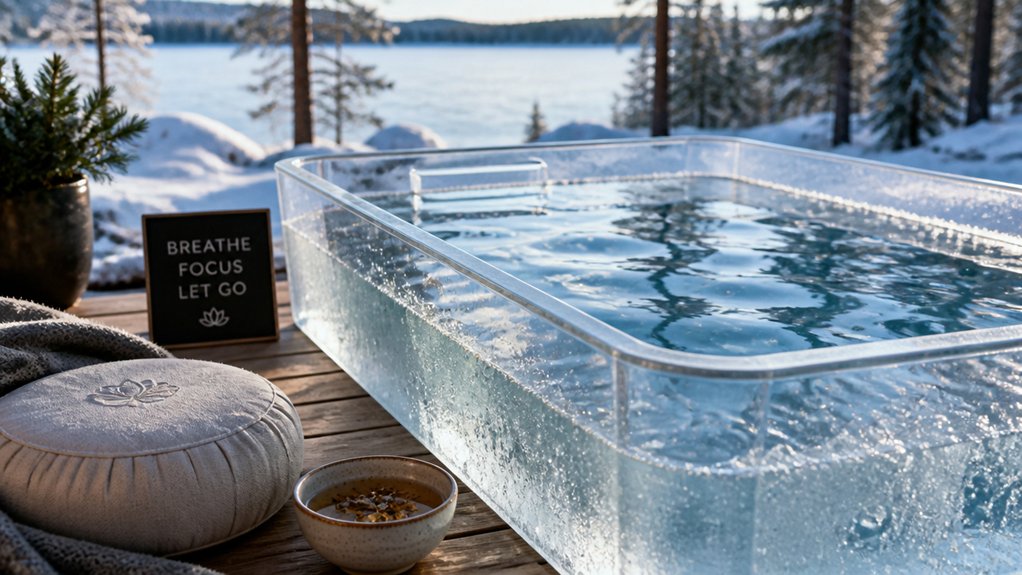
Ever wonder how deep breathing amplifies the stress-relief benefits of cold water immersion? By practicing deep breathing techniques during your cold plunge, you activate your parasympathetic nervous system, promoting calmness and relaxation.
Controlled, paced breathing helps regulate your body’s cold shock response, minimizing involuntary gasping and hyperventilation for a safer, more comfortable experience.
To maximize benefits, focus on:
- Sustained, even inhales and exhales to enhance relaxation
- Slow, deliberate breathing to stimulate emotional regulation
- Synchronizing breath with your immersion to deepen parasympathetic activation
Deep breathing during cold water immersion not only reduces stress but also improves overall emotional regulation.
Neurophysiological studies show that this practice strengthens communication between brain regions responsible for stress resilience and calmness, boosting mental wellbeing. Incorporating vital sign monitoring can help you optimize your breathing technique for better safety and effectiveness.
Visualize and Affirm: Boost Your Mood While Cold Plunging
Visualizing positive outcomes and affirming your strength during cold plunges can greatly boost your mood and emotional resilience. When you visualize calm and success, you reinforce the brain’s stress adaptation pathways triggered by cold receptor stimulation, enhancing emotional regulation. Incorporating wavelengths like 650 nm red and 850 nm infrared into your mental practices can further amplify these benefits by promoting deeper tissue recovery and relaxation. Affirmations, like telling yourself you’re strong or resilient, work alongside cold plunges to promote a sense of confidence and essential energy. This mental practice aligns with increased endorphin and norepinephrine release, boosting alertness and feelings of well-being. Engaging in positive imagery during cold immersion shifts your emotional state, reducing tension and fatigue. By combining visualization and affirmations, you support consistent mood improvements, making cold plunges not just physically invigorating but also psychologically empowering.
Pairing Cold Water Plunges With Exercise for Better Mood and Resilience

Pairing cold water plunges with exercise creates a powerful synergy that can greatly boost your mood and resilience. When you combine the two, you activate TIPP skills—temperature adjustments, intense exercise, and calming techniques—that enhance emotion regulation and reduce stress.
Exercise before cold plunging triggers sympathetic nervous system activation, increasing norepinephrine release, which improves mood and alertness after immersion. Additionally, vigorous activity paired with cold exposure boosts endorphins, providing pain relief and a “runner’s high.”
Incorporating resistance bands or other portable workout tools can help you perform effective warm-up exercises before your cold plunge, optimizing the benefits during physical activity. Regularly combining these practices can lead to: 1. Long-term reductions in cortisol levels, supporting stress management. 2. Enhanced mental health through better emotion regulation. 3. Faster recovery from physical strain, enabling consistent mood-boosting routines.
Alternating Heat and Cold: How to Maximize Relaxation and Stress Relief
Alternating between heat and cold boosts circulation, helping your body recover faster and feel more relaxed. This contrast activates your nervous system, balancing stress responses and inviting deep calmness. Incorporating infrared heat therapy can further enhance these benefits by penetrating deeply into tissues and promoting detoxification.
Enhancing Circulatory Benefits
Using a combination of heat and cold therapies can greatly boost your circulatory health while simultaneously promoting relaxation and reducing stress. Alternating heat, like infrared sauna sessions, with cold water plunges creates cycles of vasodilation and vasoconstriction. This process improves blood flow and strengthens your cardiovascular system.
Before cold immersion, applying heat warms your muscles and dilates blood vessels, which lessens cold shock and supports smoother circulation.
To maximize benefits, consider these key points:
- Use 10-15 minutes of heat, followed by 2-3 minutes of cold water immersion.
- Repeat cycles 2-3 times to promote vasodilation and vasoconstriction.
- Focus on water temperature and duration to optimize circulation and health.
This routine enhances inflammation reduction, speeds recovery, and sustains cardiovascular resilience.
Balancing Stress Responses
Balancing stress responses through thermal contrast therapy involves intentionally shifting between heat and cold to activate your nervous system’s opposing branches.
Alternating heat, such as in a sauna, and cold immersion triggers dynamic responses in your sympathetic and parasympathetic nervous systems, helping to improve stress regulation. Heat exposure causes vasodilation and muscle relaxation, while cold immersion induces vasoconstriction and sympathetic activation. This process helps lower cortisol levels more effectively than using cold or heat alone, supporting mood stabilization and resilience.
Combining these exposures stimulates the production of beneficial cold-shock proteins and endorphins, which promote neural repair and emotional well-being. Gradually acclimating yourself with alternating heat and cold enhances these benefits while minimizing risks like cold shock or cardiovascular strain, optimizing your stress response balance.
Promoting Deep Relaxation
By intentionally shifting between heat and cold, you can deeply enhance relaxation and reduce stress. Alternating heat exposure via saunas or infrared therapy with cold immersion stimulates the parasympathetic nervous system and sharpens stress relief.
This contrast causes blood vessels to dilate during heat, improving circulation and softening muscles, which then amplifies cold-induced vasoconstriction. The rapid temperature shifts leverage physiological hormesis, reducing cortisol levels more effectively and boosting endorphin release to elevate mood during cold phases.
To maximize deep relaxation, follow a protocol of:
- 3-4 cycles of 5-15 minutes in heat, immediately followed by
- 1-3 minutes of cold immersion,
- Repeating to enhance autonomic nervous system regulation and promote recovery from mental fatigue.
Create a Consistent Cold Plunging Routine to Improve Mental Toughness
Creating a consistent cold plunging routine is essential for building mental toughness and resilience. By practicing regular full-body immersion at temperatures around 10–15°C for 2–15 minutes, you activate stress adaptation pathways and strengthen your sympathetic nervous system responses.
Gradually increasing cold exposure duration and intensity helps develop both physiological and psychological resilience, leading to lower cortisol levels and better stress management. Pair your plunges with paced breathing and muscle relaxation techniques like TIPP skills to enhance emotion regulation and mental hardiness.
Over time, consistent cold plunging elevates norepinephrine levels, which improve focus, alertness, and mood stability. Scheduling these sessions several times weekly guarantees long-term mood regulation and reduces negative emotions such as tension and depression, reinforcing your mental toughness.
Tune Your Routine Based on How You Feel
How you feel on a given day should guide adjustments to your cold plunging routine. Listening to your mental state helps optimize benefits like mood regulation and stress reduction.
Adjust your cold plunging based on how you feel to enhance mood and reduce stress effectively.
If you’re low on energy or stressed, try brief facial cold water immersions to activate the parasympathetic nervous system quickly without full-body shock.
Conversely, on days when you feel mentally fatigued or anxious, pair cold plunges with paced breathing and muscle relaxation techniques to boost mood regulation and resilience.
When feeling well, increase full-body exposure times and frequency to reinforce long-term improvements in mental health through sustained norepinephrine release, which enhances alertness and stress tolerance.
Always listen to your body’s signals, adjusting temperature and duration or opting for cold showers if needed to protect your mental wellbeing.
Frequently Asked Questions
What Are the Mental Health Benefits of Cold Plunge?
Cold plunges boost your mental health by elevating mood, reducing stress hormones, and increasing positive feelings. They improve alertness, self-esteem, and resilience, helping you manage anxiety and depression while fostering long-term emotional stability and a sense of pride.
How to Mentally Handle a Cold Plunge?
To handle a cold plunge mentally, focus on slow, controlled breathing, stay present with mindfulness, and remind yourself of the health benefits. Gradually build your resilience, trust the process, and shift attention away from discomfort.
What Is the Psychology Behind Ice Baths?
The psychology behind ice baths involves activating stress adaptation pathways, boosting endorphins, enhancing mood, and fostering resilience. You experience increased mental focus, emotional regulation, and a sense of achievement, which collectively promote positive emotional shifts and mental toughness.
How to Get the Most Benefits From Cold Plunge?
To get the most benefits, start slowly with shorter sessions at warmer temps, and gradually increase duration and coldness. Combine plunges with breathing and relaxation techniques, and pair them with other wellness routines like exercise or heat therapy for enhanced mental and physical recovery.