After childbirth, you can use cold therapy in the first 72 hours to reduce swelling and pain by applying ice packs for 15 minutes every 2-3 hours with a cloth barrier. Once swelling decreases, switch to warm sitz baths or heat packs for muscle relaxation and improved circulation, usually after day 3. Remember to always wrap packs in cloth and limit sessions to prevent skin damage. If you want expert tips on creating a safe and effective recovery plan, keep exploring.
How Cold Therapy Aids Your Postpartum Recovery
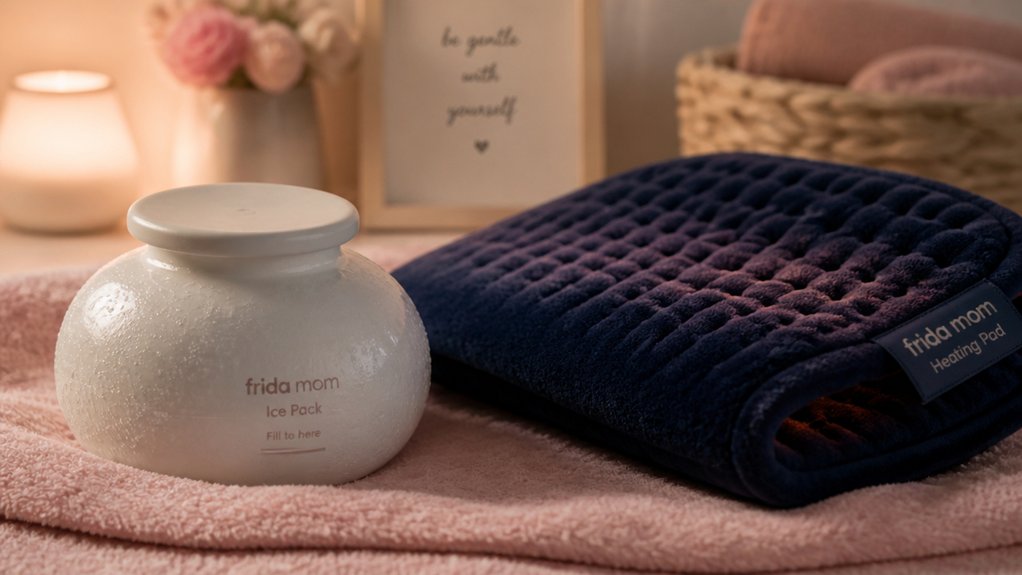
In the first few days after giving birth, cold therapy can be a highly effective way to reduce swelling, soreness, and inflammation around your perineal area. Using Cold Therapy packs helps slow blood flow to this region, quickly alleviating discomfort. To ensure optimal protection during application, consider using products like anti-chafe balms that create a barrier against moisture and friction, enhancing comfort and preventing skin irritation. These packs aren’t just for soreness—they also provide relief from hemorrhoids, C-section incisions, and engorged breasts when used between feedings.
When to Use Ice Packs Right After Birth
You should start using ice packs within the first 72 hours after birth to help reduce swelling and alleviate soreness in your perineal area. Apply them for 15 minutes every 2-3 hours, making sure to use a cloth barrier to protect your skin. This cold therapy can ease discomfort, control bleeding, and minimize bruising during this vital early recovery period. Ensuring your ice packs are waterproof and durable can help maintain their effectiveness throughout the recovery process.
First 72 Hours
During the first 72 hours postpartum, applying ice packs to the perineal area can greatly ease swelling, reduce inflammation, and alleviate pain, especially if you’ve experienced tears or stitches. Use cold therapy packs for 15-minute intervals every 2-3 hours, ensuring you place a cloth barrier between the pack and your skin to prevent frostbite. Incorporating cold only therapy with reusable and disposable packs can enhance comfort and aid in swelling reduction. These packs also soothe engorged breasts and diminish burning from swollen hemorrhoids during this early recovery phase. Be careful not to overdo it, as prolonged icing may slow healing by limiting circulation and stiffening muscles.
If you’re allergic to hospital-provided pads, prepare your own safe, sensitive skin–friendly frozen pads for effective cold therapy. Proper use of cold therapy packs can make your initial postpartum days more manageable and comfortable.
Reducing Postpartum Swelling
Right after childbirth, applying ice packs to the perineal area can be highly effective for reducing swelling and numbing soreness from tears or incisions. Use cold therapy packs within the first three days postpartum to control inflammation, swellings, and discomfort.
A well-designed ice pack can also provide consistent cold therapy with long-lasting cooling gel, ensuring prolonged relief during those critical initial days. Apply the packs for 15 minutes every 2–3 hours, always with a cloth barrier between the skin and ice to prevent frostbite and maximize comfort. Cold therapy helps manage pain from hemorrhoids and C-section sites while supporting the natural healing process.
Keep in mind, minimal or controlled ice use is best to avoid slowing circulation or delaying healing. This approach provides soothing relief during the critical early days, aiding your recovery and easing your discomfort.
Managing Perineal Soreness
Applying ice packs immediately after childbirth helps manage perineal soreness effectively. Cold therapy packs reduce swelling, soreness, and pain from tears or stitches during the first 3 days postpartum. Use ice packs for about 15 minutes every 2-3 hours, with a cloth barrier between your skin and the cold source to prevent frostbite. This helps numb pain and control inflammation. You can also combine cold therapy with witch hazel pads for extra soothing relief. Remember not to apply ice for too long to avoid muscle stiffness or delayed healing. After three days, shift to warm sitz baths to promote circulation and recovery. Incorporating moisturizing ingredients like aloe and botanical extracts can further aid in soothing your skin during the healing process.
Proper Ways to Apply Frozen Pads and Cold Compresses
When applying frozen pads or cold compresses, always place a cloth barrier between the skin and the ice to prevent frostbite. Limit each session to 15 minutes and remove the cold pack to let your skin recover, reducing the risk of tissue damage. Be cautious when using cold therapy on sensitive or compromised skin, and make certain reusable packs are properly cleaned and refrozen for next use. Additionally, ensure the overheat protection sensors are functioning correctly to avoid excessive cooling or injury.
Use Cloth Barriers
Using a cloth barrier between frozen pads or cold compresses and your skin is essential to prevent frostbite and irritation during postpartum recovery. Always place a clean, sensitive skin–friendly cloth between the cold source and your skin. This protects your postpartum areas from direct contact, reducing the risk of muscle stiffness and delayed healing. Incorporating fast-absorbing topical creams after cold therapy can further support muscle and joint recovery. Apply the frozen pad or compress for about 15 minutes every 2-3 hours during the first three days postpartum for ideal swelling and pain relief. If needed, moisten or change the cloth to stay comfortable and prevent moisture buildup.
Limit Application Time
To prevent skin damage and frostbite, limit cold therapy packs or frozen pads to no more than 15-20 minutes per application. This duration helps guarantee effective pain relief without risking cold burns or tissue damage.
Use a cloth or disposable sleeve as a barrier between the cold pack and your skin to protect sensitive tissues, especially around stitches or areas with reduced sensation. Wait at least 1-2 hours before reapplying to allow your skin’s temperature and circulation to normalize.
Follow your healthcare provider’s instructions or hospital guidelines, which often recommend limited cold therapy cycles during the first three days postpartum. Keeping careful track of application times maximizes comfort and safety during your recovery process.
Additionally, understanding the importance of controlled therapy is crucial, as proper heat and cold use can influence your healing outcomes and overall comfort.
Prepare Sensitive Skin
Protecting your sensitive skin during cold therapy is key to your postpartum comfort and safety. Always place a cloth or disposable sleeve barrier between cold packs and your skin to prevent frostbite and irritation.
Check the temperature of the cold pack before applying, ensuring it’s not too cold, especially on delicate areas like your perineum or incision sites.
Limit each application to 15 minutes and wait at least 2–3 hours before reapplying to avoid skin damage or restricted circulation.
Use hypoallergenic, skin-friendly cold packs if you’re prone to sensitivities, and avoid hospital products that might cause reactions.
After each use, clean the reusable cold therapy packs with mild soap and water, then let them air dry fully to maintain hygiene and prevent infections.
Transitioning From Cold to Warm Therapy : When and How
When is the right time to shift from cold to warm therapy postpartum? Typically, after day 3, when swelling lessens, you can start adapting. Use cold therapy packs sparingly as recommended by the BE CALM protocol, which advises minimizing ice to avoid slowing circulation. Adjusting involves replacing ice with heat, like sitz baths or heat packs, to promote circulation and healing. Timing varies based on individual recovery, but generally, after 4 days, it’s safe to switch. The table below helps you determine when to shift:
| Days Postpartum | Symptoms | Recommended Therapy |
|---|---|---|
| 0-3 days | Swelling, inflammation | Cold Therapy packs |
| Day 4+ | Reduced swelling, pain from cramps | Warm therapy (heat packs) |
| — | Relax muscles and boost healing |
Benefits of Heat Therapy for Muscle Relaxation and Cramps
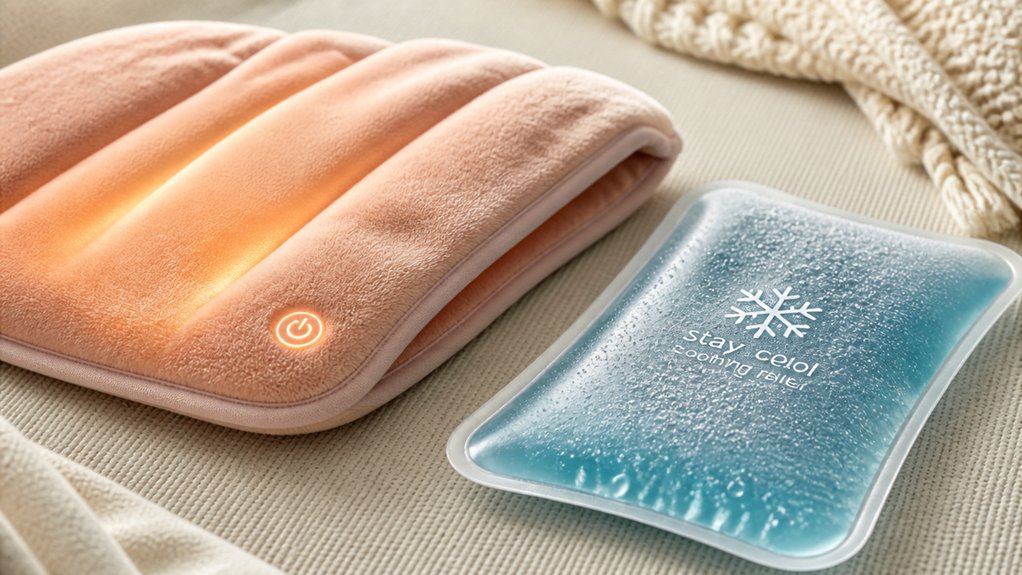
Heat therapy offers significant benefits for postpartum recovery by promoting blood circulation and relaxing tense muscles. Applying warmth helps relax pelvic and uterine muscles, easing postpartum cramps, especially during breastfeeding-related afterpains.
Warmth increases tissue flexibility and oxygen flow, supporting faster healing of muscle soreness and tension caused by childbirth. Using heat therapy after the initial swelling phase (typically after day 3 postpartum) reduces muscle stiffness and enhances mobility in the lower back and hips.
Warm sitz baths or contour heat packs designed for postpartum use can soothe uterine cramps while relaxing surrounding muscles. Controlled heat application, avoiding excessive temperatures, helps relieve discomfort without increasing inflammation or irritating sensitive postpartum tissues.
As a result, heat therapy can be a valuable tool for easing postpartum muscle tension and cramps.
Safe Tips for Using Heating Pads During Recovery
When using a heating pad during postpartum recovery, make sure the heat is warm—not hot—to prevent burns.
Limit each session to 15-20 minutes and always monitor your skin’s response for redness or irritation.
Proper temperature settings, short sessions, and skin checks are key to safe and effective heat therapy.
Proper Temperature Settings
Proper temperature settings are essential for safe postpartum recovery with heating pads. You should heat the pack in short bursts of about 5 seconds to prevent overheating, which can cause burns or damage. Always test the heat on your skin before applying it to make certain it feels warm but comfortable.
Avoid excessive heat that might lead to frostbite or burns, especially on sensitive postpartum tissues. Limit your heat therapy sessions to around 20 minutes, with at least an hour between uses, to promote safe healing.
Never use a heating pad straight from frozen without proper thawing, as sudden heat can harm your skin. To keep hygiene and prevent irritation, use the pack with proper sleeves or cloth barriers during every session.
Limit Session Duration
Limiting the duration of each heating pad session helps prevent skin burns and protects sensitive postpartum tissues from overheating. To do this, always limit session duration to about 15-20 minutes. This brief exposure helps guarantee your skin and underlying tissues aren’t subjected to excessive heat, reducing the risk of burns or irritation.
Remember to take at least a one-hour break between sessions, allowing your skin and tissues to rest and recover. Always use a cloth barrier between the heating pad and your skin to further reduce the risk of direct heat damage.
Avoid using a heating pad on areas with poor circulation, numbness, or open wounds like a recent C-section incision without medical advice. Follow product-specific instructions to guarantee safe, effective heat therapy postpartum.
Monitor Skin Responsiveness
Monitoring your skin’s response during heat therapy is essential to prevent burns or irritation. Always place a cloth barrier between the heating pad and your skin, and check for redness or irritation frequently.
When using heat packs, limit application to about 20 minutes per session, with at least an hour between uses. To avoid overheating, heat the pad in short bursts—such as 5 seconds—and follow the manufacturer’s instructions carefully.
Before applying to sensitive postpartum areas, test the temperature on your inner wrist to verify it’s not too hot. Avoid using heating pads on areas with poor circulation, numbness, or decreased skin sensitivity.
For cold therapy packs, always confirm they’re appropriately wrapped and monitored to prevent skin damage while balancing their soothing effects.
Combining Cold and Heat Treatments for Faster Healing
Combining cold and heat treatments during postpartum recovery can greatly speed up healing by addressing different needs at each stage.
Early on, cold therapy packs help reduce swelling, inflammation, and pain in areas like the perineum or C-section incisions. Use them for 15-20 minutes every 2-3 hours, always with a cloth barrier to prevent frostbite.
Once initial swelling decreases, shift to heat therapy from day 4 onward to promote circulation, relax pelvic muscles, and ease cramps. You can do this with warm sitz baths or heat packs.
To maximize healing, follow this approach:
- Apply cold therapy packs in the first days postpartum.
- Switch to heat treatments after initial swelling subsides.
- Use heat to improve blood flow and tissue repair.
- Combine both methods for balanced recovery.
How to Make Reusable Ice and Heat Therapy Packs at Home
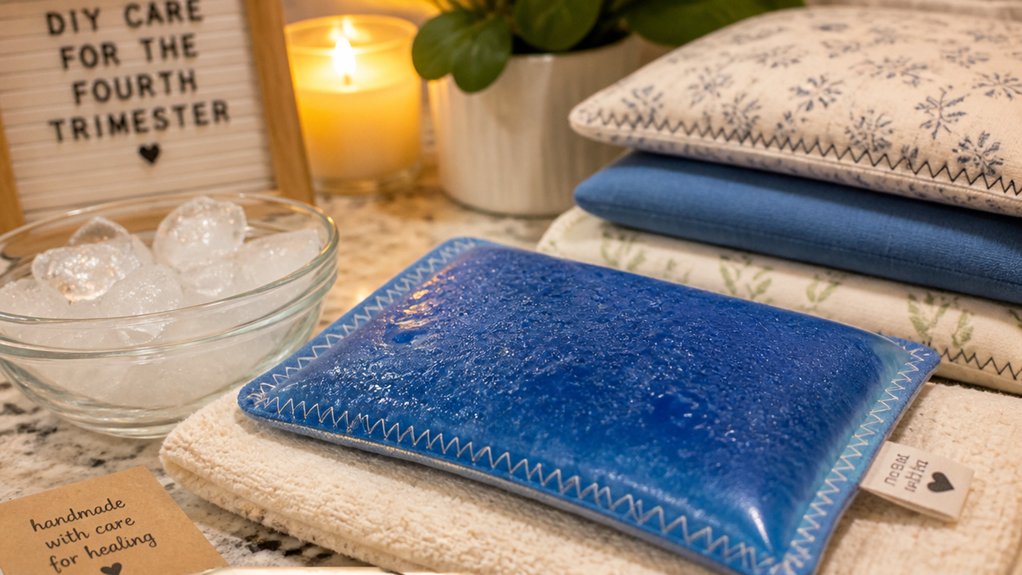
Creating reusable ice and heat therapy packs at home is simple and cost-effective, offering a convenient way to support your postpartum recovery.
Homemade ice and heat packs are affordable, simple options to aid your postpartum healing.
To make cold therapy packs, fill a clean, sealable plastic bag with one part water and two parts rubbing alcohol, then freeze for about four hours. This creates a flexible gel perfect for soothing sore areas.
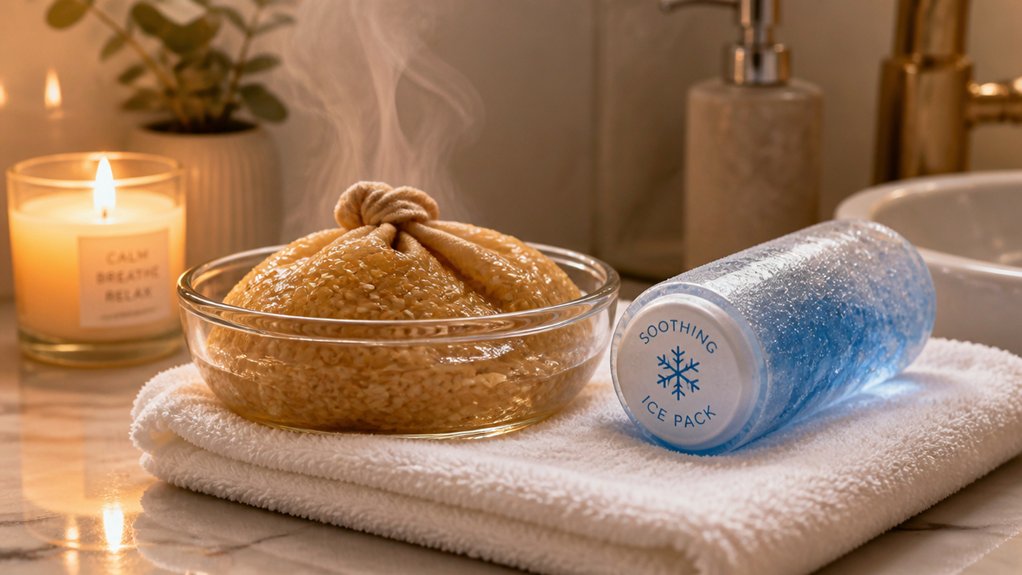
For heat therapy, fill a fabric pouch or sock with dry rice or uncooked beans, then microwave in 20-30 second intervals until warm.
Always wrap these homemade packs in a cloth barrier before applying to your skin to prevent burns or frostbite. Limit use to 15-20 minutes and regularly inspect the packs for leaks or damage to guarantee safety and hygiene during your recovery.
Top Tips for Using Ice and Heat Safely and Effectively
To get the most benefit and stay safe, focus on proper application techniques, like using a cloth barrier and avoiding direct skin contact.
Pay attention to timing and duration; limit ice to 20 minutes and switch to heat after swelling subsides.
Be alert for warning signs, such as increased pain or skin changes, and stop treatments if they occur.
Proper Application Techniques
Using ice and heat safely during postpartum recovery helps reduce discomfort and promotes healing; however, it’s essential to follow proper application techniques.
Here are key tips:
- Always use cold therapy packs wrapped in a cloth barrier to prevent skin damage, applying them for 15-20 minutes every 2-3 hours during the first 3 days.
- For heat therapy, switch to warm sitz baths or heated packs after day 3 to relax muscles and boost circulation.
- Never place ice or heat directly on your skin—test packs first to verify they’re at a safe, comfortable temperature.
- Limit each session to about 20 minutes to avoid muscle stiffness or burns, and follow manufacturer instructions for reusable packs.
Proper application promotes effective healing and safe comfort.
Timing and Duration Tips
Timing and proper duration are key to getting the most benefit from your ice and heat therapies while keeping your skin safe.
For cold therapy packs, use them during the first 3 days postpartum for 15 minutes every 2-3 hours. Always place a cloth barrier between the pack and your skin to prevent frostbite.
After day 4, you can shift from ice to warm sitz baths to relax your pelvic muscles and boost circulation.
Heat therapy sessions should last about 20 minutes, several times a day, once initial swelling subsides.
Never heat packs in microwaves; instead, warm them in short 5-second bursts and test the temperature before applying.
Allow at least an hour between treatments to avoid skin damage and guarantee effective healing.
Recognizing Warning Signs
How can you tell if your ice or heat therapy is doing more harm than good? Recognizing warning signs is essential. Pay attention to these signals:
- Increased pain or swelling that worsens despite treatment shows you need medical help.
- Heavy bleeding, such as soaking a pad in less than an hour, indicates a problem.
- Fever over 100.4°F or foul-smelling discharge signals infection.
- Numbness or areas with poor circulation that don’t improve with heat or ice, or open wounds, require professional advice.
If you notice any of these warning signs, stop therapy immediately and consult your healthcare provider.
Using heat and ice safely means being alert to your body’s responses and seeking help when needed.
Signs You Should Stop Cold or Hot Therapy and Consult a Doctor
Knowing when to stop cold or hot therapy is essential for your safety and recovery.
With cold therapy packs, stop if you experience persistent numbness, loss of sensation, or worsening pain in the treated area.
If you notice signs of infection like a fever over 100.4°F, foul-smelling discharge, or redness and swelling around stitches or incisions, seek medical advice immediately.
Discontinue therapy if excessive skin irritation, burns, or frostbite symptoms develop during or after treatment.
Watch for heavy postpartum bleeding, such as soaking a pad in under an hour, or unusual pelvic heaviness after applying heat or ice.
If you have poor circulation, open wounds, or compromised skin, consult your healthcare provider before continuing therapy.
Always prioritize your safety and seek medical attention when in doubt.
Incorporating Sitz Baths Into Your Postpartum Routine
Starting around day 4 postpartum, incorporating sitz baths into your routine can greatly aid your healing process. After waiting at least 12 hours post-delivery, you can begin using sitz baths to soothe soreness and promote tissue healing.
Beginning around day 4 postpartum, sitz baths help soothe soreness and support healing.
Here’s how:
- Use warm, not hot, water for about 20 minutes, several times daily. Warm water helps increase circulation and tissue repair.
- Choose between a clean bathtub or an over-the-toilet sitz bath basin, both requiring thorough cleaning after each use to prevent infection.
- Adjust between warm and cool water sitz baths depending on your comfort, with warm aiding healing and cool providing relief.
- Consistently incorporate sitz baths to reduce swelling, ease soreness, and support natural postpartum recovery.
Peri-Bottles: Essential for Comfort and Hygiene
After incorporating sitz baths into your postpartum routine, maintaining good hygiene becomes even more important for healing and comfort. A peri-bottle is an essential tool during this time, helping you gently cleanse your perineal area with water.
Using a peri-bottle reduces irritation and stinging during urination by spraying water over the area, which can be especially soothing. Before bowel movements, it can relax your pelvic muscles, making the process less painful.
Afterward, the peri-bottle rinses the area gently, avoiding friction from wiping and supporting healing of tears or stitches. Many hospitals provide peri-bottles, but bringing your own guarantees you have a clean, comfortable option tailored to your needs.
This simple device promotes hygiene and comfort during your postpartum recovery.
Best Positions and Movements to Ease Postpartum Pain
To ease postpartum pain, choosing the right positions and movements can make a significant difference in your comfort and recovery. Using packs and adjusting your body carefully helps reduce soreness.
Consider these tips:
- Lie on your side during breastfeeding or bottle feeding to lessen pressure on your sore perineum.
- When sitting up, roll to your side first, then push up with your top arm to avoid straining pelvic muscles.
- When climbing stairs, face forward, hold your baby chest-high, and alternate your leading leg for stability.
- Use pillows to support your head, back, and knees; this promotes good posture and relieves muscle tension in hips and lower back.
These simple adjustments support smoother recovery and less discomfort during your postpartum journey.
Managing Bleeding and Discomfort With Cold and Heat
Managing postpartum bleeding and discomfort involves the strategic use of cold and heat therapies to support healing and reduce pain.
Cold therapy, such as ice packs, is most effective during the first 0-3 days postpartum. Apply an ice pack wrapped in a cloth barrier for 15 minutes every 2-3 hours to minimize swelling, numb pain, and control bleeding in the perineal area. Cold therapy also helps reduce bruising and hematomas.
After this initial period, switch to warm sitz baths to promote circulation, relax pelvic muscles, and encourage tissue healing. Use warm, not hot, water for about 20 minutes several times daily.
Remember to monitor your bleeding, and if it becomes heavy or there are signs of infection, consult your healthcare provider promptly.
Creating Your Personalized Postpartum Recovery Plan With Temperature Therapies
Crafting a postpartum recovery plan that effectively incorporates temperature therapies helps promote comfort and healing tailored to your needs. Start by understanding when to use cold versus heat.
To include cold therapy, follow these steps:
- Use ice therapy during days 0-3 postpartum for up to 15 minutes every 2-3 hours, always with a cloth barrier to reduce swelling and pain.
- Shift to warm sitz baths around day 4 for 20 minutes several times daily to relax pelvic muscles and boost circulation.
- Incorporate heat packs after the initial swelling diminishes to soothe uterine cramps, muscle tension, and support milk flow.
- Balance cold and heat treatments based on your symptoms, avoiding overuse to support natural healing processes. Personalize your toolkit with reusable packs like Nyssa’s for safe, effective recovery.
Frequently Asked Questions
Is Heat or Ice Better for Postpartum?
You should use ice first few days to reduce swelling and pain, then switch to heat afterward to relax muscles and promote healing. Balance both for comfort, but avoid prolonged ice use to prevent slowing recovery.
How to Speed up Healing Postpartum?
To speed up postpartum healing, you should frequently use ice packs in the first days to reduce swelling, switch to warm sitz baths later to soothe muscles, stay hydrated, eat high-fiber foods, and move gently without strain.
How Long Should I Ice After Giving Birth?
You should ice your postpartum area for about 15 minutes every 2-3 hours during the first 0-3 days. After that, reduce or stop ice application to promote natural healing, gradually moving to heat therapy around day 4.
Can I Use a Heating Pad Postpartum?
Yes, you can use a heating pad postpartum, mainly after the first 3 days, to relax cramps and soothe muscles. Use it safely, avoid direct skin contact, limit sessions to 20 minutes, and make sure it’s comfortably warm.