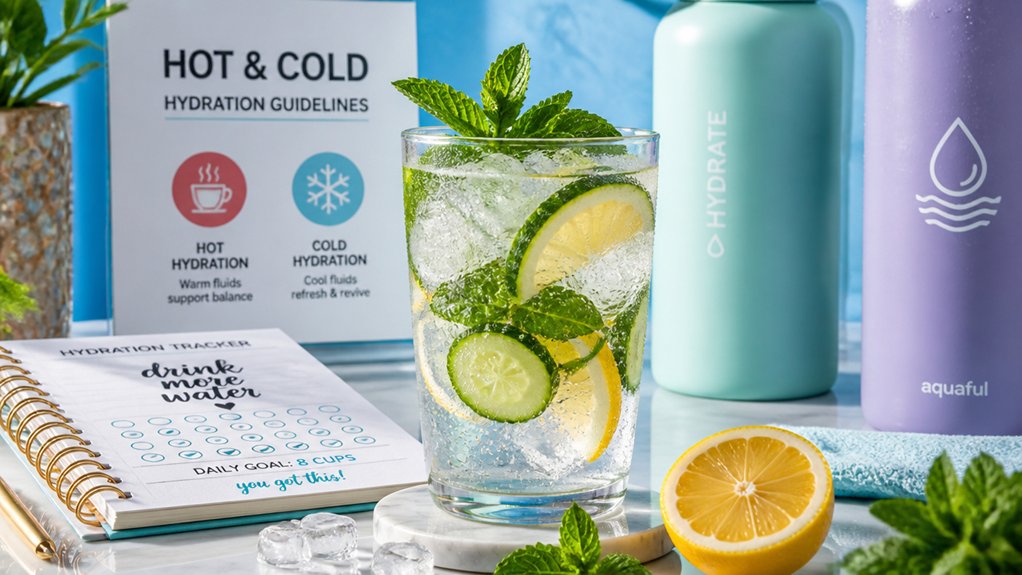
To stay hydrated in hot and cold combos, start by pre-hydrating with 16–24 oz of water or electrolyte drinks an hour or two before exposure. Sip fluids regularly during sessions, using cold water in heat and warm fluids in cold settings to support comfort. Rehydrate afterward with electrolyte-rich drinks, and keep electrolyte balance by including potassium-rich foods. Watch urine color and body cues, avoiding thirst as your guide. For more detailed tips, continue exploring these essential guidelines.
How Temperature Changes Affect Your Hydration Needs
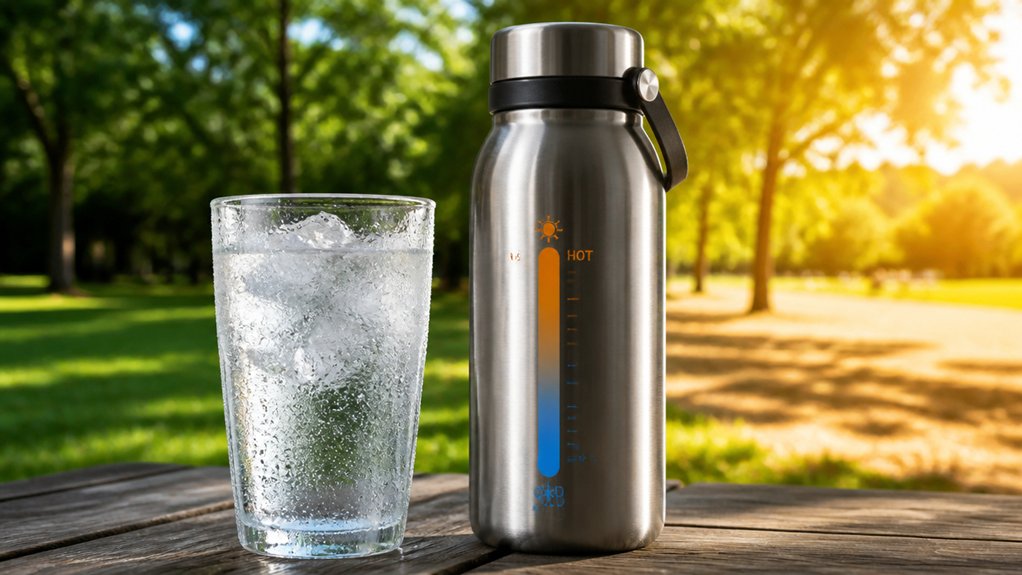
Temperature changes greatly influence your hydration needs, especially when moving between hot and cold environments. You may wonder, how much water do I need?
In hot conditions, your body loses more fluid through sweating, so you need to drink much water to stay hydrated. Conversely, cold weather can suppress your thirst, but your body still requires fluids, especially if you’re exposed to cold temperatures.
When shifting from heat to cold, your body adjusts core temperature, affecting sweat rates and fluid loss. Drinking warm water helps with digestion during temperature fluctuations, while cold water post-exercise supports better rehydration by reducing sweating.
How to Spot Dehydration During Sauna and Cold Plunge Sessions
Watch for signs like dizziness, muscle cramps, dry mouth, fatigue, and a rapid heartbeat during your sauna and cold plunge sessions, as they indicate dehydration. Keep an eye on urine color—dark yellow means you’re likely dehydrated—so aim for pale yellow. Since thirst is a late signal, hydrate proactively with water or electrolyte drinks before and between your sessions. Incorporating proper electrolyte balance supports muscle recovery and helps prevent cramps.
Recognize Dehydration Signs
Recognizing dehydration signs during sauna and cold plunge sessions is essential to maintaining safety and ideal benefits. Knowing the important signs helps you act quickly and prevent serious issues. Key symptoms include muscle cramping, fatigue, lightheadedness, dry mouth, and increased heart rate. You should also watch for dizziness and confusion, which indicate more severe dehydration. Regularly check your urine color; darker yellow signals dehydration, while pale yellow is better. Thirst alone is a late sign, so proactive hydration is critical. Sudden temperature changes intensify fluid loss, making early recognition indispensable. Here’s a quick reference:
| Symptom | What It Means |
|---|---|
| Muscle cramping | Dehydration affecting muscles |
| Dizziness/Confusion | Severe dehydration risk |
| Dry mouth | Need for hydration |
| Increased heart rate | Fluid and electrolyte imbalance |
Additionally, understanding how thermal insulation contributes to maintaining water temperature can aid in better managing sessions and reducing unnecessary fluid loss. Being alert helps keep your sessions safe and effective.
Monitor Urine Color
Monitoring your urine color during sauna and cold plunge sessions offers a simple, effective way to track hydration levels. Aim for pale yellow, which indicates proper hydration, especially after consuming about 16 to 24 ounces of water beforehand.
Dark yellow or amber urine signals dehydration, so you should increase your fluid intake immediately. Since thirst is a late sign, don’t wait until you’re thirsty to hydrate; instead, check urine color regularly during your routine.
Sweating in saunas leads to fluid loss, so proactive hydration is essential. Use urine color alongside symptoms like dry mouth or dizziness to spot dehydration early. Staying attentive helps you maintain proper hydration and enjoy hot and cold combos safely. Proper compression technology in recovery boots can also support circulation and recovery after sweating복
Rehydrate Effectively
Dehydration can sneak up on you during sauna and cold plunge sessions, making it essential to rehydrate effectively and promptly. To prevent dehydration symptoms like dizziness or muscle cramps, drink water before, during, and after your sessions. Since thirst is a late indicator, rely on other signs such as urine color—pale yellow signals good hydration, while darker shades show you need more water.
A reliable way to monitor your hydration status is by tracking your body temperature and recovery metrics with specialized cold plunge thermometers to ensure optimal hydration levels. After cold plunges, replenish lost fluids with water or electrolyte-rich drinks containing sodium to restore both water and salts. Cold water helps speed up rehydration and cools your body quickly, but consistent fluid intake is key.
Staying proactive and monitoring your hydration levels guarantees you avoid fatigue and confusion, keeping your hot-and-cold therapy safe and effective.
What Are the Best Drinks to Stay Hydrated in Hot and Cold Environments?
What’re the best drinks to stay hydrated in hot and cold environments? In heat, cold water around 60.8°F (16°C) is ideal for cooling your body and encouraging fluid intake.
In hot environments, aim for cold water around 60.8°F (16°C) to cool your body and boost hydration.
During prolonged heat activity, isotonic sports drinks are helpful—they replace lost electrolytes like sodium and potassium while providing carbohydrates for energy.
In cold conditions, plain water keeps you hydrated effectively, and warmer drinks can enhance comfort without hindering absorption. Warm or hot water may also promote digestion and soothe respiratory symptoms in cold environments.
To optimize hydration, avoid sugary or caffeinated beverages in both settings, as they can cause dehydration and stomach upset. Prioritize water and, when needed, sports drinks with electrolytes to stay balanced and energized. Proper hydration strategies can also help maintain overall balance and recovery in varying temperatures.
When and How to Hydrate Before, During, and After Heat and Cold Therapy
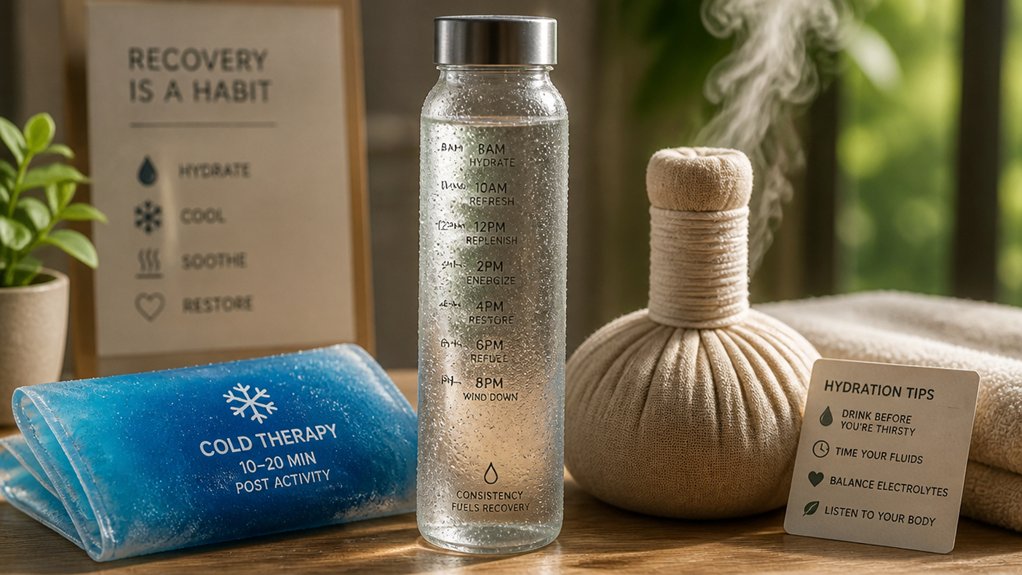
To maximize the benefits and minimize the risks of heat or cold therapy, it’s important to hydrate appropriately before, during, and after each session. Start by drinking enough water or a hypotonic sports drink about 1–2 hours beforehand to prepare your body and prevent dehydration. During heat therapy, sip cool water regularly—about 4–8 oz every 15–20 minutes—to help regulate your temperature and replace fluids lost through sweating. For cold therapy, maintain steady hydration with room temperature or cool water to support circulation without upsetting your stomach. After completing the session, rehydrate with enough water or a sports drink containing electrolytes—around 16–24 oz—to restore fluids and minerals, especially if the therapy was prolonged or intense. Magnesium-rich creams can also support muscle relaxation and recovery post-therapy.
How to Keep Electrolyte Levels Balanced in Temperature Fluctuations
Maintaining your electrolyte levels during temperature fluctuations requires strategic replenishment because your body’s electrolyte losses vary with heat and cold exposure.
Strategic electrolyte replenishment is essential as losses vary with heat and cold.
In hot environments, sweat can cause significant losses of sodium, chloride, and potassium, so replenishing with beverages containing these electrolytes is essential. Cold water helps with hydration but may reduce sweating and electrolyte loss, so adjust electrolyte intake accordingly.
Be mindful of the amount of sugar in sports drinks; high sugar content can spike insulin and impair electrolyte absorption.
To stay balanced:
- Choose low- or no-sugar electrolyte drinks when possible
- Include foods rich in potassium like bananas and sweet potatoes
- Monitor urine color and symptoms such as muscle cramps
- Use isotonic solutions during prolonged activity in fluctuating temperatures
Additionally, using pH-balanced water can help maintain the proper hydration environment for optimal electrolyte function pH testing kits, ensuring your water chemistry stays within the safe and effective range.
Balancing electrolytes effectively helps prevent cramps, fatigue, and dehydration across temperature extremes.
Hydration Tips for Sauna and Cold Plunge Enthusiasts
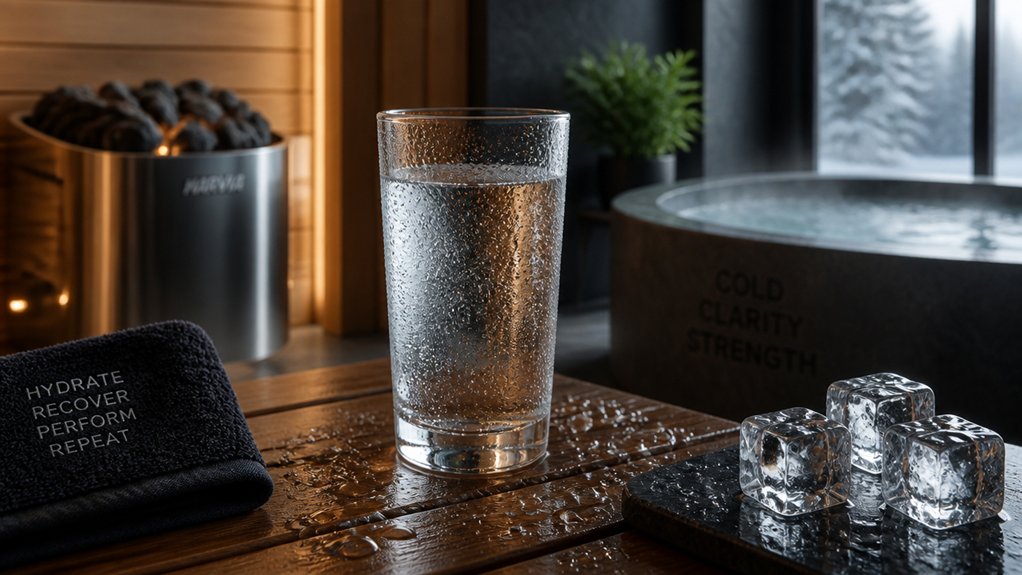
To stay hydrated during sauna and cold plunge sessions, timing is key—you should drink water or electrolyte drinks before, during, and after your routine. Paying attention to electrolyte balance helps prevent dehydration and muscle cramps, especially after hot or combined temperature swings. Incorporating hydrating ingredients like hyaluronic acid, which help retain moisture and support skin recovery, can further enhance your post-session hydration.
Balancing Electrolytes Effectively
- Hydrate with electrolyte-rich drinks before and after sessions
- Use homemade electrolyte formulas for quick replenishment
- Choose beverages with blood-like sodium levels (20–30 mmol/L)
- Monitor per pound to avoid overhydration and dilution
Hydration Timing Strategies
Timing your hydration around sauna and cold plunge sessions enhances safety and performance. Drinking 16–24 oz of water or a sports drink 1–2 hours beforehand is a good choice to prepare your body and prevent dehydration.
During hot sessions, consume 4–8 oz of fluids every 15–20 minutes to replace sweat losses and maintain electrolyte balance.
After completing your sauna and cold plunge rounds, rehydrate with 8–16 oz of water or a hypotonic sports drink to support recovery from fluid shifts. Don’t wait until thirst signals you; it’s a late indicator. Staying proactive is key.
Cold water is a good choice post-sauna for rapid core temperature cooling, while warm water can aid digestion if consumed later in the day.
How to Monitor Your Hydration Status Effectively
Keeping an eye on your hydration status requires more than just listening to thirst; it involves using practical methods that give accurate insights into your body’s water balance.
To effectively drink to stay, check your urine color—aim for pale yellow to prevent dehydration or overhydration. Don’t rely on thirst alone, as it’s a late sign; schedule regular fluid intake before and during activity. Track your body weight before and after exercising to estimate fluid loss; replace about 24 ounces of fluid per pound lost.
Also, observe physical signs like muscle cramps, dizziness, dry mouth, and fatigue to catch early dehydration symptoms. Use fluid measurement techniques, such as counting gulps, where one to two gulps equal roughly one ounce, to maintain consistent hydration and guarantee you’re drinking enough throughout the day.
Preparing Hydration Plans for Extended Hot and Cold Exposure Sessions
To prepare an effective hydration plan, start by drinking 16–24 oz of water or a sports drink 1 to 2 hours before your session.
During the activity, sip cold water every 15–20 minutes, and use electrolyte drinks if the session lasts over 45 minutes.
Afterward, rehydrate with water or warm fluids, matching your intake to your body’s needs and losses.
Pre-Hydration Strategies
Preparing your hydration plan for extended sessions in hot and cold environments starts with strategic pre-hydration. You should consume 16–24 oz of water or an isotonic sports drink about two hours beforehand to balance electrolytes and fluids.
Regularly sip fluids leading up to your activity—don’t wait for thirst—so you stay hydrated during temperature shifts. Adjust your fluid intake based on body weight; aim for one ounce per pound daily, increasing it when exposure lasts longer in extreme temperatures.
Incorporate electrolyte-rich drinks like orange juice when heavy sweating is expected in hot conditions, but stick to plain water to avoid diluting electrolytes before cold exposure.
Carry a suitable hydration container for easy access and consistent pre-hydration throughout your session.
During Activity Hydration
During activity, maintaining proper hydration becomes essential as your body loses fluids through sweat in both hot and cold environments. Staying well-hydrated during extended sessions directly impacts your athletic performance, helping prevent fatigue and dehydration.
Aim for 4-8 oz of fluids every 15-20 minutes, adjusting if temperature extremes increase sweat rates. For activities lasting over 45 minutes, incorporate sports drinks with electrolytes to replenish sodium, potassium, and carbohydrates lost through sweat, helping to maintain the electrolyte balance necessary for peak performance.
Start hydrating at least an hour beforehand with 16-24 oz of water or electrolyte beverage. During hot exposure, cold water can promote cooling, while warm fluids might be better in cold conditions. Always plan your hydration strategy based on the environment and activity specifics to sustain peak performance and prevent dehydration.
Post-Session Recovery
After extended hot and cold exposure sessions, promptly rehydrate with cold water to efficiently lower core body temperature and restore fluid balance. Cold water helps cool your body quickly and encourages fluid intake, making recovery more effective.
To replenish lost electrolytes, include a hypotonic sports drink or electrolyte solution, such as coconut water with a pinch of salt, to restore sodium and potassium levels. Hydrating foods like watermelon or pineapple also support recovery, providing natural electrolytes and hydration without excess sugar.
Focus on starting hydration immediately — aim for 16-24 oz within the first hour. Incorporate chocolate milk post-session for a balanced source of carbs, protein, and electrolytes, aiding muscle recovery and rehydration. Proper timing and electrolyte support are essential for ideal recovery.
Common Mistakes to Avoid When Hydrating in Hot and Cold Environments
One common mistake to avoid when hydrating in hot and cold environments is waiting until you feel thirsty, which is always the best indicator of dehydration. Thirst signals that your hydration levels are already falling short, so starting to drink beforehand is smarter.
In hot conditions, overhydrating with plain water without electrolyte replacement can dilute blood sodium and impair performance. Conversely, in cold environments, neglecting to hydrate because thirst feels diminished increases dehydration risk.
Relying on caffeinated or sugary drinks should also be avoided, as they can cause dehydration or energy crashes. Remember, ideal hydration strategies always consider temperature extremes.
Staying proactive and adjusting your fluid intake accordingly helps you maintain performance and comfort, avoiding common pitfalls when managing hydration in fluctuating environments.
Practical Tips for Staying Safely Hydrated in Hot and Cold Settings
To stay safely hydrated in hot and cold environments, it’s essential to start your hydration routine early. Drink 16–24 oz of water or a sports drink 1–2 hours before exposure to prepare your body.
During extended activity in heat, sip cold water or isotonic sports drinks every 15–20 minutes to keep cool and replace lost electrolytes.
In cold settings, don’t wait for thirst; maintain regular fluid intake, as dehydration signs can be subtle and cold air increases fluid loss through respiration.
After activity, consume 16–24 oz of fluids with added sodium or a hypotonic beverage to restore hydration and electrolytes. Adjust your hydration strategy seasonally—use cold water for cooling and warm water in cold conditions for comfort and digestion.
- Hydrate proactively before exposure
- Drink consistently, not just when thirsty
- Choose temperature-appropriate fluids
- Replenish electrolytes post-activity
Frequently Asked Questions
What Is the 3 2 1 Hydration Method?
The 3 2 1 hydration method has you drink 3 glasses of water two hours before exercise, 2 glasses 30 minutes prior, and 1 glass right before starting. It keeps you well-hydrated and prevents dehydration during hot and cold workouts.
Is It Better to Hydrate With Cold or Hot Water?
You should hydrate with cold water after hot exercise because it cools your body effectively and encourages more fluid intake, helping you rehydrate quickly. Warm or hot water supports digestion and congestion relief but isn’t ideal for rapid rehydration.
What Is the 10 Gulp Rule?
The 10 Gulp Rule advises you to take ten quick gulps, about 10 ounces of water, during or after activity. It helps you stay properly hydrated, especially in hot weather or during intense exercises, preventing underhydration.
How Much Water Should I Drink on Zepbound?
On Zepbound, you should drink about one ounce of water per pound of your body weight daily, and stay consistently hydrated before, during, and after activity, adjusting for hot or cold weather, to support medication and overall health effectively.