If you have cardiovascular issues like uncontrolled hypertension or heart disease, cold or hot water immersion can worsen your symptoms. Those with peripheral vascular disease, neuropathy, open wounds, or skin infections should avoid immersion therapy, as it can increase pain or cause infections. Pregnant women and people with impaired thermoregulation also face risks. If you experience dizziness, chest pain, or unbearable discomfort, stop immediately. Keep exploring to learn more about keeping safe during water therapy.
Is Water Immersion Therapy Safe for You?
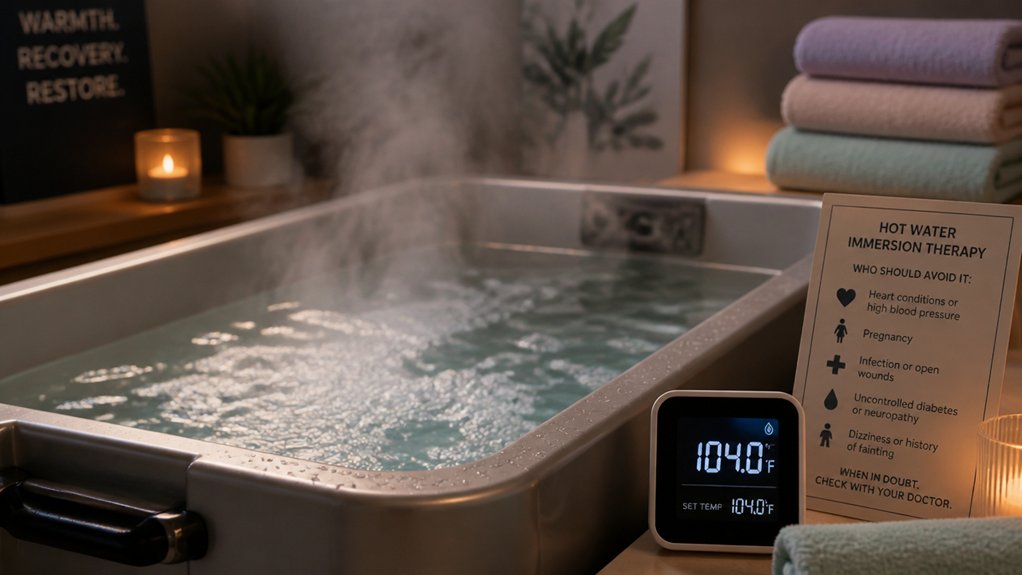
Is water immersion therapy safe for everyone? Not necessarily. If you have cardiovascular conditions, like uncontrolled high blood pressure or heart disease, heat immersion might increase your heart rate and lower your blood pressure, so it’s best to avoid it.
People with peripheral vascular disease or neuropathy should be cautious with cold water immersion, as it could cause intense nerve pain or worsen symptoms.
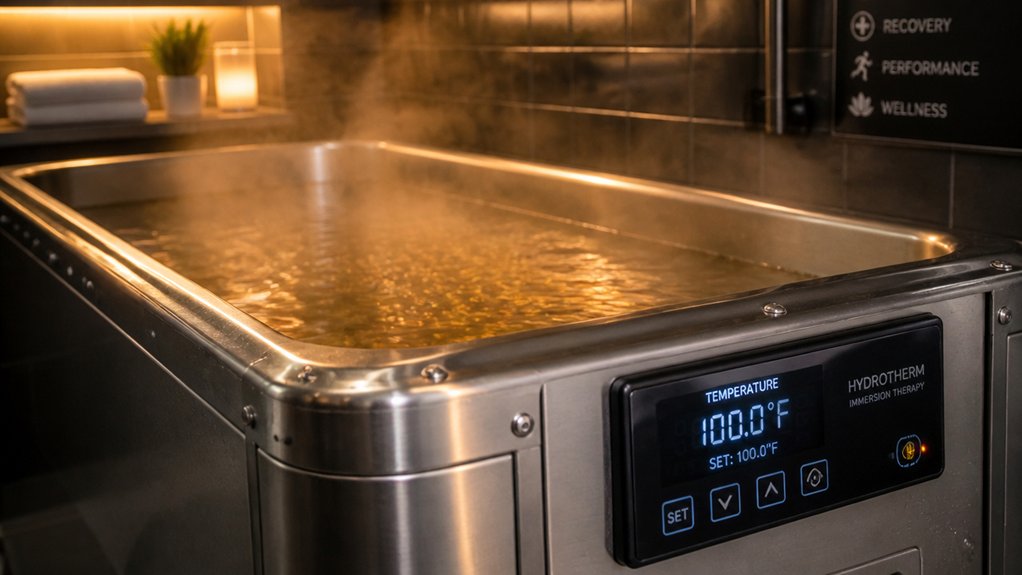
Heat immersion above 104°F (40°C) isn’t safe and risks burns or heat-related issues, especially if you have heat sensitivity. Cold water immersion can trigger cold shock or respiratory distress in those prone to such responses.
If you have open wounds, infections, or skin conditions, water immersion therapy could worsen your condition.
Always prioritize safety and consult a healthcare professional before trying these therapies. Measurement parameters and understanding your body’s responses can help ensure safe practice.
Conditions That Increase the Risk of Water Therapy
Certain health conditions can greatly increase the risks associated with water therapy, making it essential to understand your personal health status before trying these treatments.
If you have peripheral vascular disease, cold exposure during immersion therapy can worsen pain and circulation issues, raising injury risks. People with peripheral neuropathy should consult healthcare providers, as cold water immersion may trigger intense nerve pain.
Those prone to skin sensitivity or with open wounds must avoid hot water, which could cause burns or infection.
Patients with cardiovascular conditions need medical clearance before heat immersion because hot water can increase heart rate and lower blood pressure, stressing the heart.
Individuals with impaired thermoregulation, such as the elderly or diabetics, face risks of hypo- or hyperthermia, requiring close supervision or avoidance. Additionally, cold retention duration is crucial, as prolonged cold exposure can increase the risk of hypothermia in vulnerable populations.
Signs and Symptoms That Indicate You Should Skip Water Therapy
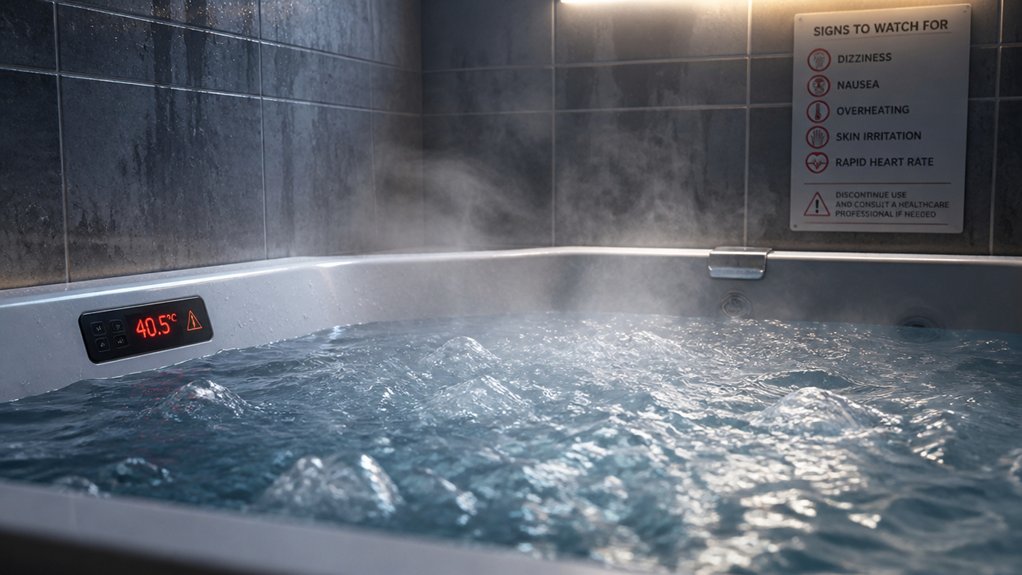
Not sure whether you should proceed with water therapy? Watch for these warning signs.
First, if you experience cardiovascular instability—like dizziness, chest pain, or irregular heartbeat—stop heat immersion immediately.
If you experience dizziness, chest pain, or irregular heartbeat, stop heat immersion immediately.
Second, note if you feel intense nerve pain or find cold immersion unbearable, as it could worsen symptoms.
Third, if you notice symptoms of heat stroke, such as confusion, nausea, or rapid respiration, avoid further heat therapy and seek medical advice.
Additionally, signs of inflammation or worsening skin conditions—especially around open wounds—are clear indicators to skip water therapy at this time.
Furthermore, improper insulation or water temperature fluctuations can compromise safety and reduce the therapy’s effectiveness. Proper insulation and temperature control are essential for safe immersion sessions.
Always be attentive to your body’s response, as discomfort or symptoms indicating instability or intolerance mean it’s safest to pause.
Special Precautions for Pregnant Women and People With Wounds
Pregnant women and individuals with wounds should exercise caution before engaging in water immersion therapy, as certain conditions can increase risks.
Pregnant women should avoid hot water immersion above 98.6°F (37°C), as elevated body temperature can lead to neural tube defects and fetal distress. Heat immersion can also cause maternal hypotension, reducing blood flow to the fetus.
For those with open wounds or skin infections, water immersion therapy isn’t recommended due to the risk of bacterial contamination, which can worsen infections and delay healing. Soaking wounds in hot or cold water can disrupt the healing process, increasing inflammation.
Always consult your healthcare provider before proceeding, especially if you’re pregnant or have skin issues, to guarantee safety and prevent complications. Water Care and Maintenance Guidelines emphasize the importance of proper hygiene and treatment to avoid infections during immersion.
Consult Your Healthcare Provider Before Starting Water Therapy
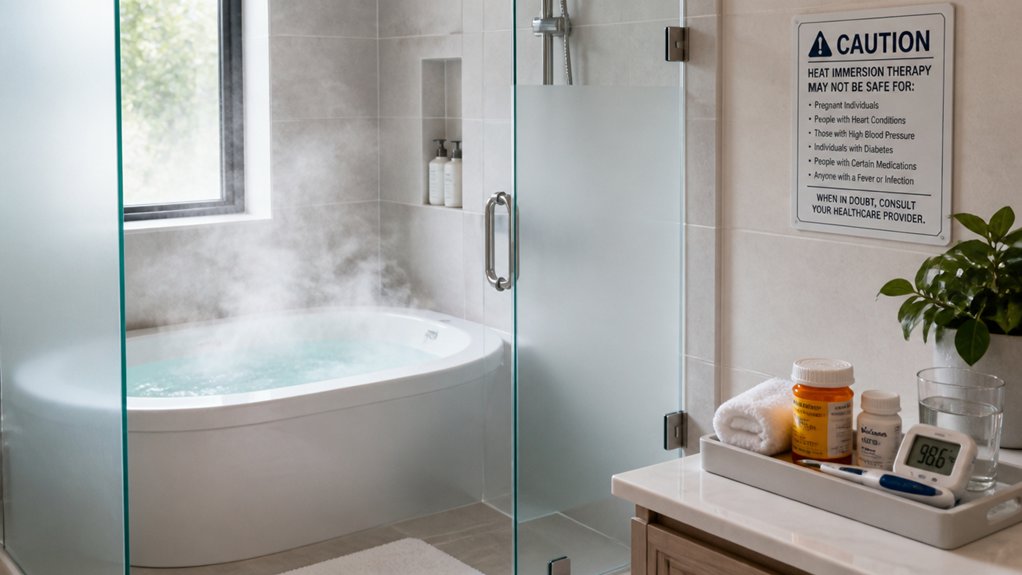
Before starting water therapy, it’s important to talk with your healthcare provider, especially if you have existing health conditions. Heat-and-cold water immersion therapy can affect your heart rate and blood pressure, so consulting your provider is essential. A thorough understanding of therapeutic water temperature ranges can help ensure safety during treatment. Ask your doctor about: 1. Managing cardiovascular conditions like uncontrolled hypertension or heart disease during therapy. 2. Risks associated with peripheral vascular disease or neuropathies, especially cold exposure. 3. Whether you should avoid therapy altogether if you have open wounds, skin infections, or are pregnant, to prevent complications. Your healthcare provider will evaluate your thermal regulation ability and advise on safe participation. Always seek personalized guidance to avoid risks and verify that water therapy is suitable for your health status.
Frequently Asked Questions
When Should You Avoid Using Heat Therapy?
You should avoid using heat therapy if you have an acute injury, swelling, open wounds, skin infections, peripheral vascular disease, impaired sensation, cardiovascular issues, fever, or systemic infections, as it could worsen your condition or cause harm.
What Kind of Water Relaxes Muscles?
Warm water between 94°F and 104°F relaxes your muscles, increases blood flow, and loosens joints. It helps reduce stiffness, relieve pain, and improves recovery, especially when combined with massage hoses for enhanced therapeutic benefits.
What Is the Single Most Important Step to Avoid Heat Illness?
You should rigorously monitor your core body temperature during heat-immersion therapy, ensuring it stays below 104°F (40°C). This key step helps prevent heat illness, along with staying hydrated, taking breaks, and watching for early warning signs.
Which Patient Would Be the Most Appropriate Candidate for Heat Therapy?
You are most suitable for heat therapy if you suffer from chronic muscle stiffness, arthritis, or tendinitis, or are recovering from injury. Athletes, or those seeking relaxation, can also benefit from warm water immersion within recommended temperatures.