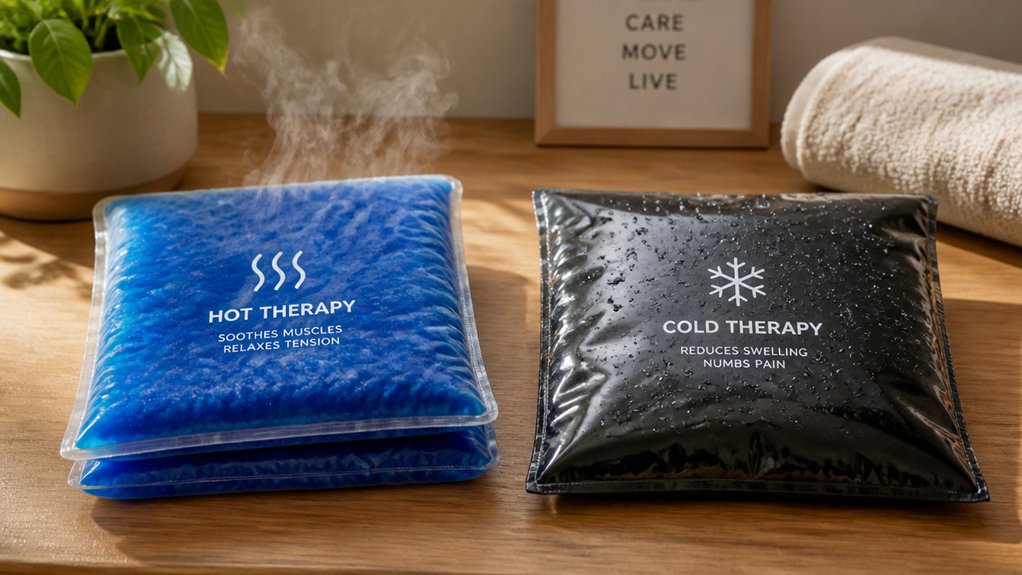
To effectively use heat and cold therapy for joint pain, always apply a protective barrier and limit sessions to 15-20 minutes to prevent skin damage. Use heat before activity to loosen muscles and improve joint flexibility, and cold afterward to reduce inflammation and numb pain. Avoid applying heat during acute inflammation. Keep an eye on your skin for signs of irritation, and seek medical advice if pain persists or worsens—more helpful tips await you.
What’s the Difference Between Heat and Cold Therapy for Joint Pain?
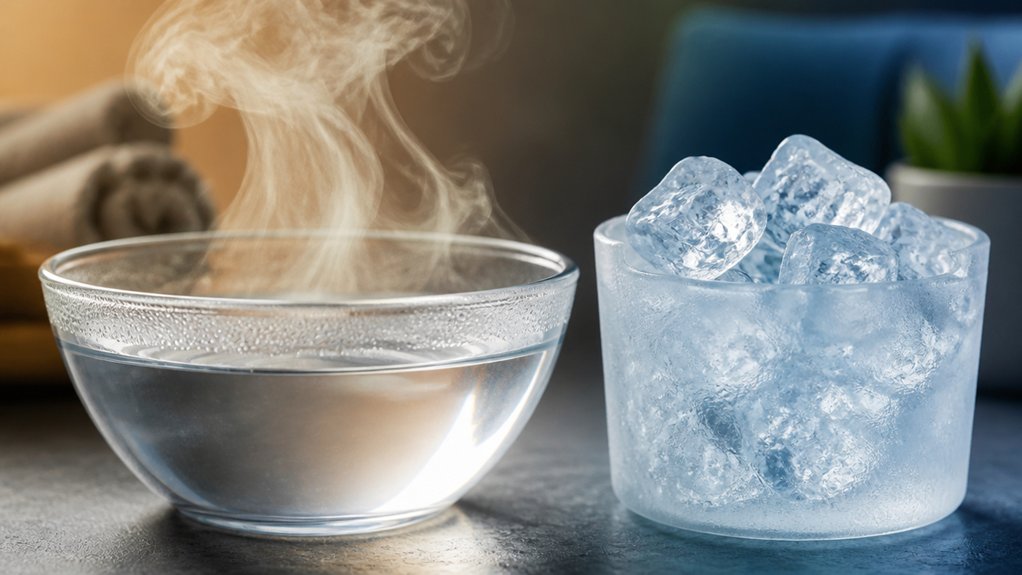
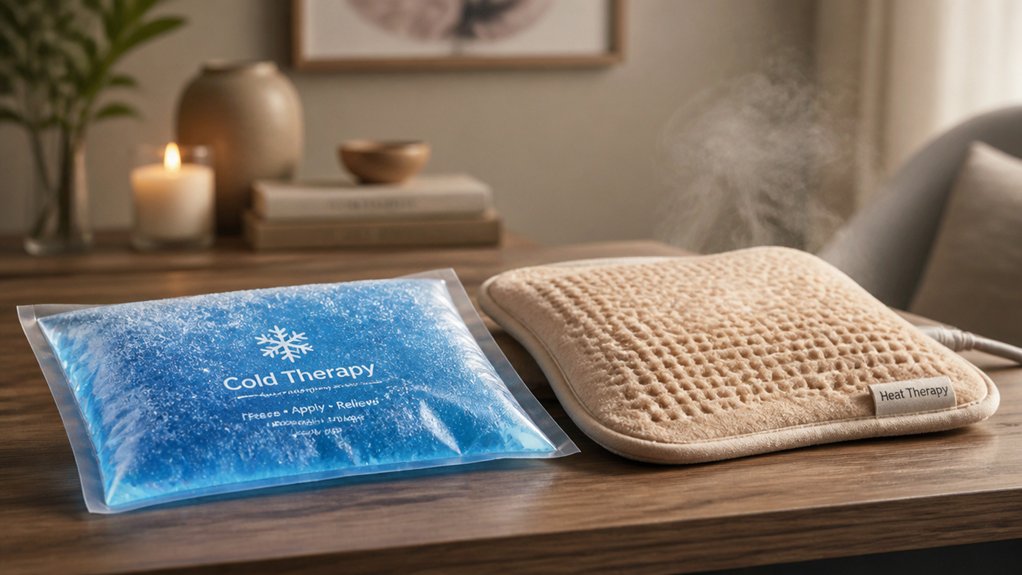
Wondering how heat and cold therapy differ when treating joint pain? Heat therapy works by promoting vasodilation, increasing blood flow to your joints. Applying heat helps relax muscles, reduce stiffness, and improve flexibility, making it ideal for chronic pain or before activity.
Heat therapy promotes blood flow, relaxes muscles, and improves flexibility—ideal for chronic joint pain or pre-activity relief.
Cold therapy, on the other hand, constricts blood vessels, which reduces inflammation, swelling, and numbs pain. It’s most useful after activity or during acute inflammation to control swelling.
While heat helps nutrients and oxygen reach tissues to promote healing, cold slows nerve signals for immediate pain relief.
Both therapies require caution—protective barriers and monitoring prevent burns or tissue damage. Remember, heat isn’t suitable for acute inflammation, and cold should be used in short, controlled sessions. appropriate heat therapy can enhance recovery by increasing circulation and tissue flexibility.
When and Why Should You Use Heat Before Activities?
When should you use heat therapy before activities? Applying heat before activities can be highly beneficial, especially if you want to increase blood flow and improve joint flexibility.
Use heat before activities to warm up muscles, relax tight muscles, and reduce muscle stiffness or spasms linked to arthritis. Applying heat for 15-20 minutes helps lubricate joints and eases stiffness, making movement smoother and less painful.
This prepares your joints and muscles for activity, helping to improve joint function and nutrient delivery. Remember to apply heat with a protective barrier and monitor closely to avoid burns, especially if you have sensitive skin or circulatory issues.
Using heat before activities can make exercise more comfortable and help prevent injury caused by stiffness.
How Cold Therapy Can Help Reduce Inflammation and Swelling
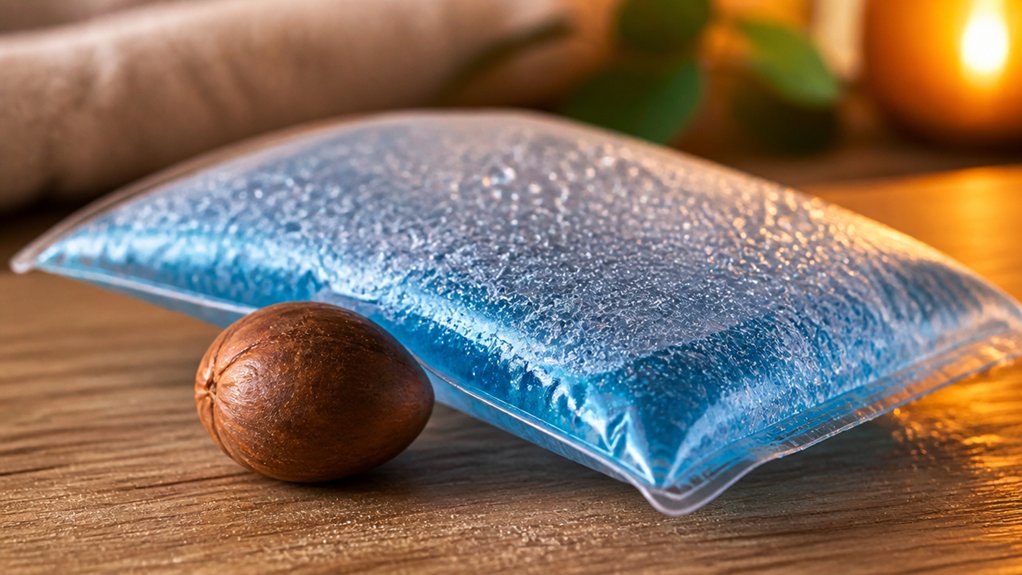
Cold therapy effectively reduces inflammation and swelling in affected joints by constricting blood vessels, which decreases blood flow to the area. When applying ice or an ice pack, you can help reduce inflammation and manage arthritis pain.
Cold therapy also numbs pain temporarily, providing relief from joint stiffness and swelling caused by inflammation. It’s especially useful during acute arthritis flares, gout, or pseudogout attacks.
To avoid skin damage, limit cold therapy sessions to 10-20 minutes and use a protective barrier between the ice and skin. Regularly monitor your skin during treatment to prevent irritation or frostbite.
Using cold therapy properly helps ease swelling and promotes more comfortable joint movement during painful episodes.
Safe Tips for Applying Heat and Cold at Home
Are you aware of the key safety tips to follow when applying heat or cold therapy at home? To safely relieve joint pain, always apply a protective barrier, like a towel, between your skin and the heat or cold source to prevent burns or frostbite.
Using a timer can help ensure you do not exceed the recommended session duration, reducing the risk of skin irritation or tissue damage.
Limit each session to 15-20 minutes, allowing your skin to rest afterward to avoid skin irritation or tissue damage. When applying heat therapy, avoid it during acute arthritis pain or inflammation; cold therapy is better in these cases to reduce swelling.
Keep a close eye on your skin for redness or discomfort. If you have poor circulation or conditions like Raynaud’s disease, consult a healthcare provider before applying ice or using cold therapy.
Additionally, utilizing reliable timers can help monitor and manage your therapy sessions safely and effectively.
Signs You Need to See a Doctor for Persistent or Severe Pain
Noticing persistent or severe joint pain that doesn’t improve or worsens over time clearly signals you need to see a doctor. If pain lasts beyond three days, limits your range of motion or daily activities, or is caused by injury with swelling or bruising, seek medical attention immediately. Chronic inflammation, stiffness, or discomfort disrupting sleep also indicate the need for professional care. Recurrent arthritis episodes, in particular, require assessment by a rheumatologist for proper management. Ensuring proper cold therapy application and monitoring your recovery can help prevent further joint damage.
Frequently Asked Questions
Can Heat or Cold Therapy Worsen My Joint Symptoms?
Heat or cold therapy can worsen your joint symptoms if used improperly or too long. You should follow guidelines, avoid applying extreme temperatures directly to your skin, and consult your healthcare provider for personalized advice.
How Do I Know if Cold or Heat Therapy Is Right for Me?
You determine if cold or heat therapy suits you by paying attention to your joint reactions. Try each method separately; if cold reduces swelling and pain, use cold. If heat eases stiffness, opt for heat therapy.
Can I Use Both Therapies on the Same Joint During One Session?
Yes, you can alternatingly use both therapies on the same joint during one session. Just make certain you wait at least 20 minutes between applications, and always follow your healthcare provider’s guidance to avoid skin irritation or injury.
What Are Alternative Methods if I Cannot Tolerate Heat or Cold?
If you can’t tolerate heat or cold, try gentle massage, elevation, or over-the-counter pain relievers. You might also explore topical creams or discuss physical therapy options with your healthcare provider to manage joint pain effectively.
How Long Should I Wait Between Applying Heat and Cold Treatments?
You should wait at least 20 minutes between applying heat and cold therapies. This pause helps prevent skin damage and guarantees each treatment’s effectiveness, giving your skin enough time to recover before switching treatments.