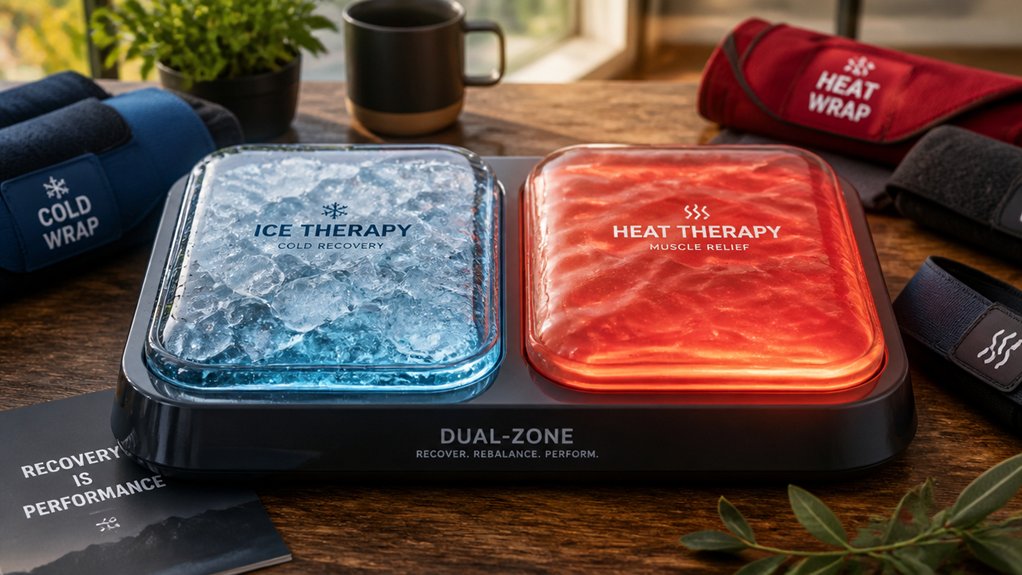
To recover from muscle soreness, start with cold therapy within 48 hours of injury to reduce swelling and numb pain. Use ice packs for about 20 minutes, multiple times daily, then switch to heat therapy once swelling subsides to relax muscles and boost circulation. Alternating cold and heat in 20-minute sessions can speed up healing. Protect your skin and use devices with safety features. Keep exploring for more tips to optimize your recovery.
When Is Cold Therapy the Right Choice for Muscle Pain?
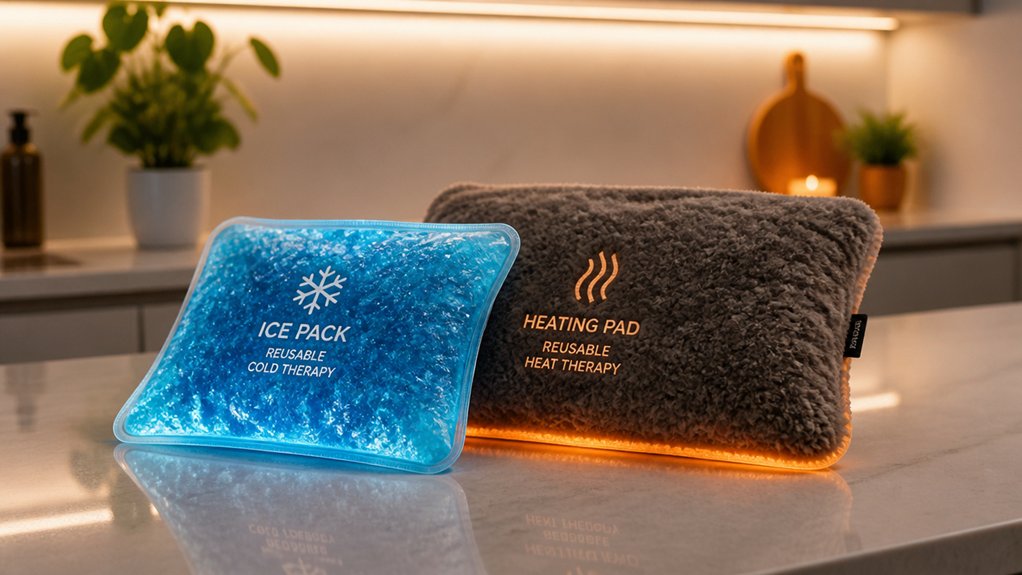
Wondering when cold therapy is the right choice for muscle pain? If your muscles are swollen, inflamed, or recently injured, cold therapy can be effective within the first 48 hours. Applying ice packs for about 20 minutes several times a day helps reduce swelling and inflammation by constricting blood vessels through vasoconstriction. Additionally, using specialized muscle recovery creams after cold therapy can enhance relief and support healing. This minimizes the swelling from muscle strains, sprains, or bruises caused by exercise microtears. Cold therapy also numbs pain receptors and slows nerve conduction, providing immediate pain relief that can last up to a day after activity.
How Does Heat Therapy Help Relax and Heal Muscles?
Have you ever noticed how applying heat to sore muscles can provide immediate relief? Heat therapy helps relax muscles by dilating blood vessels, which boosts blood flow. This increased circulation delivers oxygen and nutrients, speeding up healing. It also helps flush out metabolic waste like lactic acid, reducing soreness after exercise. This method is especially effective for chronic muscle pain, stiffness, and spasms, and can improve joint movement when inflammation has subsided. Carefully selecting the right heat pad size and type can enhance the effectiveness of the treatment.
How to Safely Combine Cold and Heat for Faster Muscle Recovery?
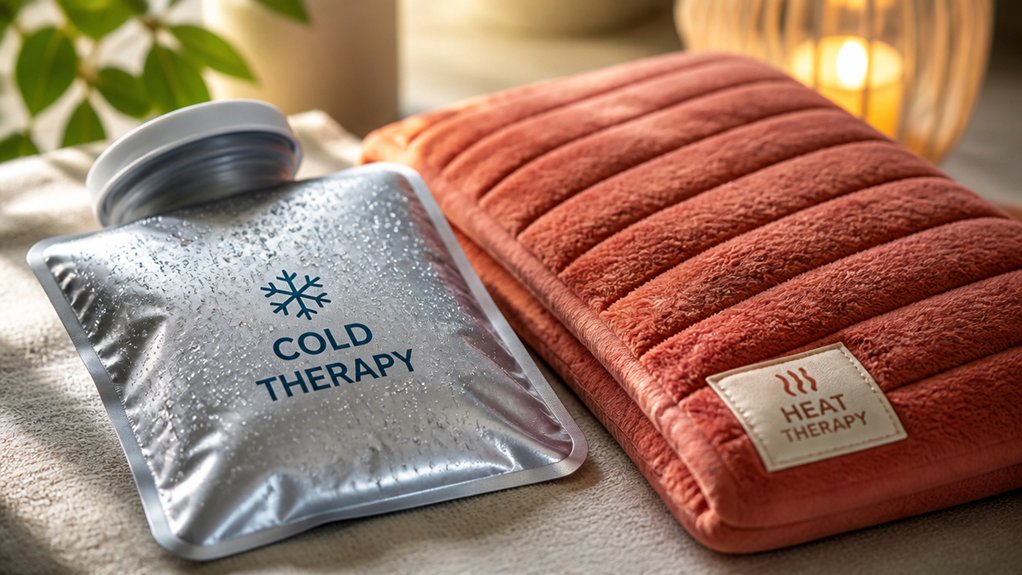
Combining cold and heat therapy can accelerate muscle recovery when done safely and correctly. Use cold therapy, such as ice packs or other forms of cold therapy, within the first 24-48 hours after injury or intense exercise. This helps reduce swelling, numb pain, and minimize inflammation.
Whether to use heat or cold depends on the injury stage—use cold initially and then switch to heat after swelling subsides. Heat can help relax tight muscles and improve blood flow, which assists in healing.
Alternating between cold and heat—20-minute sessions multiple times daily—helps reduce stiffness and promotes faster recovery. Always protect your skin with a barrier and limit sessions to prevent burns or tissue damage.
Considering the temperature therapy features of modern devices can enhance safety and effectiveness during recovery routines.
Consult a healthcare professional if pain worsens.
Frequently Asked Questions
Is Heat or Cold Better for Muscle Recovery?
Cold therapy is better for muscle recovery, especially 24 hours after exercise, because it reduces pain and inflammation effectively. You should use cold therapy to manage soreness and swelling, while heat can help relax muscles post-exercise.
What Is the 20 20 Rule for Ice?
The 20 20 rule for ice involves applying ice for 20 minutes, then waiting at least 20 minutes before reapplying. You should use a barrier like a towel and avoid exceeding 20-minute sessions to prevent skin damage.
What Are the 4 Stages of Muscle Healing?
You go through four muscle healing stages: initial Inflammatory Phase with swelling; Repair Phase, regenerating tissue; Remodeling Phase, strengthening fibers; and Maturation, restoring full strength and flexibility, so understanding these helps optimize recovery strategies effectively.
How to Make Sore Muscles Recover Quickly?
To recover quickly from sore muscles, you should apply cold therapy right after workouts, then switch to heat therapy after 48 hours. Stay hydrated, get enough sleep, and nourish your body to boost healing effectively.