Sauna and ice therapy boost your mental health by regulating hormones, reducing stress, and improving emotional resilience. Heat boosts serotonin and endorphins, helping you feel calmer and happier, while cold immersion releases norepinephrine, sharpening focus and lowering anxiety. Alternating between hot and cold stimulates your nervous system, supporting better mood regulation and stress response. Keep exploring to discover how consistent practice and proper protocols can maximize these mental health benefits for you.
How Sauna and Cold Plunge Therapy Support Your Mental Health
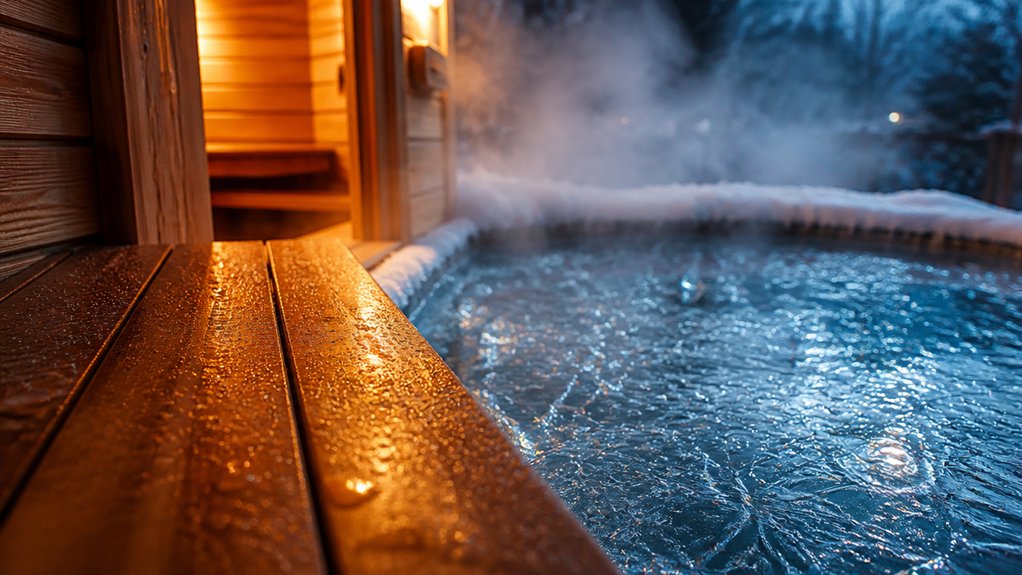
Sauna and cold plunge therapy can greatly boost your mental health by directly influencing your mood and stress levels. When you use the sauna, your cortisol levels decrease, while serotonin and endorphins increase, promoting calmness and easing symptoms of depression and anxiety.
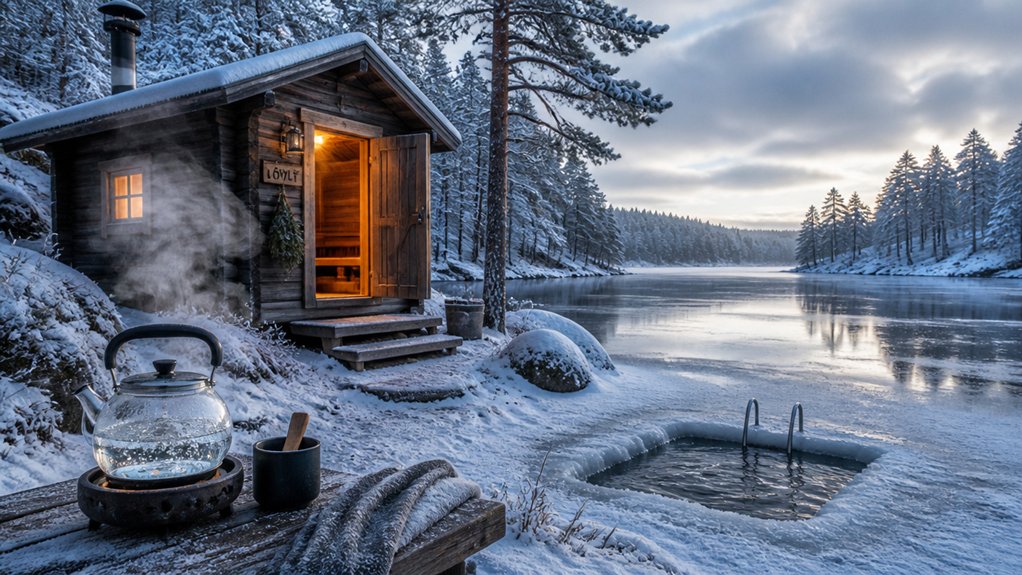
Cold plunge therapy triggers the release of norepinephrine and endorphins, which lift your mood, sharpen attention, and lower stress hormones. Alternating between heat and cold enhances your autonomic nervous system’s flexibility, helping you develop resilience and emotional balance.
This contrast therapy supports better sleep and mental clarity by regulating body temperature and fostering relaxation. Regular use of sauna and cold plunge sessions builds long-term stress coping mechanisms, strengthening your ability to manage emotional challenges effectively. Additionally, the use of infrared saunas with specific light therapies can target skin and muscle recovery, complementing mental health benefits.
The Neurobiology Behind Hot and Cold Therapy for Emotional Control
Understanding the neurobiology behind hot and cold therapy reveals how these practices influence your brain’s stress and emotional regulation systems.
When you experience heat through sauna exposure, your autonomic nervous system boosts serotonin release, promoting calmness and mood stability while reducing cortisol. Conversely, cold water immersion activates receptors that trigger norepinephrine and endorphin release, sharpening focus, increasing alertness, and alleviating anxiety.
The electrical signals from cold receptor activation also stimulate brain pathways involved in stress adaptation, helping you respond better to emotional challenges. Repeated contrast therapy encourages neuroplasticity and autonomic flexibility, strengthening your brain’s ability to maintain emotional balance under stress.
Research indicates that consistent use of these therapies can lead to a balanced nervous system, facilitating greater resilience to daily emotional fluctuations. Together, these mechanisms foster improved emotional control and resilience.
How Contrast Therapy Reduces Stress and Lowers Cortisol
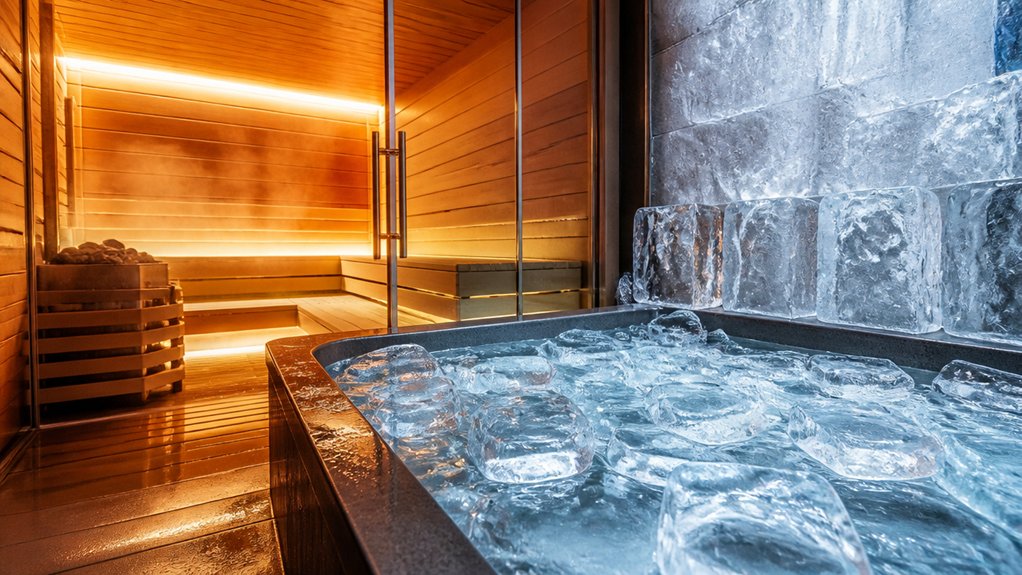
Alternating between hot and cold treatments triggers hormonal responses that boost your mood and sharpen focus, while also lowering stress hormones like cortisol. Cold shocks cause vasoconstriction, helping reduce inflammation and calm your nervous system, making you feel more relaxed. Over time, consistent contrast therapy can lead to sustained decreases in cortisol levels and improve your ability to handle stress. Incorporating infrared heat therapy can further enhance the relaxation response and deepen the overall benefits of contrast therapy.
Cold Shock and Hormonal Response
Cold shock from ice therapy stimulates your body’s cold receptors, prompting a surge of endorphins that create feelings of pain relief and mental euphoria. This hormonal response enhances your mood and sharpens mental clarity. During cold exposure, your sympathetic nervous system activates, increasing norepinephrine levels, which boost focus and resilience to stress. Contrast therapy’s quick cold plunges and heat sessions work together to lower cortisol levels—studies show up to three hours of reduced cortisol after a 15-minute cold water immersion at 10°C. Over time, regular cold exposure fewer cortisol spikes, helping your body better manage stress. This hormonal shift — involving endorphins, norepinephrine, and cortisol reduction — collectively contributes to mental health benefits and increased stress resilience.
| Cold Shock Benefits | Hormonal Response |
|---|---|
| Endorphin surge | Reduced cortisol |
| Pain relief | Boosted norepinephrine |
Vasoconstriction and Stress Reduction
Contrast therapy reduces stress by triggering vasoconstriction during cold plunges, which narrows blood vessels to decrease inflammation and swelling, helping your body recover more quickly from physical stress. This vasoconstriction activates your sympathetic nervous system, releasing norepinephrine that boosts your mood and promotes relaxation.
When combined with sauna heat, followed by cold exposure, the alternating blood vessel responses create a vascular workout. This process improves autonomic nervous system flexibility, balancing stress responses.
Repeated hot and cold cycles from contrast therapy help lower cortisol levels, the primary hormone linked to stress. As your cortisol drops, your overall stress diminishes, and emotional regulation improves.
The physiological response of vasoconstriction and vasodilation supports resilience, making it easier to manage daily stressors and maintain mental clarity. Enhancing your high-powered chillers to achieve rapid cooling and optimal temperature control can further improve the effectiveness of contrast therapy.
Cortisol Decrease Over Time
Over time, engaging in contrast therapy can greatly lower your cortisol levels, helping you manage stress more effectively. Regular sauna use modulates the hypothalamic-pituitary-adrenal (HPA) axis, leading to sustained reductions in cortisol that can last up to six weeks.
Combining sauna sessions with cold water immersion (CWI) at 10°C for 15 minutes causes temporary decreases in cortisol levels, lasting up to three hours. Repeated cold exposure through winter swimming or cryotherapy over 12 weeks gradually diminishes cortisol responses, increasing resilience to stress.
The hot-cold cycling in contrast therapy activates your autonomic nervous system, improving cortisol regulation and reducing chronic stress hormone levels over time. This integrated approach supports long-term stress management and enhances overall mental health. Adaptogen supplementation can further support this process by modulating stress hormones and promoting resilience.
Research Shows Sauna and Cold Immersion Boost Mood and Calmness
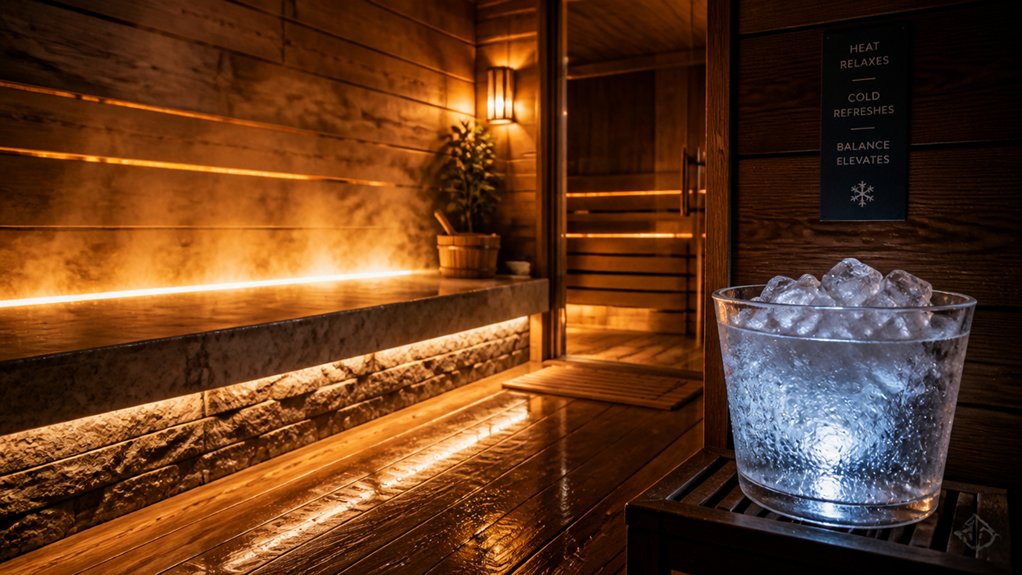
Research indicates that incorporating sauna sessions followed by cold immersion can greatly enhance your mood and sense of calm. Saunas and Cold Plunges reduce the stress hormone cortisol while boosting mood-boosting neurotransmitters like serotonin and beta-endorphins.
Sauna and cold plunge therapy boost mood and calmness by reducing cortisol and increasing serotonin and endorphins.
Cold water immersion (CWI) triggers surges in norepinephrine and endorphins, improving alertness, reducing anxiety, and promoting emotional calmness. When you combine these therapies, you support your autonomic nervous system’s stress management, which strengthens mental resilience.
The benefits extend further:
- Regulate core body temperature through post-sauna cooling, improving sleep quality.
- Enhance emotional well-being by hormonal responses that decrease stress and heighten positive feelings.
- Facilitate better emotional regulation through contrast therapy, supporting overall mental health.
How Endorphins and Norepinephrine Enhance Resilience and Wellbeing
Endorphins and norepinephrine play essential roles in boosting resilience and overall wellbeing by actively regulating your brain chemistry. When you engage in sauna sessions, it triggers the release of endorphins, promoting feelings of happiness and reducing stress, which helps improve your mood and mental resilience.
Cold water immersion stimulates norepinephrine release, sharpening your focus, increasing alertness, and enhancing emotional control—key for building mental toughness. The combined surge of endorphins and norepinephrine during contrast therapy helps modulate your autonomic nervous system, boosting your stress coping capacity.
Regular exposure to heat and cold maintains elevated norepinephrine levels, supporting lasting improvements in anxiety and emotional regulation. Advanced chilling units with thermal insulation quality further enhance these effects by maintaining consistent temperatures, which optimizes the biochemical responses. Together, these biochemical responses strengthen your mental health and resilience against daily challenges.
Using Heat and Cold to Improve Sleep and Brain Function
Using heat and cold therapies can greatly enhance your sleep quality and brain function by regulating your body’s internal systems. Sauna use helps normalize core body temperature and promotes relaxation through serotonin and beta-endorphins, which support emotional regulation and mental clarity.
Heat and cold therapies boost sleep and brain health by regulating internal systems and promoting relaxation and alertness.
Post-sauna cooling, like cold plunges, accelerates sleep onset and deepens rest—crucial for recovery and cognitive performance. Cold plunges also boost daytime alertness by elevating norepinephrine, sharpening your focus and mood.
Incorporate these strategies by understanding that:
- Sauna use prepares the body for restful sleep by balancing temperature and promoting relaxation.
- Cold plunges refresh your mind, increasing alertness and mental clarity.
- Alternating heat and cold enhances autonomic nervous system flexibility, supporting sustained brain health.
- Selecting the appropriate ice bath chiller ensures consistent plunge temperatures and an effective cold therapy session.
Together, they optimize sleep and support cognitive resilience.
Build Mental Resilience With Regular Sauna and Cold Plunge Practices
Incorporating regular sauna sessions and cold plunges can considerably bolster your mental resilience by training your nervous system to handle stress more effectively. Cold plunging and contrast therapy challenge your body’s stress response, promoting autonomic nervous system flexibility.
Over time, repeated heat and cold exposure help build emotional balance by stimulating hormonal shifts—like increased endorphins and reduced cortisol—enhancing your ability to stay calm under pressure. Building tolerance to these thermal stressors strengthens your psychological endurance, preparing you to better manage daily stressors.
As your nervous system adapts through hormesis, you’ll find it easier to recover from setbacks and maintain emotional stability. Regular sauna and cold plunge practices, thus, serve as effective tools to develop long-term mental resilience.
Practical Tips for Designing an Effective Contrast Therapy Routine
To create an effective contrast therapy routine, first determine how often you should practice—generally 2 to 3 sessions per week is ideal.
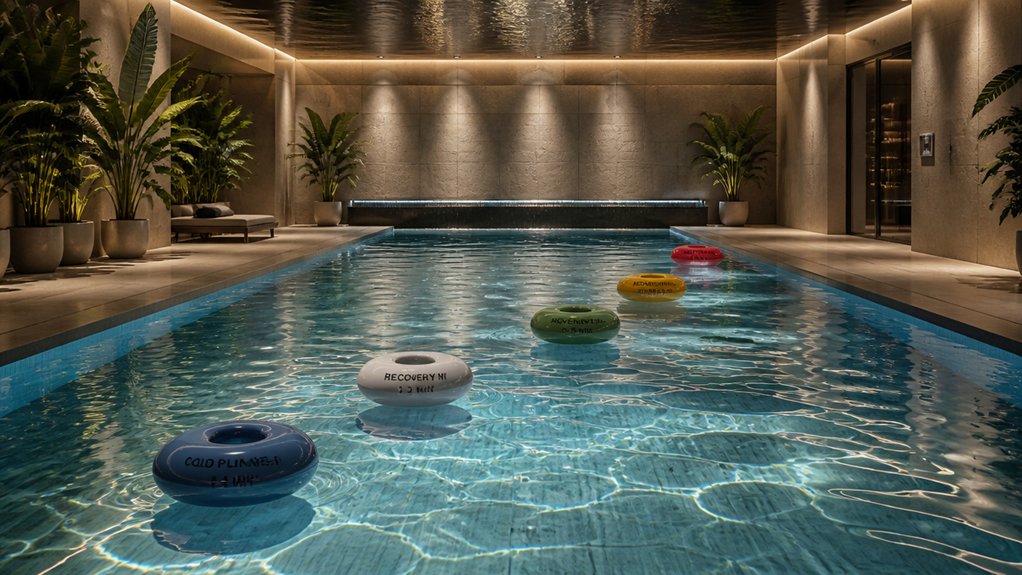
Always prioritize safety by sticking to recommended temperature ranges and duration, gradually building your tolerance over time. Keeping close proximity between sauna and cold plunge units helps maintain consistent thermal stress and maximizes benefits.
Optimal Session Frequency
How often you should practice contrast therapy depends on balancing benefits with your body’s tolerance. For ideal mental health improvements, aim for consistent regular sauna use combined with plunges and saunas.
Typically, 2-4 sessions weekly provide the right frequency to maximize mood, reduce anxiety, and improve sleep without overtaxing your nervous system.
To develop effective routines, consider these guidelines:
- Start with 2 sessions per week, gradually increasing as your body adapts
- Limit each session to 30-40 minutes, including multiple cycles of heat and cold exposure
- End sessions with cold plunges to support faster recovery and mental reset
Safety and Temperature Guidelines
Designing an effective contrast therapy routine requires careful attention to safety and proper temperature management. You should keep sauna temperatures between 140-200°F and limit sessions to 12-15 minutes. Cold plunges should be as low as 37°F, with immersion times no longer than 5 minutes. Alternating 2-3 cycles of heat and cold exposure with minimal delay optimizes benefits while minimizing risks. It’s crucial to approach cold water gradually to prevent cold shock, involuntary gasping, and heart rhythm issues. Staying hydrated is essential throughout. To help you stay safe, consider this guide:
| Aspect | Recommendations |
|---|---|
| Body temperature | Maintain within safe ranges; avoid overheating |
| Heart rate | Monitor, especially if you have cardiovascular issues |
| Heat and cold exposure | Limit durations; listen to your body |
Safety Tips for Starting Sauna and Cold Exposure Safely
Starting sauna and cold exposure sessions safely requires patience and mindful practice. To minimize risks, you should:
- Begin cold plunges gradually, starting with short exposures (about 2 minutes) in moderately cool water (~20°C/68°F). This helps your body adapt without overwhelming your system.
- Enter cold water slowly to reduce the initial shock, which can cause involuntary gasping and hyperventilation, especially if you have heart issues.
- Limit full-body cold immersions to under 10 minutes. This prevents hypothermia and manages the cold shock response, essential for protecting your body and heart health.
Always stay hydrated and consult a healthcare professional if you have pre-existing conditions like heart disease or high blood pressure.
Overcoming Challenges When Beginning Contrast Therapy
Beginning contrast therapy can be challenging at first, but approaching it gradually makes the process manageable. Start with short cold plunges, around 2 minutes in water at about 20°C (68°F), and slowly progress to colder temperatures and longer durations.
A slow entry into cold water helps you manage the initial cold shock response, avoiding involuntary gasping and reducing risks like cardiac strain. When combining sauna heat and cold plunges, stick to 12-15 minutes of heat and no more than 5 minutes in the cold, repeating 2-3 cycles based on your tolerance.
Staying hydrated and avoiding alcohol or caffeine enhances recovery. If you have pre-existing health conditions, consult a healthcare professional before beginning contrast therapy. Patience and gradual exposure are key to overcoming initial challenges.
Real Stories: How Sauna and Cold Immersion Changed People’s Mental Wellbeing
Have you ever wondered how simple practices like sauna and cold immersion can transform your mental wellbeing? Many people find that regular sessions enhance their emotional well-being by boosting endorphin and norepinephrine levels.
Personal stories highlight key benefits:
- Improved mood and reduced anxiety, thanks to the calming effects of sauna and cold plunge routines.
- Better sleep quality and increased mental clarity following contrast therapy sessions.
- Lasting relief from mild depression, with benefits often lasting six weeks or more.
Testimonies reflect a heightened sense of resilience and a greater ability to manage daily stress. By incorporating sauna and cold plunge sessions into your routine, you can experience a profound mental reset and support your overall emotional health.
Combining Contrast Therapy With Other Mental Health Strategies
Combining contrast therapy with mindfulness and breathing exercises can deepen your relaxation and strengthen emotional resilience.
When you integrate sauna and cold plunges with meditation or CBT, you may find it easier to manage stress and improve mood. Personalizing these routines helps support mental clarity, better sleep, and sustained mental health benefits.
Enhancing Mindfulness Practice
Integrating contrast therapy with mindfulness practices can greatly deepen your mental health benefits by helping you stay present and engaged. By cycling through heat and cold, you activate your body’s autonomic nervous system, fostering emotional regulation.
During sessions, incorporating mindful breathing enhances vagal tone, stimulating the parasympathetic nervous system for calmness. Consider these key strategies:
- Focus on breath awareness during sauna and cold plunge sessions to strengthen present-moment attention.
- Use thermal cycling to trigger hormonal shifts, such as increased endorphins and decreased cortisol, reducing anxiety.
- Combine mindfulness cues with contrast therapy to physically reset stress responses and promote sustained emotional resilience.
This approach not only sharpens mental clarity but also supports long-term stress management by balancing nervous system activity.
Supporting Meditation Techniques
Building on mindfulness practices enhanced by contrast therapy, adding specific meditation techniques can amplify their mental health benefits. When you combine meditation with contrast therapy, it activates your autonomic nervous system, fostering greater flexibility between sympathetic and parasympathetic responses.
Cold water immersion during meditation leverages the diving reflex, helping you achieve calm and focus, while sauna sessions reduce cortisol levels and boost serotonin, creating a neurochemical environment ideal for emotional regulation. Incorporating paced breathing and mindfulness during hot-cold exposure cycles supports mental clarity and resilience, aiding in stress recovery.
This synergy encourages bottom-up mental health benefits by using bodily thermal cues to influence brain function and mood, making your meditation more effective for managing anxiety and fostering overall emotional balance.
Amplifying Stress Reduction
When contrast therapy is paired with mental health strategies like mindfulness or breathing exercises, it amplifies your ability to reduce stress more effectively. The combination stimulates the autonomic nervous system, enhancing its flexibility to adapt to stress.
Consider these approaches:
- Use heat therapy, such as sauna sessions, followed by ice baths to trigger hormonal responses that lower cortisol levels and reduce anxiety.
- Incorporate ice baths into your routine to create a norepinephrine surge that supports mental clarity and emotional regulation.
- Pair contrast therapy with progressive muscle relaxation or paced breathing to reinforce resilience to daily stressors and improve emotional stability.
Integrating contrast therapy with mental health techniques maximizes the hormonal and nervous system benefits, promoting deeper stress relief and better overall mental health.
Choosing the Right Protocols for Your Goals
Choosing the right sauna and ice therapy protocols depends on your specific goals, whether they’re physical recovery, mental health, or performance enhancement.
For mental health, consistency is key. Regular cycles of heat from sauna sessions—lasting 12-15 minutes at 140-200°F—followed by cold plunges of up to 5 minutes, help enhance autonomic nervous system flexibility, stress resilience, and mood regulation.
If you’re new, start with milder heat (under 160°F) and colder water around 20°C (68°F), gradually increasing duration and cold intensity over time.
Finishing with a cold plunge is generally recommended to reduce inflammation, promote calmness, and improve recovery.
Personalize your protocols by monitoring your responses, incorporating hydration, and resting between cycles to guarantee safety and maximize mental health benefits.
How to Incorporate Sauna and Cold Plunges Into Your Weekly Routine
Incorporating sauna and cold plunge sessions into your weekly routine requires a balanced approach that aligns with your goals and daily schedule. To maximize mental health and stress recovery, schedule 2-3 contrast therapy sessions per week.
Start with 12-15 minute sauna sessions, followed by 2-5 minute plunges at no colder than 10°C (50°F), alternating 2-3 cycles based on your tolerance. Always finish with cold exposure to reduce inflammation, improve sleep, and mental clarity.
Focus on gradual acclimatization by beginning with shorter durations and warmer temperatures before progressing to colder, longer immersions. Keep hydration high before, during, and after sessions, and avoid alcohol or caffeine to guarantee safe and effective stress recovery through consistent therapy.
Maximize Long-Term Benefits: Persistence and Mindset for Success
Maintaining consistency with sauna and ice therapy is key to releasing long-term benefits, as regular practice helps deepen hormonal balance, improve neurotransmitter function, and enhance emotional resilience.
Persistence is essential; gradual acclimatization through consistent sessions optimizes emotional regulation and sleep quality. Developing a positive mindset toward thermal stressors increases autonomic nervous system flexibility, which boosts resilience and overall mental health.
Focused mindfulness during sessions—paying attention to breathing and body sensations—amplifies these benefits, strengthening the brain-body connection. Over time, this persistence and resilience training reinforce adaptive stress responses, leading to sustained mental health improvements.
With patience and a growth mindset, you’ll maximize the long-term mental advantages of heat-cold cycling, transforming your emotional well-being for lasting success.
Frequently Asked Questions
How Does Sauna Improve Mental Health?
You improve your mental health by using a sauna, which boosts serotonin, releases endorphins, lowers cortisol, and promotes relaxation. These effects help reduce anxiety, improve mood, enhance sleep, and support overall mental wellbeing.
Can Sauna Reset Dopamine?
Yes, sauna can help reset dopamine by stimulating its release and balancing neurotransmitters, which boosts your mood and resilience. Regular sessions may alleviate stress, depression, and anxiety, promoting better mental clarity and emotional regulation over time.
Is Sauna and Ice Bath Good for Anxiety?
Yes, sauna and ice baths can help with anxiety by lowering cortisol, increasing endorphins, and promoting emotional balance. They enhance your stress resilience, improve mood, and foster mental clarity, making them natural tools for anxiety relief.
Why Are Saunas and Ice Baths Good for You?
Saunas and ice baths are good for you because they boost your mood, reduce stress hormones, enhance alertness, improve sleep, and promote relaxation. They train your nervous system, helping you handle stress better and boost overall mental resilience.