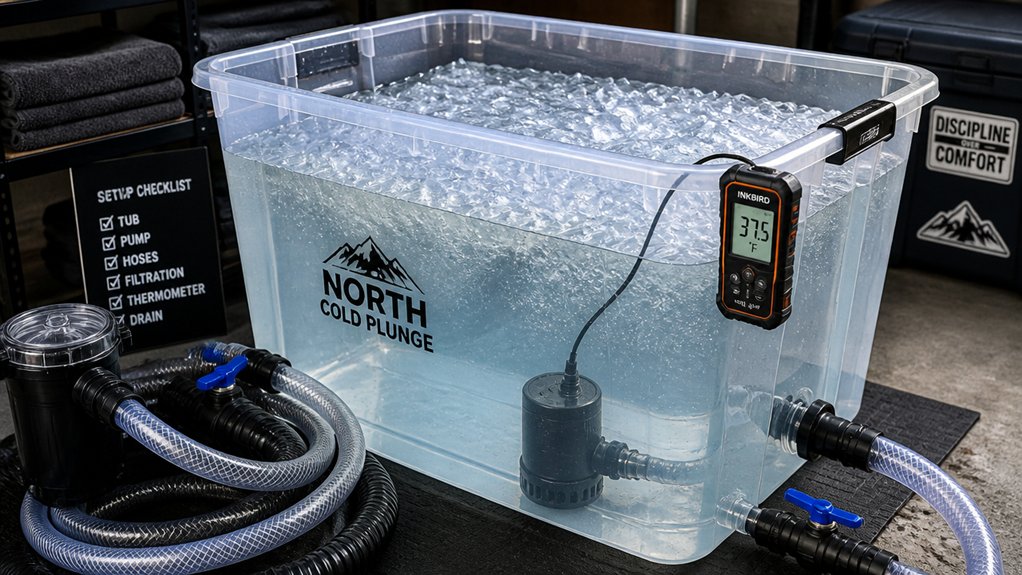
To set up your DIY ice bath pump, you need a reliable submersible pump with a flow rate of 250-500 GPH that matches your chiller. Place the pump near the bottom of the tub, guarantee all hoses are secure and free of kinks, and use durable fittings with sealant to prevent leaks. Regular maintenance and troubleshooting can keep your system running smoothly. Keep going to discover expert tips for peak circulation and pump longevity.
Why Water Circulation Is Key to Your DIY Ice Bath
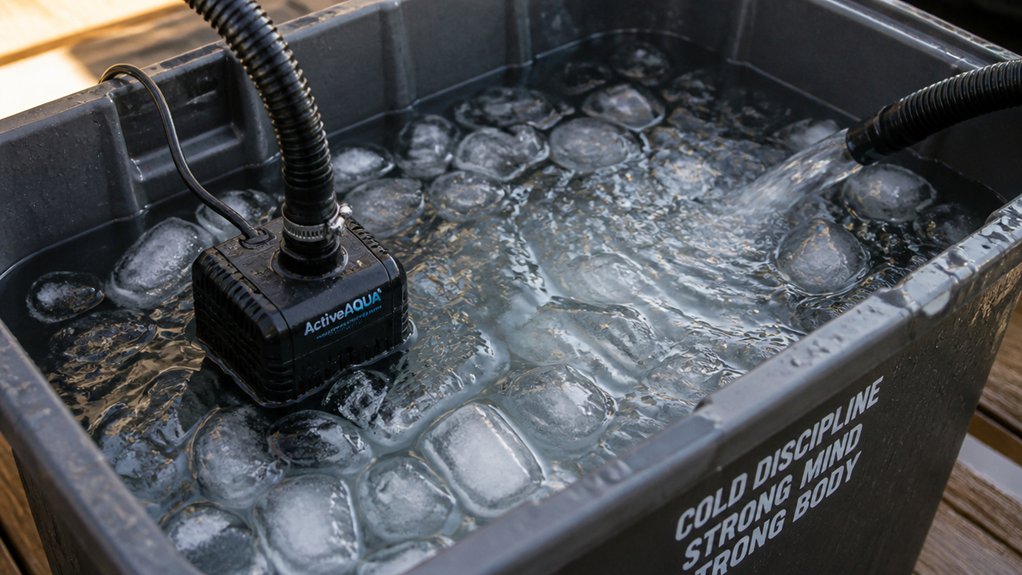
Water circulation is essential for your DIY ice bath because it guarantees evenly distributed cold temperatures throughout the tub. With proper water circulation, the pump moves water constantly through the chiller, ensuring consistent water temperature and preventing warm zones. A reliable pump with a flow rate of 250–500 GPH efficiently balances circulation without wasting energy. Proper flow helps accelerate heat exchange, quickly reaching and maintaining the ideal cold plunge temperature of 40–55°F. Additionally, continuous movement prevents stagnation, which reduces bacteria growth and keeps water clean. Correct pump placement and tubing setup are vital to avoid flow disruptions and leaks. Good circulation also allows your filtration and sanitization systems to work better, resulting in a safer, more comfortable cold plunge setup. Ensuring the pump is compatible with your tub size and setup is crucial for optimal water flow management.
How to Choose the Best Water Pump for Your Needs
Choosing the right water pump depends on your ice bath size and setup needs. You’ll want a pump with a flow rate between 250 and 500 GPH for efficient circulation without wasting energy, especially if paired with a chiller.
Consider compatibility and energy efficiency to guarantee reliable, cost-effective operation for your DIY system. Additionally, selecting a pump with suitable solid handling capacity ensures it can manage debris like leaves or dirt that may enter the system.
Pump Size and Flow
Selecting the right pump size is essential for maintaining effective circulation without wasting energy. You want a water pump with a flow rate between 250 and 500 GPH, which provides enough movement for chillers and filtration without overloading the system.
Danner pumps are a top choice for durability and reliability; consider the Danner Mag-Drive 950 GPH for smaller chillers or the 1200 GPH for larger ones. Keep in mind that tubing length, vertical lift, and the number of pump connections can impact flow rate efficiency.
Use two hose clamps per barb fitting to guarantee a tight seal and prevent leaks. Avoid undersizing or oversizing your pump, as both can compromise chilling, filtration, and energy efficiency. Additionally, ensuring your system components are compatible, such as the fittings and hoses, will optimize performance.
Compatibility With Chiller
Ever wondered how to guarantee your pump works seamlessly with your chiller? Focus on choosing a compatible water pump with the right flow rate, typically between 250 and 500 GPH, to maintain efficient circulation without overloading the system.
Match the pump horsepower to your chiller size—1/4 HP pumps suit 1/4 HP chillers, while 1/2 HP pumps match 1/2 HP chillers, maintaining peak cooling.
Opt for durable, submersible pumps like Danner Water Pumps (950 or 1200 GPH), known for reliability and compatibility.
Also, consider your tubing length and vertical lift, as these factors influence flow rate and chiller performance.
Avoid all-in-one units; instead, select separate pumps to improve flow control, ease maintenance, and maximize your setup’s efficiency.
Energy Efficiency Tips
Wondering how to maximize energy savings while maintaining effective circulation in your DIY ice bath? Choose a water pump with a flow rate between 250–500 GPH, balancing circulation and energy use. Opt for reliable brands like Danner Water Pumps, such as the Mag-Drive 950 GPH, for efficiency and longevity. Match your pump’s horsepower to your chiller: a 1/4 HP pump works with a 1/4 HP chiller, while a 1/2 HP pump suits a 1/2 HP chiller, optimizing cooling. Minimize tubing length and avoid sharp bends to reduce flow resistance, improving efficiency. Use timers or smart plugs to run the pump only when needed, lowering operational costs. Ensure your pump’s flow rate matches the filter capacity to maintain water cleanliness and circulation effectively.
Installing Your Pump and Plumbing Step-by-Step
Start by selecting a pump rated between 250–500 GPH to guarantee proper circulation.
Then, drill holes for bulkhead fittings and connect the tubing securely with hose clamps to prevent leaks.
Finally, position the pump near the bottom of the tub and run a quick leak test before sealing everything up.
In addition, ensure that the tubing and fittings are made from temperature-resistant materials such as stainless steel or durable plastics to withstand cold water conditions and prevent cracking.
Selecting Appropriate Pump Size
Choosing the right pump size is essential for efficient water circulation in your DIY ice bath. The flow rate of your submersible water pump determines how effectively water moves through the water chiller and filtration system. To match your pump with your setup, consider the size of your water chiller: a 1/4 HP chiller typically pairs with a 950 GPH pump, while a 1/2 HP chiller needs around 1200 GPH. Use PVC tubing, usually 3/4″ inner diameter, to connect the pump, securing fittings with hose clamps to prevent leaks. Properly selecting pump size and flow rate guarantees steady circulation and peak cooling. Additionally, paying attention to the electricity consumption of different pumps can help optimize energy efficiency while maintaining effective water flow.
Ensuring Leak-Free Plumbing Connections
To guarantee your plumbing connections remain leak-free, it’s essential to use high-quality materials and proper assembly techniques. Confirm all pump-to-plumbing connections are secure by tightening double hose clamps on every barb fitting.
Apply generous amounts of pipe thread sealant, preferably brush-on, on all threaded fittings before assembly to create a durable, leak-proof seal. To improve the fit, heat sections of 3/4 inch ID PVC tubing in hot water before fitting onto barbs, ensuring a snug, flexible connection that resists leaks.
Position bulkhead fittings carefully, with inlet holes about 18 inches and outlet holes 9 inches above the cooler, to optimize flow. Additionally, considering insulation materials during installation can help maintain consistent water temperatures and improve efficiency. Finally, perform a static leak test by filling the system with water, inspecting each joint for drips before powering the pump.
Common Pump Problems and How to Fix Them
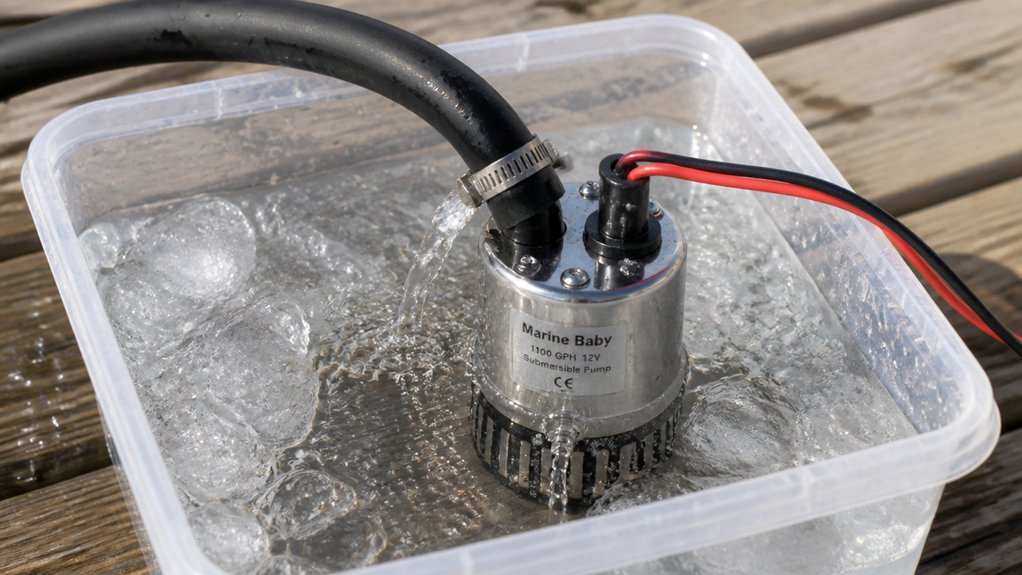
Many common pump problems stem from simple issues like inadequate flow, air leaks, or electrical faults. If your pump isn’t moving enough water, check if the flow rates are below 250 GPH, which can hamper cooling and filtration.
Air leaks in tubing or loose hose clamps can cause a loss of prime, resulting in noisy operation or shutdown. Clogged filters restrict water flow, overworking the pump motor and risking overheating or failure. Make certain your filter isn’t blocked, and water levels are sufficient to keep the pump submerged.
Also, inspect electrical connections for looseness or damage, especially if the pump suddenly stops working. Proper maintenance, quick identification of issues, and regular filtering help prevent these common problems and keep your pump running smoothly. Additionally, ensure that your pump settings are appropriate for your water volume, as incorrect sizing can lead to inefficient operation or premature failure.
Tips for Maintaining Your Pump and Extending Its Life
Maintaining your pump regularly is essential for guaranteeing it runs efficiently and lasts longer. To keep your submersible pump performing at its best, clean the intake and impeller area frequently to prevent clogging from debris and buildup, which can reduce flow efficiency and strain the motor.
Use a quality submersible pump rated between 250-500 GPH, like the Danner Mag-Drive series, for durability. Always guarantee the pump is fully submerged during operation to prevent overheating and damage.
Routinely inspect hoses, clamps, and seals, replacing worn parts to maintain a leak-free, efficient system. Schedule periodic maintenance by flushing with clean water and listening for unusual noises or vibrations. These simple steps will help extend your pump’s lifespan and optimize your ice bath setup.
Troubleshooting Water Circulation Issues Effectively
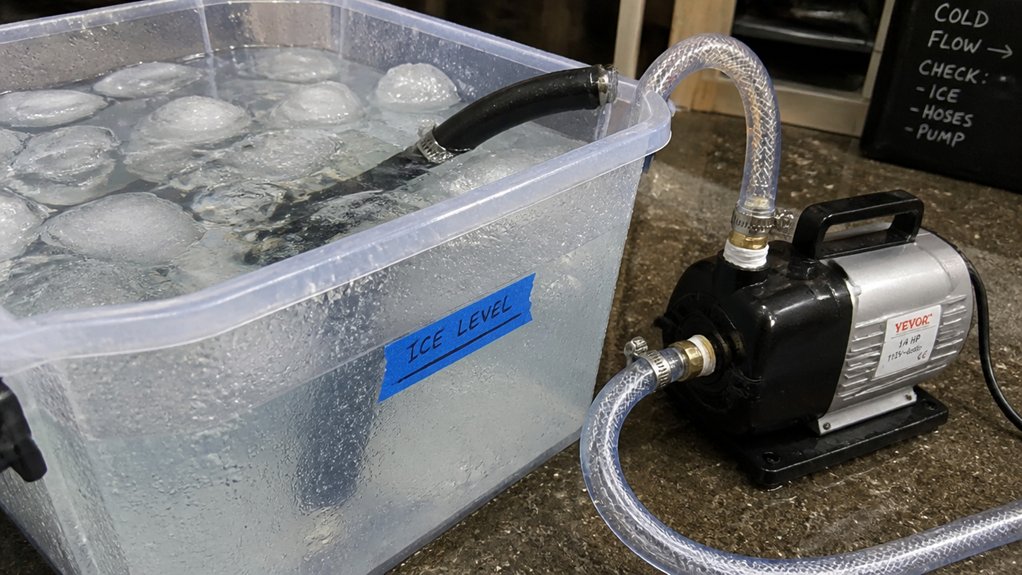
If your ice bath pump isn’t circulating water effectively, start by inspecting the system for potential blockages. Clogs or debris in the pump intake, tubing, or filter housing can restrict water flow and hinder circulation.
Confirm all hose connections are secure, tight, and free of kinks or sharp bends that can impede water movement. Verify the submersible pump is fully submerged and positioned correctly in the tank to prevent air locking—when trapped air stops flow.
Also, test the pump separately by running it in water to identify electrical or mechanical faults. Regularly check these components to guarantee water circulation stays consistent and efficient. Proper maintenance helps you avoid reduced flow and keeps your DIY ice bath working at peak performance.
Frequently Asked Questions
Can I Use a Submersible Pump Instead of an External One?
Yes, you can use a submersible pump instead of an external one. Just make certain it’s rated for continuous use, compatible with your ice bath setup, and has enough power to circulate water efficiently without overheating or causing damage.
What Safety Precautions Should I Take During Installation?
You should always unplug the power before working on the pump, wear gloves to protect your skin, guarantee all electrical connections are waterproofed, keep the area dry, and double-check wiring to prevent electrical hazards during installation.
How Do I Prevent Algae Buildup in the Pump and Tubing?
You prevent algae buildup by regularly cleaning your pump and tubing with diluted vinegar or a specialized cleaner, ensuring proper drainage and drying after use, and keeping the area around your setup clean and shaded to reduce algae growth.
What Power Source Is Safest for Continuous Operation?
You should use a GFCI outlet for safety, ensuring continuous operation doesn’t pose electrical risks. It’s best to connect your pump to a dedicated circuit with proper grounding, and avoid extension cords to prevent electrical hazards.
How Often Should I Clean or Replace Pump Components?
You should clean your pump components every 2 to 4 weeks and replace any worn parts promptly. Regular maintenance helps prevent clogs, extends the pump’s lifespan, and guarantees peak performance for your ice bath.