To comply with legal standards for ice baths, you must maintain strict water quality, disinfection, and safety protocols. Guarantee your water is regularly tested for pH (7.0-7.6), chlorine residuals (2-3 mg/l), and temperature (ideally 7-10°C). Use approved filtration, automated disinfectant dosing, and certified equipment to prevent contamination and accidents. Failing to meet these standards can result in fines, shutdowns, or legal issues. Keep exploring to understand how to stay fully compliant.
What Water Quality Standards Must Commercial Ice Baths Comply With?
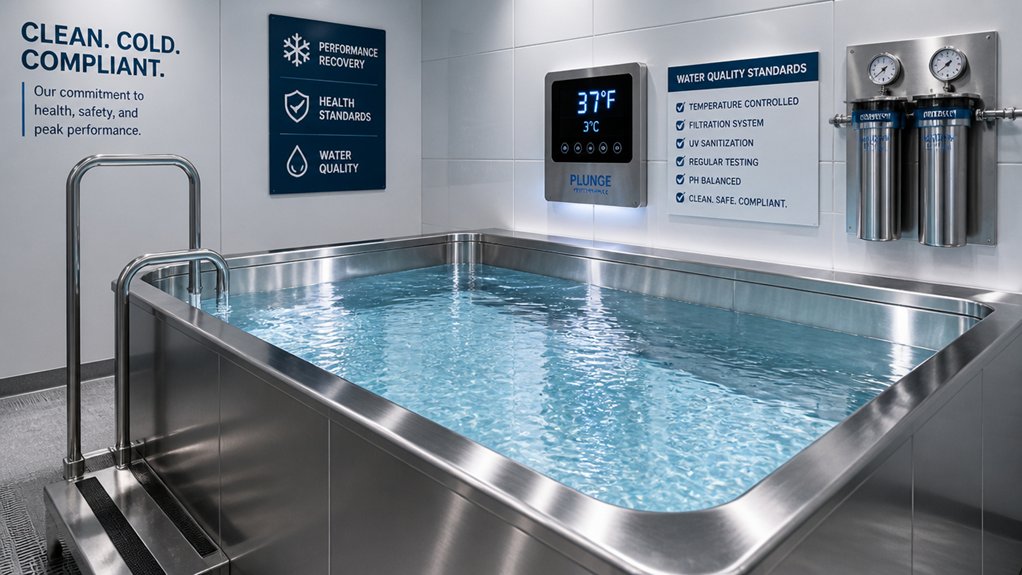
What water quality standards must commercial ice baths meet to guarantee safety and compliance? Maintaining water quality is essential for safe use.
You need to secure effective filtration, which involves multi-stage systems that remove contaminants efficiently, as required by PWTAG standards. Daily monitoring of water quality parameters is critical; the pH should stay between 7.0 and 7.6, and free chlorine must be maintained between 2-3 mg/l to prevent microbial growth.
Residual disinfectants are mandatory, as UV and ozone treatments alone don’t provide continuous pathogen control. Temperature regulation is indispensable, keeping water between 7-10°C (45-50°F).
Finally, compliance with NSF/ANSI/CAN 50 standards guarantees proper circulation, filtration, and disinfection, all of which uphold the water quality necessary for safe and legal commercial ice bath operation.
How Do Sanitation and Disinfection Regulations Ensure Safe Ice Bath Use?
How do sanitation and disinfection regulations keep your ice baths safe? The Water Treatment Advisory Group emphasizes integrated systems like multi-stage filtration, UV/ozone treatment, and residual disinfectants to prevent waterborne infections. These standards guarantee continuous microbial control, with regulations requiring chlorine residuals of 2-3 mg/l and pH levels between 7.0-7.6.
A robust water filtration system is crucial for maintaining water clarity and purity in ice baths. Automated dosing systems help manage disinfectant levels and alert operators when maintenance is needed, especially during heavy use. Since UV and ozone alone don’t provide ongoing pathogen protection, residual disinfectants are mandatory.
Regular inspections by health departments enforce sanitation protocols and emphasize consistent water quality monitoring. These regulations collectively guarantee your ice bath remains safe, reducing the risk of infections through strict control of water treatment processes.
What Are the Required Filtration and Circulation System Standards?
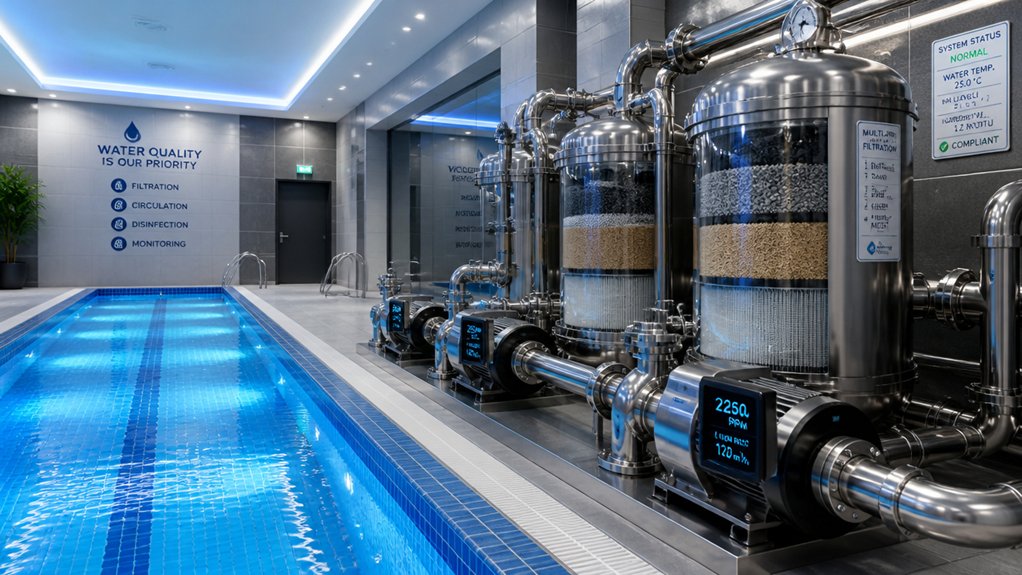
To guarantee your ice bath remains safe and compliant, your filtration and circulation systems must meet strict standards. High-flow, multi-stage filtration compliant with PWTAG guarantees contaminants and biofilms are controlled, while continuous water movement supports effective sanitation. Additionally, your disinfection approach must go beyond UV or ozone alone, incorporating integrated treatment and proper sizing at the manufacturer level to maintain water quality. Ensuring the use of effective water clarifiers can further enhance filtration efficiency and water clarity.
Filtration System Requirements
Effective filtration and circulation systems are essential for maintaining safe and hygienic ice baths in commercial settings. Your filtration system must include multi-stage processes that comply with PWTAG standards, ensuring the effective removal of physical contaminants and preventing biofilm buildup.
Properly sized filtration equipment is indispensable to handle the pool’s volume and user turnover, supporting pathogen control. Continuous circulation maintains water movement, which aids disinfection and preserves temperature stability during heavy use.
You should also incorporate integrated filtration, UV or ozone treatment, and residual disinfectant systems — relying solely on UV or ozone is insufficient for microbial control.
Automated sanitation dosing and monitoring systems are imperative for maintaining chemical balance and alerting you to maintenance needs, ensuring ongoing compliance with health regulations.
Circulation System Standards
Maintaining proper circulation in your ice bath is essential for guaranteeing consistent temperature, effective filtration, and reliable sanitation, particularly in high-traffic commercial settings. Water must continuously flow through the system to support these functions, meeting strict standards like PWTAG guidelines. Multi-stage filtration efficiently removes physical contaminants and prevents biofilm buildup, keeping water clean and safe. To guarantee ongoing microbial control, sanitation should include a residual disinfectant component, as UV or ozone treatments alone don’t provide lasting disinfection. The system design needs to allow easy maintenance access and incorporate automated sanitation logic for consistent monitoring and dosing. Compliance with NSF/ANSI/CAN 50 standards confirms that circulation and filtration components perform reliably at cold water temperatures, typically at or below 65℉ (18℃). Additionally, using high-flow filters enhances debris removal and supports the longevity of the system.
Disinfection System Compliance
Guaranteeing your ice bath meets disinfection system compliance requires strict adherence to filtration and circulation standards. You must incorporate multi-stage filtration systems that align with PWTAG standards to effectively remove physical contaminants.
Continuous water circulation, combined with proper disinfection technologies, is essential for maintaining safe pathogen levels, especially under heavy use. Additionally, residual disinfectants like chlorine (2-3 mg/L), alongside UV or ozone systems, are legally mandated to guarantee ongoing microbial control.
To stay compliant:
- Use multi-stage filtration systems sized and maintained to prevent biofilm buildup.
- Continuously circulate water to support filtration and disinfection processes.
- Incorporate residual disinfectants, such as chlorine, to sustain microbial control.
- Implement automated dosing and monitoring technologies for real-time disinfection management.
- Regularly monitor filtration effectiveness to ensure system performance meets legal standards.
These measures help guarantee your ice bath remains safe and compliant.
How Is Water Temperature Regulation Regulated for Safety and Performance?
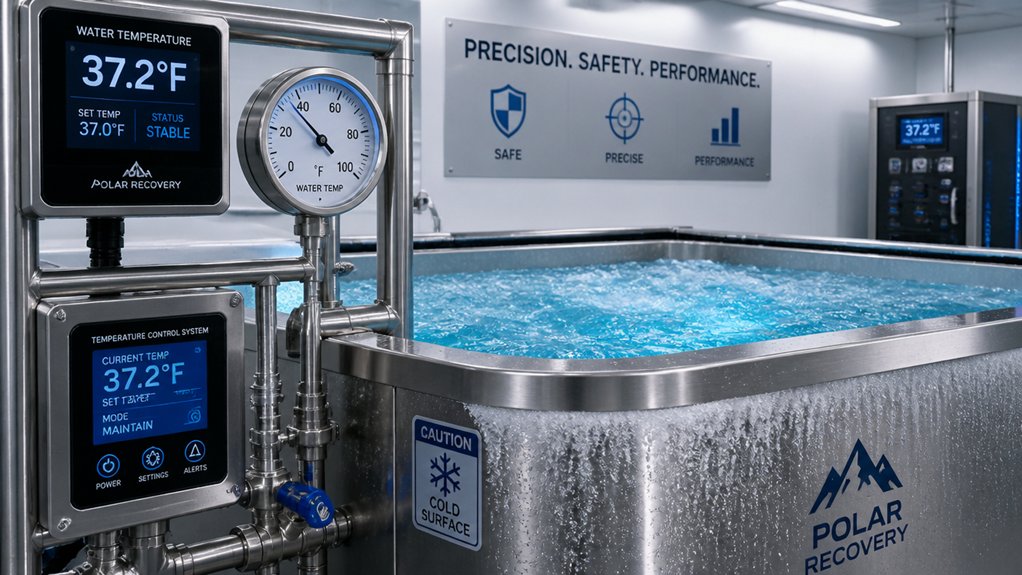
You need to guarantee that water temperature in ice baths stays within safe and effective ranges, typically at or below 65°F (18°C).
Automated monitoring systems help maintain consistent temperatures and comply with regulatory standards, even with high user turnover. Proper controls prevent fluctuations that could endanger users or reduce therapeutic benefits.
Temperature Control Standards
Controlling water temperature accurately is essential for both safety and effectiveness in ice bath therapies, especially in commercial settings.
Proper temperature regulation guarantees that cold plunges remain within safe limits, preventing cold shock or hypothermia.
To meet legal standards, operators must use reliable systems such as chillers and circulation equipment that stabilize water temperature despite heavy use and ambient conditions.
Key regulations include:
- Maintaining temperatures at or below 65℉ (18℃).
- Using temperature monitoring systems compliant with standards like NSF/ANSI/CAN 50.
- Conducting daily checks to keep water between 44.6-50℉ (7-10℃).
- Safeguarding systems compensate for high user turnover and environmental factors.
These standards help keep cold plunges safe, effective, and regulation compliant.
Automated Monitoring Systems
Automated monitoring systems play a crucial role in maintaining safe and consistent water temperatures in commercial ice baths. These systems continuously regulate water temperature, keeping it within safe ranges of 7-10°C (44.6-50°F). Safety regulations require precise control to prevent cold shock, limiting exposure to water below 10°C for 2-5 minutes. Integrated sensors work with automated dosing and filtration to alert operators instantly if temperatures deviate from safe limits. They also support compliance with health codes by documenting temperature stability and enabling prompt corrections. Proper sensor latency management ensures timely alerts and accurate readings, which are essential for safety and regulatory compliance. Many systems are designed to integrate with sanitation controls, ensuring water quality while maintaining low temperatures efficiently. Here’s a quick overview:
| Feature | Function | Regulation Requirement |
|---|---|---|
| Automated sensors | Detect temperature deviations | Immediate alerts when limits are exceeded |
| Dosing and filtration systems | Maintain water quality and temperature | Integration with safety protocols |
| Data documentation | Record temperature stability | Supporting compliance and audits |
What Electrical Safety Certifications Are Needed for Ice Bath Equipment?
Are the electrical safety certifications for ice bath equipment truly essential for guaranteeing safe operation in wet environments? Absolutely, these certifications are critical to maintaining health and safety standards.
They verify that equipment minimizes risks like electric shock, fire, or malfunction. To meet safety requirements, you should confirm your ice bath system has:
- Certifications such as CE (Europe) or UL (North America)
- Ground-fault circuit interrupters (GFCIs)
- Waterproof electrical enclosures
- Compliance verified by inspections and permits
Manufacturers must guarantee that all components—pumps, chillers, controls—meet established safety standards. This guarantees your facility operates legally and reduces hazards, reinforcing health and safety for users and staff alike. Properly rated waterproof extension cords play a vital role in maintaining safety and reliability in wet environments.
How Do Regulations Cover User Safety and Capacity Limits?
Regulations are designed to guarantee that ice bath facilities keep user safety at the forefront, especially when it comes to capacity limits and safe access. To prevent overuse and maintain water quality, limits are set on the number of users allowed at once, especially since some non-compliant facilities report hundreds of daily users without proper filtration. For safety, pre-use health screenings are required to exclude those with heart conditions. Exposure time is restricted to 2-5 minutes to lower the risk of cold shock. Clear safety signage, usage instructions, and strict temperature controls are mandatory, particularly in unsupervised settings. Accessibility requirements, like lifts or transfer walls, secure safe, equitable entry. Regular maintenance protocols include cleaning of filters and sanitation systems to ensure hygiene standards are met. Health departments enforce these rules via permits and inspections, with failure risking shutdown or penalties.
What Are the Inspection and Maintenance Protocols for Keeping Ice Baths Compliant?
Maintaining compliance for ice baths requires rigorous inspection and maintenance protocols to guarantee safety and water quality. Regular checks are essential to meet the Pool Water Treatment Advisory standards.
- Conduct daily water quality tests, ensuring pH stays between 7.0-7.6, chlorine levels are at 2-3 mg/l, water temperature remains 7-10°C, and circulation is continuous.
- Regularly inspect filtration systems to prevent biofilm buildup and uphold high-flow multi-stage filtration aligned with PWTAG standards for commercial ice baths.
- Perform weekly deep cleaning, including draining, refilling, sanitizing around the unit, and replacing filters with PWTAG-approved agents.
- Use automated systems like the Brass Monkey app to manage disinfectant levels and receive maintenance alerts, ensuring sustained sanitation.
- Consider the compatibility of water sanitizers with tub materials and their impact on pH and temperature stability to maintain proper water chemistry and prevent equipment degradation.
Keeping documented records of these procedures guarantees regulatory compliance.
How Should Emergency Procedures and Safety Signage Be Set Up?
Properly setting up emergency procedures and safety signage for a commercial cold plunge is essential to guarantee user safety and compliance. You need trained staff capable of recognizing and responding quickly to cold shock reactions and other health emergencies.
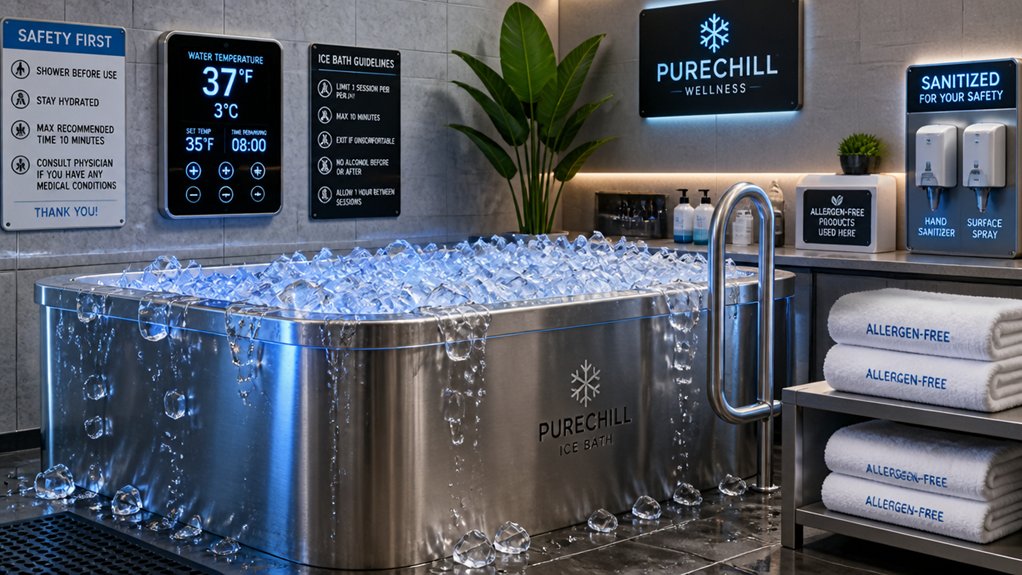
Signage should clearly display instructions, including maximum exposure times of 2-5 minutes, and warn individuals with heart conditions. Place highly visible signs at all entry points to secure users are aware of risks and safety protocols.
Additionally, maintain precise temperature control with monitoring systems and guarantee emergency shut-off controls are accessible to staff at all times.
Staff must be trained in emergency protocols and first aid specific to cold immersion incidents, enabling rapid and effective responses to any emergencies in the ice bath area.
What Are the Design Standards for Facility Layout, Slips, and Drainage?
Designing an efficient and safe facility layout for ice baths involves careful attention to flooring, drainage, and overall flow. You need non-slip surfaces to prevent slips and falls, especially around water zones.
Proper drainage systems are essential to handle water overflow, cleaning, and prevent standing water that could cause accidents. To optimize safety, consider positioning ice baths near showers or saunas to encourage contrast therapy and facilitate calm recovery zones.
Key standards include:
- Installing slip-resistant flooring in all ice bath areas
- Ensuring effective drainage to manage water and cleaning cycles
- Incorporating adequate ventilation to reduce humidity and condensation risks
- Designing accessible pathways that comply with local regulations for all users
Focusing on these standards helps maintain safety and hygiene for your ice baths.
How Do Local Regulations Impact Ice Bath Access and Usage Policies?
Local regulations greatly shape how you can offer and operate ice baths, with requirements varying widely by jurisdiction. You’ll need to navigate permit processes, inspections, and water sanitation standards to stay compliant.
Additionally, ADA accessibility laws may require modifications like lifts or transfer walls to guarantee inclusive access.
Variability in Local Standards
Variability in local regulations greatly influences how ice bath facilities establish access and safety policies, often resulting in inconsistent standards across different regions. This inconsistency directly affects public health, safety, and facility operations.
Here are four key ways standards differ:
- Some areas enforce strict sanitation, filtration, and water treatment requirements, impacting operational complexity.
- Local health departments may mandate permits, inspections, and specific safety procedures, delaying approvals.
- Regulations often require accessible entry solutions like lifts or transfer walls, influencing design.
- Regional interpretations of water safety standards can vary, dictating filtration systems and disinfectant use.
Navigating these differences means you must engage early with local authorities to comply with region-specific rules, ensuring public health and avoiding costly delays or closures.
ADA Accessibility Regulations
Managing regional standards isn’t just about sanitation and water treatment; it also involves guaranteeing that ice bath facilities are accessible to all users. ADA regulations require commercial ice baths to have accessible entry options, like lifts or transfer walls, to accommodate users with disabilities.
Local authorities often enforce these standards, impacting the design and construction of public and commercial ice baths. Failing to meet ADA accessibility can lead to disapproval from health departments, operational restrictions, or even facility shutdowns.
Accessibility provisions also shape usage policies by requiring facilities to plan for diverse user needs during layout and installation. To avoid compliance issues, it’s essential to consult local regulations early in your ice bath project to guarantee your facility meets ADA accessibility requirements.
Permit and Inspection Processes
Permits and inspections are essential steps to guarantee your ice bath facility complies with safety, sanitation, and accessibility standards before opening or making any operational changes. Local health departments require these processes to confirm health and safety standards are met.
During inspections, you’ll need to demonstrate compliance with water filtration, disinfection, and continuous monitoring requirements. Here are key points to take into account:
- Obtain necessary permits early to avoid operational delays.
- Meet anti-entrapment (VGB) and ADA accessibility requirements for safety and health.
- Pass routine inspections focusing on water quality and user safety controls.
- Engage with local health authorities upfront to clarify regulations, define policies, and prevent shutdowns.
Understanding and managing local regulations protect your facility’s legal status and prioritize health standards.
What Are the Legal Consequences of Non-Compliance in Ice Bath Operations?
What’re the legal risks if you fail to comply with regulations in ice bath operations?
If your treatment systems don’t meet sanitation standards, you risk regulatory inspections, facility shutdowns, and losing your operational license. Poor water quality or ineffective filtration can lead to health department complaints, increasing liability and damaging your brand.
Failing to address ADA accessibility requirements, like installing lifts, can result in legal action or permit denial. Insurance companies may also decline coverage or raise premiums if your treatment systems are inadequate or non-compliant.
Enforcement actions often include mandatory corrections, fines, or permit revocations for those who ignore evolving local and federal regulations. Non-compliance exposes you to significant legal and financial consequences, jeopardizing your business’s continued operation and reputation.
How Does Certification and Regular Testing Maintain Regulatory Compliance?
Certification standards like NSF/ANSI/CAN 50 verify that your ice bath meets essential safety and performance benchmarks, including filtration, circulation, and disinfection.
Regular water testing maintains proper pH and chlorine levels, ensuring ongoing sanitation that aligns with regulatory guidelines.
Automated monitoring and routine inspections help you stay compliant, preventing biofilm buildup and potential shutdowns.
Importance of Certification Standards
Guaranteeing that ice baths meet regulatory standards hinges on adhering to established certification protocols, which specify essential system requirements. Certification standards like NSF/ANSI/CAN 50 guarantee cold tubs and ice baths meet defined water quality, filtration, and disinfection criteria crucial for compliance.
Here’s how they help:
- They include guidelines for integrated systems, guaranteeing proper water treatment.
- Regular testing covers key parameters like pH, chlorine, temperature, and water clarity.
- Certified systems require multi-stage filtration and residual disinfection for ongoing microbial control.
- Following these standards simplifies inspections, reducing the risk of violations, fines, or shutdowns.
Adhering to certification standards also promotes accountability among manufacturers, guaranteeing sanitation and safety are built into ice bath designs from the start.
Regular Testing Ensures Safety
Regular testing plays a vital role in maintaining regulatory compliance for ice baths by providing concrete proof that water quality standards are consistently met. Water immersion has become safer and more reliable through routine testing, ensuring pH levels stay between 7.0-7.6 and chlorine remains at 2-3 mg/l. Certification standards like NSF/ANSI/CAN 50 require continuous monitoring of filtration, disinfection, and circulation systems, supporting safe practices. Automated dosing systems with real-time alerts help maintain disinfectant levels and prevent pathogen growth. Regular inspections detect biofilm buildup and mechanical issues early. Establishing documented testing schedules and results allows regulatory bodies to verify compliance. Think of the table below as a visual reminder of key testing elements:
| Water Quality | System Monitoring | Documentation |
|---|---|---|
| pH & Chlorine | Filtration Checks | Testing Records |
What Role Do Industry Standards Like NSF/ANSI/CAN 50 Play in Your Compliance Strategy?
Industry standards like NSF/ANSI/CAN 50 play a crucial role in shaping your compliance strategy by providing a clear and all-encompassing framework for managing cold tubs with circulation, filtration, and disinfection systems. When it comes to ice baths, meeting these standards guarantees your system maintains water quality, controls pathogens, and keeps users safe.
Adherence simplifies compliance with health department regulations, reducing inspection risks and potential shutdowns. The standards support integrated system design, combining pumps, chillers, filters, and controls for continuous heavy-use conditions.
As a result, manufacturers who meet NSF/ANSI/CAN 50 make it easier for you to stay compliant by offering products designed for sanitation and safety, ultimately streamlining your ice bath management.
- Guarantees consistent water quality for ice baths
- Facilitates pathogen control and safety
- Aligns with health department requirements
- Supports durable, heavy-use system design
How Can Manufacturers and Facility Managers Stay Ahead of Changing Regulations?
Staying ahead of changing regulations requires proactive approaches from both manufacturers and facility managers. You should design ice bath systems with multi-stage filtration, residual disinfectants, and automated sanitation to guarantee ongoing pathogen control and compliance with evolving health standards.
Regularly consulting updated local and state health codes, including NSF/ANSI/CAN 50 amendments, helps you stay current with jurisdictional requirements. Collaborating early with regulatory agencies during planning and installation allows you to anticipate permit and inspection criteria, reducing operational delays.
Tools like CET CryoSpa’s expert consultancy and automated dosing apps can support water quality management and streamline maintenance.
Prioritizing durable materials and accessible designs minimizes sanitation failures, inspections, and treatment disruptions, helping you successfully navigate changing legal landscapes.
Frequently Asked Questions
What Are the Guidelines for Ice Baths?
You should guarantee your ice bath meets health standards with proper filtration, continuous circulation, and disinfectant use. Make it accessible, regularly test water quality, follow local permits, and maintain sanitation protocols to stay compliant and safe for users.
Is There Evidence to Support Ice Baths?
Yes, evidence supports ice baths’ benefits, showing they reduce fatigue, lower injury risks, and aid recovery when used properly with controlled temperature and timing. Always guarantee water quality and sanitation for safe, effective use.
Can Ice Baths Help With Lipedema?
Ice baths can potentially help with lipedema by reducing inflammation, swelling, and pain while improving mobility, but you should always consult your healthcare professional first. Use controlled durations and temperatures to stay safe.
What Is the Limit for an Ice Bath?
You should keep ice bath temperatures at or below 65℉ (18℃) and limit sessions to 2-5 minutes. Maintain temperature stability and monitor user volume and water quality, following local health codes and safety standards to stay compliant.