To boost your immune support, try using cold water immersion at 50-59°F for 1-3 minutes, followed by warm water at 70-85°F for 3-5 minutes, cycling through 3-5 times. Incorporate ice baths post-exercise or on recovery days, and gradually increase cold exposure over time. Always monitor your body’s responses and prioritize safety. Keep exploring for more effective contrast therapy methods to strengthen your immune defenses.
What Is Contrast Therapy and How Does It Support Immunity?
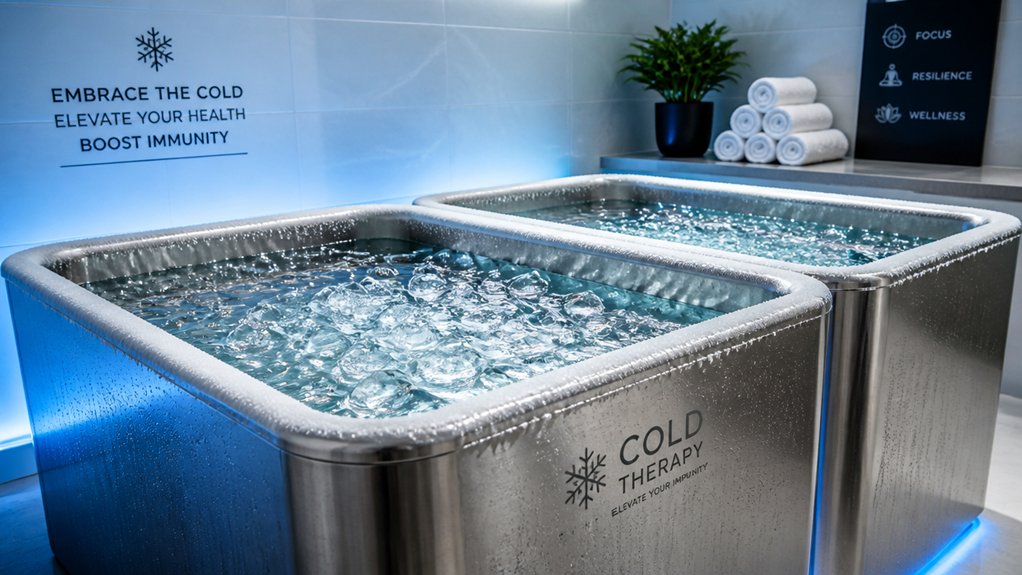
Contrast therapy involves alternating between cold water immersion and warm water exposure to boost your circulatory and immune systems. When you switch between cold (around 50-59°F or 10-15°C) and warm water, it creates rapid temperature changes that promote vasoconstriction and vasodilation. These processes enhance blood flow, helping circulate white blood cells more effectively throughout your body. The increased blood circulation can support your immune response by mobilizing immune cells and clearing metabolic waste. Incorporating infrared heat therapy into contrast therapy routines can further deepen tissue warming and promote relaxation, maximizing immune benefits. Regular contrast therapy, done 2-3 times weekly with brief cold immersions and warm cycles, may also induce hormesis—mild stress that strengthens your immune system over time. This method offers a way to improve immune markers naturally, without the risks associated with prolonged cold-water immersion alone.
What Are the Best Contrast Therapy Methods to Boost Your Immune System?
To effectively boost your immune system with contrast therapy, it’s important to follow proven methods that maximize benefits while ensuring safety.
A solid approach involves alternating between cold water immersion at 50-59°F (10-15°C) for 3-5 minutes and warm water for 3-5 minutes, cycling through this 3-4 times. Regular sessions 2-3 times weekly for at least 6 weeks activate hormesis, enhancing immune efficiency and boosting white blood cell production.
The cold shock response triggers metabolic stress and cytokine release, strengthening immunity, while the warm phase boosts blood flow and clears inflammatory byproducts.
- Use cold plunges lasting 3-10 minutes followed by warm periods
- Gradually increase temperature differences and duration
- Monitor cardiovascular response and comfort
- Stick to a consistent routine for maximum benefits
- Using an insulated ice bath with adjustable temperature controls can help maintain precise cold exposure temperature regulation for safe and effective therapy
How Do Hot and Cold Alternations Improve Immune Response?
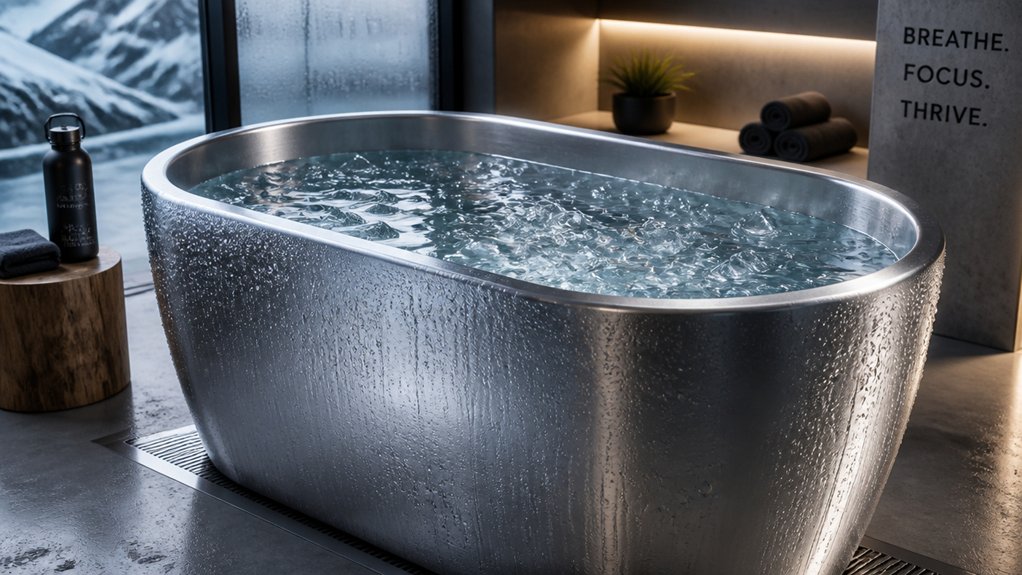
By alternating hot and cold exposures, you activate hormetic stress, which strengthens your immune response and helps manage inflammation. These temperature shifts boost blood flow, enhancing the delivery of immune cells and nutrients throughout your body. Regularly practicing this contrast therapy can lead to improved immune cell mobilization and greater resilience against infections. Incorporating adaptogens in your routine can further support your stress response and recovery during these temperature fluctuations adaptogen synergy.
Hormetic Stress Activation
Alternating hot and cold exposures activates the body’s natural defense mechanisms through hormetic stress, which involves controlled biological challenges that strengthen the immune system.
Cold water exposure, like cold-water immersion, stimulates the production of white blood cells and enhances immune responses by triggering mild, adaptive stress. Heat, such as sauna use, induces heat shock proteins that support cellular health and inflammation regulation.
This process promotes:
- Improved immune cell activity through hormetic stress
- Increased white blood cell production via cold immersion
- Enhanced circulatory flow by vasodilation and vasoconstriction
- Activation of heat and cold shock proteins that reduce inflammation
Regularly experiencing these temperature shifts trains your immune system to respond more effectively, leading to fewer sick days and heightened immunity. This hormetic stress activation keeps your defenses resilient over time and can be supported by advanced energy-efficient water chillers that ensure consistent and safe temperature control during your recovery routines.
Blood Flow Enhancement
Hot and cold exposures create a dynamic blood flow cycle that markedly boosts your immune response. During heat exposure, blood vessels vasodilate, increasing blood flow and improving lymphatic drainage. Switching to cold triggers vasoconstriction, which helps mobilize white blood cells, enhancing immune surveillance. This alternating pattern creates a vascular pumping effect, flushing immune cells throughout your body for better resistance. The thermal contrast stimulates your autonomic nervous system, boosting cytokine release and balancing inflammation. Regular hot-cold sessions strengthen immune cell function by activating heat and cold shock proteins that support cellular stress responses. This process not only improves circulation but also enhances the body’s ability to detect and respond to threats. Understanding infrared heat can help optimize recovery and immune benefits in these protocols. Check out the table below for how blood vessel responses support immune health:
| Exposure Type | Blood Vessel Response | Immune Effect |
|---|---|---|
| Heat | Vasodilation | Improved circulation |
| Cold | Vasoconstriction | Immune cell mobilization |
| Alternation | Vasodilation/constriction | Blood flow enhancement |
Immune Cell Mobilization
Immune cell mobilization occurs when your blood vessels rapidly contract and dilate during hot and cold exposures, creating a dynamic circulation that enhances immune surveillance. This process helps distribute immune cells like white blood cells more effectively throughout your body. A full spectrum infrared sauna can further support this process by providing diverse wavelengths that penetrate deeper tissues, promoting circulation and immune activation. Alternating between sauna sessions and ice baths triggers a cold shock response that activates immune function, mobilizing white blood cells. The subsequent heat exposure increases blood flow, aiding in the systemic distribution of these cells. Regular hot-cold routines boost cytokine and T lymphocyte levels, strengthening your immune system. Additionally, switching between heat and cold activates heat and cold shock proteins that regulate inflammation.
How Can You Safely Practice Contrast Baths at Home?
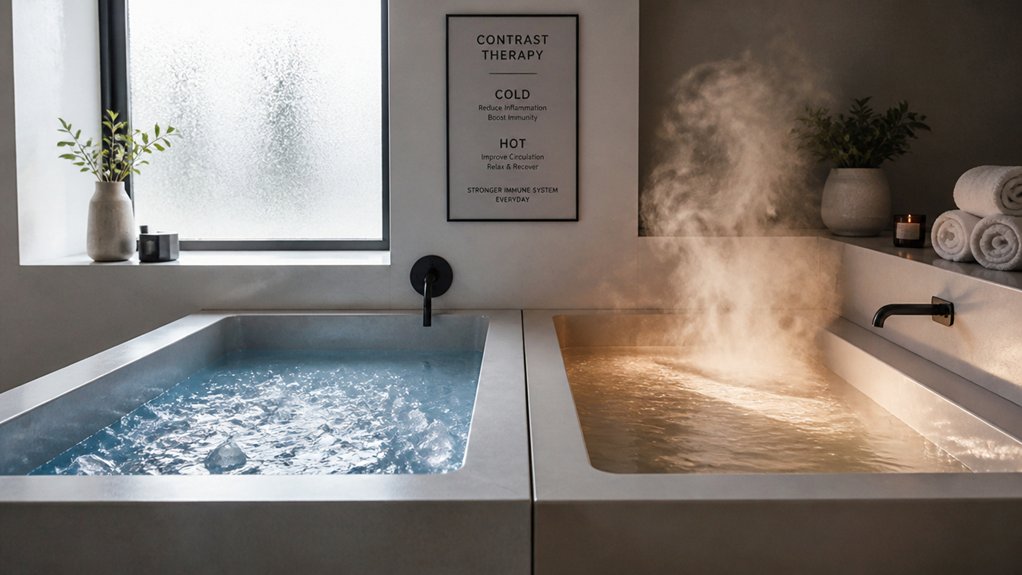
Wondering how to safely try contrast baths at home? Start by using two basins or tubs—one with cold water (50–59°F/10–15°C) and ice, the other with warm water (98–104°F/37–40°C). Always measure water temperature with a thermometer to keep it safe.
Begin with cold water immersion for 30 seconds to 1 minute, then switch to warm water for 3–4 minutes. Repeat this cycle 3–5 times, gradually increasing cold immersion time as your tolerance improves. Using a floating thermometer can help you accurately monitor the water temperatures to ensure safety.
Monitor for signs of cold shock or discomfort, and never push beyond your comfort level. After finishing, dry off thoroughly and warm up slowly with warm clothes and a beverage.
These steps help you safely experience the benefits of contrast baths for your immune system.
What Temperature Range Is Ideal for Immune-Boosting Contrast Therapy?
To boost your immune system effectively, aim for cold water temperatures between 50°F and 59°F (10°C to 15°C), as this range stimulates immune responses without risking cold shock. Using a reliable blood oxygen monitor can help ensure proper oxygen levels during and after cold exposure. Alternating these cold immersions with warmer water helps improve circulation and immune cell activity. Keep cold exposures within 3 to 5 minutes and practice this 2-3 times weekly for safe and consistent benefits.
Optimal Cold Temperature Range
What’s the ideal temperature range for an ice bath aimed at boosting your immune system? The prime ice bath temperature is between 50°F and 59°F (10°C to 15°C). This range balances effective cold exposure and safety, promoting immune activation without risking hypothermia.
Starting closer to 59°F allows gradual adaptation, minimizing shock while still stimulating beneficial hormesis effects. Staying within this range guarantees prime activation of immune cells, especially impacting white blood cell response.
Regular ice baths at these temperatures, about 3 times weekly for 5 to 10 minutes, can improve immune markers like glutathione levels. Keep in mind, prolonged exposure below 50°F isn’t recommended for beginners, as it increases hypothermia risk without significant additional immune benefits.
Temperature Differentials Effectiveness
Maintaining an effective temperature differential between cold and warm water immersion enhances the immune-boosting benefits of contrast therapy. To optimize this, keep cold water therapy at 50°F to 59°F (10°C to 15°C), which activates immune responses without risking hypothermia. The temperature difference with warm water should be significant but safe, typically around 10–20°F (5–10°C). A gradual approach from higher to lower cold temperatures boosts tolerance and immune adaptations over time. Repeated sessions thrice-weekly for six weeks improve immune markers, like T lymphocytes. Here’s a visual guide:
| Cold Water Temperature | Warm Water Temperature |
|---|---|
| 50°F–55°F (10°C–13°C) | 70°F–85°F (21°C–29°C) |
| 55°F–59°F (13°C–15°C) | 85°F–95°F (29°C–35°C) |
| Duration: 5–10 min | Alternate with warm immersion |
Safety Guidelines for Contrast
Choosing appropriate temperature ranges for contrast therapy is essential for safety and effectiveness. The cold phase should be between 50°F and 59°F (10–15°C) to stimulate the immune system without risking hypothermia.
During the warm phase, temperatures should range from 98°F to 104°F (37–40°C) to promote vasodilation and circulation. Follow safety guidelines by alternating 1–3 minutes in cold water and 3–5 minutes in warm water, repeating 3–5 times for peak immune support.
Keep cold immersion times between 2 to 10 minutes per session to reap immune benefits while avoiding cold shock. Always monitor body responses carefully, avoid exposing yourself to temperatures below 50°F (10°C) if you’re a beginner, and consult a healthcare professional if you have cardiovascular or immune conditions.
How Long Should You Use Contrast Therapy, and How Often?
Wondering how long you should stay in contrast therapy sessions and how often to do them? Usually, these sessions last about 10 to 15 minutes, alternating between cold water immersion and warm recovery periods. To support your immune system, aim for a frequency of three times per week. Beginners should start with cold exposure times of 30 seconds to 1 minute, gradually increasing cold immersion up to 5–10 minutes as your tolerance builds. The key is balancing cold water immersion with warm phases to maximize immune support without over-stressing your body. Stick to this routine for at least 6 weeks to see consistent benefits. Here’s a quick guide:
| Duration of Cold Exposure | Frequency of Sessions | Total Session Time | Warm Recovery | Overall Effect |
|---|---|---|---|---|
| 30 sec – 1 min | 3x/week | 10–15 min | Yes | Enhanced immunity |
| 1–2 min | ||||
| 3–5 min | ||||
| 5–10 min | ||||
| 10–15 min |
What Scientific Evidence Shows Contrast Therapy Enhances Immunity?
Scientific research increasingly supports the idea that contrast therapy can boost your immune system. By alternating cold and warm exposures, your body responds with hormesis, improving immune cell activity.
Regular cold exposure within contrast therapy increases white blood cell circulation and boosts cytokines, which enhance pathogen defense. Evidence from a 30-day hot-to-cold regimen shows a 29% reduction in sick days, indicating improved immune resilience.
Additionally, contrast therapy activates heat and cold shock proteins that help regulate inflammation and strengthen immune adaptation.
- Stimulates immune cell activity
- Enhances cytokine production
- Improves circulation of white blood cells
- Supports immune system resilience
While promising, more research is needed to confirm the full extent of these immune benefits.
How Can You Combine Contrast Therapy With Other Healthy Habits to Strengthen Immunity?
You can boost your immunity by timing contrast therapy sessions around your workouts, sleep, and healthy routines to maximize their benefits.
Combining cold plunges with practices like mindful breathing or a balanced diet enhances their effects and reduces stress. Experimenting with the sequence and pairing of these habits can help you build a stronger, more resilient immune system.
Timing and Sequence Strategies
Strategically timing and sequencing contrast therapy with other healthy habits can greatly boost your immune resilience. For peak results, aim for about three ice baths a week, ideally 30-60 minutes after exercise, to reduce inflammation while supporting recovery.
Pair cold therapy with sauna sessions to enhance hormesis effects, which strengthen your immune response through alternating vasoconstriction and vasodilation. To safely build tolerance, start with cold showers or tepid water before progressing to full ice baths.
Incorporate breathing exercises during cold sessions to activate the parasympathetic nervous system, lowering stress hormones and fostering immune resilience. Additionally, synchronize your cold therapy with a nutrient-rich, antioxidant-dense diet to maximize detoxification and immune support.
Proper sequencing guarantees you maximize benefits without overstressing your immune system.
Complementary Lifestyle Practices
To maximize the immune-boosting effects of contrast therapy, it’s essential to combine it with healthy habits that support your immune system. Alternating sauna sessions with ice baths can boost your immune response by improving circulation and mobilizing immune cells.
Maintaining a balanced diet rich in antioxidants, vitamins (like C and D), and minerals reduces oxidative stress, enhancing the benefits of cold immersion.
Prioritizing adequate sleep allows your immune system to recover and respond effectively, as sleep deprivation hampers cold exposure benefits. Stress management techniques such as mindfulness or breathing exercises can further diminish inflammation and bolster your immune resilience.
Consistent exercise, combined with regular ice baths, activates immune cells and increases white blood cell counts, providing long-term immune support.
What Are the Risks of Contrast Therapy and How Can You Minimize Them?
Contrast therapy, while beneficial, can carry certain risks, especially for those with underlying health conditions. Rapid temperature shifts can trigger a cold shock response, increasing heart rate and blood pressure, which may be dangerous if you have cardiovascular issues.
Contrast therapy may pose risks for those with health issues, including cold shock and increased heart rate.
Sudden changes can also cause dizziness, hyperventilation, or fainting, raising your risk of falls. To minimize these risks:
- Start with mild temperature contrasts
- Gradually increase exposure while watching your body’s reactions
- Avoid contrast therapy if you have heart, lung conditions, or are acutely ill
- Guarantee a safe environment with non-slip surfaces and supervision if you’re new to the practice
Monitoring your body response and following these safety tips helps you enjoy contrast therapy without unnecessary danger.
What Are Expert Tips for Effective and Safe Contrast Therapy Sessions?
Wondering how to make your contrast therapy sessions both effective and safe? Start with alternating between 1-3 minutes of cold water immersion (50-59°F/10-15°C) and 3-4 minutes of warm water, repeating 3-5 cycles for peak immune support.
Keep cold immersion durations short initially, around 30 seconds to 1 minute, and gradually increase to prevent cold shock and hypothermia—especially if you’re a beginner. Always have supervision present, use safe environments free of currents, and avoid contrast therapy if you’re ill or have cardiovascular issues without medical approval.
After each session, use warm clothing and towels to stabilize your core temperature and support recovery. Limit sessions to 2-3 times weekly, monitoring your body’s response to tailor duration and temperature for maximum safety and benefits.
Frequently Asked Questions
Do Ice Baths Strengthen Your Immune System?
Ice baths can strengthen your immune system by activating immune cells, increasing white blood cells, and boosting cytokine production. Regular cold exposure may decrease sickness-related absences, but scientific evidence is still limited, so more research is needed for confirmation.
How to Ice Bath Without Getting Sick?
To avoid getting sick, start cold baths gradually, limit sessions to 5-10 minutes a few times a week, practice controlled breathing, stay warm afterward, and avoid cold plunges if you’re feeling unwell or have health issues.
Is 20 Minutes in an Ice Bath Too Long?
Yes, 20 minutes in an ice bath is too long and can be risky. It might cause hypothermia or frostbite, especially if you’re new or unsupervised. Stick to 5-10 minutes to safely boost your immune system.
Can Ice Baths Help With Lipedema?
Ice baths may help with lipedema by reducing inflammation, improving lymphatic drainage, and activating brown fat. However, you should consult your healthcare provider first, as evidence is limited and cold therapy should complement standard treatments.