
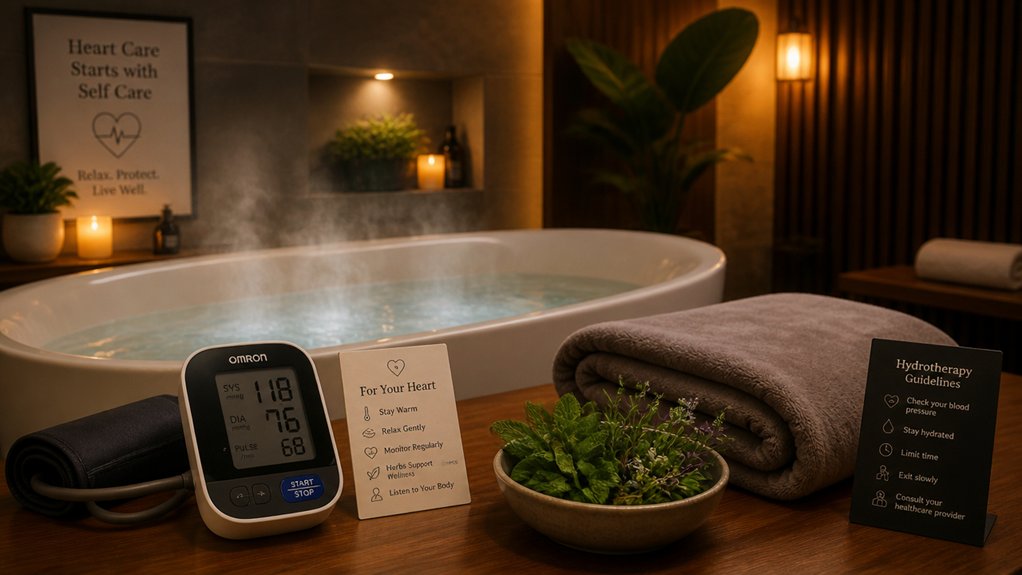
To protect your heart during hydrotherapy, always consult your healthcare provider before starting new treatments. Monitor your heart rate, blood pressure, and any symptoms like dizziness or chest pain closely. Use the right water temperatures, keeping it warm or cool as recommended, and avoid sudden changes in temperature. Stay vigilant for signs of cardiac stress, and stop therapy if you experience any discomfort. Keep going to learn how to implement these precautions safely and confidently.
Are Cold and Contrast Therapy Safe for Heart Patients?
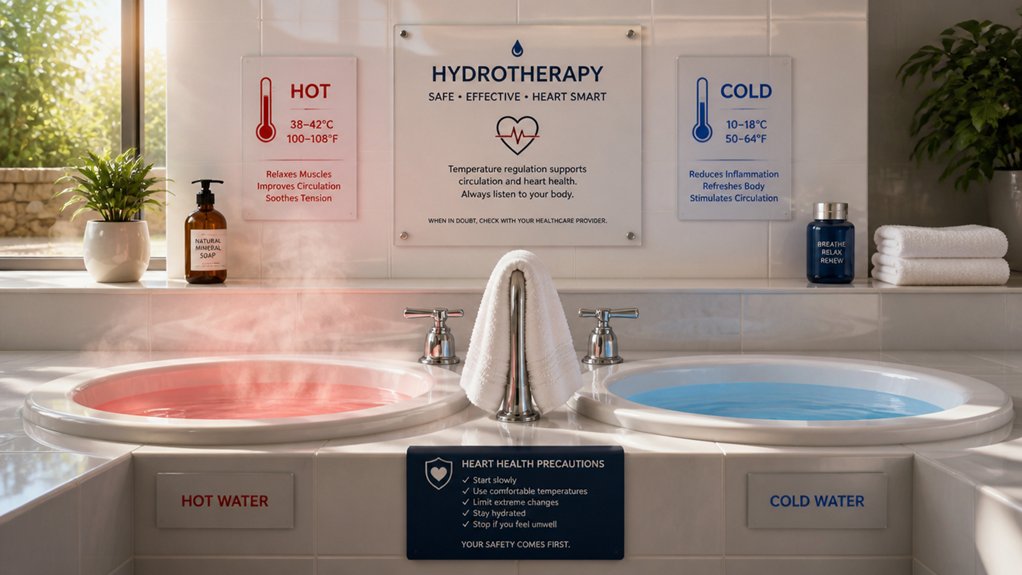
Are cold and contrast therapy safe options for heart patients? Generally, they aren’t recommended without medical supervision because they influence your cardiovascular system. Cold therapy causes blood vessels to constrict, potentially raising heart rate and blood pressure, which can strain your heart, especially if you have heart disease.
Contrast therapy, which involves switching between cold and warm water, can cause rapid changes in blood pressure and heart rate, risking complications if your heart condition is unstable or if you have arrhythmias. Warm water hydrotherapy is often safer, as it promotes vasodilation and lowers blood pressure. Additionally, understanding the effects of temperature control on the cardiovascular system is crucial when considering hydrotherapy options. Always consult your healthcare provider before trying cold or contrast hydrotherapy, especially during cardiac rehabilitation or if you have any heart conditions.
How to Safely Incorporate Contrast Therapy Into Your Routine
Incorporating contrast therapy into your routine requires careful planning, especially if you have heart conditions. First, consult your healthcare professional before starting, particularly if you have chronic heart failure or hypertension.
Use warm water immersion within a safe temperature range (33-35°C) to promote peripheral vessel dilation and enhance cardiac output without overloading your heart. During the sessions, monitor your heart rate and blood pressure continuously with waterproof devices to prevent excessive cardiovascular stress.
Keep sessions short and gradually increase duration as tolerated. Watch for symptoms like dizziness, palpitations, or chest discomfort—if any occur, stop immediately. Incorporate contrast therapy into a supervised hydrotherapy program, following professional guidance to maximize benefits safely. Paying attention to accurate Blood Oxygen Monitors can further ensure your safety during cold exposure.
What Signs of Cardiac Stress Should You Watch for During Therapy
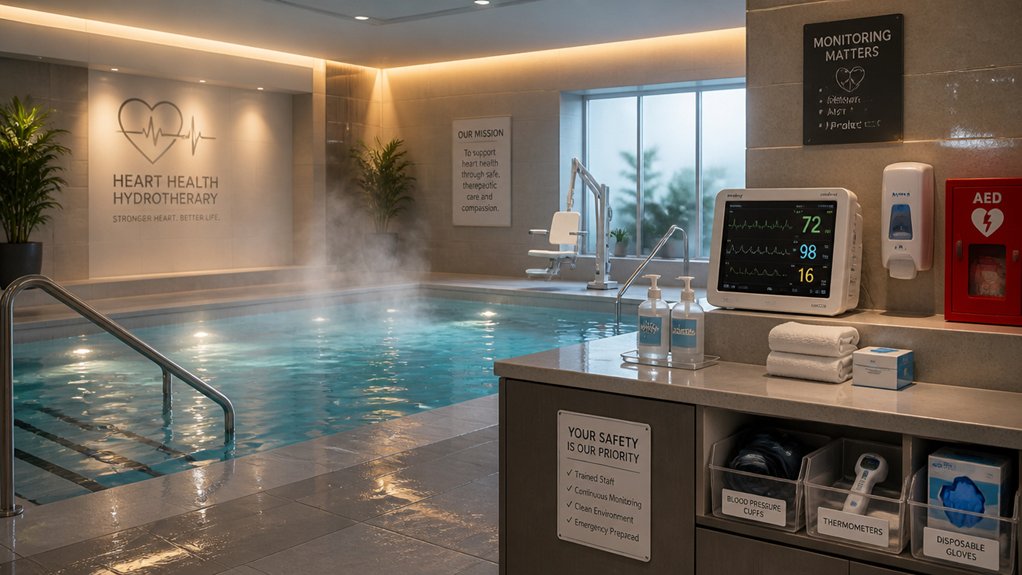
How can you tell if your body is under stress during hydrotherapy? Watch for signs like dizziness, chest pain, or excessive shortness of breath, which could indicate arrhythmia or cardiac strain.
Watch for dizziness, chest pain, or shortness of breath—signs of potential cardiac strain during hydrotherapy.
Keep an eye on your heart rate, especially if it spikes suddenly, as tachycardia signals unsafe cardiac stress. If you experience faintness or a sudden drop in blood pressure, you might be at risk of faintness or worse, heart failure.
Unusual fatigue or difficulty completing your usual water exercises suggest your heart isn’t pumping effectively, needing medical attention.
Swelling in your legs or increased shortness of breath during or after therapy are warning signs of worsening heart failure.
Stay alert to these symptoms to guarantee your safety during hydrotherapy sessions.
Frequently Asked Questions
What Precautions Should Someone With Heart Disease Take When Exercising?
You should consult your healthcare provider, monitor your heart rate closely, start with low to moderate exercise, stop if you experience symptoms, and confirm the water temperature is safe. Follow medical guidance to avoid overexertion or heart stress.
Who Should Not Do Hydrotherapy?
You shouldn’t do hydrotherapy if you have unstable heart conditions, severe heart failure, open wounds, infections, respiratory issues, or implanted cardiac devices without medical approval. It can pose serious health risks without proper supervision.
Does Hydrotherapy Increase Cardiac Output?
Yes, hydrotherapy increases your cardiac output by boosting venous return, dilating vessels, and supporting better blood flow. This helps your heart pump more efficiently, lowers your heart rate, and enhances overall cardiovascular health during water-based treatments.
What Are the Precautions for Heart Disease?
You should consult your healthcare provider before starting hydrotherapy, monitor your heart rate during activity, avoid water therapy during unstable symptoms, and start gradually at moderate intensity to protect your heart health and prevent complications.