After an ice plunge, you should gradually rewarm your body by removing wet clothes, drying thoroughly, and bundling up in layers with moisture-wicking fabrics and insulating outerwear. Use gentle movements like slow walking or stretching to boost circulation and avoid sudden shifts in temperature. Sip warm drinks and eat light, energy-boosting snacks to internally warm up. Creating a cozy, draft-free environment with blankets and controlled heat helps prevent rapid temperature changes. Keep exploring to discover more safe and effective rewarming techniques.
Why Proper Warming After an Ice Bath Matters
Proper warming after an ice bath is essential because it helps prevent afterdrop, a dangerous phenomenon where your core temperature continues to drop even after you leave the cold.
Proper warming after an ice bath prevents afterdrop and supports safe, effective recovery.
When blood vessels constrict during cold exposure, blood flow slows, risking further internal cooling. Gradual warming techniques promote circulation, helping blood flow back into numb extremities, which supports muscle relaxation and reduces nervous system stress.
Avoid abrupt heat sources, as sudden exposure can shock your cardiovascular system. Instead, layer warm, moisture-wicking clothing and perform slow, gentle movements to help regulate body temperature naturally. Drinking warm beverages and eating small carbohydrate-rich snacks further fuels metabolic heat generation.
Implementing appropriate warming methods can significantly enhance your recovery process and safety. Proper warming guarantees a safer recovery, minimizes risks, and promotes an effective return to normal body temperature.
How to Safely Dry Off and Cover Up After Your Cold Plunge
After your cold plunge, promptly remove wet clothing to prevent further heat loss.
Carefully dry your skin, focusing on extremities, using a towel, and then dress in layers to retain warmth. Wearing warm socks, gloves, and a hat, along with standing on an insulating surface, helps keep your body heat from escaping. Using a quick-dry towel can enhance the drying process and ensure you stay warm.
Immediate Drying Techniques
Once you’ve finished your cold plunge, it’s essential to remove all wet clothing immediately to prevent further heat loss through evaporation. Quickly dry your skin with a warm towel to retain body heat.
Focus on thoroughly drying areas prone to heat loss, like your head, hands, and feet. Use an insulating surface, such as a towel or wooden bath mat, to stand on while drying and dressing.
To stay warm, dress appropriately with moisture-wicking base layers made from wool or synthetic fabrics, followed by insulating fleece or down layers. Be sure to put on warm socks, hats, and gloves promptly.
Avoid delaying these steps to keep heat in and reduce the risk of cold-related stress or afterdrop. Additionally, consider using thermal socks and booties that combine insulation and active heating for rapid warm-up and consistent warmth after your plunge.
Layering for Warmth
To effectively warm up after your cold plunge, you should use a layered approach for drying and covering up. First, remove wet clothing promptly to prevent evaporative cooling and help dry your skin, especially around your head, hands, and feet.
Adopt a layering system that starts with a moisture-wicking base layer, made of wool or synthetic fabric, to keep moisture away from your skin. Add insulating layers like fleece or down to trap warmth, then finish with a wind-resistant outer layer to block cold air.
Don’t forget warm accessories such as hats, gloves, and wool socks—these protect extremities that lose heat quickly. Standing on insulating surfaces like towels or wooden mats also helps retain warmth, ensuring your body’s core temperature stabilizes efficiently after immersion. Using luxury heated robes with multiple adjustable heating levels can offer consistent warmth and help prevent chills during the recovery process.
Internal Warming Tips: Drinking and Eating After Cold Exposure
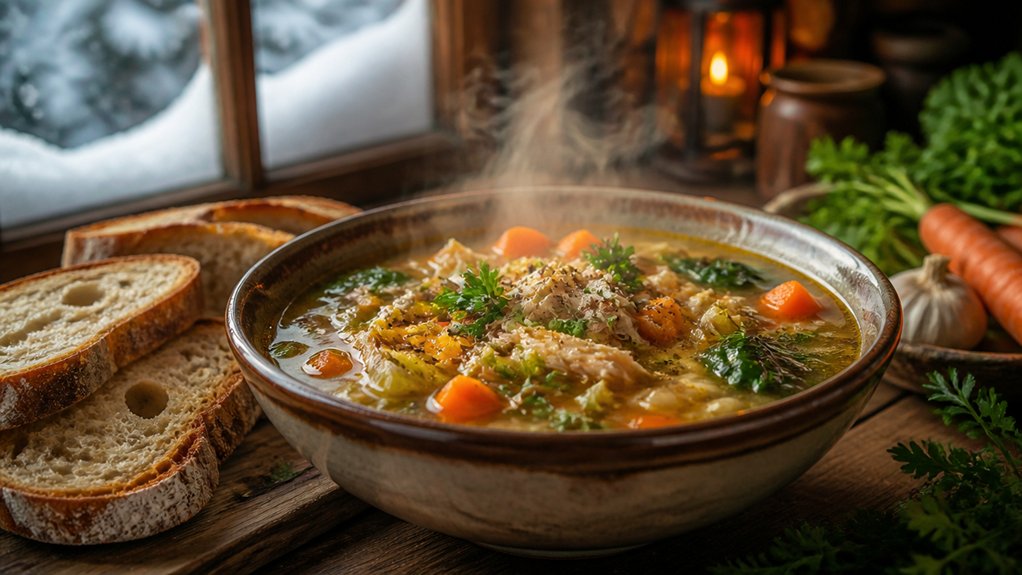
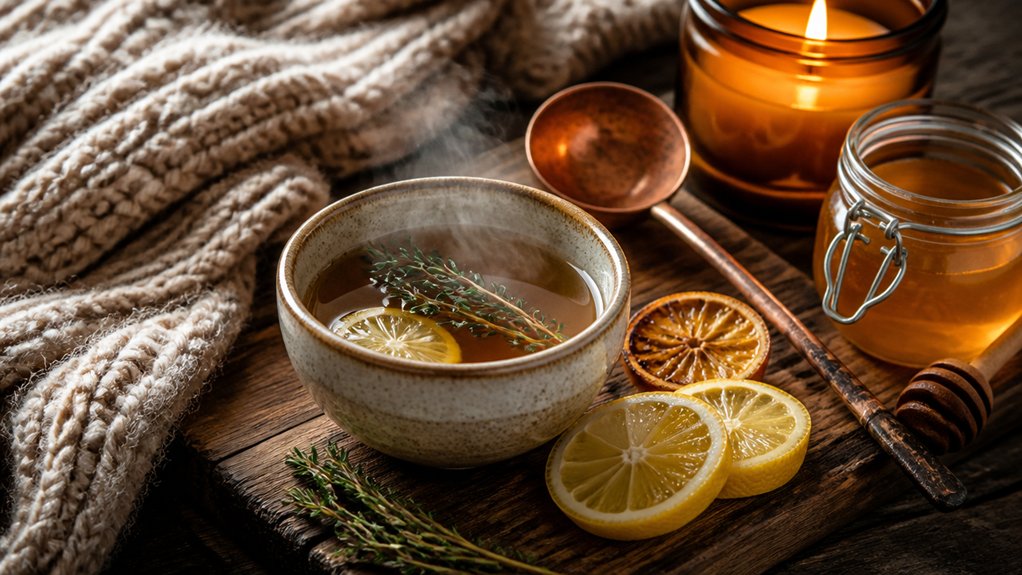
When working to rewarm your body following an ice plunge, choosing the right foods and drinks is essential. Opt for warm, room-temperature options to avoid further lowering your body temperature. Sip on hot drinks like herbal tea or warm lemon water slowly to raise your core temperature gently.
Eating after a cold exposure with small, easily digestible snacks—such as fruit, honey, or dark chocolate—provides quick energy and boosts metabolic heat production. Be sure to avoid alcohol and high-caffeine drinks, as they cause dehydration and increase heat loss through vasodilation.
Warm electrolyte solutions help restore minerals like magnesium, potassium, and sodium, supporting hydration and muscle recovery. These choices efficiently raise your body temperature and help restore energy levels after cold exposure. Incorporating balanced electrolyte ratios in your post-plunge routine can further optimize recovery and overall hydration.
How to Use Gradual External Heating to Rewarm Your Body
After consuming warm foods and drinks to boost your core temperature, turning to external heating methods can further support your recovery. Start with lukewarm water for showers or hot tubs to gently stimulate circulation without causing cardiovascular stress. Gradually increase external heat exposure, avoiding rapid shifts that could trigger shock or muscle damage. Use warm blankets or low-setting heating pads on your torso, avoiding direct heat on extremities. Dress in layered, moisture-wicking fabrics like fleece or wool to retain heat and manage perspiration. Maintain ambient room temperature around 68-72°F for controlled external warming. This approach guarantees safe, consistent rewarming by combining gradual external heating with body-friendly insulation. Recognizing the importance of temperature regulation can help prevent adverse effects associated with sudden heat changes.
Gentle Moves and Stretches to Boost Circulation and Warm Up
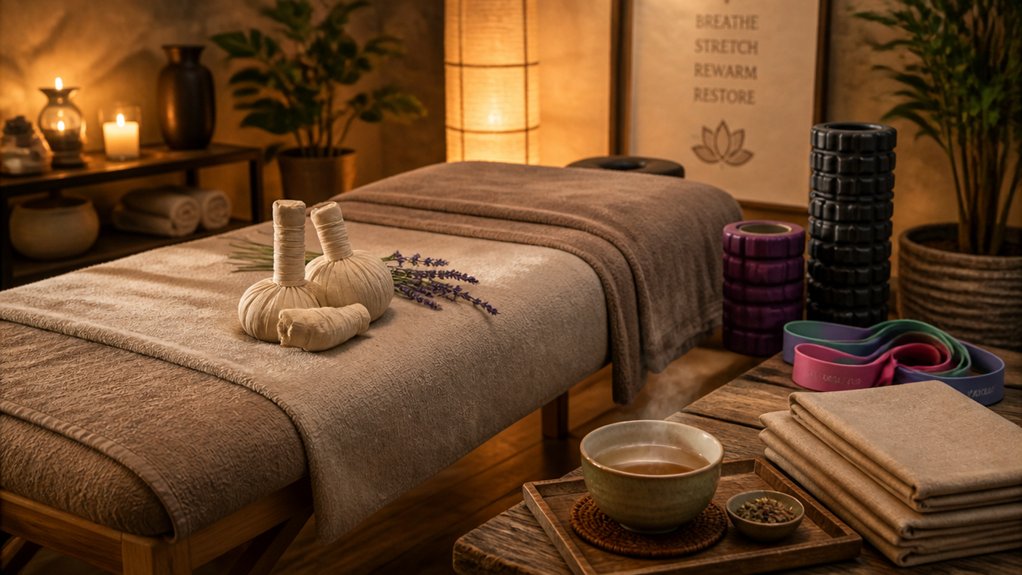
Start with slow, gentle moves like walking or marching in place to gradually increase blood flow without overtaxing your body.
Incorporate light stretches such as arm circles or leg swings, holding each for about 10 to 15 seconds to release tension and promote warming.
A foam roller can also be used to muscle recovery and help stimulate circulation after cold plunging.
Always listen to your body and stop if you feel dizzy or uncomfortable, allowing the gentle movements to guide your rewarming process.
Slow Dynamic Movements
Engaging in slow, deliberate movements immediately after a cold plunge experience helps gently stimulate circulation and warms your muscles. This approach prevents abrupt muscle strain and supports gradual recovery.
You can:
- Practice slow walking or march in place to softly boost blood flow
- Perform dynamic stretches like arm circles, leg swings, and air squats for 10-15 seconds to promote gradual muscle warming
- Engage in low-intensity exercises such as the horse stance or slow pushups, focusing on controlled movements
- Monitor your body’s response closely, stopping or resting if you feel dizziness, fatigue, or discomfort
- Utilize temperature therapy features like heat and cold cycles, which can speed up recovery, especially when paired with percussion massagers that offer rapid temperature adjustments temperature regulation
These gentle, controlled activities help give your body the chance to adapt gradually, ensuring a safe and effective rewarming process after your cold plunge experience.
Gentle Stretching Techniques
Gentle stretching techniques can effectively boost circulation and help your body warm up gradually after a cold plunge.
Start with gentle exercises like slow walking around or marching in place to gradually adjust your body’s temperature and stimulate blood flow. Incorporate dynamic stretches such as arm circles, leg swings, and gentle air squats to activate major muscle groups, promoting circulation without overexerting yourself.
Hold static stretches for 10-15 seconds to ease tension in muscles that feel stiff from the cold, focusing on releasing tightness. Keep your movements controlled and avoid sudden or intense motions to support the rewarming process.
Deep breathing can enhance relaxation and circulation, allowing your body to warm up comfortably while maintaining mental focus on your recovery.
Focused Circulatory Exercises
After an ice plunge, focusing on slow, deliberate movements helps boost circulation effectively. Gentle, focused circulatory exercises can help your body increase the temperature gradually and promote blood flow.
Start with:
- Slow walking or marching in place to gently stimulate blood without shocking your system.
- Dynamic stretches like arm circles, leg swings, and low-intensity yoga poses, such as horse stance, to warm muscles and boost blood flow.
- Holding gentle stretches for 10-15 seconds on major muscle groups to release tension and prevent stiffness.
Always monitor for lightheadedness or discomfort; stop immediately if symptoms occur. These slow, controlled movements help your body recover from cold exposure, support the gradual increase of your body’s core temperature, and minimize afterdrop risks.
Creating a Comfortable Environment for Post-Ice Bath Recovery
Creating a comfortable environment for post-ice bath recovery is essential for a safe and effective rewarming process. Maintain ambient room temperatures between 68-72°F (20-22°C) to support gradual warming.
Create a cozy, draft-free space at 68-72°F for safe, gradual post-ice bath recovery.
Use warm blankets and apply low-setting heating pads to your torso, avoiding extremities to prevent overheating or burns. Dress in layered clothing with moisture-wicking fabrics beneath insulating materials like fleece or wool, helping regulate your body temperature naturally.
Guarantee your space is quiet and free from drafts, allowing your body to recover without unnecessary heat loss. Focus on deep, controlled breaths to activate relaxation and facilitate steady rewarming.
Creating this supportive environment helps optimize your natural recovery, reducing risks and making the post-ice bath experience safer and more comfortable.
Common Mistakes to Avoid When Warming Up After Cold Exposure
Many people make the mistake of rushing into hot showers or baths immediately after an ice plunge, believing it will speed up warming. This sudden switch from cold to hot can cause cardiovascular stress and worsen afterdrop. To help your body heat gradually, avoid hot water right away.
- Don’t wear damp or wet clothing, which promotes heat loss.
- Steer clear of intense exercise or rapid movements, as they increase stress.
- Refrain from consuming heavy meals or alcohol, since digestion and dehydration hinder warming.
- Listen to your body and give it time to rest before aggressive warming methods.
Understanding that sudden temperature changes can be harmful is key. Use warm water gradually, and remember, time to rest is essential for safe, effective rewarming after cold exposure.
Frequently Asked Questions
How to Warm up After an Ice Plunge?
You should gradually warm up by taking lukewarm showers or soaking in a hot bath, doing gentle movements like walking, then drying thoroughly, dressing warmly, sipping warm drinks, eating easily digestible snacks, and resting in a cozy, warm environment.
What Should You Do Immediately After a Cold Plunge?
Immediately after a cold plunge, dry off promptly with a warm towel, change into layered, moisture-wicking clothes, and walk gently or stretch. Sip warm herbal tea slowly, avoiding sudden heat to allow gradual, safe body rewarming.
Do Cold Plunges Help Neuropathy?
Cold plunges can help neuropathy by stimulating blood flow and reducing inflammation, which may ease pain. However, you should use them cautiously, follow proper rewarming techniques, and consult healthcare professionals to guarantee safety and effectiveness for your condition.
Is 20 Minutes in an Ice Bath Too Long?
Yes, 20 minutes in an ice bath is too long. You risk hypothermia, numbness, and circulation issues. To stay safe, limit immersion to 5-10 minutes and follow a gradual rewarming process afterward to prevent health complications.