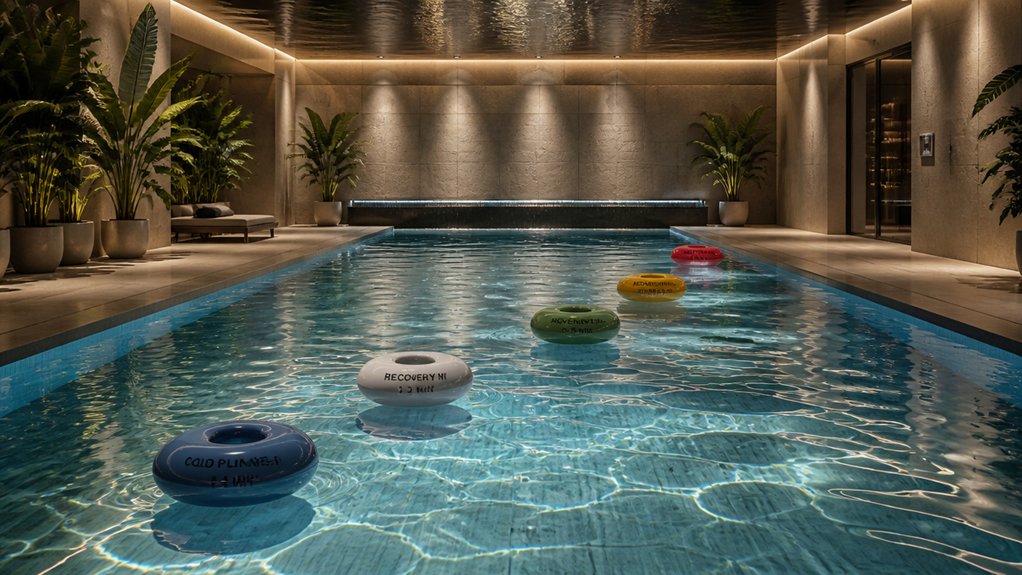
Before your ice plunge, choose snug, quick-dry swimsuits made from nylon or polyester-spandex blends to stay warm. Layer moisture-wicking base layers to dry faster and reduce chill. Add insulating fleece or wool garments to trap heat before submersion. Protect your extremities with neoprene gloves and booties designed for cold water. To learn more about effective layering tips and how to stay warmer longer, keep exploring how these garments can make a difference.
How to Prepare Your Layers for a Cold Plunge
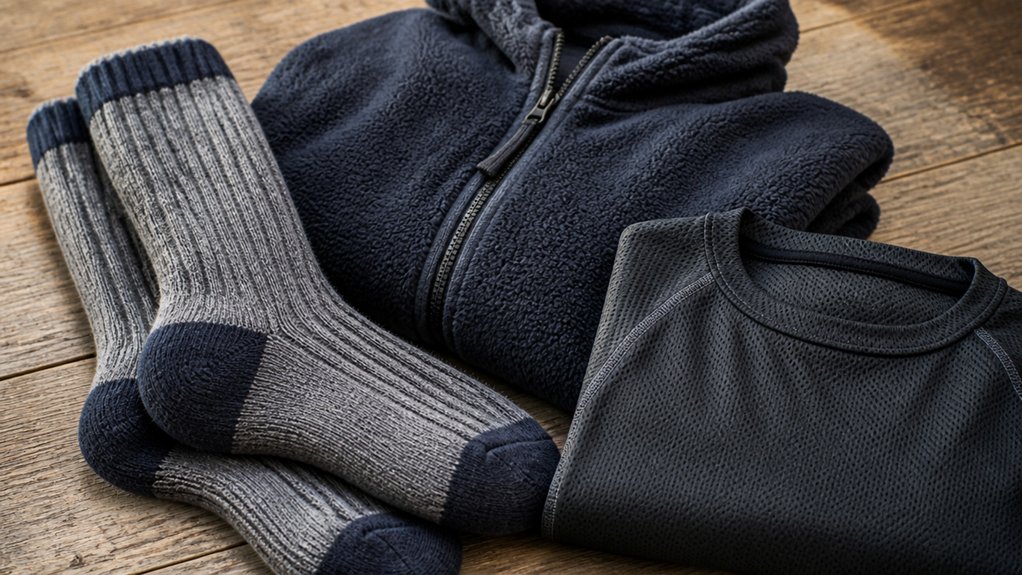
Preparing your layers properly is essential for a safe and comfortable cold plunge. Start with a snug, quick-dry swimsuit made of nylon or polyester-spandex blends to minimize water retention and help maintain your core temperature.
Add moisture-wicking base layers to promote faster drying and reduce chill after exiting the water. Incorporate insulating fleece or wool garments to trap warmth and support your body’s temperature regulation.
Have neoprene accessories like booties and gloves ready to protect your extremities and improve circulation, especially in plunge temperatures below 50°F. Avoid cotton or loose clothing that traps water and causes heat loss.
Keep warm, dry layers and insulated slip-on shoes nearby for an immediate change afterward. Properly prepared layers can make all the difference in your cold plunge experience. Additionally, opting for specialized neoprene gear can significantly enhance insulation and safety during your immersion.
Insulating Your Extremities for Better Cold Tolerance
Insulating your extremities is essential for increasing your cold tolerance during a plunge, as these areas are most vulnerable to heat loss. Keeping your hands and feet warm helps maintain overall body temperature and blood flow during cold exposure. Wear neoprene gloves and booties to retain heat in your extremities without dulling sensation. Wool socks under water shoes or neoprene footwear provide insulation even when wet, reducing limb cooling. Insulated slip-on shoes like Teva ReEmber help keep feet warm after the plunge, aiding recovery. Use water shoes such as neoprene NRS Kicker Wetshoes to protect from debris and cold while maintaining flexibility. Avoid cotton or loose materials, as they increase heat loss and risk a dangerous drop in core temperature. Proper insulation and moisture-wicking materials, like those used in layered neoprene gear, are crucial to optimize warmth and comfort during cold water exposure.
Best Head and Foot Coverings to Stay Warm
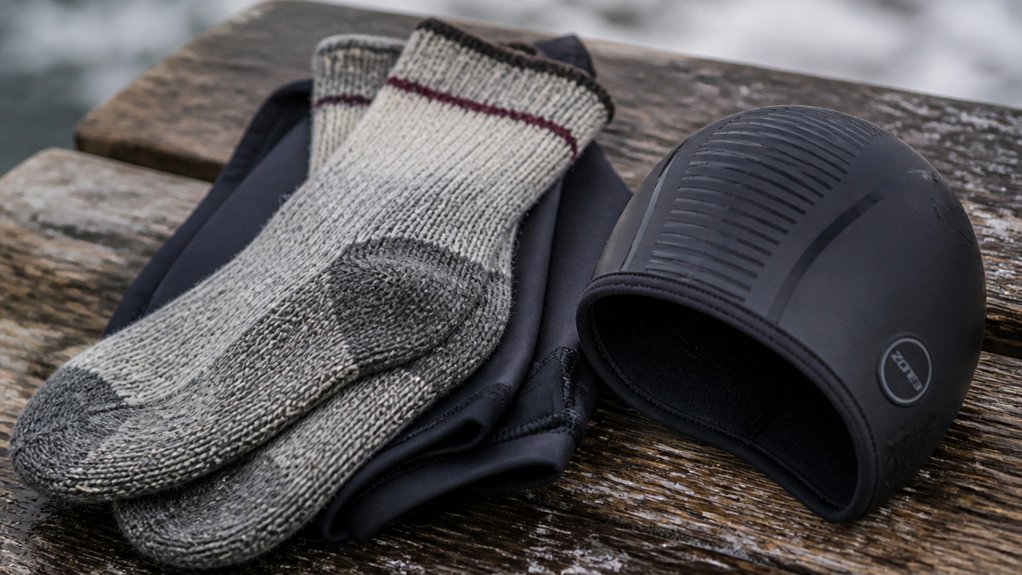
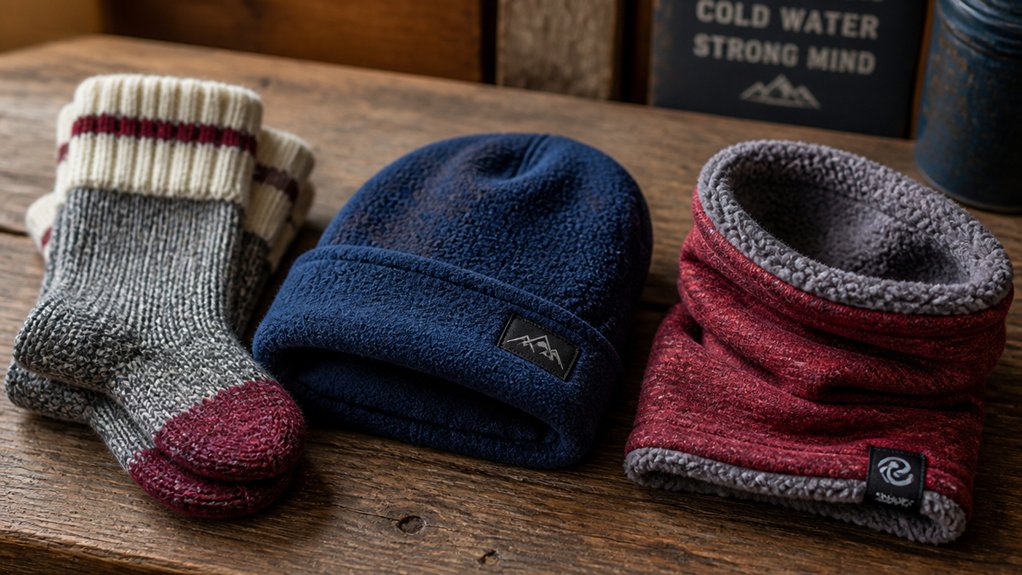
Want to keep your head and feet warm during cold water immersion? During cold plunges or ice baths, your head and feet are vulnerable to heat loss, so choosing the right head coverings and footwear is essential.
Wool or neoprene caps are ideal for head coverings because wool retains insulation when wet, and neoprene minimizes heat loss and prevents cold-induced headaches. The Smartwool Isto Retro Beanie offers warmth and style without submersion.
For your feet, neoprene NRS Kicker Wetshoes protect from debris and insulate thanks to petroleum-free materials. Layer wool socks under water clogs for extra insulation.
Post-plunge, insulated slip-on shoes like Teva ReEmber slip-ons with microfiber lining help warm feet quickly. These gear choices enhance cold-water immersion experiences and keep you warmer longer.
Using thermal insulation strategies with appropriate gear helps maintain core temperature and improves overall comfort during and after cold plunges.
Frequently Asked Questions
What Should I Do Before a Cold Plunge?
Before a cold plunge, you should dress in loose, layered, moisture-wicking clothes, wear insulated footwear and a snug hat, and carry quick-drying towels and a dry robe. Avoid cotton to stay warm and prepared.
What Are Common Cold Plunge Mistakes?
You often make mistakes like wearing loose cotton clothes, skipping snug swimsuits or neoprene gear, and not layering moisture-wicking fabrics. These errors lead to increased heat loss, rapid limb cooling, discomfort, and reduced endurance during your cold plunge.
Can Cold Plunge Lower Cortisol?
Yes, cold plunges can lower your cortisol levels by triggering a physiological response that reduces stress hormones, promoting relaxation and improving mood. Regular plunges may help balance cortisol secretion, aiding in long-term stress management and overall mental well-being.
Should You Hot or Cold Plunge First?
You should cold plunge first because starting with hot water or sauna can cause rapid skin warming, increasing heat loss and risks. Beginning with cold exposure helps your body adapt gradually, improves heat regulation, and prevents afterdrop or cold shock.