For your best pre-competition plunge routines, start with a 2–4 minute cold plunge at 50–59°F about 10-30 minutes before warming up. Follow immediately with dynamic movements like jumping jacks or sport-specific drills to boost circulation and muscle readiness. Avoid static stretching and heavy lifts right after the plunge. Incorporate gradual rewarming afterward to maximize alertness and performance. Stick to these guidelines, and you’ll discover how to optimize your cold plunge strategy for peak results.
What Are the Benefits of Pre-Competition Cold Plunges?
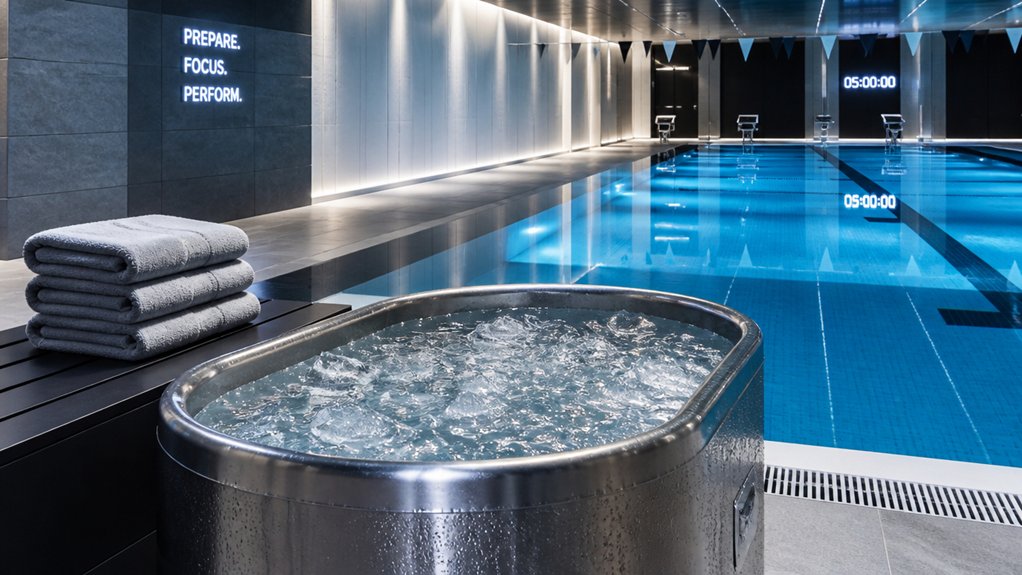
Have you wondered how a quick cold plunge before your event can give you an edge? A Pre-Workout Cold Plunge, lasting 2–4 minutes in 50–59°F water, can boost your alertness by increasing norepinephrine by 200–300%. This hormone enhances focus and activates your central nervous system, sharpening your mental readiness.
It also reduces your core temperature, delaying heat fatigue in hot conditions. Cold exposure causes vasoconstriction, followed by rebound vasodilation, which improves muscle circulation and oxygen delivery, supporting better neural drive.
Importantly, this short immersion doesn’t impair muscle protein synthesis or anabolic signaling, so it’s safe to incorporate before competition. When combined with warm-up routines, it maximizes both mental alertness and physical preparedness without causing stiffness or losing power.
When Is the Best Time to Cold Plunge Before a Race?
Determining the ideal timing for a cold plunge can greatly enhance your performance on race day. The best time is about 10-30 minutes before your warm-up routine begins. This window allows you to maximize neurological priming while giving your body time to naturally rewarm and promote vasodilation. Incorporating the right water treatment solutions can help maintain water cleanliness and improve your overall plunge experience. Aim for a pre-competition cold plunge at a temperature between 50-59°F (10-15°C) for 2-4 minutes to boost norepinephrine and dopamine levels, which heighten mental focus. Avoid plunging immediately before racing without warming up first, as muscle chilling can impair muscle performance, strength, and power. Proper timing guarantees your core temperature is lowered enough to delay heat-induced fatigue while maintaining peak muscle readiness for peak performance.
What Water Temperature and Duration Work Best Before Competition?
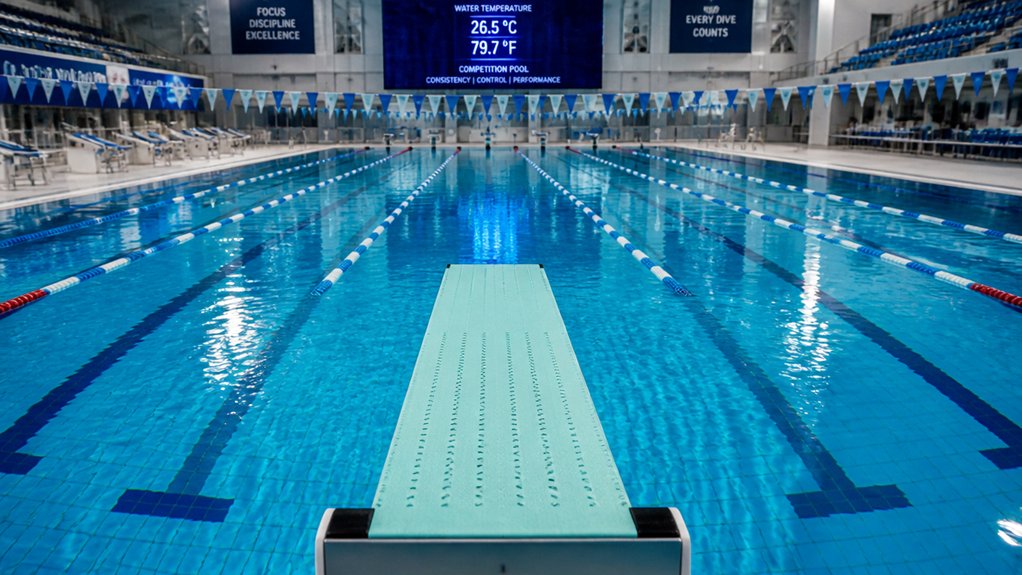
What water temperature and duration are most effective for a pre-competition cold plunge? For peak results, aim for a water temperature between 55 to 60°F (13 to 16°C). This range provides the right balance of alertness boost without overly chilling your muscles.
A 3 to 5-minute cold water immersion is ideal; it’s long enough to increase norepinephrine and dopamine, enhancing mental focus and motivation. Plunging too close to your event—less than 10 minutes—can cause muscle stiffness and reduce power output, so schedule your pre-competition cold plunge 10 to 30 minutes before warming up.
After plunging in ice or cold water, follow with a dynamic warm-up to activate muscles and optimize performance.
How Should You Warm Up After a Cold Water Immersion?
After a cold water immersion, it’s essential to warm up gradually to restore muscle temperature and optimize performance. Engage in a dynamic warm-up lasting 10–15 minutes, focusing on multi-joint movements, light aerobic exercises, and sport-specific drills. A specific focus on sensor accuracy, ensuring your monitor maintains reliable data during rewarming, can help tailor your recovery process effectively. This rewarming process helps restore muscle contractility and neuromuscular coordination impaired by cold exposure, reducing stiffness and preventing performance decline. Incorporate slow, controlled breathing during your warm-up to maintain parasympathetic tone, which cold immersion naturally initiates, while preparing your body for sympathetic activation. Avoid static stretching immediately after plunging, as it may worsen stiffness. Prioritize mobility and activation exercises to guarantee a smooth shift from cold to warm, setting the stage for peak performance in your event.
How to Cool Down Your Body and Prepare for Your Event
To cool down and prepare your body for the event, use an ideal cold temperature range of 50–59°F for 2–4 minutes, but avoid going below 50°F or staying too long. Focus on gentle breathing techniques like deep, controlled inhales and exhales to promote recovery and nervous system balance. Incorporating insulation from your cold plunge tub can help maintain a consistent temperature and enhance the effectiveness of your cold therapy. Finish with air drying and gradual rewarming to maximize mental alertness and physical readiness.
Optimal Cold Temperature Range
Cooling your body to the ideal temperature before a competition involves immersing in cold water within a specific temperature range that balances effectiveness with safety. The pre-competition cold plunge temperature should be between 50°F and 59°F (10°C to 15°C), which effectively lowers core temperature without impairing muscle function. High-powered chillers offer rapid and precise cooling, ensuring consistency and comfort. Cold plunging before vs. immediately before exercise makes a difference; timing the immersion 10 to 30 minutes prior allows natural rewarming. During cold immersion, you enhance alertness by boosting norepinephrine and dopamine levels, especially with 2 to 4-minute dips at around 55-60°F. Regular cold exposure per week helps increase thermal headroom and heat tolerance, delaying fatigue in warm conditions. Maintain this temperature range for safe, effective preparation without risking muscle stiffness or decreased strength.
Timing for Best Results
Timing your cold plunge correctly is essential for maximizing its benefits before a competition. Aim for pre-competition cold plunging in water between 50-59°F (10-15°C) for 2-4 minutes, completed 10-30 minutes prior to warming up.
This allows your body to benefit from increased mental focus, as immersion boosts norepinephrine and dopamine by 200-300%, sharpening arousal and motivation.
After the cold plunge, follow immediately with a dynamic warm-up to elevate muscle temperature and enhance joint mobility—since cold immersion alone doesn’t prepare muscles for activity. Be careful not to overdo it; avoid plunging longer than 5 minutes or in temperatures below 50°F, or you risk stiffness and reduced power output. Properly sized chillers with appropriate water circulation ensure consistent temperatures and an effective plunge experience.
Proper timing guarantees you capitalize on thermal headroom and mental alertness for peak performance.
Breathing Techniques for Recovery
Practicing intentional breathing techniques after a cold plunge can greatly enhance your body’s recovery and readiness for competition. Controlled breathing techniques, such as slow inhalation for 4 counts followed by longer exhalation for 6 counts, activate your parasympathetic nervous system, helping your body cool down and settle nervous energy.
Diaphragmatic breathing during cold plunges helps regulate your heart rate and reduces stress hormones, optimizing recovery. Combining breath holds with slow, deep breaths boosts CO2 tolerance and improves oxygen efficiency, supporting focus.
Engaging in paced breathing post-plunge accelerates vasodilation, increasing blood flow and aiding muscle recovery. Regular practice of these structured breathing routines stabilizes your nervous system and lowers core temperature, ensuring you’re physically and mentally prepared for the upcoming event.
How Often Should You Cold Plunge Before a Competition?
How often you should cold plunge before a competition depends on ensuring maximum benefits without negative effects. Typically, limiting pre-competition cold plunges to 3-5 minutes at 55-60°F (13-15°C) boosts norepinephrine and dopamine, enhancing mental focus without impairing muscle function. Additionally, using insulation features can help maintain optimal water temperature and improve the effectiveness of your plunge. Aim for no more than one session 10-30 minutes before your warm-up to optimize neurological priming. During taper phases, 3-4 cold plunges per week can build stress resilience and support recovery without hindering peak performance. Avoid multiple plunges on the same day, especially just before multiple events, as it can cause muscle stiffness and reduce power. Combine cold plunges with a thorough warm-up to balance mental boosts and physical readiness for competition.
Tips for Customizing Your Cold Plunge Routine for Your Sport
To optimize your cold plunge routine for your sport, it’s essential to tailor the pre-competition cold plunge temperature, duration, and frequency to your specific needs. Keeping the pre-competition cold plunge temperature between 55-60°F for 3-5 minutes promotes neurological priming without risking muscle stiffness that could impair explosive movements.
Schedule your cold plunging routine 20-30 minutes before warm-up to maximize vasodilation and allow natural rewarming, enhancing muscle performance. For heat-sensitive sports, use cold plunging as a pre-cooling method to lower core temperature, boost thermal headroom, and delay fatigue.
Key tips:
- Adjust temperature range based on sport demands.
- Limit duration to avoid impairing muscle contractility.
- Timing your routine optimizes vasodilation.
- Avoid combining post-workout with pre-competition plunges.
- Consider the insulation efficiency of your ice bath to maintain optimal water temperatures during pre-competition routines.
How to Track Your Response and Adjust Your Cold Plunge Routine
Tracking your response to cold plunges allows you to fine-tune your routine for peak performance. To enhance pre-competition readiness, monitor key indicators such as strength, reaction time, and perceived freshness before and after your cold plunge.
Record physiological data like heart rate variability and core temperature changes during and after immersion to understand your recovery response. Pay attention to subjective measures, including mood, alertness, and soreness, to adjust plunge timing and duration effectively.
Keep a detailed training log that notes the plunge temperature, duration, timing relative to warm-up, and competition results. Start with 2-4 minutes at 55-60°F about 10-30 minutes before warm-up. Use these insights to modify your routine based on performance trends and personal comfort, ensuring peak readiness. Additionally, utilizing recovery tracking apps can help you analyze your data more accurately and make informed adjustments.
Common Mistakes to Avoid When Using Cold Water Before Your Race
Many athletes mistake overcooling as a way to boost performance, but too much cold can actually hinder your muscles. Skipping a proper warm-up before plunging can reduce joint mobility and muscle readiness right when you need it most.
Overcooling Improves Performance
Overcooling by immersing in excessively cold water can hinder your performance rather than enhance it. If the water is below 50°F (10°C), you risk muscle stiffness and impairing neuromuscular readiness. This can reduce your strength, power, and sprint performance.
To prevent overcooling, keep your cold plunge at 55-60°F and limit your time to 2-4 minutes. After the plunge, it’s essential to perform an active, dynamic warm-up for 10-15 minutes to regain muscle temperature and joint mobility. Avoid doing the cold plunge right before finishing warm-up, as insufficient rewarming diminishes muscle contractility.
Remember:
- Avoid water colder than 50°F
- Limit immersion to 2-4 minutes
- Don’t skip post-plunge warm-up
- Don’t stay in cold water over 5 minutes
Skimping on Warm-Up
Skipping a proper warm-up after a pre-competition cold plunge can considerably diminish your performance, as muscles remain stiff and less responsive. Skipping warm-up leaves your muscles chilled, reducing strength, power, and sprinting ability.
Cold plunging immediately before intense activity without time for rewarming delays ideal muscle contractility and biomechanical readiness. Failing to allow 10–30 minutes between the cold plunge and warm-up prevents beneficial vasodilation and core temperature rebound.
Neglecting dynamic warm-up exercises after cold immersion also hampers neural drive activation, which is critical for strength and coordination. Avoid combining pre-competition cold plunge with inadequate warm-up routines, as it may neutralize neurological alertness benefits and elevate injury risk.
Prioritize thorough warm-up exercises to release peak performance post-cold plunge and prevent muscle stiffening.
Expert Tips: Combining Cold Plunges With Dynamic Warm-Ups
To maximize the benefits of cold plunges and dynamic warm-ups, timing and sequencing are essential. A cold plunge of 2-4 minutes at 50-59°F should be done about 10-30 minutes before your dynamic warm-up. This allows neurological priming and boosts mental clarity without impairing muscle function.
Immediately after the cold plunge, perform a full dynamic warm-up to increase muscle temperature, enhance joint mobility, and promote vasodilation, preparing your body for peak performance.
Key tips:
- Schedule the cold plunge before your warm-up, not right before lifting heavy.
- Use the cold plunge to activate norepinephrine and dopamine levels, sharpening focus.
- Gradually rewarm your muscles for ideal contractility.
- Combine cold plunge and warm-up routines to maximize pre-competition readiness.
Frequently Asked Questions
What Is the 3-3-3 Rule Gym?
The 3-3-3 Rule Gym is a pre-competition routine with three minutes of cold immersion at 55-60°F, three minutes of dry warming, then three minutes of dynamic warm-up, designed to boost your neural readiness and muscle performance.
What Are Good Warm-Up Exercises Before Sports?
You should do dynamic exercises like leg swings, arm circles, and high knees to warm up. Incorporate sport-specific drills and mobility moves to boost performance, prevent injuries, and prepare your muscles for the demands ahead effectively.
What Is the 5 4 3 2 1 Workout?
The 5 4 3 2 1 workout is a structured warmup where you perform five exercises, decreasing repetitions from five to one. It activates muscles, improves neuromuscular readiness, and enhances coordination, prepping your body and mind efficiently for competition.
Is Cold Plunge Good Day Before Race?
Yes, a cold plunge the day before your race can reduce inflammation, improve sleep, and boost mood, helping you feel more prepared. Just timing it at least four hours prior prevents stiffness and preserves your power and readiness.