To prep for ice baths, try deep breathing exercises that activate your nervous system and boost cold tolerance. Use techniques like diaphragmatic breathing to reduce shock, box or triangle breathing to calm nerves, and 4-7-8 breathing to promote relaxation. Combining slow, focused exhalations helps control your gasp reflex and enhances endurance. Mastering these routines makes cold immersion more manageable—keep exploring for detailed tips to optimize your cold plunge experience.
Why Breath Control Enhances Your Ice Bath Experience
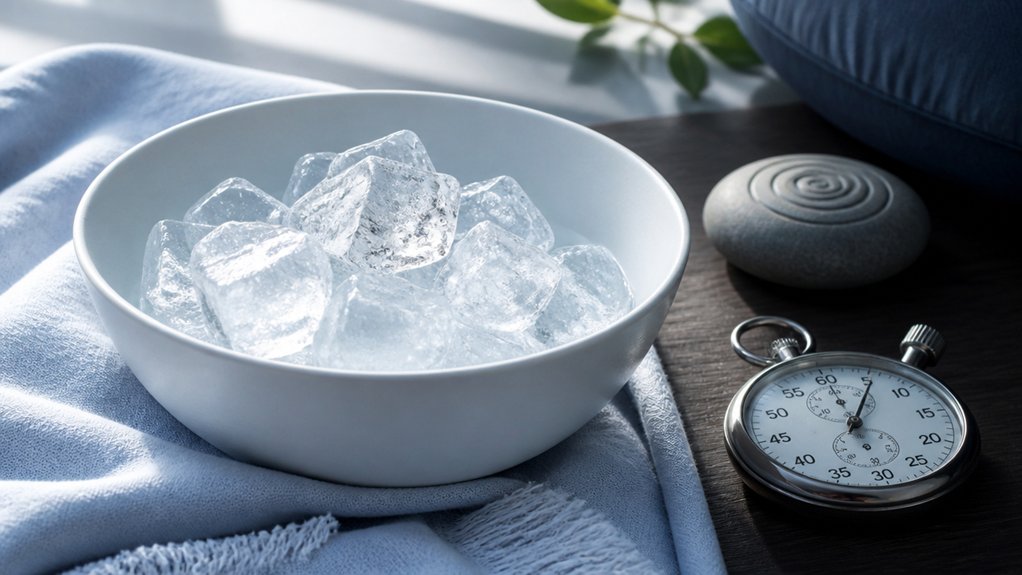
Controlling your breath before an ice bath can greatly improve your experience by regulating your body’s stress response. Using effective breathing techniques to help, such as breath control and breath slowing, reduces the cold shock response during cold water immersion.
This controlled breathing activates the vagus nerve and the parasympathetic nervous system, promoting relaxation and inner warmth. Practice techniques like box or 4-7-8 breathing to prepare your nervous system, decreasing the gasp reflex and enhancing mental focus.
When you consciously slow your breath, you improve oxygen absorption, supporting circulation and helping maintain core body temperature. Building this capacity allows you to stay longer and more comfortably in the ice bath, transforming a stressful experience into a manageable, calming one. Additionally, using adjustable resistance tools can support respiratory stamina development, further enhancing your cold plunge preparedness.
Deep Breathing Techniques to Prepare Your Body for Cold Water
Before stepping into an ice bath, taking a series of deep, mindful breaths can greatly enhance your body’s readiness. Deep breathing helps control your breath, reducing shock during cold exposure. Inhale deeply through the nose for about three seconds, expanding your belly, then exhale slowly for six seconds.
This deep breath technique stimulates adrenaline and noradrenaline, boosting your immune system and raising pain tolerance. Controlled deep breaths also improve blood flow and support heat conservation during the cold plunge. Practicing diaphragmatic breathing reduces the initial gasping reflex and shallow breathing caused by cold shock, enabling you to stay longer and more comfortably immersed.
Incorporating these deep breathing exercises into your pre-ice bath routine prepares your body for cold exposure and enhances overall resilience. Full-spectrum adaptogen blends may also support stress resilience and recovery, making your cold plunge experience more effective.
Calm Your Nerves With Box and Triangle Breathing

Building on your mindful breathing practice, incorporating box and triangle breathing routines can help soothe nerves just before entering an ice bath. These techniques regulate breathing and calm the nervous system during cold exposure.
You’ll find that:
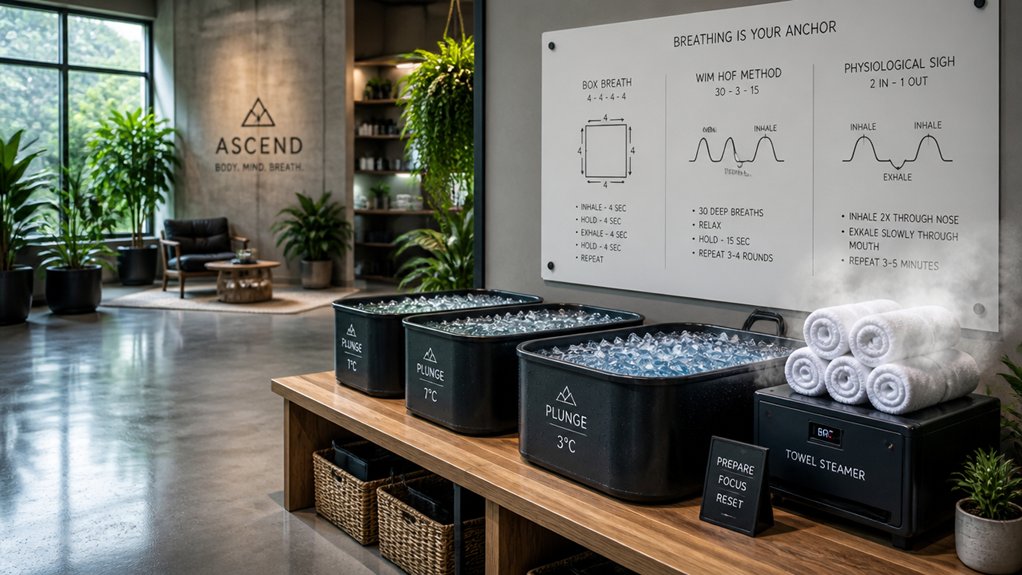
- Box breathing involves inhaling, holding, exhaling, and holding again for 4 seconds each, creating a steady rhythm.
- Triangle breathing simplifies this into three parts—inhale, hold, exhale—each lasting around 4 seconds, promoting smooth, deep breaths.
- Practicing these routines prevents hyperventilation caused by the cold shock, which can double your breaths per minute.
- Both techniques activate the parasympathetic nervous system, reducing fight-or-flight responses and helping you relax for better cold water tolerance.
- Using recovery tracking apps can help monitor your breathing patterns and progress over time, enhancing your cold plunge preparedness.
Relax and Deepen Your Cold Readiness With 4-7-8 Breathing
Using the 4-7-8 breathing technique can substantially deepen your readiness for cold exposure by fostering a profound sense of relaxation. By controlling your breath—slowly inhaling through your nose for 4 seconds, holding your breath for 7, and exhaling for 8—you activate your parasympathetic nervous system, helping you relax and reduce stress.
This method prevents the hyperventilation and chest gasping often brought on by ice bathing. Extending the exhale encourages slow breathing, which improves oxygen efficiency and stabilizes blood pressure during cold immersion. Regular practice enhances breath awareness, allowing you to consciously breathe deep and controlled, better preparing your mind and body for the intense sensations of ice baths. Plus, practicing controlled breathing in cold environments can help mitigate the effects of peripheral vasoconstriction that reduces blood flow during cold exposure.
Deepened relaxation ultimately promotes a calmer, more tolerable cold exposure experience.
Combine Deep Breaths and Focused Exhalation to Maximize Cold Tolerance
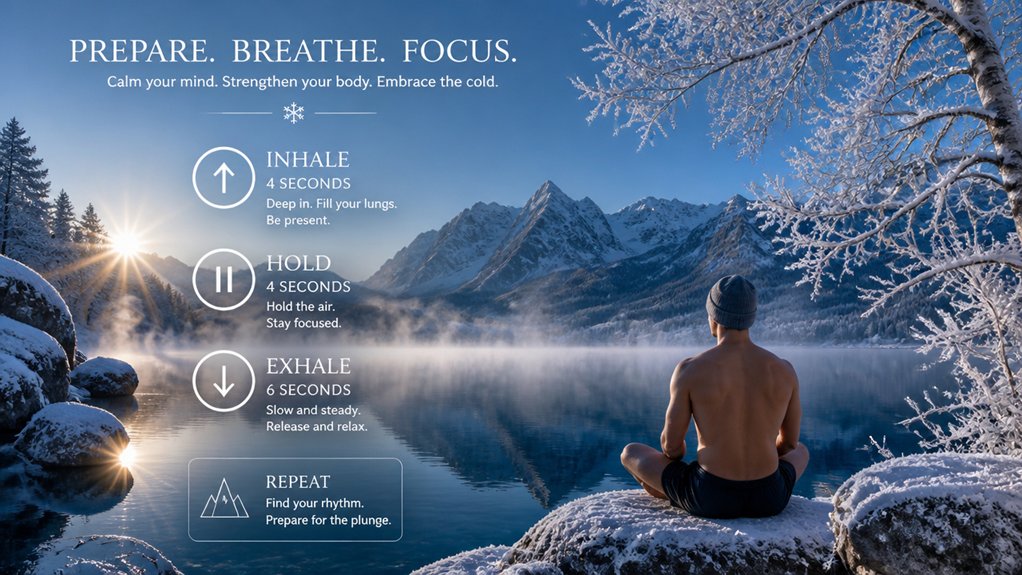
To enhance your cold tolerance, combining deep, intentional breaths with focused exhalation can make a significant difference. This approach aligns with Wim Hof breathing techniques, helping you control your breathing and activate the vagus nerve. A guided meditation device with breathing modes designed for stress relief and focus can further support this practice. Here’s how:
- Deeply inhale through your nose for about 3 seconds, expanding your belly and increasing your fullness lung capacity.
- Slowly exhale for 6 seconds, focusing on a controlled, focused exhalation to slow your breaths per minute.
- Repeat this cycle, which stimulates the activation of the vagus and reduces your fight-or-flight response.
- As oxygen levels rise, you’ll better manage the cold water’s natural gasp reflex, improving endurance and mental focus during ice baths.
Consistent practice boosts heat conservation, making cold exposure more manageable.
Frequently Asked Questions
How to Breathe Before an Ice Bath?
Before your ice bath, take 3-4 deep, slow breaths, inhaling through your nose to expand your belly and exhaling for six seconds to calm your body. Practice controlled breathing to manage shock and enhance mental focus.
What Is the 4 7 8 Rule for Breathing?
The 4-7-8 breathing rule involves inhaling quietly through your nose for 4 seconds, holding your breath for 7 seconds, then exhaling audibly through your mouth for 8 seconds. This technique promotes relaxation and better breath control.
How to Prepare Your Body for an Ice Bath?
To prepare your body for an ice bath, start with slow, deep breaths to calm nerves, practice controlled breathing like box breathing, perform diaphragmatic breathing for oxygen, and do 10 minutes of specific routines like Wim Hof to activate warmth and resilience.
Can Ice Baths Help With Lipedema?
Ice baths might help with lipedema by reducing inflammation, swelling, and pain. They improve circulation and lymphatic drainage, especially when you use controlled breathing techniques to enhance cold tolerance, although more research is needed to confirm these effects.