
Using mental techniques for ice-bath acclimation helps you control your nervous system, reduce anxiety, and build confidence. By practicing focused breathing, visualization, and mindfulness, you can calm your cold shock response and stay relaxed during immersion. These methods enhance your mental resilience, making it easier to tolerate colder temperatures over time. If you want to learn how to stay calm and improve your cold exposure experience, keep exploring these powerful mental strategies.
Why Mental Preparation Matters for Cold Water Immersion

Mental preparation is essential because it helps you stay calm and in control when entering cold water. Preparing mentally allows you to regulate your cold shock response by focusing on your breathing and relaxing your muscles. This reduces involuntary gasp reflexes and hyperventilation, lowering the risk of drowning during cold water immersion. Additionally, practicing specific breathing exercises can enhance lung capacity and improve respiratory control, further supporting safe cold plunge experiences. When you’re mentally ready, you can activate your parasympathetic system, calming your nervous system and easing cold stress. This mental state also helps prevent panic reactions and heart arrhythmias caused by sudden cold exposure. Additionally, psychological strategies can modulate cortisol levels and boost mood regulation by encouraging a calm, focused mindset. Setting clear goals and maintaining composure supports gradual adaptation, increasing your resilience and the long-term benefits of cold water immersion.
How Controlled Breathing Can Help You Stay Calm During Ice Baths
Using controlled breathing during an ice bath helps you manage the shock by reducing rapid gasping and hyperventilation. Simple techniques like slow, deep breaths activate your calming nervous system, keeping panic at bay. Incorporating specific breathing patterns such as box breathing or 4-7-8 rhythms can further enhance your breathing mode compatibility for optimal mental preparedness.
Deep Breathing Techniques
Deep breathing techniques serve as a powerful tool to stay calm during ice baths by actively engaging your body’s relaxation response. Proper breath control helps counteract the cold shock response and hyperventilation, stabilizing your heart rate and oxygen levels. Using a digital Ice Plunge Bath Thermometer with Waterproof Alarm can help you monitor temperature fluctuations in real-time, ensuring safe immersion. Through deep breathing, you activate the parasympathetic nervous system (SNS), promoting relaxation. The vagus nerve plays a vital role here, lowering stress hormones like cortisol and boosting calmness. Incorporating methods like Wim Hof, which include breath retention, can sharpen your mental focus and improve cold tolerance.
Here are ways to use deep breathing techniques effectively:
- Practice slow, deliberate breaths to calm anxiety.
- Use breath retention to enhance mental focus.
- Control your breathing during ice baths to maintain stability.
Relaxation and Focus Strategies
Controlled breathing techniques play a key role in maintaining calmness and focus during ice baths. By engaging in controlled breathing, you activate your parasympathetic nervous system, which helps lower your heart rate and minimize the cold shock response.
Techniques like paced breathing and breath retention reduce involuntary gasping and hyperventilation, preventing panic and increasing your immersion tolerance. Focused breath control boosts oxygen delivery and decreases cortisol levels, which lowers stress and improves emotional regulation during cold exposure.
Combining muscle relaxation with slow, deep breaths enhances mental focus, shifting attention away from discomfort. Additionally, facial cold water immersion paired with diaphragmatic breathing triggers the diving reflex, calming your nervous system and allowing you to stay longer in the ice bath safely and effectively. Incorporating adaptogens into your routine may further support stress resilience and recovery during cold plunge practices.
Simple Techniques to Cultivate Calm and Focus Before Cold Exposure
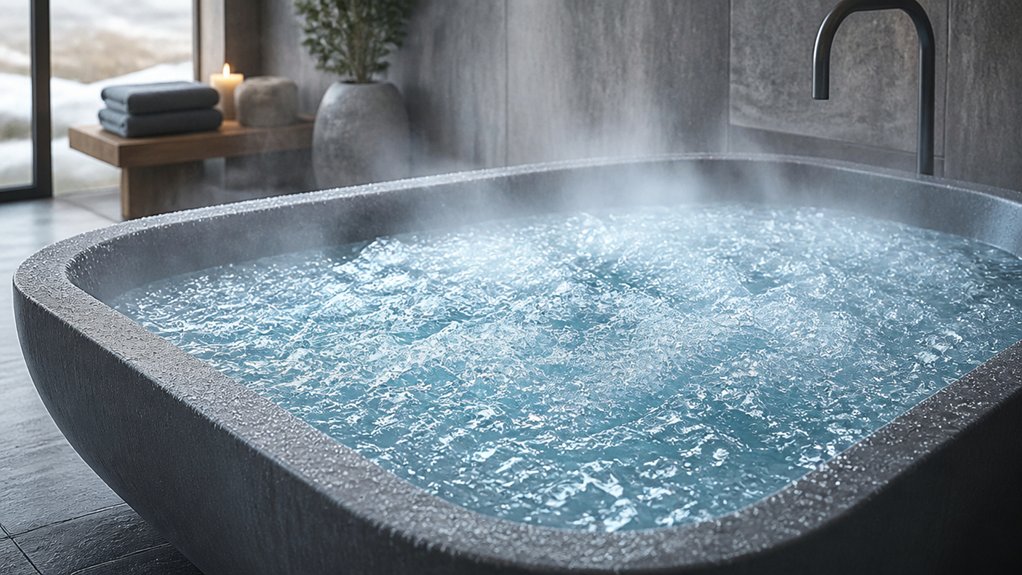
What simple techniques can help you cultivate calm and focus before sitting in an ice bath? These mental strategies prepare you for cold water therapy by easing anxiety and boosting focus.
First, practice deep paced breathing to activate your parasympathetic nervous system, reducing the cold shock response. Second, use progressive muscle relaxation to release physical tension, sharpening your mental clarity. Third, visualize a successful cold water immersion, strengthening confidence and calming nerves.
Incorporating short cold face immersions beforehand can trigger the dive reflex, deepening focus. These techniques create a calm, centered mindset that supports emotional control and resilience during ice baths. By consciously integrating these methods, you set yourself up for a more effective and mentally prepared cold water therapy experience. sensor accuracy under cold stress
How Visualization Builds Your Confidence for Cold Water Tolerance
Visualization is a powerful tool that can greatly enhance your confidence and preparedness for cold water immersion. By engaging in mental imagery before ice baths, you activate brain regions involved in emotion regulation and stress adaptation, reducing anxiety about cold-induced discomfort.
Rehearsing successful cold water immersion sessions builds neural pathways that boost your confidence and sense of control, making each session feel less intimidating. Visualizing calm, steady breathing and relaxed muscles supports physiological regulation via the parasympathetic nervous system, increasing your endurance.
Studies show that mental imagery related to cold exposure triggers adaptive stress responses, helping you acclimate faster and lower cortisol levels. Using vivid, positive imagery of invigoration and mental clarity also reinforces motivation, resilience, and consistent cold water practice. Maintaining a positive mindset through motivational wall art and visual cues can further bolster your mental resilience during cold plunges.
Practical Strategies to Manage Discomfort and Cold Shock Reflexes

Managing discomfort and cold shock reflexes during an ice bath requires strategic mental techniques that help you stay calm and in control. You can do this by:
- Focusing on your breathing rhythm to regulate your sympathetic nervous system, preventing hyperventilation and involuntary gasp. Using controlled, steady breaths promotes parasympathetic activation, reducing stress.
- Practicing visualization and mindfulness before immersion prepares your mind to accept initial discomfort, minimizing panic and supporting a calmer nervous system response.
- Employing cognitive reframing and gradual exposure trains your body to recondition sympathetic nervous system activation, lessening cold shock intensity over time. Stay positive with self-talk, which helps lower cortisol and anxiety, ensuring longer, safer immersion. Recognizing the importance of water resistance ratings and material durability can help ensure your watch remains reliable throughout these practices.
How to Develop Mental Resilience With Gradual Cold Exposure
To build mental resilience through gradual cold exposure, start by easing into shorter sessions at milder temperatures, such as around 20°C (68°F), and gradually increase duration over time. This method allows your body to adapt to cold immersion, reducing the cold shock response and fostering resilience. Using insulated tubs with features like multi-layer insulation can help maintain consistent temperatures, making the process safer and more effective.
As you consistently practice, norepinephrine levels rise, boosting your focus, energy, and stress tolerance. Incorporate controlled breathing and muscle relaxation techniques to activate your parasympathetic nervous system, which enhances emotional regulation and calms anxiety.
Over time, this progressive acclimation shifts your nervous system from sympathetic dominance to greater vagal tone, promoting calm and resilience. Monitoring your responses helps build self-awareness and reinforces mental toughness, equipping you to better handle discomfort and stress during cold exposure.
Overcoming Negative Thoughts About Ice Baths and Building Positive Mindset
Your mindset plays a vital role in how you perceive cold exposure, so reframing negative thoughts can make a big difference. Practicing mindful resilience helps shift your emotional response from dread to calm, making ice baths seem more manageable.
Reframing Cold Experience Perceptions
Reframing your thoughts about ice baths can transform how your body reacts to the cold. Instead of viewing the cold as a threat, see it as a challenge that promotes growth. This mental shift can reduce your stress response and support better emotional regulation.
Here are three ways to change your perception:
- Think of cold plunges as empowering—each one helps you build resilience and manage anxiety more effectively.
- Focus on the positive mindset shift, encouraging your body to release endorphins and norepinephrine, which boost your mood.
- View cold exposure as a tool to lower cortisol levels, helping you feel calmer and more in control of your stress response.
This shift enhances safety, motivation, and long-term benefits during ice baths.
Cultivating Mindful Resilience
Cultivating mindful resilience is essential for overcoming negative thoughts about ice baths and fostering a positive mindset.
During ice-bath acclimation, focusing on controlled breathing and present sensations helps reduce anxiety and the cold shock response, allowing you to stay grounded. Practicing positive mindset techniques boosts motivation and self-esteem, turning discomfort into a sense of achievement.
Viewing ice baths as challenges rather than threats activates adaptive brain pathways, improving stress resilience through sympathetic nervous system engagement.
Gradual exposure and mental reframing ease initial distress, lowering cortisol spikes and supporting long-term benefits.
Consistent mental training shifts negative emotions like fear and fatigue into feelings of alertness and inspiration, reinforcing emotional regulation and building mindful resilience for more effective ice-bath experiences.
How Mindfulness and Relaxation Can Enhance Your Cold Water Training
Ever wondered how mental focus can boost your cold water training? Mindfulness and relaxation activate essential physiological responses that improve your experience. Here’s how:
- Focused breathing and muscle relaxation help manage the cold shock response, reducing involuntary gasping and distress.
- Activating the parasympathetic nervous system via relaxation techniques counteracts the sympathetic stress response, fostering calmness.
- Mindful awareness of bodily sensations engages the prefrontal cortex, building mental resilience against fear and discomfort.
Practicing these techniques sustains oxygen levels, preventing hyperventilation, and prolongs your tolerance.
Regular use of mindfulness and relaxation during cold water training reduces cortisol release, elevates mood, and makes the immersion safer and more enjoyable.
Tips to Stay Motivated and Consistent With Your Cold Exposure Practice
Staying motivated and consistent with your cold exposure practice can be challenging, but using practical tips makes the journey more manageable. Setting clear, achievable goals for each session boosts motivation by giving you a sense of progress. Incorporating mental techniques like focused breathing and muscle relaxation helps manage the cold shock response, making ice baths more tolerable. Tracking mood improvements and stress resilience benefits reinforces your commitment over time. Joining supportive communities or challenges, such as the Wim Hof 40 Seconds Ice Bath Challenge, promotes social accountability. Start with gradual acclimatization, beginning with shorter, warmer exposures to build confidence. These strategies strengthen motivation and consistency, making cold exposure a sustainable part of your routine.
| Goal Setting | Mental Techniques | Social Support |
|---|---|---|
| Clear, realis- | Focused breathing to | Join challenges like |
| tic goals to | manage cold shock during | Wim Hof; share expe- |
| track progress | ice baths for better | riences to stay moti- |
| comfort and mental focus | vated and consistent |
Frequently Asked Questions
What Are the Mental Benefits of Ice Baths?
Ice baths boost your mood, increase mental clarity, and reduce stress. They help you feel more alert, focused, and calm, while enhancing emotional resilience. Combining mental techniques with cold exposure amplifies these benefits, promoting overall mental well-being.
What Is the Psychology Behind Ice Baths?
The psychology behind ice baths involves managing your initial cold shock with mental techniques like focused breathing and visualization. These help you control fear, reduce discomfort, and promote resilience, enabling you to stay calm and adapt better over repeated exposures.
How to Mentally Prepare for an Ice Bath?
To mentally prepare for an ice bath, set clear goals, practice controlled breathing and mindfulness, visualize success, and acknowledge safety risks. Approach gradually, focus on positive thoughts, and create a comforting environment to build confidence and resilience.
Why Is Cold Plunging Good for PTSD?
Cold plunging helps PTSD by lowering stress hormones, activating your vagus nerve, and boosting parasympathetic response. It promotes calmness, emotional regulation, and resilience, easing symptoms like anxiety, depression, and hyperarousal, especially when combined with mindful mental techniques.