
To quickly build cold tolerance for ice baths, start by gradually lowering water temperature from around 15°C (59°F) to 10°C (50°F) over several sessions, adding 1°C and extending immersion time by 1-2 minutes each time. Focus on controlled breathing and stepwise entry to manage shock. Use gear like neoprene gloves and caps for added safety. Keep consistent and listen to your body. Continuing will reveal more tips to safely boost your cold acclimation.
Why Building Cold Tolerance Is Key for Safe Ice Baths
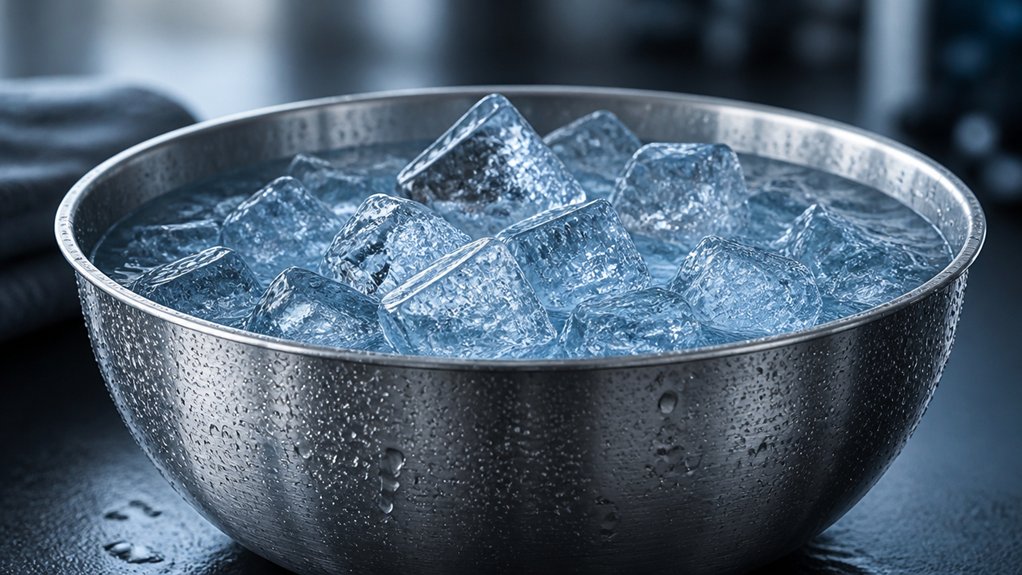
Building cold tolerance is essential for enjoying ice baths safely because your body’s response to cold exposure becomes less intense over time. Without proper adaptation, sudden cold shock responses, like gasping and hyperventilation, can occur, increasing the risk of panic and hypothermia.
By gradually increasing exposure through regular cold sessions, you encourage physiological adaptations, such as enhanced brown fat activity and improved vasoconstriction, which help maintain core temperature. Breathing techniques and stepwise water entry are vital for panic mitigation and controlled breathing during cold exposure.
Developing cold tolerance with a gradual increase in duration and intensity reduces the likelihood of adverse effects and makes longer, colder immersions more manageable and safe. Incorporating adaptogens can support your body’s stress response and bolster resilience during cold plunges. Consistent practice builds resilience and allows you to enjoy ice baths without overwhelming your body.
How to Safely Establish Your Starting Temperature and Duration
Starting your ice bath journey safely begins with setting the right initial temperature and duration. For beginners, start with an ice bath temperature around 15°C (59°F) and keep immersion time to 1-2 minutes. Use a thermometer to guarantee accurate temperature control, keeping water between 10-15°C (50-59°F). Implementing reliable recovery tracking apps can help monitor your session details and ensure consistent progress. Begin with partial immersion up to the waist or chest, avoiding the head and neck to reduce cold shock. As you build tolerance, gradually increase immersion time, but always monitor for signs of cold stress, dizziness, or excessive shivering. To avoid cold, disorientation, or the risk of hypothermia, adjust the temperature or stop if you experience any adverse effects. Safety is key, so listen to your body and never push beyond your comfort zone.
Gradually Lower Water Temperature to Increase Tolerance
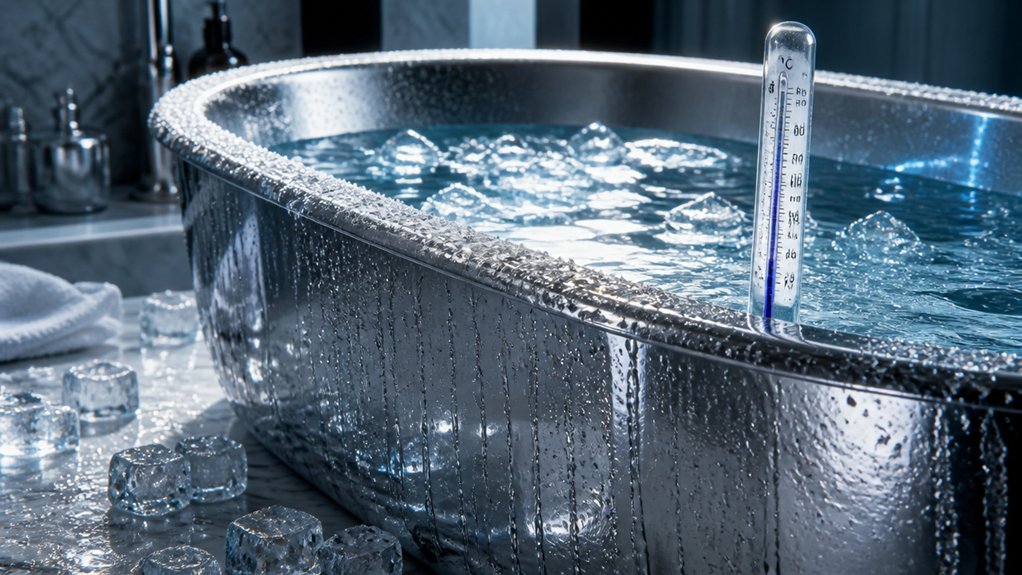
Start with your ice bath at around 15°C (59°F), then slowly lower the temperature over multiple sessions.
As you become more comfortable, decrease the water temperature in small steps toward 10°C (50°F), always monitoring how your body responds.
This gradual cooling helps build tolerance safely while enhancing the benefits of each session. Incorporating a precise temperature control system, such as an adjustable chiller or LCD touchscreen, can assist in maintaining consistent, safe cooling levels.
Start With Warmer Temperatures
To safely increase your cold tolerance, begin your ice baths at a warmer temperature, around 15°C (59°F), rather than jumping straight into very cold water. Starting with water temperature that’s comfortably cool helps you understand the cold plunge experience without overwhelming your body. Taking an ice bath at this stage allows your body to adapt gradually, reducing the risk of cold shock reflex that can cause discomfort or panic. Focus on breathing calmly and evenly during each session, which aids in acclimation and makes the process more manageable. Incorporating proper water treatment solutions ensures the water remains clean and safe as you gradually lower the temperature. Over time, you can gradually lowering the water temperature as your tolerance improves. This approach guarantees ice baths stay good for building resilience without risking hypothermia or stress, setting a solid foundation for longer cold water immersion.
Incremental Cooling Steps
As your body begins to adapt to colder water, gradually decreasing the temperature in small steps is key to building tolerance safely. Use incremental cooling steps during your ice bath routine to enhance cold water therapy, starting at around 15°C (59°F). A good practice is to utilize temperature control features or external chillers, if available, to precisely regulate water temperature. Limit initial immersion to 1-2 minutes, focusing on comfortable duration before lowering the temperature toward 10°C (50°F). Always practice slow, controlled breathing and stepwise entry—dipping limbs first, then torso—to minimize cold shock. Monitor your body’s response carefully, adjusting water temperature and immersion duration as needed to avoid shivering or discomfort. Maintain consistent frequency, with gradual temperature decreases over several weeks, supporting thermal adaptation and increasing tolerance without risking adverse effects.
Breathing Strategies to Manage Cold Shock and Stress
Using controlled, deep breaths helps you manage the initial cold shock and prevent over-hyperventilation when entering the ice bath.
Practicing full exhalations before immersion can lessen that instinct to gasp and keep your heart rate steady. Focus on calm, consistent breathing to reduce stress and improve your cold exposure tolerance. Incorporating breath control techniques can further enhance your ability to stay composed during cold plunges.
Controlled Breathing Techniques
Controlled breathing techniques play a vital role in managing the initial shock and stress of cold water immersion. Using methods like Wim Hof’s approach, you focus on deep inhalations through your nose and slow, controlled exhalations through your mouth to calm your nervous system and counteract the cold shock gasp reflex.
Before entering cold water, practicing full exhales helps reduce involuntary gasping and hyperventilation. Maintaining steady, rhythmic breathing during immersion keeps dizziness, tingling, and panic at bay.
This breath control activates your parasympathetic nervous system, fostering relaxation and enhancing cold tolerance. For beginners, emphasis should be on rhythmic breathing rather than breath holding, which safely moderates the sympathetic nervous system’s response without risking hyperventilation. Additionally, incorporating pH-balanced cleansers into post-immersion routines can help support skin recovery and reduce irritation caused by extreme temperature shifts.
Gasp Reflex Mitigation
Have you ever felt your breath tighten and your heart race the moment you step into cold water? That’s the gasp reflex and cold shock response kicking in.
To manage this, practice controlled deep breathing with slow inhales through your nose and long exhales through your mouth before and during immersion. Start with a gradual water entry—dipping your feet, then legs, face, and chest—to help your body acclimate.
Performing pre-plunge breathwork like the Wim Hof Method calms the sympathetic activation, increasing your tolerance. During the first 30–60 seconds, keep your breathing steady, rhythmical, and slow. Avoid rapid gasping or breath-holding, as they heighten dizziness and hyperventilation risks.
- Practice controlled deep breathing exercises regularly
- Use gradual water entry to reduce initial shock
- Incorporate Wim Hof Method breathwork pre-immersion
- Utilize guided meditation devices with visual cue support to enhance breathing synchronization and mental calmness during cold plunge prep
Designing Your Weekly Progression Plan for Cold Tolerance
Creating an effective weekly progression plan for cold tolerance involves gradual adjustments to both temperature and immersion time based on your body’s responses.
Gradually optimize your cold tolerance by adjusting temperature and immersion duration based on how your body responds.
Start with an ice bath at 15°C (59°F) for 1-2 minutes, twice a week. Each session, lower the temperature by 1°C and increase immersion time by 1-2 minutes, paying attention to comfort and cues like breath control and shivering.
As your cold tolerance improves, increase frequency to 3-4 sessions weekly. Aim to reach 10-12°C (50-54°F) for 10-12 minutes by weeks 4-6 to enhance vasoconstriction and hormonal benefits.
Maintain a recovery time of at least 48 hours between sessions initially, gradually progressing to 2-3 times weekly, maintaining consistency to solidify adaptations.
Tracking Temperature and Time to Ensure Safe Progress
Monitoring your ice bath temperature and duration is essential for safe progress and effective adaptation. Using a reliable thermometer, keep the water temperature between 10-15°C (50-59°F) to promote proper acclimation.
Use a timer or stopwatch within easy reach to track immersion time, starting at 1-2 minutes at around 15°C. As your tolerance builds, gradually extend duration to 10-15 minutes, ensuring safe exposure.
Calculate your cold dose by multiplying temperature difference from your comfort zone by immersion time, helping personalize your acclimation.
Keep a session log of temperature, time, and physical responses such as shivering or discomfort to prevent overexposure or hypothermia.
Best Gear and Accessories to Make Cold Baths More Comfortable
Using the right gear can make cold baths more manageable and comfortable. Neoprene gloves, caps, and booties help keep your extremities warm without losing the benefits of cold exposure.
Safety accessories like non-slip mats and sturdy step stools also make entering and exiting much easier.
Essential Thermal Protective Gear
To make cold baths more comfortable and extend your session, investing in the right thermal protective gear is essential. Neoprene gloves, booties, and caps greatly reduce heat loss from extremities, allowing you to stay longer in the ice bath and gain more benefits.
An ear-covering neoprene cap or earplugs prevent cold water from causing discomfort or conditions like surfer’s ear during repeated sessions. Thermal lids or covers on your ice bath help retain heat, making rewarming easier and reducing ice consumption.
Wearing layered clothing and quick-dry towels after exiting supports gradual rewarming and prevents excessive heat loss. Essential thermal protective gear guarantees comfort and safety, helping you focus on the physiological benefits of cold immersion.
Comfort-Enhancing Accessories
Enhancing comfort during cold baths depends heavily on the right accessories and gear designed to support your body and environment. Using neoprene gloves, booties, and caps helps reduce heat loss in extremities and the head, making ice tubs more tolerable while preserving cold benefits.
Thermal lids and insulated covers keep water temperatures stable, minimizing ice addition and maintaining comfort during your session. Ear plugs or neoprene ear covers protect against cold-induced ear irritation and improve overall comfort during prolonged immersions.
Wearing lightweight, quick-drying wetsuit tops or wetsuit tops provides extra warmth for the torso, easing cold shock. Additionally, nonslip mats, step stools, and comfortable seating around the ice tub enhance safety and ergonomics, making entry, exit, and rest more secure and comfortable.
Integrating Cold Exposure Into Your Training Routine
Incorporating cold exposure into your training routine can greatly speed up recovery and reduce muscle soreness, but timing and temperature are key. To optimize benefits, schedule your cold bath 30-60 minutes after workouts, avoiding immediate post-exercise immersion.
Start with water at 13-15°C (55-59°F) for 10-15 minutes, 2-3 times per week, gradually decreasing temperature and increasing immersion time to build cold tolerance without shock. Use controlled breathing and slow entry techniques to manage the cold shock response and stay consistent with your training schedule.
- Plan your ice bath sessions on cardio or rest days to prevent interference with muscle growth
- Focus on gradual temperature reduction to boost cold tolerance
- Maintain a regular post-workout routine for maximum recovery benefits
When and How to Warm Up Safely After Cold Plunges
Wondering how to warm up safely after an ice bath? First, dry off immediately to prevent unsafe body temperature drops and to promote gradual rewarming.
Dry off quickly to ensure safe, gradual warming after an ice bath.
Dress in warm, dry clothing in stages, layering if needed, and use blankets for additional insulation. Avoid hot showers or baths for at least 1-2 hours, as they can cause rapid temperature swings and negate cold therapy benefits.
Instead, engage in light physical activity like walking, stretching, or gentle yoga to stimulate circulation and support natural warming. Sip warm fluids such as herbal tea to help internal warming without discomfort.
Focus on gradual rewarming, which minimizes the risk of afterdrop and maintains cardiovascular stability. This measured approach guarantees safe recovery while maximizing the benefits of cold exposure.
Troubleshooting Common Challenges in Building Cold Tolerance
Building cold tolerance can present some common hurdles, especially as you progress to colder water and longer immersions. The cold shock response and cold gasp reflex often cause discomfort and panic, making it tricky to build tolerance initially.
To manage this, gradually lower water temperature over weeks, starting at around 15°C and slowly decreasing to 10°C. Use controlled, deep breathing techniques to stay calm during immersion.
Start with short immersion times of 1-2 minutes and increase as you adapt. Incorporate partial submersion, such as only your legs or torso, to ease into cold exposure.
Wearing neoprene accessories like gloves or caps also helps reduce extremity heat loss. Being patient and consistent helps you overcome common challenges and safely enhance your cold tolerance.
Tips for Staying Consistent and Avoiding Overexposure
Staying consistent with your ice baths is essential for safely building cold tolerance, but it can be challenging to avoid overdoing it. To guarantee proper acclimation, stick to a schedule of 2-3 baths per week, gradually increasing exposure time from 1-2 minutes at 15°C to 10-15 minutes at 10-12°C.
Avoid daily or prolonged sessions beyond 15 minutes to prevent overexposure, hypothermia, and cold injuries. Use controlled breathing techniques, like Wim Hof, to manage your body’s cold shock response and improve comfort. Monitor for signs of overexposure, such as heavy shivering or dizziness, and adjust your routine accordingly.
Schedule baths 30-60 minutes after exercise for recovery and avoid multiple sessions daily to maintain consistency and safeguard your body’s temperature regulation during acclimation.
Frequently Asked Questions
How Often Should I Schedule Ice Bath Sessions for Optimal Adaptation?
You should schedule ice bath sessions 2 to 3 times weekly, allowing your body enough time to recover between sessions. Consistency is key, but avoid overdoing it to prevent potential negative effects and guarantee peak adaptation.
Can Cold Exposure Therapy Benefit Mental Health or Cognitive Function?
Cold exposure therapy can boost your mental health and cognitive functions by reducing stress, improving mood, enhancing focus, and promoting mental resilience. Regular exposure helps your body adapt, fostering better emotional regulation and mental clarity over time.
Are There Specific Health Conditions That Contraindicate Ice Baths?
Certain health conditions, like cardiovascular issues, cold hypersensitivity, or poor circulation, contraindicate ice baths. You should consult with a healthcare professional before attempting cold exposure if you have these or other health concerns.
What Are the Signs of Overexposure or Hypothermia During Cold Training?
You might experience shivering, numbness, dizziness, confusion, or intense fatigue if overexposed to cold during training. If these signs appear, remove yourself from the cold, warm up gradually, and seek medical help if symptoms worsen.
How Can I Prevent Cold Shock Responses From Becoming Overwhelming?
You can prevent cold shock responses from overwhelming you by gradually acclimating to cold, maintaining controlled breathing, staying calm, avoiding sudden movements, and listening to your body’s signals to stop if discomfort intensifies.