To safely acclimate to cold plunges, start slowly with shorter, warmer exposures, gradually lowering the temperature over time. Keep track of water temp and duration, and only increase exposure gradually. Use controlled breathing techniques during each session to manage shock and discomfort. Always monitor your body’s responses, avoid plunging alone, and have warm supplies ready. Following these tips guarantees safer cold therapy; keep exploring for more ways to improve your cold plunge safety.
Why Gradually Exposure Improves Cold Plunging Safety
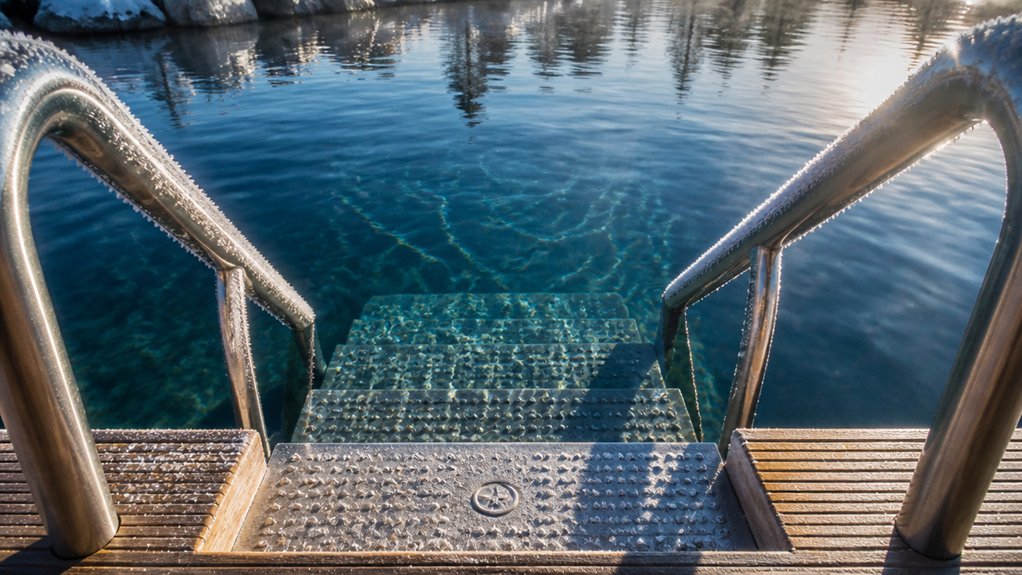
Gradually exposing yourself to cold water greatly enhances safety during cold plunges by allowing your body to adapt over time. This slow approach reduces the cold shock response by up to 50%, giving your physiology time to adjust to cold exposure without overwhelming your nervous system. Incorporating appropriate water treatment solutions ensures the water remains clean and safe as your exposure duration increases. As you progress, your cold tolerance improves, delaying the onset of hypothermia and decreasing cardiovascular strain. Starting with short immersion times helps stabilize your breathing and heart rate, preventing dizziness and nausea. Over weeks of consistent, gradual exposure, your body develops better physiological responses and mental resilience, making cold plunges safer and more manageable. This incremental adaptation not only minimizes risks but also boosts long-term benefits, helping you stay comfortable and in control during each plunge.
Start With Shorter, Warmer Showers Before Full Cold Plunges
Start by taking shorter, warmer showers at around 15–20°C (59–68°F) to ease your body into cold exposure. Gradually lower the temperature over time to build your tolerance safely without overwhelming yourself. Focusing on controlled, shorter sessions helps your body adapt while minimizing discomfort. Incorporating resistance adjustment techniques during your breathing exercises can further enhance your resilience to cold exposure by strengthening your respiratory muscles and improving breath control.
Gradual Temperature Reduction
To safely ease into cold plunges, it’s best to begin with short cold showers at slightly warmer temperatures. This allows you to gradually rather than abruptly adapt to colder water. You should:
- Slowly increase exposure time, starting with 1-2 minutes to manage the initial shock.
- Gradually reduce water temperature over multiple sessions, aiming for 10-15°C (50-59°F).
- Begin with partial immersion, like feet or hands, before progressing to full-body exposure to build tolerance.
- Focus on controlled diaphragmatic breathing to manage stress and improve cold tolerance. Incorporating guided meditation or breathing devices that support rhythmic breathing patterns can aid in autonomic balance, enhancing your ability to adapt safely.
Shorter Shower Durations
Beginning with shorter, warmer showers allows your body to acclimate comfortably before tackling full cold immersions.
Starting with brief cold water immersion—30 seconds to a minute at around 15-20°C—helps reduce initial shock responses like dizziness or rapid breathing. These short cold showers let you control your breathing and cardiovascular response gradually rather, avoiding undue stress.
As you adapt, slowly decrease the shower temperature by 1-2°C every few days and extend exposure time safely. Consistently practicing short cold showers 2-3 times weekly promotes physiological adaptation without overwhelming your system.
Always listen to your body; if you experience discomfort, ease back and adjust accordingly. Through this gradual approach, you build tolerance safely and prepare yourself for full cold plunges.
Additionally, using a well-designed waterproof timer can help you track your cold exposure intervals accurately, ensuring consistent and safe training progress.
How to Monitor and Maintain Proper Water Temperature
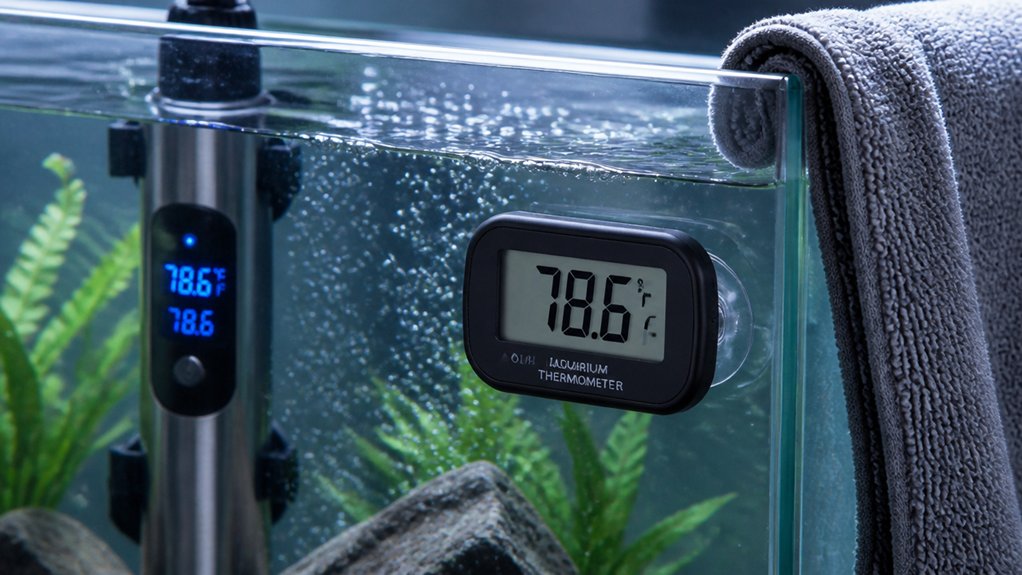
To keep your cold plunge safe and effective, use an accurate waterproof thermometer to regularly measure the water temperature. Make sure to check and adjust the temperature before each session, aiming to stay within the recommended range. Incorporating a thermometer with waterproof rating and durable materials ensures reliable readings even during repeated immersions. Consistent monitoring and insulation help maintain stable conditions for safe, gradual acclimation.
Use Accurate Thermometers
Using an accurate thermometer is essential for safely managing water temperature during your cold plunge sessions.
To maintain a safe immersion, follow these key steps:
- Always check the water temperature before each session with a precise thermometer.
- Make sure the temperature stays within the 10-15°C (50-59°F) range, avoiding drops below 10°C to prevent cold shock.
- Adjust ice or cold water gradually, not suddenly, to support gradual acclimation.
- Use waterproof digital thermometers with quick response times for real-time monitoring during your cold exposure. Proper calibration ensures consistent and accurate readings over time.
Regular Temperature Checks
Consistently monitoring your water temperature during each cold plunge session helps guarantee safety and effective acclimation. Use a reliable thermometer to check that the water stays within the safe range of 10-15°C (50-59°F). Check the water temperature before every session to prevent dangerously low levels below 10°C, which increase risk of cold shock and hypothermia. Maintaining temperature stability involves avoiding excessive ice and topping up with fresh water to keep it within the recommended range. Recording each reading along with immersion duration to track your acclimation progress and adjust as needed. Ensuring your thermometer has an IPX8 waterproof rating can further prevent inaccuracies caused by water exposure. Regular temperature checks confirm safe exposure, facilitating gradual adaptation to colder water.
Keep Water Consistent
Maintaining a steady water temperature during your cold plunge session is essential for safety and effective acclimation.
To keep the water consistent cold and prevent rapid fluctuations, follow these key steps:
- Use a reliable waterproof thermometer to measure water temperature before each session, aiming for 10°C to 15°C (50°F to 59°F).
- Continuously monitor the water during your cold plunge to avoid dropping below 10°C, which increases risks like cold shock and hypothermia.
- Partially cover the cold plunge tub or use a temperature-controlled system to reduce heat exchange with the environment.
- Regularly add cold water or ice to keep the water temperature steady, ensuring safe and effective acclimation over time.
Consistent water temperature is vital for safe cold plunge and gradual acclimation.
Breathing Techniques to Manage Cold Shock and Discomfort
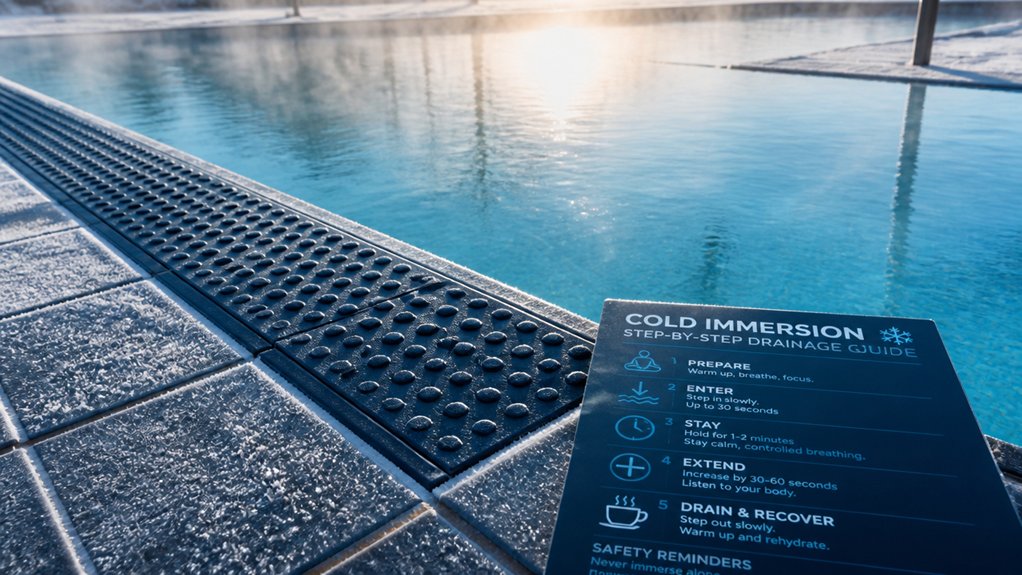
How can you prevent the shock and discomfort of cold water immersion? Practicing proper breathing during cold plunging helps calm your nervous system and mitigate the cold shock response.
Slow, deep diaphragmatic breathing before and during immersion keeps your breath controlled, reducing hyperventilation, dizziness, and panic. Focus on fully exhaling during submersion to activate the parasympathetic nervous system, which counters initial sympathetic reactions.
Deep, controlled breathing during cold plunges activates your calming nervous system and reduces panic.
Regularly acclimating with short, controlled cold immersions combined with breathing exercises greatly decreases cold-shock effects, boosting mental toughness. Incorporating adaptogen support can further enhance your body’s resilience and recovery during cold plunges.
Using these breathing techniques consistently not only enhances your tolerance to cold discomfort but also fortifies your resilience over time. Mastering breath control is key to safer, more comfortable cold plunging and ongoing acclimation.
Increasing Your Cold Plunge Duration Safely Over Time
To safely increase your cold plunge duration, it’s essential to progress gradually and listen to your body’s signals. This helps you build tolerance while avoiding cold shock or muscle soreness.
Here’s how to do it:
- Start with 1-2 minutes at 15-20°C and increase exposure time by about one minute per session.
- Limit plunge sessions to 2-3 times per week to allow proper recovery without overloading your body.
- Monitor your physical response to stay within safe limits and avoid signs of hypothermia or excessive fatigue.
- Track your progress—note time, temperature, and comfort levels—to guarantee gradual, safe adaptation.
Preparing Your Environment and Body for a Cold Plunge Routine
Preparing your environment and body before a cold plunge is essential to maximize safety and comfort. Make certain your cold plunge water stays between 10-15°C (50-59°F) by checking with an accurate thermometer before each session. Support safe immersion by having warm towels, dry clothing, and a warm beverage nearby for immediate rewarming.
Practice gradual acclimatization by starting with brief exposures of 1-2 minutes at the warmer end, around 15°C, and slowly lowering the temperature and increasing duration over weeks. Avoid plunging alone—have a buddy or supervision nearby to respond quickly if you experience dizziness or numbness.
Incorporate controlled deep breathing exercises before and during the plunge to reduce cold shock and help your body adapt, especially if you have blood pressure or health issues.
Recognizing and Responding to Signs of Overcooling or Discomfort
Recognizing early signs of overcooling is essential to ensuring your safety during cold plunges. Watch for:
Recognize early signs of overcooling to stay safe during cold plunges and respond quickly to prevent hypothermia.
- Uncontrolled shivering, numbness, or blue-tinged skin, which indicate excessive cooling; exit immediately to prevent hypothermia.
- Dizziness, nausea, or discomfort, signaling cold shock or developing hypothermia; stop the plunge promptly.
- Persistent difficulty standing or worsening motor control, despite gradual acclimatization efforts, suggesting dangerous overcooling.
- Rapid breathing or heart rate, which can indicate stress overload; exit and rewarm with dry clothes and a warm beverage.
Keeping immersion times within safe limits helps recognize these signs early and respond appropriately, ensuring safe, effective cold exposure.
Frequently Asked Questions
What Are the Safety Precautions for a Cold Plunge?
You should start with short immersions, monitor for symptoms like dizziness or shivering, avoid plunging alone or with health issues, and rewarm gradually afterward. Never plunge under influence or after heavy meals to guarantee your safety.
How to Acclimate to a Cold Plunge?
You should start with cold showers, gradually lower the temperature, and increase duration over time. Use slow breathing, stay consistent with sessions, track your responses, and listen to your body’s signals to safely adapt to the cold plunge.
What Is a Safe Amount of Time in a Cold Plunge?
A safe cold plunge lasts about 3 to 5 minutes, but you should start with 1-2 minutes and increase gradually. Always listen to your body, and never exceed 15 minutes to prevent hypothermia or shock.
How Long Does It Take to Acclimate to Cold Water Swimming?
It usually takes about 3 to 6 weeks of consistent cold water exposure for you to fully acclimate. Start with short sessions, gradually increase duration, and maintain regular practice to build tolerance, resilience, and reduce cold shock reactions.