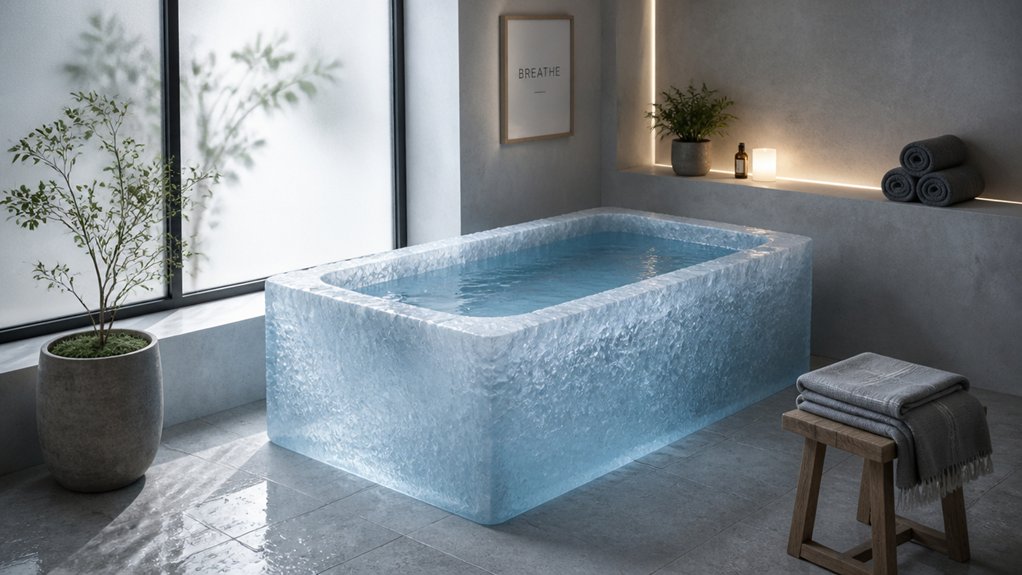
Before an ice bath, focus on slow, controlled breathing to help manage cold shock and stay calm. Use deep diaphragmatic breaths with longer exhalations, aiming for a 2:1 ratio (exhale longer than inhale), or practice box breathing—inhale, hold, exhale, hold, each for four seconds. This primes your nervous system, boosts oxygen, and reduces panic. Mastering these techniques makes cold exposure easier. Keep going to discover more simple ways to prepare your body for the cold.
Why Proper Breathing Builds Your Cold Exposure Readiness

Proper breathing before an ice bath is essential because it directly enhances your body’s ability to handle cold shocks. Using breathing techniques to help, you control your breath to reduce hyperventilation and panic responses during Cold Therapy. A well-chosen breathing device can adjust resistance to optimize your practice and further support your cold exposure readiness. Controlled breathing stimulates your parasympathetic nervous system, promoting calmness and better stress management in Cold Exposure. Slowing your breath minimizes the gasp reflex, helping you accept the cold without panicking. Focused breathing also boosts oxygen absorption, supporting circulation and maintaining core temperature. Regular practice builds resilience, training your nervous system to respond effectively to cold stress.
Essential Breathing Techniques to Prepare for Your Ice Bath
Before you step into the ice bath, mastering a few essential breathing techniques can make a significant difference in how your body responds to the cold. Focus on controlling your breathing to ease the shock of cold water immersion.
Here are four techniques to prepare:
- Deep breaths – Inhale through your nose for about 3 seconds, expanding your belly or sides, then exhale slowly for 6 seconds to promote relaxation.
- Box breathing – Inhale, hold, exhale, and hold each for 4 seconds to steady your nervous system.
- Diaphragmatic breathing – Use deep nasal inhales that expand your belly, followed by slow, full exhales to improve oxygen absorption.
- Physiological sigh – Two inhales (long and short), then a prolonged exhale, reduce anxiety and enhance breath control before cold water immersion. Incorporating guided breathing tools with visual cues can help maintain a steady rhythm and deepen your relaxation.
How to Do Box Breathing to Boost Cold Tolerance
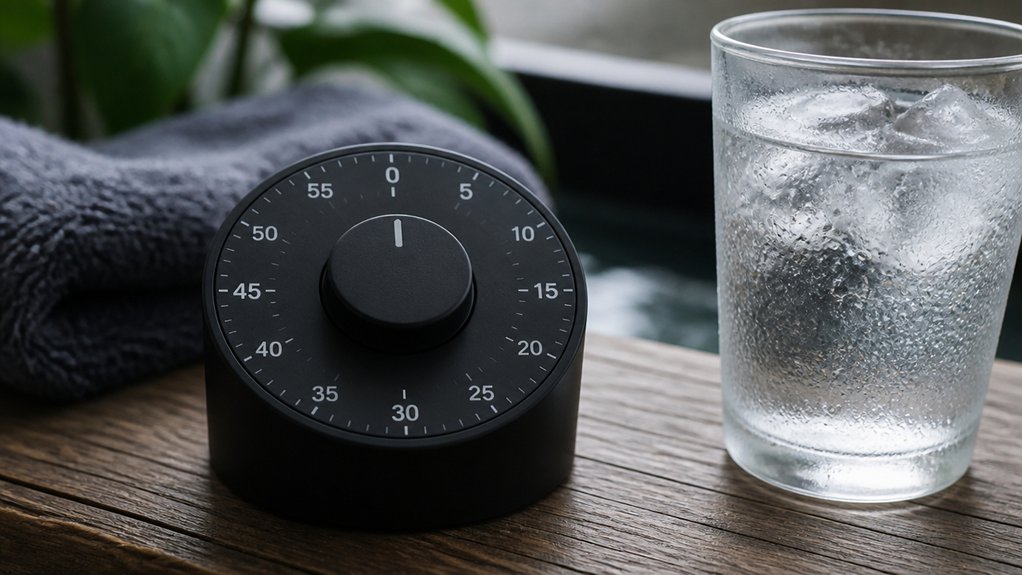
To effectively boost your cold tolerance, practicing box breathing helps slow down your nervous system and establish a sense of calm.
With box breathing, you inhale through your nose for 4 seconds, hold the breath, exhale slowly for 4 seconds, and hold again, creating four equal phases like sides of a square. This steady rhythm promotes better breath control and signals safety to your brain, reducing cold shock hyperventilation during an ice bath.
It also helps lower your heart rate and quiet mental noise, preparing your body to handle cold exposure with greater focus. Repeating 3-4 cycles before entering the ice bath can enhance your cold tolerance, allowing you to stay immersed longer. Visualize the four stages to maintain rhythm and deepen the calming, meditative effect.
Incorporating adaptogen support into your routine can further improve stress resilience, helping your body adapt more effectively during cold plunges.
Using Diaphragmatic and Tummo Breaths to Generate Internal Warmth
By practicing diaphragmatic and Tummo breathing, you can activate internal warmth just before your ice bath. Focus on deep belly inhales that expand your ribs laterally to boost oxygen and circulation, while Tummo techniques combine breath holds and visualization to generate heat rapidly. These methods help you stay calm, improve cold tolerance, and prevent shock during cold exposure. Incorporating recovery tracking apps can further optimize your cold plunge experience by monitoring your physiological responses and ensuring safe practice.
Deep Belly Inhalation Techniques
Deep belly inhalation techniques, such as diaphragmatic and Tummo-inspired breathing, activate your body’s internal energy and help generate warmth, making cold exposure more manageable.
Diaphragmatic breathing involves slowly inhaling deeply through your nose, expanding your belly and sides outward. This maximizes oxygen intake while calming your nervous system.
To practice effectively:
- Focus on deeply inhaling through the nose to fill your diaphragm.
- Keep your chest movement minimal, emphasizing belly expansion.
- Breathe slowly and steadily, rate-controlled for relaxation.
- Use diaphragmatic breathing to prepare your mind and body for cold exposure.
This controlled deep belly inhalation enhances oxygenation, stimulates parasympathetic activation, and stabilizes your heart rate, aiding your cold tolerance and mental resilience before entering the ice bath. Incorporating proper sensor accuracy techniques can further improve your monitoring and safety during cold immersion.
Focusing on Rib Expansion
Focusing on rib expansion amplifies the benefits of diaphragmatic and Tummo breathing by encouraging your lungs to fill more fully and your body to produce more internal heat.
With diaphragmatic breathing, take deep nasal inhales that push your diaphragm downward, expanding the lower ribs and belly sideways—favoring horizontal rib expansion. This movement maximizes your lung capacity and improves breath control. Placing your hands on the outside of your lower ribs can help you feel and guide this expansion, ensuring you’re engaging the correct muscles. Incorporating accurate measurement parameters like SpO2 and perfusion index ensures you’re monitoring your recovery and internal warmth effectively.
Activating Internal Heat
Activating internal heat with diaphragmatic and Tummo breathing involves intentionally engaging your breath to stimulate your body’s natural warmth. This process relies on deep breathing techniques that increase oxygen saturation and activate internal heat.
When practicing:
- Focus on deep inhalation through the nose, expanding your belly and engaging the diaphragm.
- Incorporate slow, controlled exhales to contract the belly and promote relaxation.
- Use visualizations during Tummo breaths, imagining energy rising and igniting a fire in your abdomen.
- Hold your breath briefly, stimulating the activation of the vagus nerve and the sympathetic nervous system to generate warmth.
Understanding neoprene insulation principles can help you optimize your body’s thermal response during these breathing exercises.
These techniques retrain your body to maintain deep, controlled breathing during cold exposure, enhancing cold tolerance and promoting internal heat before stepping into Ice Baths.
How Wim Hof Breathing Can Help You Stay Calm and Focused
Wim Hof breathing helps you stay calm and focused by calming your nervous system before stepping into cold water. It clears your mind, regulates your breathing patterns, and boosts your resilience to the cold. Additionally, practicing controlled breathing can help you manage your heart rate and maintain steadiness during your ice bath, enhancing your overall timer accuracy and alarms experience. Practicing it sets you up for better mental clarity and control during your ice bath.
Enhances Mental Clarity
Breathing techniques that incorporate deep inhalations and intentional breath holds can greatly improve your mental clarity before an ice bath.
Wim Hof Breathing, with its cycles of deep breaths and breath holds, helps clear mental noise and sharpens focus during a cold plunge. By controlling your breath pace and depth, you train your brain to stay present and composed, counteracting the initial panic of cold shock.
This method reduces distracting thoughts and enhances concentration, enabling you to manage stress hormones like adrenaline effectively.
- Activates the parasympathetic nervous system for calmness
- Increases oxygen saturation to sharpen focus
- Clears mental noise for better decision-making
- Builds mental endurance during cold immersion
Regulates Breathing Patterns
Practicing controlled breathing patterns before an ice bath helps you stay calm and focused by managing your body’s natural stress responses. Wim Hof breathing encourages you to take deep, rhythmic breaths per minute, expanding your belly, chest, and head. This controlled inhalation counters the body’s instinct to gasp and hold your breath during cold shock.
Breath holds train your body to tolerate increased carbon dioxide levels, encouraging steady, controlled breathing even in icy water. When you control your breaths deeply, your body tries less to hyperventilate, and you prevent erratic breathing caused by cold stress. These techniques activate your parasympathetic nervous system, promoting calmness and focus.
Ultimately, this practice helps you regulate your breathing pattern, maintaining composure in challenging cold environments.
Boosts Cold Resilience
By engaging in controlled breathing exercises before an ice bath, you can greatly enhance your ability to stay calm and focused under cold stress. Wim Hof breathing, involving deep breaths with belly, chest, and head expansion followed by breath holds, activates your parasympathetic nervous system. This helps regulate the cold shock response by reducing gasp reflex and hyperventilation.
Practicing 30-40 cycles improves oxygen saturation and decreases anxiety during cold exposure. Additionally, breath holds increase adrenaline and noradrenaline release, fostering stress hormone balance and mental clarity. Over time, consistent Wim Hof breathing builds physical and mental resilience, allowing you to stay composed, extend immersion times, and handle cold more comfortably.
Key Benefits:
- Calmness during cold shock
- Enhanced oxygen saturation
- Reduced hyperventilation
- Improved stress hormone regulation
Why Longer Exhalations (2:1 Ratio) Ease Cold Shock Responses
Extending your exhalations to a 2:1 ratio—exhaling twice as long as you inhale—activates your parasympathetic nervous system, which helps calm your body’s cold shock response. Taking slow, controlled breaths signals safety to your brain, reducing panic and lessening the gasping reflex caused by sudden cold water immersion.
A longer exhale also helps regulate your heart rate and breathing patterns, preventing rapid, shallow breaths common during cold shock. This breathing pattern promotes relaxation and supports heat conservation by influencing vagus nerve activity. Additionally, controlled, prolonged exhales improve oxygen intake and enhance cold tolerance.
How to Incorporate Breath Control Into Your Ice Bath Routine
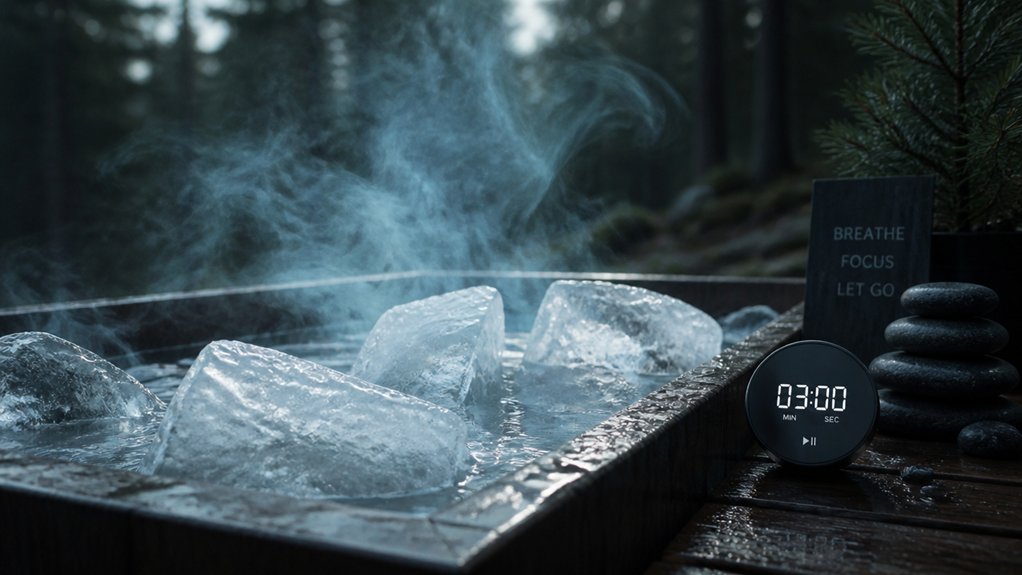
Incorporating conscious breath control into your ice bath routine can greatly improve your experience and resilience. Start by doing 3-4 deep diaphragmatic breaths, inhaling through your nose for about 3 seconds and exhaling slowly for 6 seconds to calm your nervous system.
Just before entering, practice controlled techniques like Box Breathing—inhale for 4 seconds, hold for 4, exhale for 4, and hold for 4—to steady your heart rate.
During the ice bath, maintain slow, deep breaths to regulate your cold shock response and prevent hyperventilation.
Finally, add breath-holding phases after inhalation, inspired by Wim Hof or Tummo practices, to activate internal warmth and boost your cold tolerance. Establishing this mindful breathing routine prepares both body and mind.
Common Mistakes to Avoid When Breathing Before an Ice Bath
Avoiding common breathing mistakes before an ice bath is essential for safety and effectiveness. You should avoid hyperventilating, as rapid breathing can cause dizziness and increase fainting risk. Don’t hold your breath too long before entering, which can lead to oxygen deprivation. Refrain from shallow, rapid chest breathing, as it amplifies the cold shock response and reduces oxygen efficiency. Skipping breath control practice hampers your ability to stay calm. Inconsistent or erratic breathing raises stress levels and hampers your tolerance to cold water. Use this table as a visual:
| Mistake | Effect | Better Practice |
|---|---|---|
| Avoid hyperventilating | Dizziness, fainting risk | Breathe deeply through your mouth |
| Hold breath too long | Oxygen deprivation | Practice steady, controlled breaths |
| Shallow chest breaths | Cold shock response | Focus on diaphragmatic breathing |
| Skipping breath practice | Panic, gasp reflex | Incorporate breath control drills |
| Irregular rhythm | Increased stress | Maintain consistent, calm breaths |
Frequently Asked Questions
How to Breathe Before an Ice Bath?
You should take 3-4 slow, deep breaths, inhaling through your nose and expanding your belly, then exhale slowly for 6 seconds. Use controlled breathing techniques like box or diaphragmatic breathing to relax and prepare.
Can Cold Plunge Lower Cortisol?
Yes, cold plunges can lower cortisol levels over time. By combining cold exposure with controlled breathing, you activate your parasympathetic nervous system, promoting relaxation, reducing stress, and improving hormonal balance for better mood and recovery.
What Is the 4 7 8 Rule for Breathing?
The 4-7-8 rule involves inhaling through your nose for 4 seconds, holding your breath for 7 seconds, then exhaling slowly through your mouth for 8 seconds with a whooshing sound. It calms your nervous system and improves breath control.
How to Prepare Your Body for an Ice Bath?
To prepare your body for an ice bath, take slow, deep breaths, activating diaphragmatic breathing, and practice rhythmic breathing patterns like box breathing. This calms your nervous system, reduces shock, and enhances cold tolerance effectively.