
For post-workout recovery, aim for cold plunges lasting 10-15 minutes at temperatures between 50-59°F. Waiting at least 4 hours after strength training helps preserve muscle growth signals, while shorter dips of 30-60 minutes after endurance workouts can reduce soreness without hindering progress. Vary your durations based on your training phase, and always prioritize safety. Keep exploring to discover strategies that optimize your recovery and support your fitness goals.
Why Cold Water Immersion Matters for Recovery

Cold water immersion matters for recovery because it helps reduce muscle soreness and inflammation effectively. When you submerge in cold water at 50-59°F for 10-15 minutes, you trigger physiological responses that promote muscle recovery. The cold induces vasoconstriction, which minimizes swelling and metabolic waste buildup, speeding up post-exercise recovery. Additionally, hydrostatic pressure from immersion helps decrease muscle edema, easing soreness. Using a high-quality, energy-efficient water chiller ensures consistent temperature control, maximizing recovery benefits while minimizing operational costs. Timing is essential—waiting 30-60 minutes after endurance training or at least four hours after strength sessions guarantees you gain benefits without impairing adaptations. Controlled breathing during cold water immersion enhances parasympathetic activation, reducing stress and supporting faster recovery.
Understanding How Cold Plunge Duration Affects Recovery and Growth
Getting the most out of your cold plunge means understanding how duration influences recovery and growth. Cold muscle immersion can effectively reduce soreness and support your recovery process when done for 10-15 minutes at temperatures between 50-59°F (10-15°C).
Staying in the cold water immersion too long, beyond 15 minutes, risks core temperature drops and diminishing recovery benefits, so longer sessions should be avoided.
Beginners should start with shorter cold plunge durations of 2-3 minutes at warmer temperatures and gradually increase as tolerated.
It’s important to time cold plunges at least four hours after strength training to avoid blunting anabolic signaling. Proper water treatment ensures water remains clear, hygienic, and safe for consistent use, maximizing the benefits of your cold therapy sessions.
What’s the Best Cold Plunge Time After Your Workout?

Timing your cold plunge after a workout is key to maximizing recovery without hindering gains. For strength training, waiting at least four hours helps avoid blunting muscle growth signals, while endurance sessions can be cooled down sooner.
Keep your immersion to 10-15 minutes at 50-59°F to get the benefits without risking overcooling or reduced progress.
Optimal Cold Plunge Timing
Determining the best moment to take a cold plunge after your workout can greatly influence your recovery process. For strength or hypertrophy training, wait at least four hours before plunging to prevent reducing muscle growth signaling by up to 25%. If you’ve done endurance or conditioning, a cold plunge 30-60 minutes post-workout can markedly decrease muscle soreness and inflammation. The ideal temperature is between 50-59°F (10-15°C), with a duration of 10-15 minutes for maximum benefits. Avoid plunging immediately after strength sessions, as it may blunt anabolic pathways. Instead, consider a pre-workout cold immersion of 3-5 minutes at 55-60°F to boost mental focus. Additionally, choosing a suitable cold plunge tub capacity and size can ensure comfortable immersion tailored to your needs. Timing your cold plunge based on your training phase optimizes your recovery and performance.
Effects on Muscle Recovery
Waiting the right amount of time after your workout to take a cold plunge can make a significant difference in muscle recovery. Cold immersion for 10-15 minutes at 50-59°F (10-15°C) effectively reduces muscle soreness and lowers inflammation.
This duration helps decrease creatine kinase levels, indicating less muscle damage and enhanced recovery. Shorter immersions under 10 minutes may be less impactful, while longer ones beyond 15 minutes risk lowering core temperature too much without added benefits.
Additionally, using temperature therapy features such as combined heat/cold options can further optimize recovery sessions. If you’re training frequently, cold plunging 30-60 minutes after exercise can support rapid recovery without impairing adaptations. Keep in mind, immediate cold immersion after strength training might blunt hypertrophy signals, so waiting at least 4 hours guarantees peak muscle recovery without sacrificing gains.
Avoiding Interference With Gains
Choosing the right moment to cold plunge after your workout can make a big difference in balancing recovery and muscle growth. Immediately doing cold plunges can blunt hypertrophy signaling by up to 25%, hampering muscle gains over time.
To avoid interference with your gains, wait at least four hours post-resistance training before immersing in cold water. Cold plunges 4 to 12 hours later effectively reduce muscle soreness and inflammation without notably impairing anabolic processes.
A cold plunge at 50-59°F for 10-15 minutes can optimize recovery while protecting muscle-building signals. If you want to cool down sooner, pre-workout cold plunges lasting 3-5 minutes at 55-60°F can boost mental focus without threatening hypertrophy signaling, ensuring gains remain on track.
Adding proper insulation to your cold plunge setup can help maintain consistent water temperatures and improve overall recovery efficiency.
Ideal Temperature Ranges for Safe and Effective Cold Plunges
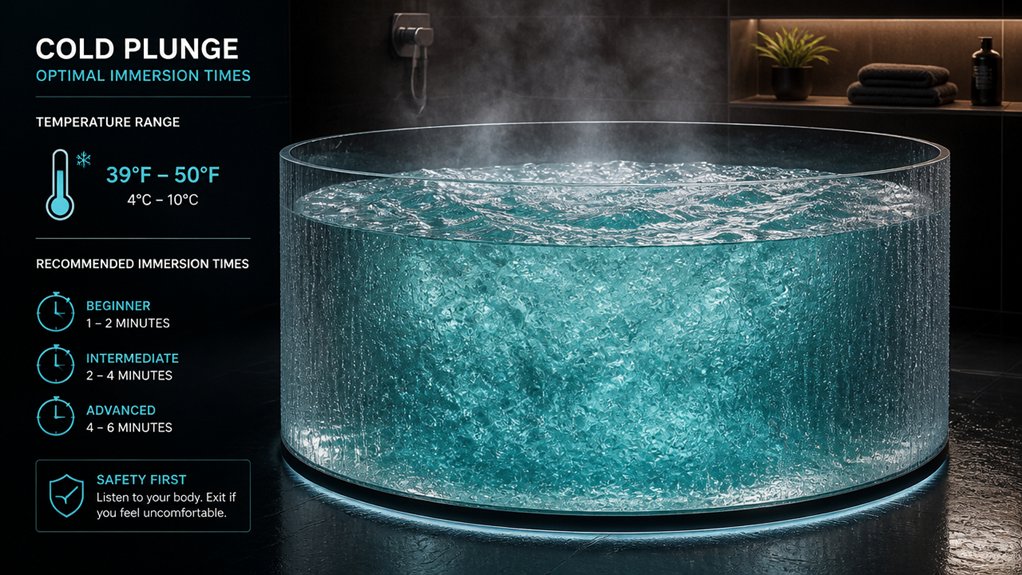
For safe and effective cold plunges after your workout, aiming for water temperatures between 50°F and 59°F (10°C to 15°C) is ideal. Cold water immersion within this temperature range maximizes soreness reduction and recovery benefits without risking harm.
Typically, staying in the water for 10 to 15 minutes provides peak results, helping reduce inflammation and muscle soreness. If you’re new to cold plunges, start by immersing in slightly warmer water around 60-65°F, gradually decreasing as your body adapts.
Temperatures below 50°F can increase stress responses and may hinder recovery, especially for beginners. Insulation efficiency supports maintaining consistent water temperature, enabling better recovery markers, including reduced muscle enzyme levels and enhanced repair processes, ensuring you gain maximum benefits safely.
How Long Should You Cold Plunge to Maximize Soreness Relief?
To maximize soreness relief, aim for a cold plunge lasting between 10 and 15 minutes at a temperature of 50-59°F (10-15°C).
This duration effectively reduces muscle soreness by about 15-20% and lowers inflammation markers like creatine kinase after intense exercise.
Keep in mind, a cold plunge shorter than 10 minutes may not deliver enough anti-inflammatory benefits, while exceeding 15 minutes risks diminishing returns and dropping your core temperature too much.
To enhance recovery, focus on slow, controlled breathing during immersion, which activates your parasympathetic nervous system.
Here’s what you should remember:
- Stick to 10-15 minutes for best soreness relief
- Avoid exceeding this time to prevent adverse effects
- Consistent, gradual immersion increases benefits and safety
- Using a quality cold plunge kit with proper water treatment can maintain optimal water quality for safer, more effective recovery sessions
Cold Plunge Durations for Different Fitness Goals
When tailoring cold plunge durations to your fitness goals, it’s important to take into account how your training type shapes your recovery needs.
For general recovery and muscle soreness relief, a 10-15 minute cold plunge at 50-59°F usually works best. Beginners should start with shorter immersions of 2-3 minutes at 60-65°F, gradually increasing duration and coldness to build tolerance.
Avoid plunges longer than 15 minutes to prevent core temperature drops and diminishing recovery benefits.
If you’re focused on hypertrophy, delay cold plunges until at least four hours post-resistance training to avoid impairing anabolic signaling.
During high-frequency training phases, multiple cold plunges of 12-15 minutes, scheduled 30-60 minutes after sessions, can help accelerate recovery effectively. Monitoring water treatment and maintenance can ensure ongoing hygiene and safety during frequent use.
Post-Workout Cold Plunge: Benefits and Timing Tips
Taking a cold plunge after your workout can reduce soreness and inflammation, especially when kept between 50-59°F for 10-15 minutes.
To avoid hindering muscle growth, wait at least 4 hours after resistance training before cooling down. Beginners should start with warmer water and shorter sessions, gradually progressing to colder temps and longer durations.
Optimal Temperature Range
The ideal temperature range for a post-workout cold plunge is between 50°F and 59°F (10-15°C), as this window maximizes recovery benefits like reducing inflammation and easing muscle soreness.
When you engage in water immersion within this range, you activate your body’s natural healing response effectively. A cold plunge at the right water temperature helps lower muscle damage markers and speeds up your recovery process.
Here are three reasons why maintaining this temperature is essential:
- It optimizes your body’s response for inflammation reduction.
- It prevents overstressing your system, especially if you’re new to cold plunges.
- It guarantees you get maximum benefits without impairing muscle growth signals.
Stick within this range for safe and effective recovery.
Recommended Duration
For ideal recovery, sticking to a cold plunge duration of 10-15 minutes at 50-59°F (10-15°C) is recommended. This timeframe effectively reduces muscle soreness and inflammation, optimizing recovery without risking over-cooling.
Starting with shorter sessions is wise if you’re new to cold plunges, gradually increasing to 10-15 minutes to avoid excessive stress on your body. Cold plunging 30-60 minutes after training can further improve recovery by lowering muscle soreness by 15-20% and decreasing creatine kinase levels.
Sessions longer than 15 minutes offer diminishing benefits and may hinder recovery by lowering your core temperature too much. Consistently doing these cold plunge sessions 3-6 times weekly can support recovery during intense training periods, helping you bounce back faster.
Timing for Best Results
Timing your post-workout cold plunge is essential to maximizing its benefits without hindering your fitness progress. Proper water immersion can effectively reduce muscle soreness, but timing matters.
- Wait at least four hours after resistance training before cold plunging to avoid blunting hypertrophy signals by up to 25%.
- For endurance or high-volume sessions, immersing 30-60 minutes afterward can lower inflammation and promote quicker recovery without impairing adaptations.
- Use CWI protocols at 50-59°F (10-15°C) for 10-15 minutes for peak results, and remember, beginners should start with warmer temps and shorter durations.
Cold Water Durations That Support Endurance and Athletic Performance
Ideal cold water immersion durations for endurance athletes typically fall between 10 and 15 minutes at temperatures of 50-59°F (10-15°C). This timeframe helps reduce muscle soreness and inflammation while supporting recovery without impairing endurance adaptations. Cold plunges performed 30-45 minutes after workouts are most effective, as they lower soreness and inflammation while preserving mitochondrial and cardiovascular gains. Staying within the 10-15 minute window prevents excessive core temperature drops and minimizes diminishing returns. Regular cold water immersion 4-6 times weekly, adjusted for training load, enhances recovery during high-volume phases. Here’s a quick overview:
| Benefit | Timing & Duration |
|---|---|
| Reduce muscle soreness | 10-15 minutes, 30-45 mins post-exercise |
|
| Support endurance | Cold water immersion, consistent routine |
|---|---|
| Timing Strategy | Purpose |
| 30-60min post-exercise cold plunge | Reduce soreness, inflammation |
| 4+ hours post-resistance training | Preserve muscle hypertrophy |
| Pre-workout cold plunge | Mental focus, no hypertrophy impact |
| Avoid combining pre/post in same session | Maximize recovery benefits |
Integrating Active Techniques
Integrating active recovery techniques with cold therapy can greatly improve your post-exercise results. Combining cold water immersion (10-15 minutes at 50-59°F) with strategies like gentle stretching or low-intensity cycling boosts muscle recovery and clears metabolites more efficiently.
During cold water immersion, controlled slow breathing (inhale 4 counts, exhale 6 counts) enhances parasympathetic activation, making your recovery more effective. Additionally, pairing cold plunge protocols with proper hydration and balanced nutrition supports inflammation reduction and tissue repair.
For maximum benefits, consider these approaches:
- Use light massage or foam rolling after cold immersion to decrease inflammation and promote regeneration.
- Incorporate a cooling-down phase with dynamic warm-down activities to prevent stiffness.
- Stay hydrated post-workout to optimize muscle recovery and recovery efficiency.
Creating a Personalized Cold Plunge Routine for Better Results
To create a personalized cold plunge routine that yields better results, start by considering your workout intensity, goals, and experience level. For effective water immersion, aim for cold temperatures between 50-59°F and immerse for 10-15 minutes to reduce muscle soreness by up to 20% and lower inflammation.
Beginners should begin with shorter sessions, around 2-3 minutes, at warmer temperatures (60-65°F), gradually increasing duration and decreasing temperature over time. Wait at least four hours after resistance training to protect anabolic signals and support muscle growth.
During high-volume phases, schedule cold plunges 30-60 minutes post-exercise. Use slow, controlled breathing during immersion to enhance recovery and activate your parasympathetic nervous system.
Tailoring these factors guarantees peak, personalized benefits.
Final Tips: How to Use Cold Water Immersion Effectively and Safely
Using cold water immersion safely and effectively requires following key guidelines to maximize recovery benefits and minimize risks.
Follow safe cold water immersion practices: start slowly, adjust frequency, and gradually increase duration for optimal recovery.
First, limit your post-workout cold water immersion to 10-15 minutes at 50-59°F to reduce muscle soreness without risking a core temperature drop. Second, wait at least 4 hours after resistance training before plunging to avoid impairing muscle hypertrophy. Third, practice slow, controlled breathing (inhale for 4 counts, exhale for 6) during immersion to enhance relaxation and parasympathetic activation.
To achieve peak results, remember:
- *Start slowly*—begin with 2-3 minutes at warmer temperatures if you’re a beginner.
- *Adjust frequency* to 2-6 sessions weekly based on your training load.
- *Gradually decrease temperatures* and increase duration for safe adaptation and maximum post-workout recovery benefits.
Frequently Asked Questions
What Is the 3-3-3 Rule for Working Out?
The 3-3-3 rule involves doing three sets of three-minute workouts, with roughly three-minute rest breaks. You focus on balancing effort and recovery, which helps maximize your training effectiveness without overexerting yourself.
What Is the 2 2 2 Rule in Gym?
The 2 2 2 rule in the gym involves doing 2 minutes of exercise, resting for 2 minutes, then repeating for 2 sets. It helps balance effort and recovery, improving workout efficiency and preventing overtraining.
What Is the Most Effective Post-Workout Recovery Method?
You should perform a cold plunge at 50-59°F for 10-15 minutes, ideally 30-60 minutes post-exercise, to reduce soreness and inflammation without harming muscle growth. Stay controlled with breathing, and limit sessions to 2-6 times weekly.
How Long Should You Stay in a Cold Bath After Working Out?
You should stay in a cold bath for 10-15 minutes after working out at 50-59°F. This duration reduces soreness and inflammation effectively, but avoid exceeding 15 minutes to prevent overheating or core temperature drops.